
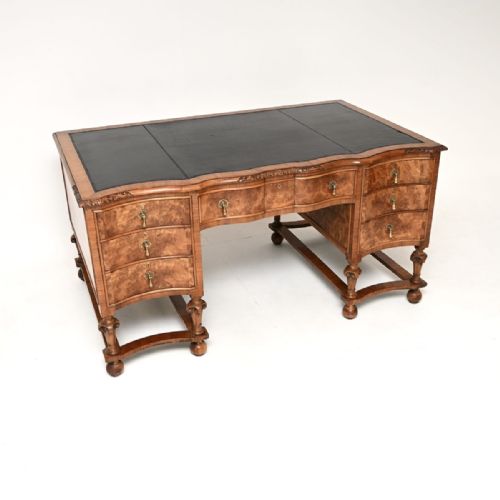
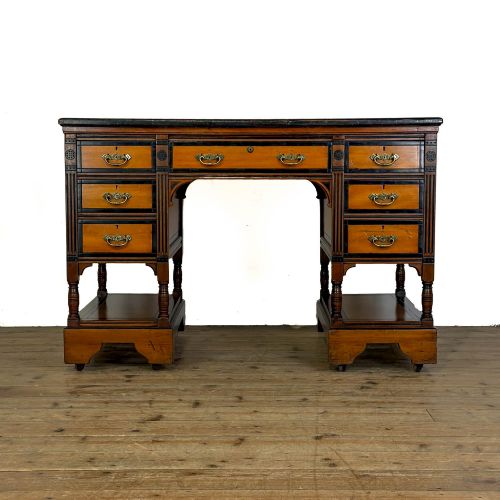
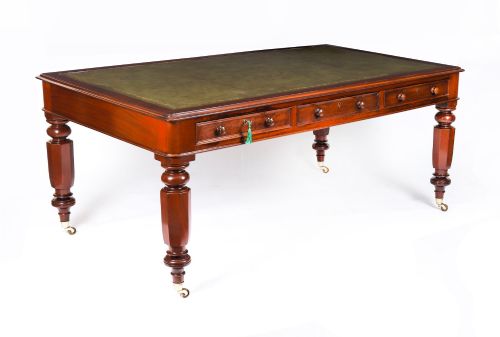
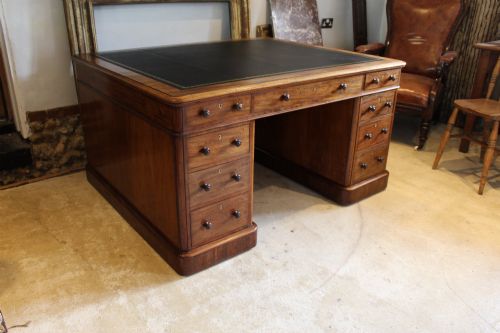


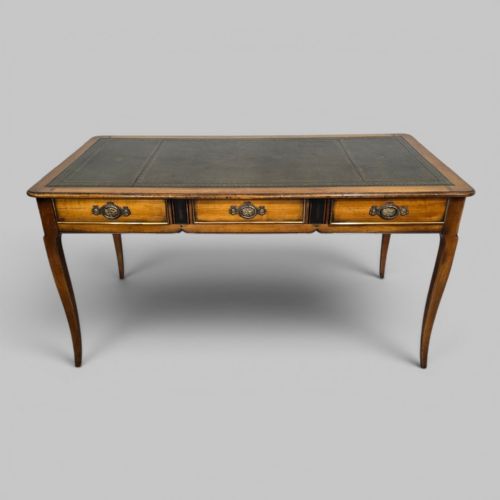

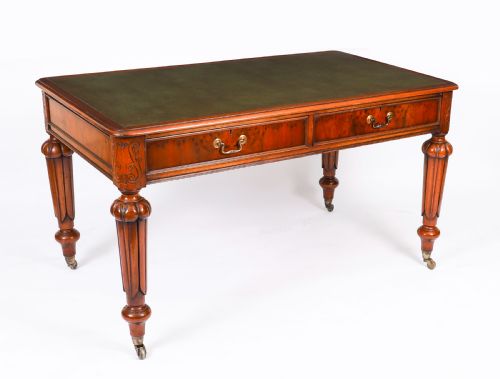


Double Sided Writing Desk
A double sided writing desk offers workspace on both faces, providing a practical centrepiece for any study.
What these desks are
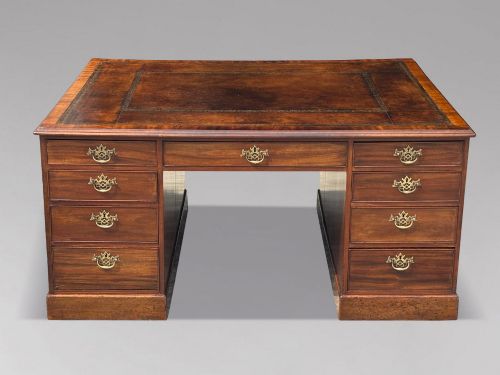
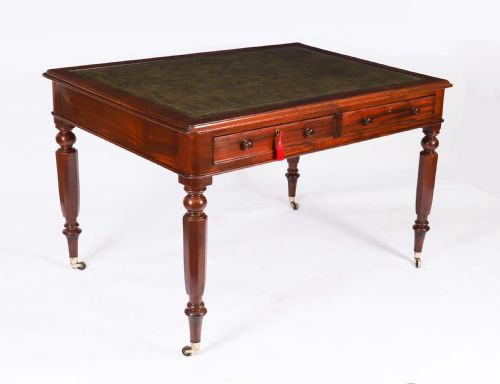
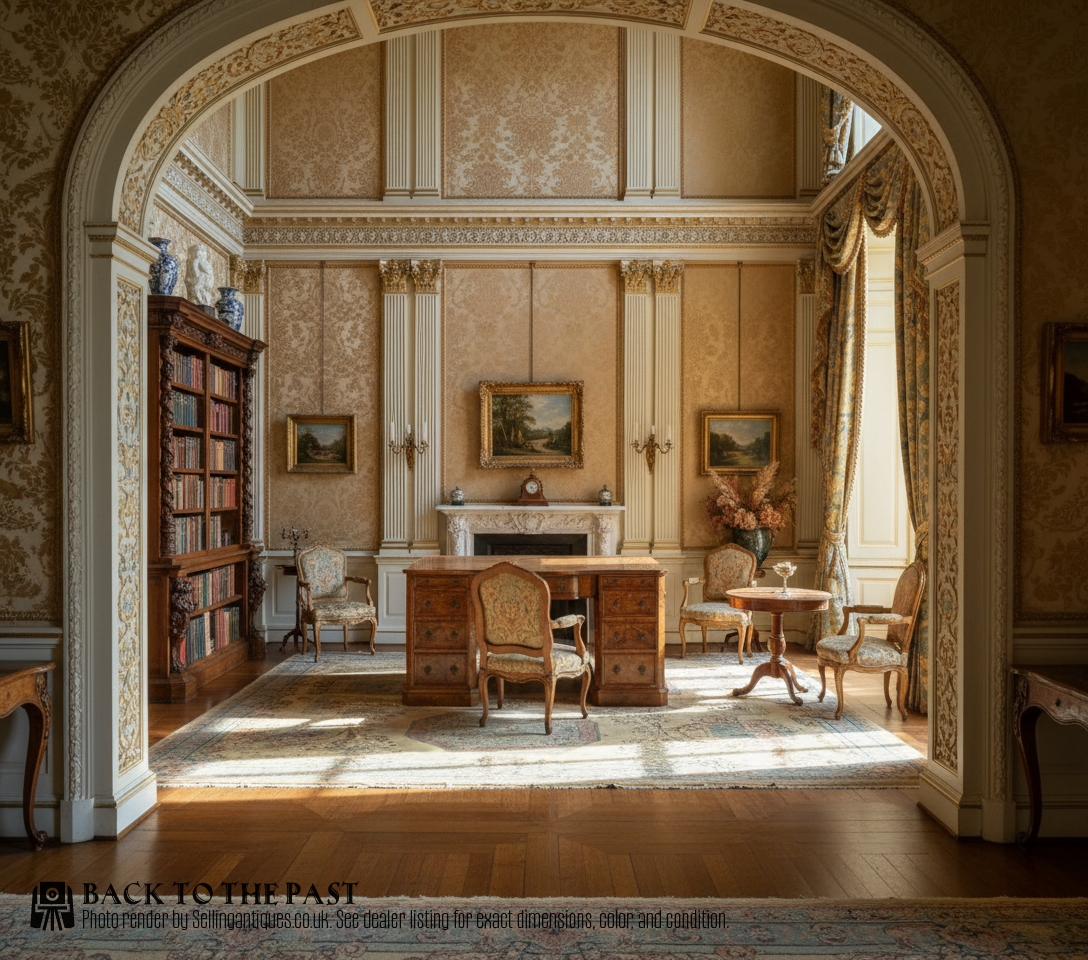
A double sided writing desk provides a functional workspace accessible from both faces, allowing two people to work opposite one another. These pieces appear frequently as partners desks or pedestal writing tables across the Georgian, Victorian, and Edwardian periods.
The inventory on this page spans the eighteenth century through to the early twentieth century, incorporating styles such as Chippendale Revival and Queen Anne Revival alongside traditional Georgian and Victorian forms. Mahogany and oak dominate the construction, often supplemented by burr walnut.
Buyers will encounter large formal desks designed for grand libraries as well as specialised variants like the postmasters sorting desk. Each item reflects the domestic or administrative needs of its original era while maintaining the characteristic dual-sided utility.
How they were made
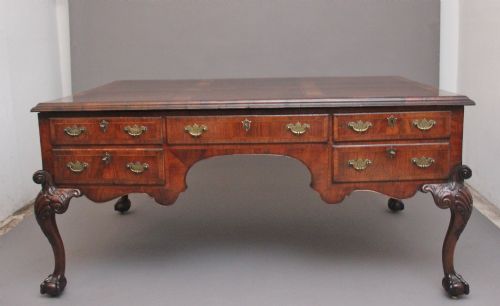
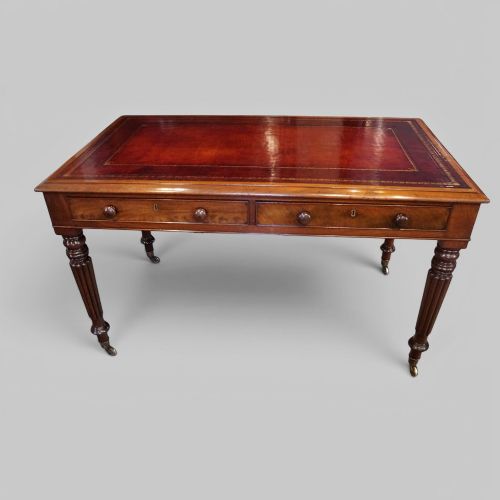
Cabinet makers constructed these pieces primarily from solid timbers like mahogany and oak, frequently employing figured mahogany veneers and burr walnut for visual depth. Brass hardware, including handles and key escutcheons, provides functional and decorative accents.
Writing surfaces were traditionally inset with leather panels, offering a durable writing plane that was often tooled with gold leaf. Carved details adorn specific examples, showcasing the craftsmanship of makers such as Gillows of Lancaster.
Retail Price Guide 2026
Typical UK retail prices for double sided writing desk, calculated from the Sellingantiques database of over a million retail prices indexed since 2003. This retail price guide relies exclusively on Sellingantiques data; no external sources or auction records are used, so the figures do not describe the wider market.
Postmasters sorting desks prove that Victorian paperwork was just as unruly as modern admin.
What varies in quality
Quality rests on the choice of timber and the complexity of its figure, with highly figured mahogany and burr walnut marking the upper tier of production. The presence of original brasses and finely carved details distinguishes workshop masterpieces from standard commercial output.
Structural refinement dictates the overall merit of a desk, visible in the harmony of proportions, the depth of serpentine shaping, and the retention of original leather writing surfaces.
Gillows of Lancaster
The Double Sided Writing Desk Glossary
- Partners desk
- A large double sided writing desk designed for two people to use simultaneously, featuring drawers and cupboards on both faces. These pieces were traditionally utilised in libraries and executive studies.
- Pedestal desk
- A form of furniture consisting of a flat top supported by two pedestals of drawers, frequently built to allow access from both front and back.
- Serpentine
- A gently undulating curved shape seen on the front or perimeter of high-status furniture frames. This outline requires advanced woodworking skill to execute cleanly.
- Escutcheon
- A protective plate surrounding a keyhole, usually cast from brass. Original hardware adds significantly to the historical integrity of a desk.
Frequently Asked Questions
What is a double sided writing desk?
A double sided writing desk is a large table or pedestal desk finished on all sides so that it can sit away from a wall. It provides drawers and workspace on opposing faces.
Such furniture was historically built for partners, bankers, or librarians who needed shared access to documents and storage within a single room.
How do I date a partners desk?
Dating relies on identifying timber choices, construction methods, and stylistic cues from periods like the Georgian, Victorian, or Edwardian eras. Mahogany and oak were used across multiple centuries, so secondary woods and hardware offer further clues.
Makers' stamps or specific revival styles, such as Chippendale Revival, also help narrow down the decade of manufacture.
Can these desks fit in modern rooms?
Because they are finished on all sides, these desks look best placed in the middle of a room rather than pushed against a wall. Their substantial scale requires ample floor space to allow movement around both working faces.
Many buyers use them as statement centrepieces in home offices or large studies where dual access remains practical.
What materials were used?
Timbers such as mahogany, oak, and burr walnut form the primary structure of these pieces. Leather was commonly inset into the top surface to provide a smooth writing plane.
Brass hardware such as handles, locks, and postmasters sorting fittings complete the construction details.