

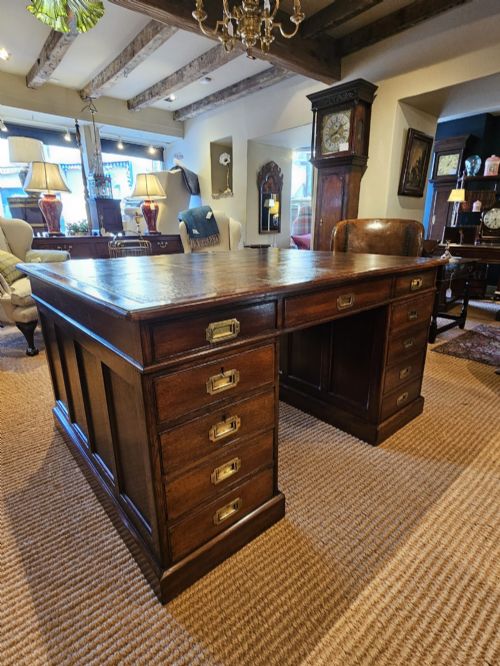
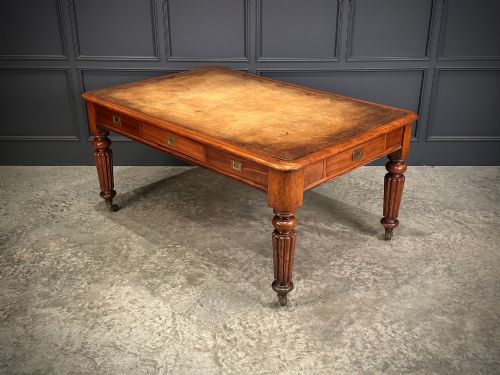
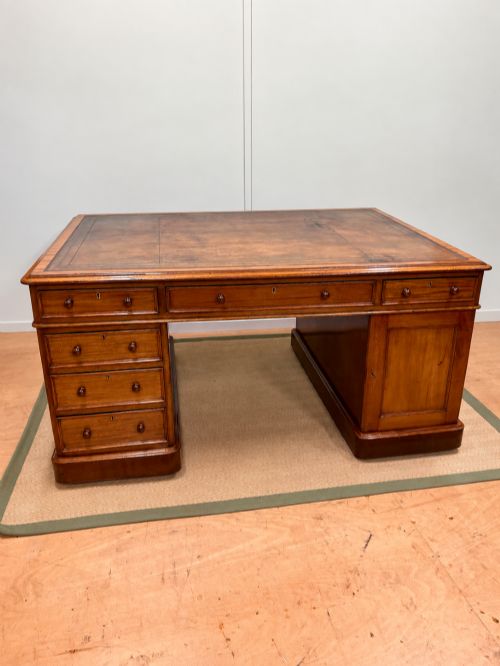
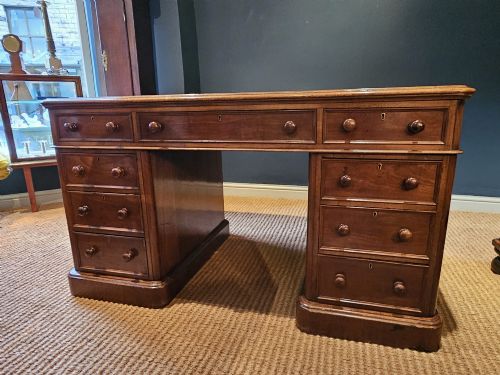



Victorian Double Sided Desk
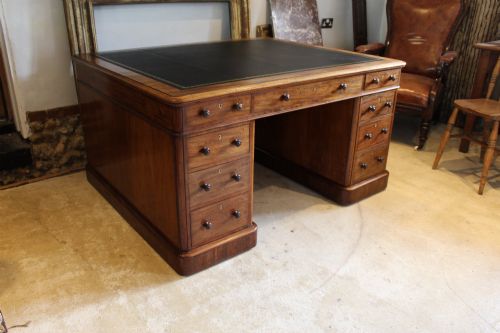
A victorian double sided desk provides workspace on both faces, functioning as a substantial partners desk built for shared studies and offices.
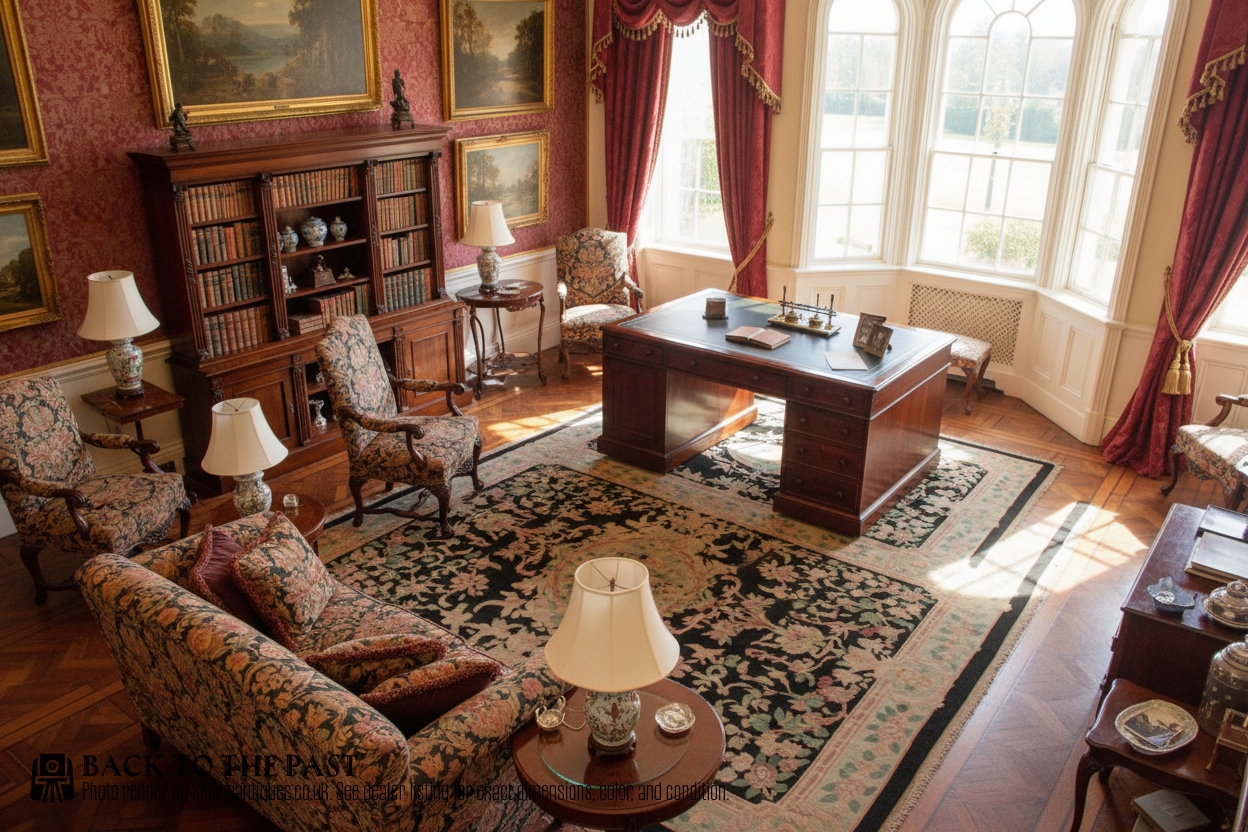
Victorian Double Sided Desk
A victorian double sided desk, often styled as a partners desk, emerges across the nineteenth century in substantial proportions designed to sit in the centre of a room rather than against a wall.
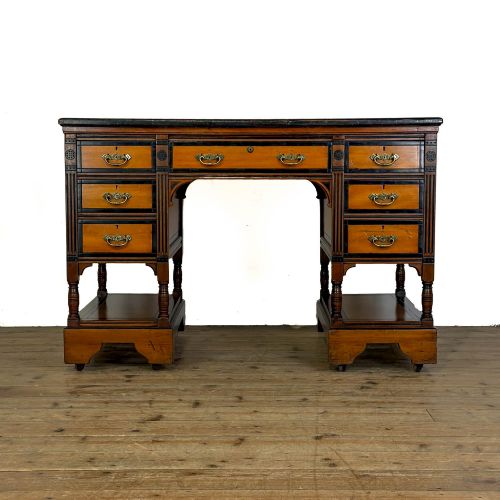
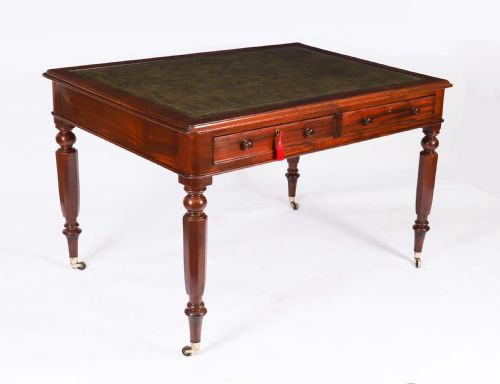
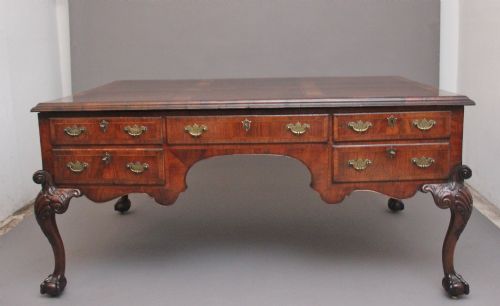
The pieces on this page appear predominantly in mahogany, oak, and walnut, frequently housing banks of drawers or cupboards accessible from either side of the pedestal base.
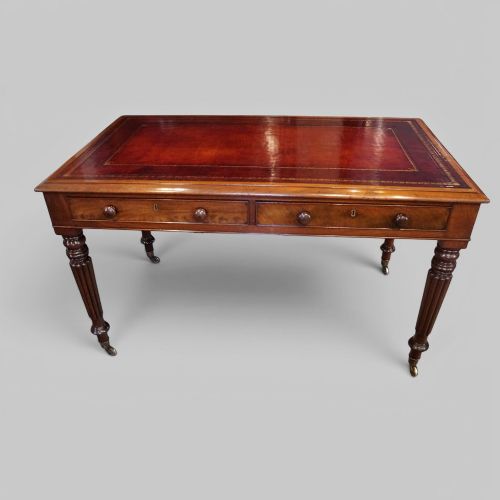
Makers and workshops of the period constructed these writing tables with inset leather writing surfaces, pairing functional storage with formal reception room presence.
Materials and Construction
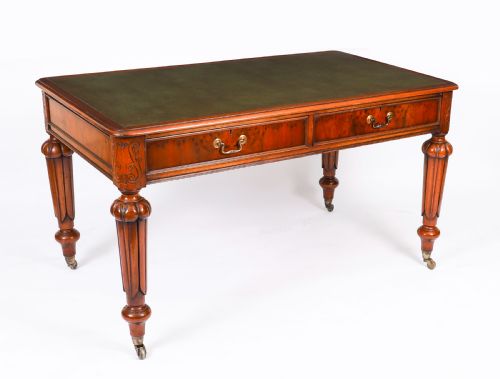
Cabinet makers utilised solid timbers such as oak, mahogany, and burr walnut, often applying flame mahogany veneers to large expanses of flat drawer fronts and tabletops.
Writing surfaces incorporated hand-tooled leather inserts surrounded by timber margins, while brass handles, drawer pulls, and locks provided operational hardware across both working faces.
Victorian Double Sided Desk Retail Price Guide 2026
Typical asking prices for victorian double sided desk among the pieces listed under this phrase on Sellingantiques today, from the lower quarter to the upper quarter. They describe what is for sale here now, not the wider market.
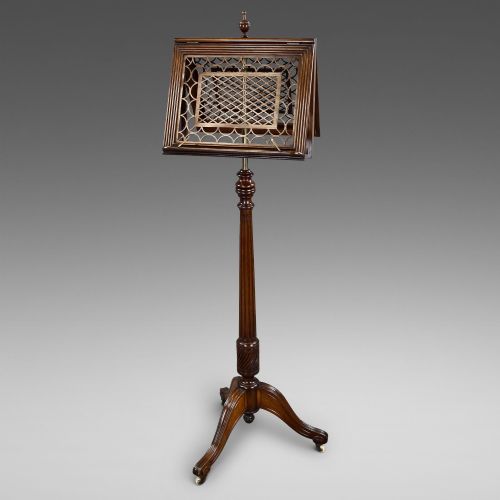
Among the heavy timber desks, a diminutive music stand waits patiently to hold a duet.
Judging Quality and Execution
The distinction between tiers of desk manufacture rests on timber selection and timber matching, particularly where figured burr walnut or flame mahogany veneers wrap continuously across multiple drawers.
Carved detailing, secondary timber choices for drawer linings, and the presence of original brasses separate standard commercial workshop output from pieces bearing maker signatures.
Maple and Co·Charles Andrea Nosotti·T Wilson
The Victorian Double Sided Desk Glossary
- Partners desk
- A double-sided writing table designed with kneeholes or cupboards on both faces to accommodate two people working opposite each other.
- Pedestal desk
- A form comprising two freestanding drawer columns supporting a single wide desktop above.
- Flame mahogany
- Timber cut to display a characteristic flammiform grain pattern, utilised extensively on high-status nineteenth-century case furniture.
- Burr walnut
- A highly figured timber harvested from walnut tree growths, valued for intricate circular grain patterns on desk fronts.
- Kneehole
- The central recessed space beneath a desk top allowing a person to sit comfortably.
Victorian Double Sided Desk: Frequently Asked Questions
Where should a partners desk go?
These large desks require placement in the centre of a room rather than against a wall, as drawers and cupboards open on both sides.
Sufficient floor space around the piece ensures access to both working faces and allows the proportions of the pedestals to read correctly in the interior.
How do I care for the leather top?
Leather writing surfaces benefit from periodic treatment with appropriate leather dressings to maintain suppleness and prevent the material from drying out.
Avoid placing damp items directly onto the leather and keep the desk away from direct heat sources and strong sunlight.
Are these desks easy to move?
Partners desks separate into multiple distinct sections, typically dividing into two pedestals and a heavy top section to facilitate transport.
Lifting the components requires multiple people due to the dense solid hardwoods and thick timber carcases employed in nineteenth-century construction.
What is the difference between a library table and a partners desk?
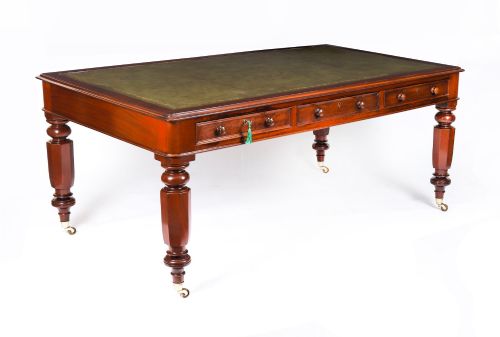
Library tables generally feature open frames or legs beneath the top rather than enclosed pedestals filled with banks of drawers.
Partners desks prioritise substantial storage accessible from both sides, whereas library tables offer simpler writing surfaces without pedestal cupboards.