


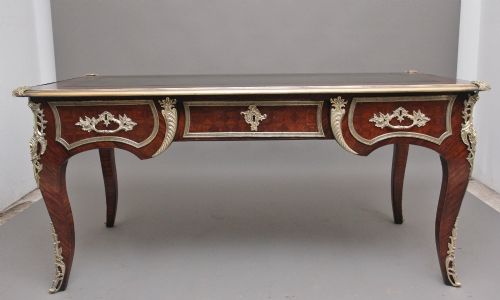
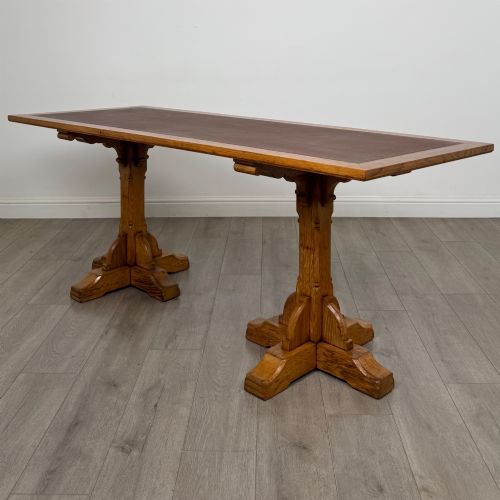
Leather Writing Desk
A leather writing desk brings tactile warmth and period utility to a study through centuries of classic forms.

Forms and Origins
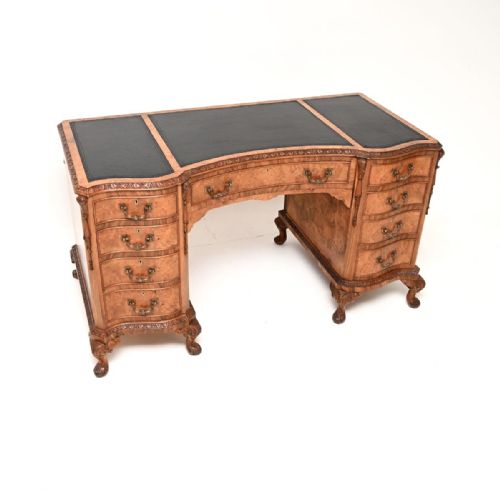
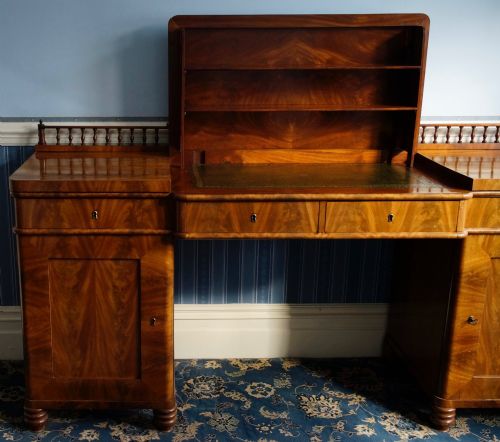
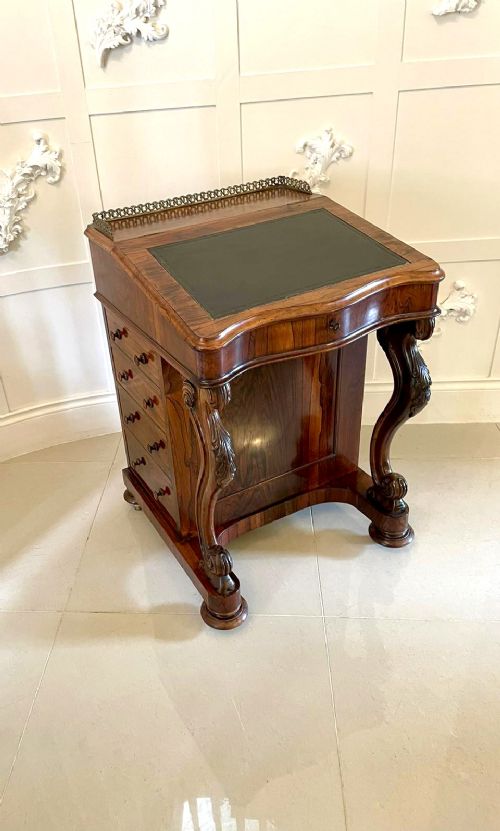
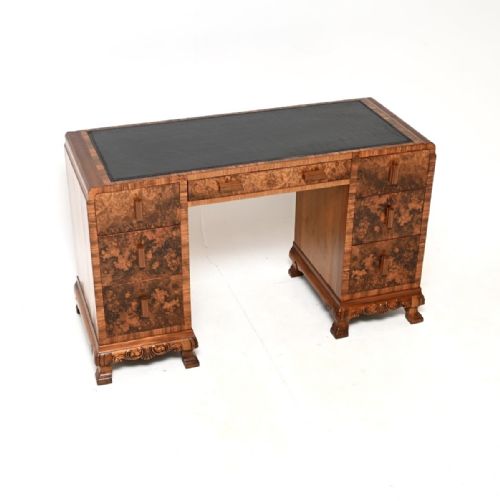
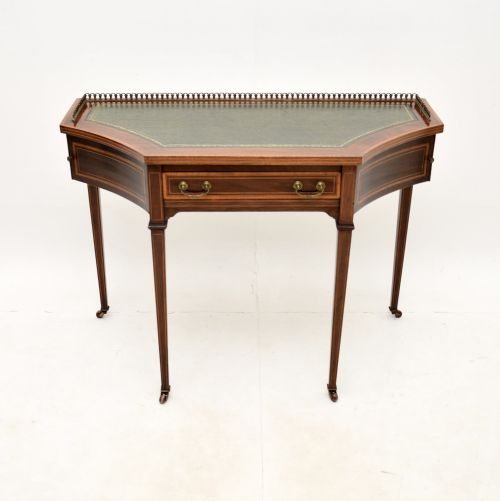
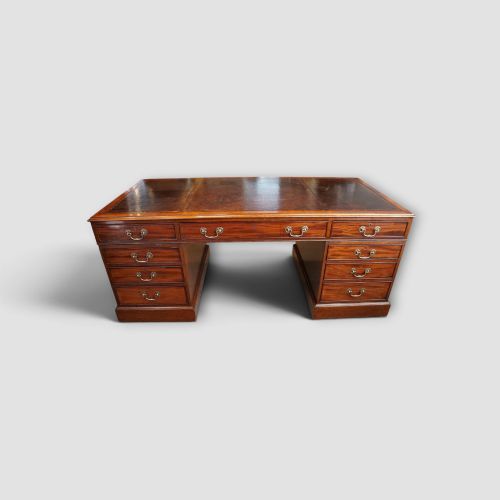
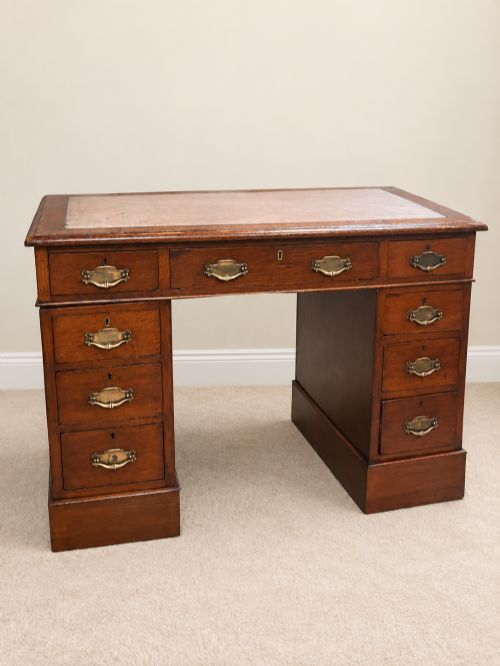
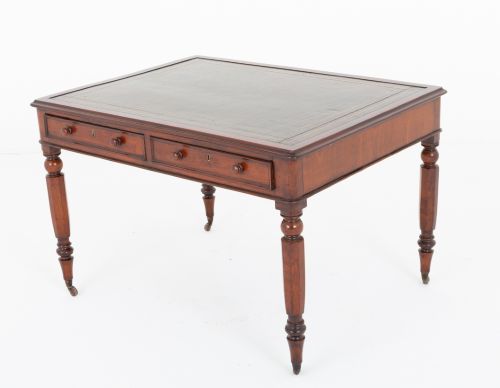
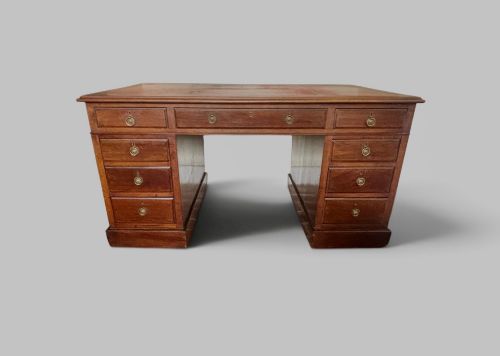
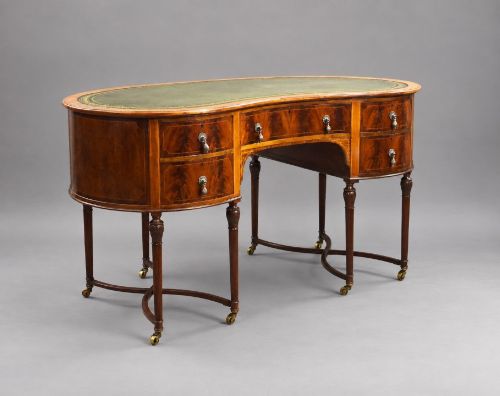
A leather writing desk spans diverse periods from Georgian and Regency through Victorian and Edwardian iterations, appearing as compact ladies desks, twin pedestal partners desks, and library tables.
The search phrase encompasses various forms designed for correspondence and study, utilising woods such as mahogany, walnut, oak, and rosewood alongside specialised writing surfaces.
Victorian and Edwardian examples frequently emerge alongside earlier Regency pieces, showing how writing furniture evolved to suit domestic and administrative interiors.
Materials and Construction
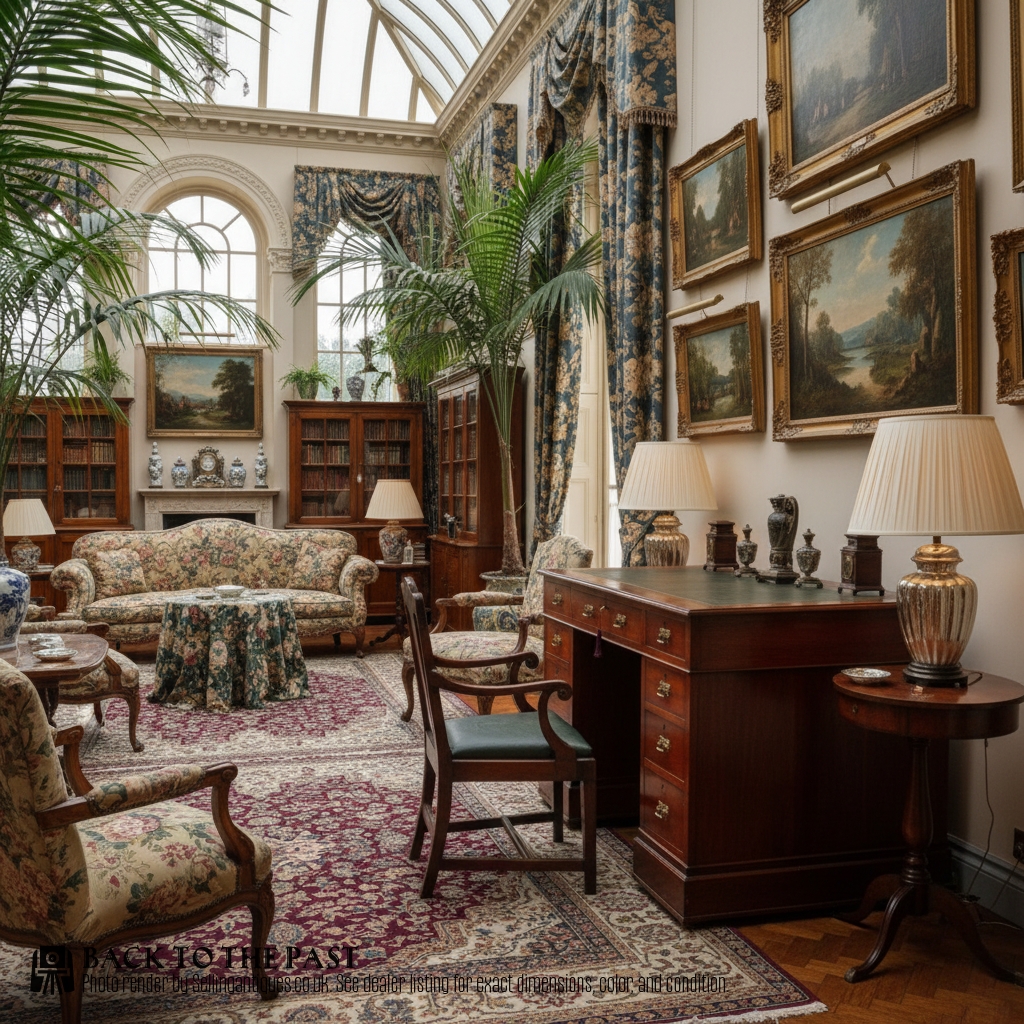
Cabinetmakers constructed these pieces using solid and veneered timbers including mahogany, burr walnut, oak, and maplewood, often incorporating brass hardware and inlaid details.
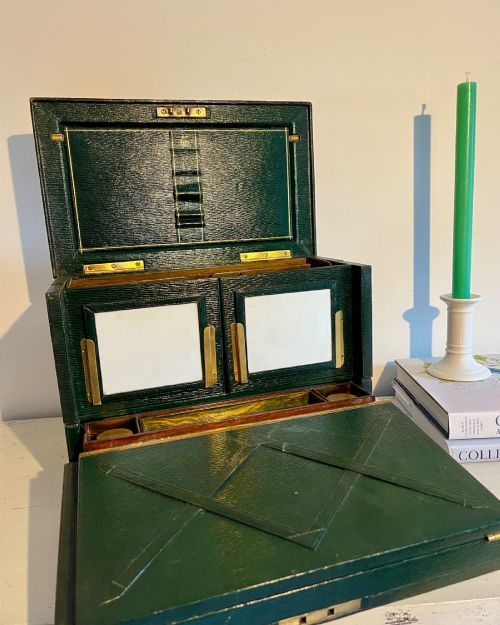
Writing surfaces integrate leather inserts, frequently accented with gilt tooling, set into timber frames above drawer configurations.
Retail Price Guide 2026
Typical UK retail prices for leather writing desk, calculated from the Sellingantiques database of over a million retail prices indexed since 2003. This retail price guide relies exclusively on Sellingantiques data; no external sources or auction records are used, so the figures do not describe the wider market.
Period styles represented span Georgian, Regency, Victorian, Edwardian, and French Directoire.
Craftsmanship and Proportion
Quality rests in timber selection, evident in figured walnut or faded mahogany patination, and the precision of brass inlay and joinery.
Structural harmony separates standard utility pieces from fine cabinetwork, particularly in the balance of pedestals, legs, and leather inset surfaces.
Cookes of Finsbury London·James Shoolbred·Gillows of Lancaster·ROBERT GILLOWS II
The Leather Writing Desk Glossary
- Partners desk
- A double-sided desk designed for two people to work opposite one another, typically featuring drawers on both sides.
- Library table
- A large freestanding table used in libraries and studies, often fitted with a leather inset top and frieze drawers.
- Pedestal desk
- A desk comprising a writing surface supported by two independent banks of drawers.
- Davenport desk
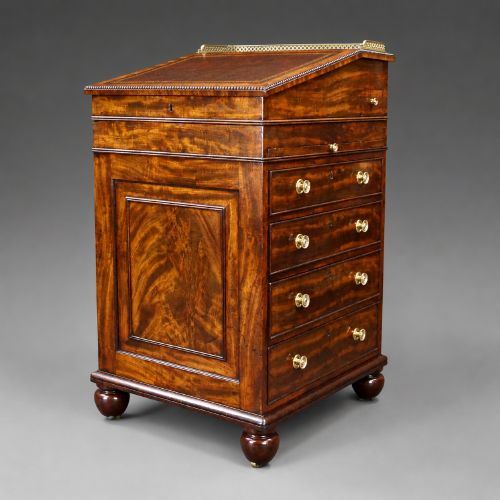
- A compact desk with a sloping leather-lined writing surface and a side-opening set of drawers.
- Bureau plat
- A freestanding French writing table, often executed in the Directoire style with mounted brass details.
Frequently Asked Questions
What woods were commonly used?
Mahogany, walnut, and oak dominate the construction of these pieces, with burr walnut and rosewood appearing on finer examples.
Secondary timbers often include pine or oak within drawer linings and internal framing.
How are different periods distinguished?
Georgian and Regency pieces lean towards architectural proportion and brass inlay, while Victorian and Edwardian examples often utilise pedestal configurations in oak or mahogany.
Stylistic cues such as Directoire curves or Edwardian marquetry help narrow down the decade of manufacture.
Where were these desks placed?
These tables served in home studies, libraries, and administrative offices as functional workspaces for correspondence and record keeping.
Freestanding library variants sat centrally in rooms, while pedestal forms typically stood against walls or within study centres.