

French Neoclassical Desk
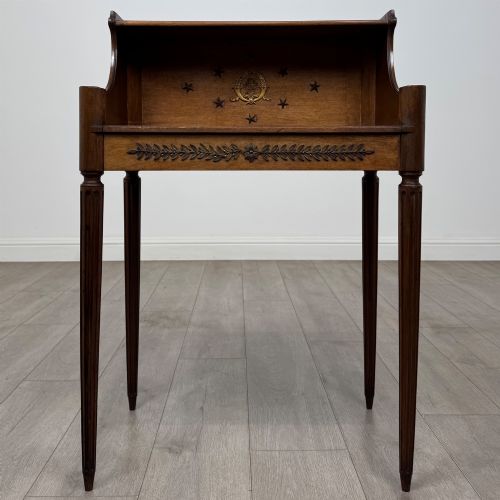
A french neoclassical desk brings architectural symmetry and refined writing surfaces into a room, prized for disciplined lines and classical mounts.
What They Are
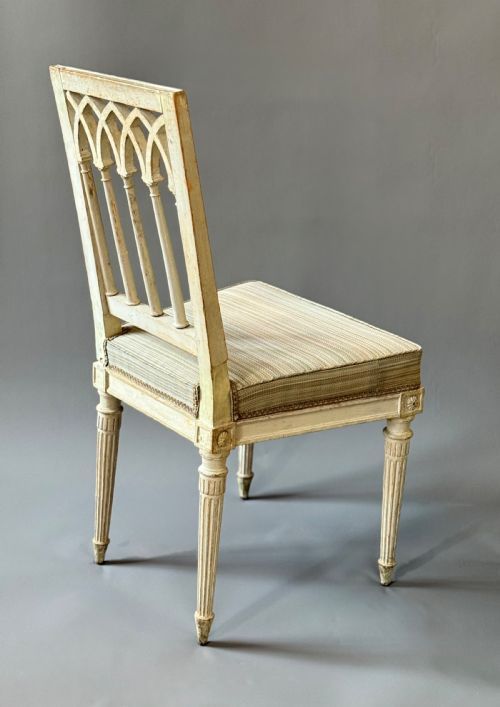
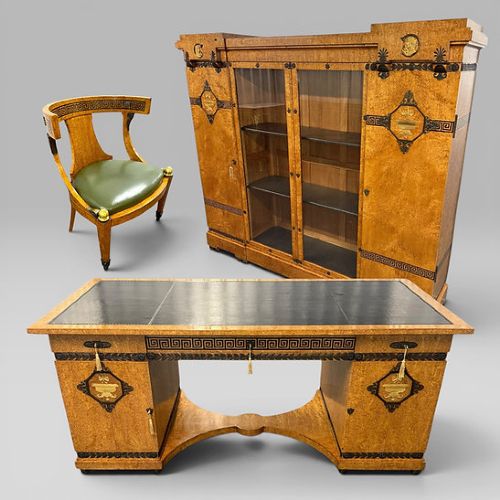
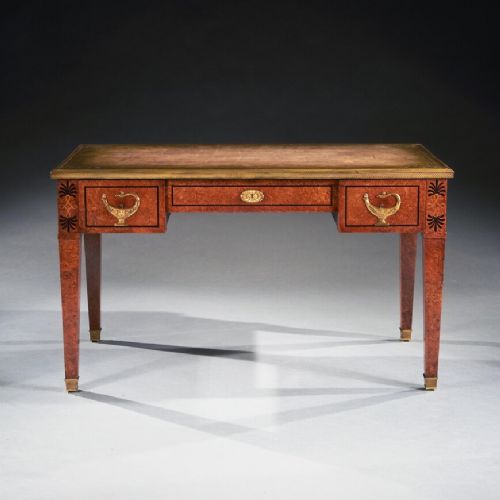
The primary forms on this page include the bureau plat and the writing table, both characterised by rectangular tops and slender, tapered legs. Makers of the nineteenth century, including Napoleon III variations, frequently returned to these classical archetypes. Each object reflects an enduring fascination with ancient architectural proportion adapted for domestic utility.
How They Were Made
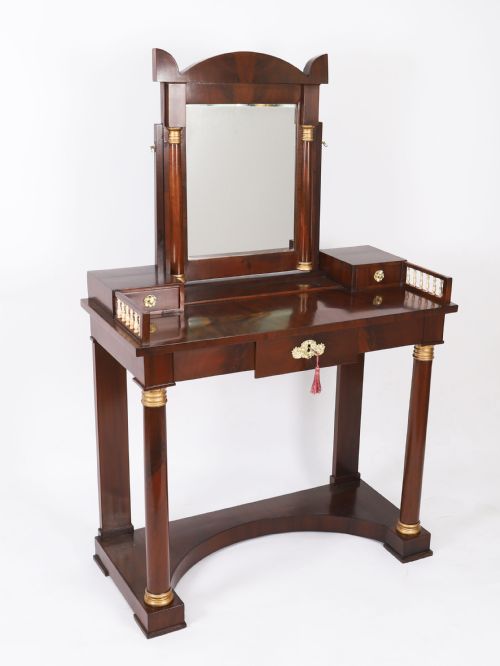
Cabinetmakers utilised rich timber foundations, building carcases in mahogany, walnut, and amboyna veneer, alongside ebonised wood. Writing surfaces were routinely inset with panels of tooled leather to provide a durable and tactile writing area.
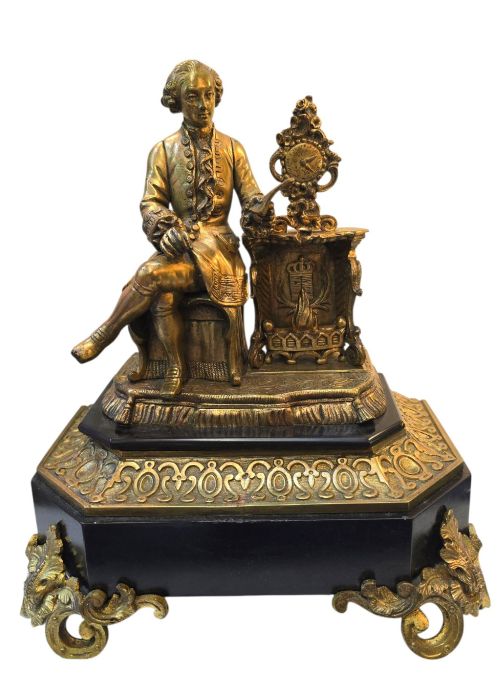
Metalwork played a defining structural and decorative role, with mounts cast in ormolu, gilt bronze, and brass. These metallic elements outlined drawers, framed panels, and capped feet to accentuate the rigorous geometry of the piece.
Retail Price Guide 2026
Typical UK retail prices for french neoclassical desk, calculated from the Sellingantiques database of over a million retail prices indexed since 2003. This retail price guide relies exclusively on Sellingantiques data; no external sources or auction records are used, so the figures do not describe the wider market.
At least one nineteenth century writing table bears an engraved signature from the Parisian workshop of Diehl.
What Varies in Quality
The distinction between tiers rests upon the precision of the cabinetwork and the crispness of the bronze or ormolu mounts. Finer examples display meticulous grain matching in veneers such as amboyna and walnut, alongside hand-chased metalwork that maintains sharp relief rather than soft casting.
Structural integrity and the fidelity of historical revival styles separate master workshop output from simpler commercial production. Integrated leather tooling and robust framing indicate superior execution by makers operating in established centres like Paris.
Diehl Paris
The French Neoclassical Desk Glossary
- Bureau plat
- A freestanding writing table fitted with one or more rows of drawers beneath the top. This form sits away from the wall to display decoration on all sides.
- Ormolu
- Gilt bronze ornament applied to furniture mounts, cast and chased to achieve bright highlights and deep shadow. The technique requires mercury amalgamation or modern electroplating over bronze.
- Amboyna veneer
- A highly figured exotic wood prized for its swirling grain patterns and warm golden brown colour. Cabinetmakers selected it for prominent surfaces to create striking visual contrast.
- Ebonised wood
- Timber treated to imitate costly ebony, typically through staining and polishing. This dark finish creates a severe, elegant contrast against gilt bronze mounts.
Frequently Asked Questions
What is a bureau plat?
A bureau plat is a flat topped writing table equipped with drawers beneath the surface, designed to be viewed from all angles.
Unlike traditional wall desks, these pieces traditionally occupy the centre of a room.
How do I identify the style?
Neoclassical pieces rely on straight lines, architectural symmetry, and classical motifs derived from antiquity.
Look for tapered legs, fluting, and restrained gilt bronze mounts rather than curving rococo flourishes.
Where were these desks made?
The pieces recorded here originate from nineteenth century French workshops, reflecting earlier royal tastes.
Master cabinetmakers in centres like Paris produced these revivals for an affluent domestic market.
What timbers were used?
Construction relies upon dense hardwoods such as mahogany and walnut, often enhanced with decorative veneers.
Amboyna and ebonised finishes provided striking visual surfaces for the elite writing table market.