

French Empire Desk
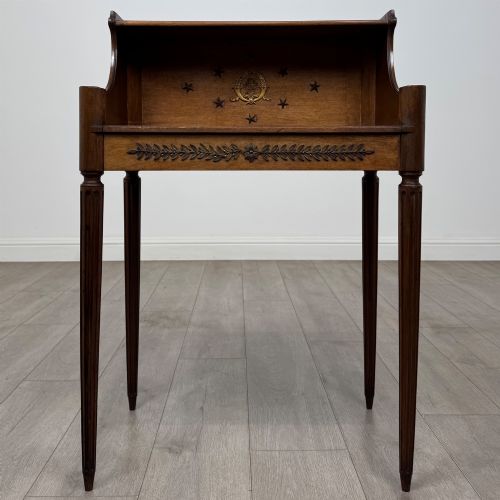
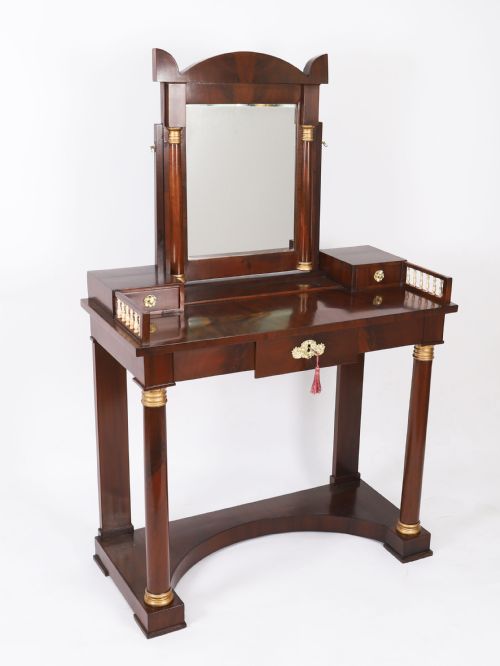
A french empire desk brings architectural classical symmetry and rich mahogany timbers to a study, offering a grand writing surface defined by gilt bronze mounts.
What They Are
A french empire desk encompasses grand writing tables, bureau plat forms, pedestal desks, and cylinder bureaux built in the neoclassical style. These pieces emerge primarily from the nineteenth century, alongside later empire revival iterations.
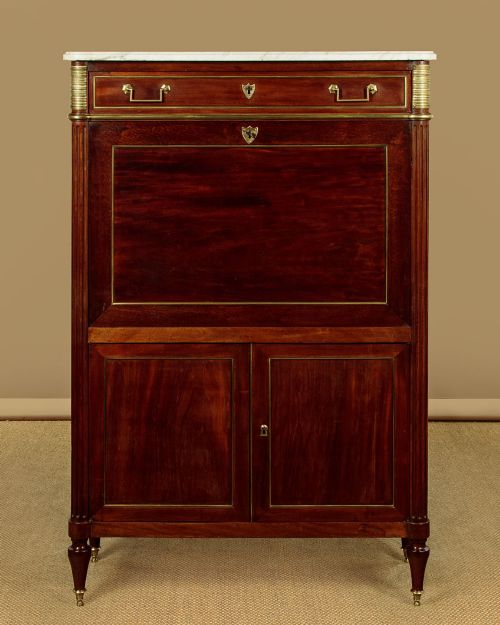
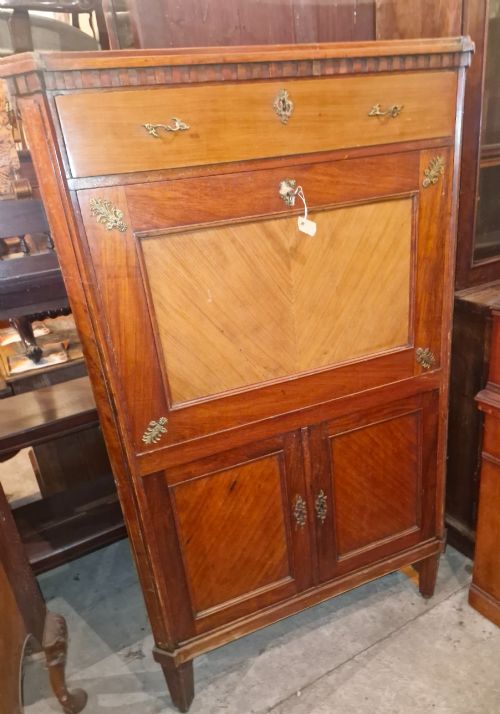
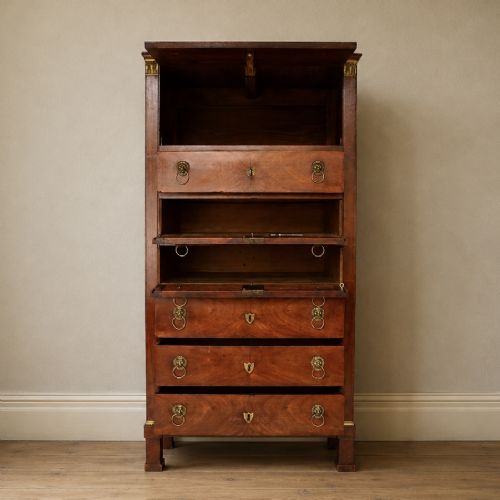
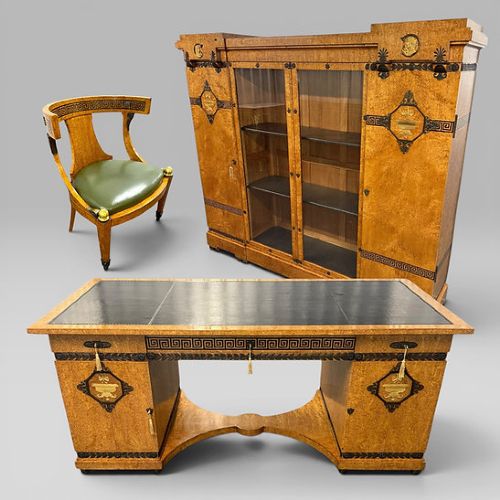
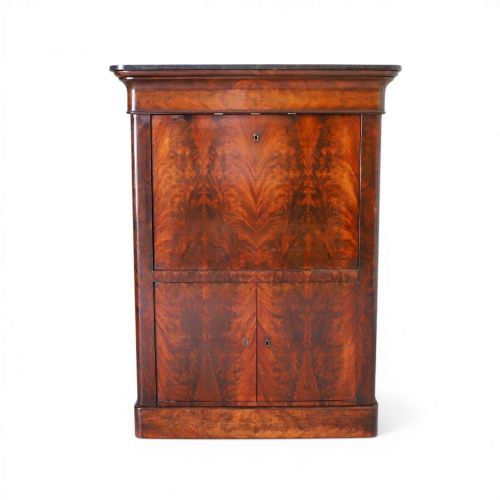
The buyer meets formal bureau plat designs with leather inserts, partners desks suited for shared use, and upright secrétaire cabinets or ladies bureau du dame pieces. Walnut, mahogany, and fruitwood form the structural core of these varieties.
Makers and cabinetmakers of the period drew on ancient Roman and Greek motifs, applying strict symmetry and monumental proportions to domestic workspace furniture.
How They Were Made
Carpenters constructed these desks using solid and veneered timbers including mahogany, walnut, ebonised wood, and fruitwood. Leather tops provided durable writing surfaces, frequently bordered by subtle gold tooling.
Casting and chasing workshops produced rich mounts in ormolu and gilt bronze, depicting classical figures, foliage, and geometric laurel wreaths. Brass inlay added linear precision to mahogany cabinet fronts and writing surfaces.
Retail Price Guide 2026
Typical UK retail prices for french empire desk, calculated from the Sellingantiques database of over a million retail prices indexed since 2003. This retail price guide relies exclusively on Sellingantiques data; no external sources or auction records are used, so the figures do not describe the wider market.
Listings feature eighteenth and nineteenth-century periods, utilising mahogany, walnut, ormolu, leather, and brass across pedestal desks and bureau plat forms.
What Varies in Quality
The refinement of the cast bronze and ormolu mounts separates standard output from exceptional pieces, visible in the crispness of the chasing and the warmth of the gilding. Heavier gauge brass inlay and dense, figured mahogany timbers indicate superior cabinetmaking.
Structural integrity relies on traditional joinery methods within the drawers and pedestals, ensuring smooth movement and enduring stability across large partners desks and bureau plat forms.
Krieger
The French Empire Desk Glossary
- Bureau plat
- A freestanding writing table fitted with drawers across the frieze, typically finished with a leather inset top. This form sits away from the wall to display symmetry from all sides.
- Ormolu
- Gilt bronze ornamentation applied to the corners, feet, and friezes of furniture. The technique involves coating cast bronze with a mercury and gold amalgam before heating.
- Secrétaire
- An upright cabinet featuring a fall-front writing flap that conceals internal pigeonholes and small drawers. These pieces combine vertical storage with a functional writing surface.
- Partners desk
- A large pedestal desk designed with matching drawers and cupboards on both sides, allowing two people to work opposite one another. These represent the larger scale of the style.
- Directoire
- The transitional style preceding the full empire period, bridging neoclassical restraint with early nineteenth-century militaristic motifs. It shares clean lines and restrained classical ornamentation.
Frequently Asked Questions
What is a bureau plat?
A bureau plat is a flat-topped freestanding writing table equipped with frieze drawers. It stands away from walls to display finished surfaces on all four sides.
These tables serve as central room pieces rather than side furniture, offering generous writing space paired with classical mounts.
How do I identify empire revival pieces?
Empire revival pieces date from later periods such as the late nineteenth or early twentieth century. They replicate the classical proportions and ormolu mounts of earlier nineteenth-century models.
Examinations of timber backing, secondary woods, and hardware construction help distinguish these later interpretations from original pieces.
Where were partners desks used?
Partners desks were built for libraries, boardrooms, and studies where two individuals required simultaneous access to workspace and storage. Their double-sided drawer configuration allowed shared access.
These large desks anchor spacious rooms and demand careful placement to allow movement around all sides.
What woods appear on these desks?
Mahogany and walnut form the primary timbers for the majority of these desks, supplemented by fruitwood and ebonised finishes. Fine veneers cover structural carcases to create consistent grain patterns.
Contrasting inlay in brass or lighter wood highlights the geometric lines characteristic of the style.