


Empire Revival Furniture
Empire revival furniture brings grand neoclassical lines and rich polished timbers into modern rooms with effortless classical dignity.
Empire Revival Furniture
Empire revival furniture draws on the monumental classical forms of nineteenth-century continental design, adapting historic motifs for domestic interiors across the nineteenth and early twentieth centuries. When searching for empire revival furniture, buyers encounter substantial seating suites, office sets, bookcases, and chests of drawers rooted in French and Scandinavian traditions.
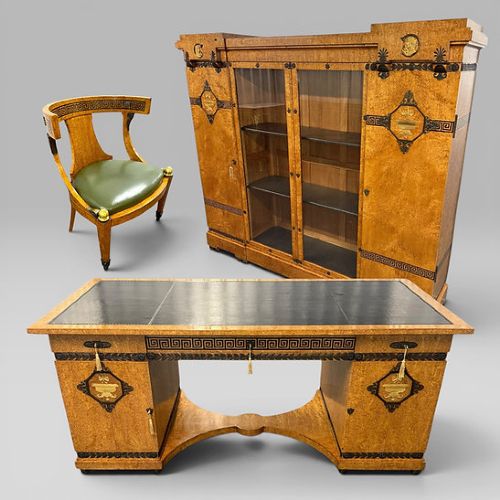
The pieces appearing here span from the mid nineteenth century through to the nineteen thirties, reflecting sustained enthusiasm for neoclassical balance and symmetry. Swedish and French workshops dominate the available forms, utilising pale birch veneers alongside deeper mahogany and walnut to achieve striking architectural silhouettes.
What varies in quality
The distinction between standard commercial production and finer workshop output lies in the selection and matching of timber veneers across large expanses like armoires and drawer banks. Finer examples display meticulous grain continuity and crisply cast brass or ormolu mounts that integrate cleanly with the timber structure.
Structural integrity and the precision of joinery separate ambitious multi-piece suites and large bookcases from simpler tables and chests. The depth of hand-carved detailing on walnut frameworks and the quality of fitted interior compartments further distinguish superior cabinetwork.
Swedish cabinetmakers turned pale birch into a magnificent stage for empire design, proving that frostier climes could embrace grand continental theatre.
Mercier Frères
The Empire Revival Furniture Glossary
- Ormolu
- Gilded bronze used for decorative mounts and furniture trim. It provides a bright metallic contrast against dark mahogany and ebonised wood surfaces.
- Birch veneer
- A thin layer of pale timber applied over a secondary wood core. Scandinavian makers utilised this technique to create striking grain patterns on large surfaces.
- Chiffonier
- A tall sideboard or chest of drawers designed for storage in living spaces and parlours. These pieces often incorporate cupboards and upper display shelving.
- Cylinder bureau
- A writing desk featuring a curved rolling cylinder that conceals interior pigeonholes and small drawers. They offer a neat enclosed workspace when not in use.
- Neoclassical revival
- An artistic movement drawing direct inspiration from classical antiquity. Furniture from this tradition employs strict symmetry and architectural proportions.
Empire Revival Furniture: Frequently Asked Questions
What rooms suit empire revival furniture?
These pieces suit formal reception spaces, studies, and bedrooms where their strong architectural presence establishes a clear focal point. Large bookcases, armoires, and complete bedroom suites demand generous wall space and high ceilings to balance their scale.
Pairing these substantial timber forms with neutral walls and minimal modern decoration allows the classical veneers and ormolu mounts to stand out clearly.
How do French and Swedish pieces differ?
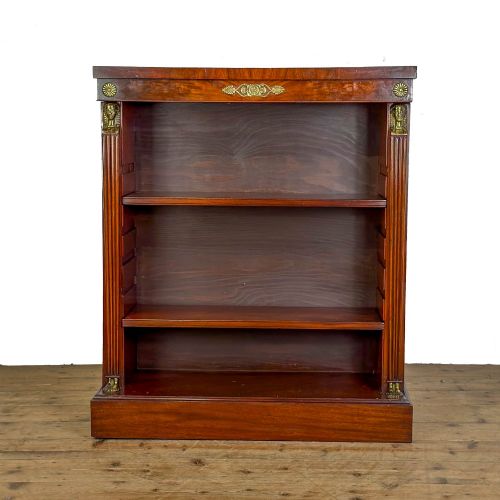
French pieces often utilise dark mahogany combined with gilded bronze ormolu mounts, creating a dramatic and opulent visual weight. They frequently incorporate classical architectural columns and detailed figurative hardware.
Swedish pieces tend to favour pale birch, birds-eye maple, and ebonised details, offering a cooler and more restrained interpretation of neoclassical design that brightens domestic interiors.
How do I care for birch and mahogany?
Keep these timber surfaces away from direct sunlight and heat sources to prevent veneers from drying out, lifting, or splitting over time. Dust regularly with a soft, dry cloth and apply occasional high-quality beeswax to nourish the polished wood.
Avoid liquid polishes containing silicone, which can build up on antique finishes and dull the natural warmth of the grain.
Can I use an empire revival desk daily?
These desks and office sets function well for daily writing and administrative tasks, provided the leather inserts and sliding mechanisms receive gentle treatment. Ensure heavy computers and modern equipment do not exceed the structural capacity of antique writing surfaces or drawer runners.
Using protective pads beneath laptops and writing implements preserves the original leather and polished timber finish during everyday use.