
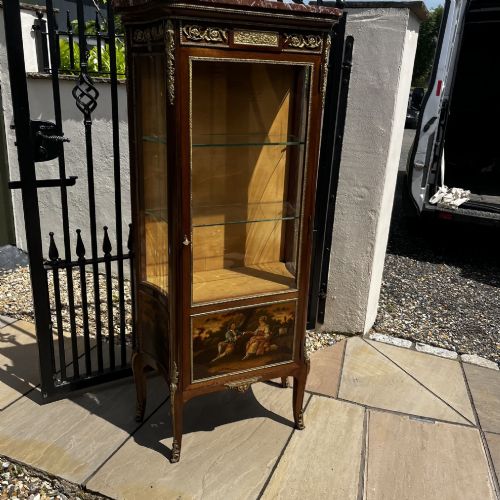
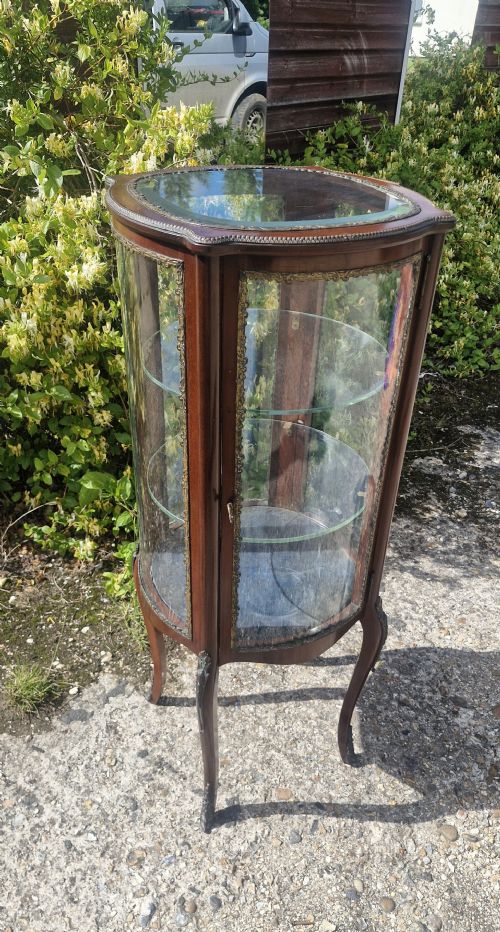
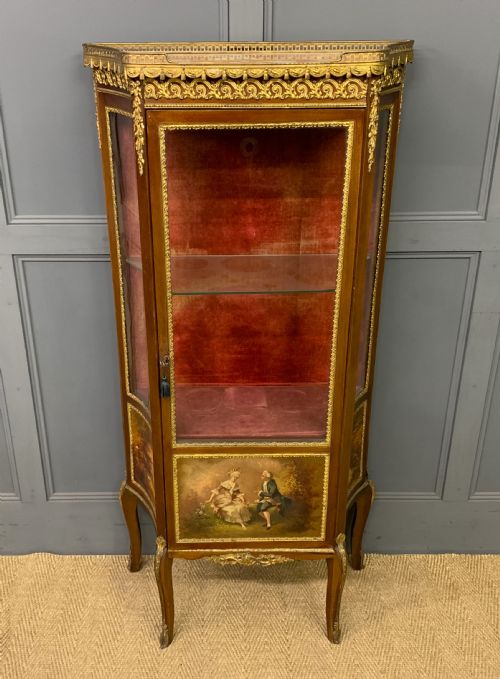
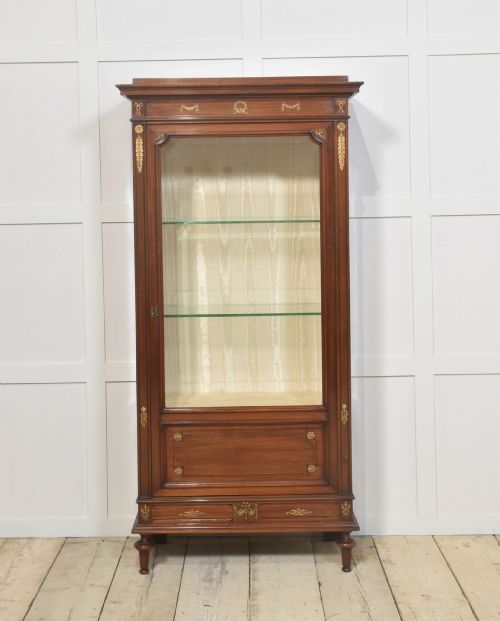


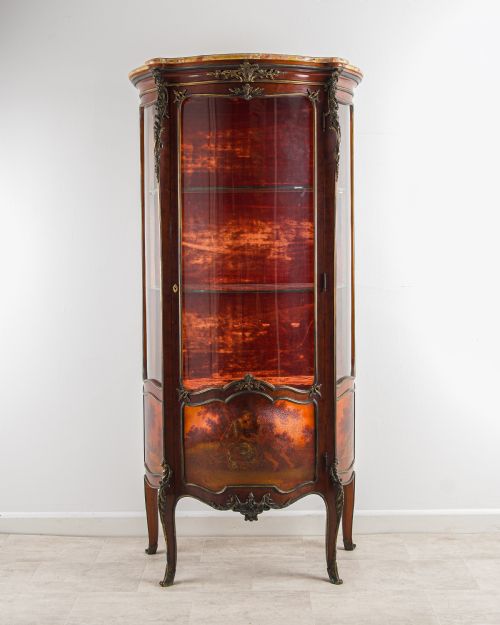
French Mahogany Vitrine
A French mahogany vitrine brings warmth and elegance to any room, offering a refined glass-fronted enclosure designed to showcase cherished collections and delicate objects.
French Mahogany Vitrine
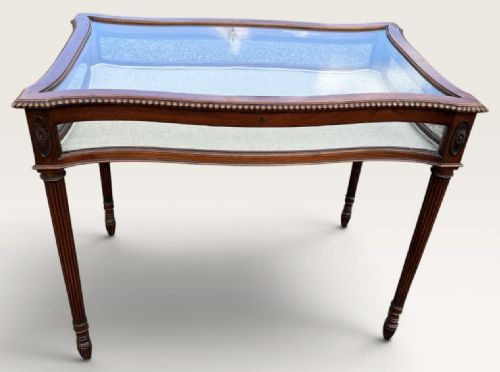
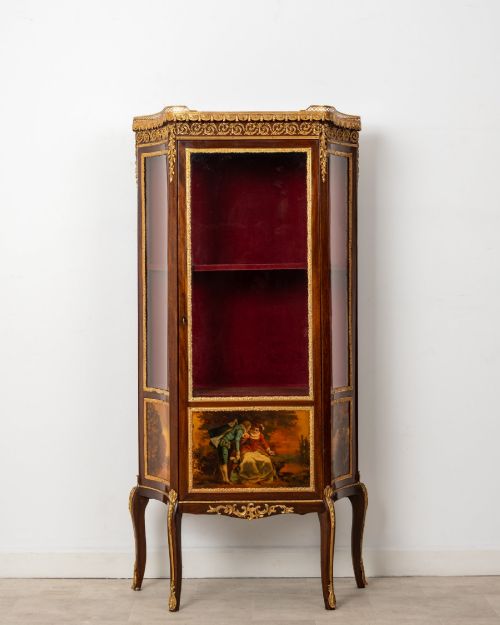
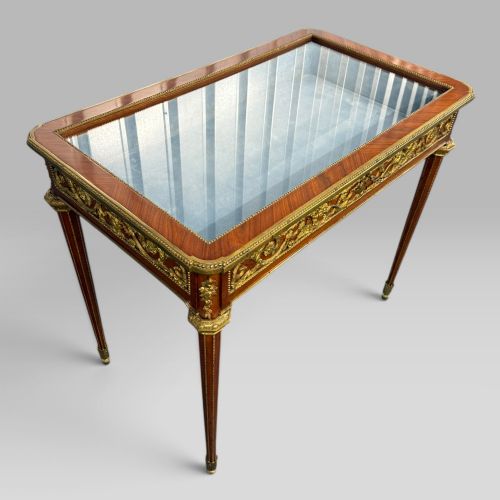
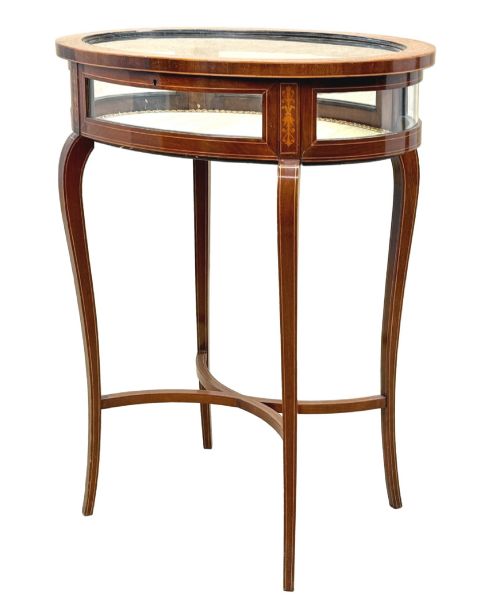
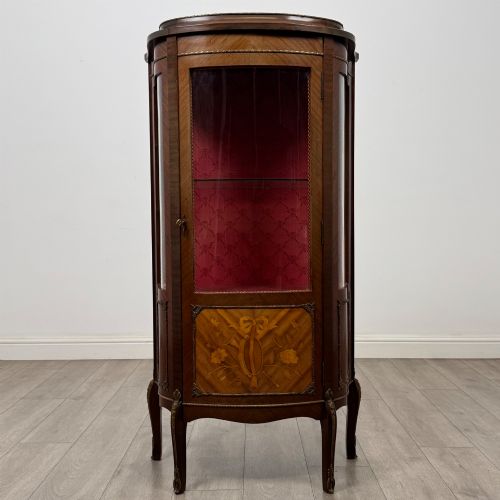
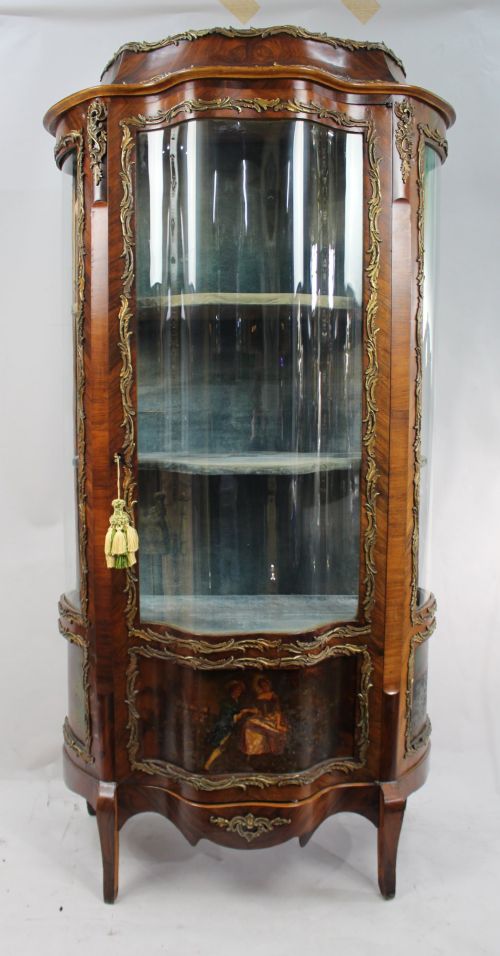
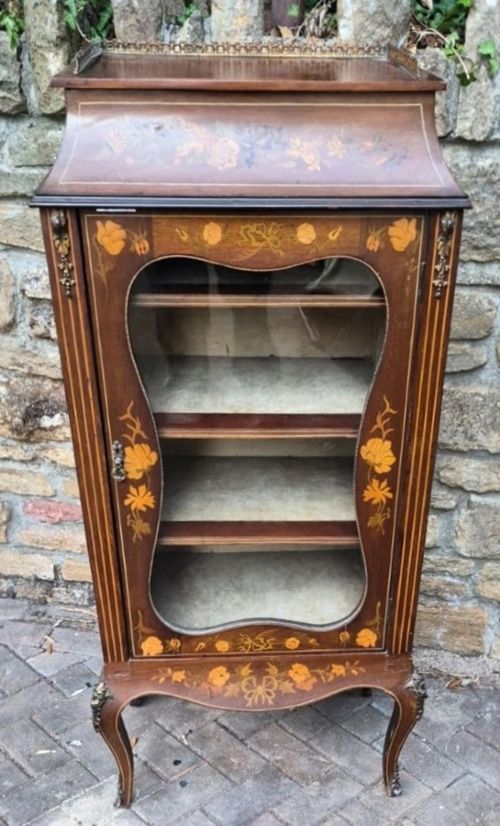
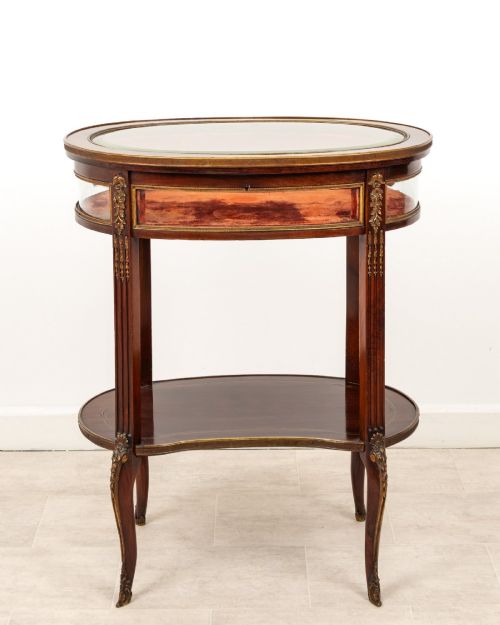
When searching for a french mahogany vitrine, collectors encounter an array of glazed display furniture ranging from freestanding cabinets and slender corner units to tabletop bijouterie cases.
The pieces appearing on this page span the nineteenth century and the Edwardian era, reflecting prominent revival aesthetics such as Louis XVI, Louis XV, and French Empire styles.
Makers utilised mahogany carcass work combined with glass panels, velvet linings, and marble tops to construct vessels intended for the protection and presentation of porcelain and small artefacts.
How They Were Made
Cabinet makers constructed the primary framework using solid and veneered mahogany, frequently incorporating brass stringing, marquetry inlay, or parquetry patterns across the surfaces.
Chasing and gilding metal mounts of ormolu or brass enhanced the architectural corners, door borders, and aprons of the display cabinets and bijouterie tables.
Interior display surfaces utilised velvet or fabric linings, while select examples incorporated painted lower panels executed in the Vernis Martin decorative tradition.
French Mahogany Vitrine Retail Price Guide 2026
Typical asking prices for french mahogany vitrine among the pieces listed under this phrase on Sellingantiques today, from the lower quarter to the upper quarter. They describe what is for sale here now, not the wider market.
Listings feature mahogany display cabinets alongside specialised bijouterie tables, corner cabinets, and bookcases dating from the nineteenth century through the Edwardian period.
What Varies in Quality
The refinement of the cast ormolu mounts determines much of the distinction between standard production and exceptional examples, with chased detailing offering greater depth and clarity.
Cabinet construction reveals differences through the precision of the mahogany veneering, the intricacy of any parquetry work, and the integration of curved glass panes.
Attribution to documented workshops or makers elevates the standing of a piece, particularly when paired with high quality painted panels and original marble tops.
François Linke·Paul Sormani·Mercier Freres·Lampre·Robert Dennery Sousman and Robinot
The French Mahogany Vitrine Glossary
- Vitrine
- A glass-fronted display cabinet designed for exhibiting porcelain, silver, and small curiosities. These pieces often feature glazed side panels to maximise interior illumination.
- Bijouterie table
- A glazed display table with a hinged or lift-off top used for viewing jewellery and small ornaments. They frequently stand on slender legs connected by stretchers.
- Ormolu
- Gilded bronze mounts applied to furniture for decorative accentuation. The technique involves applying a mercury and gold amalgam to bronze before firing.
- Parquetry
- Geometric wood inlay patterns arranged to create decorative surfaces on cabinet doors and panels. Makers used contrasting timber tones to build visual depth.
French Mahogany Vitrine: Frequently Asked Questions
What is the difference between a vitrine and a bijouterie table?
A vitrine is a vertical display cabinet featuring glass doors and shelves designed to hold collections upright at eye level. They function primarily as room furniture placed against walls or in corners.
In contrast, a bijouterie table is a low, horizontal piece with a glazed top meant for viewing objects from above. These tables sit lower in the room and serve a different decorative purpose.
How do I care for the velvet lining inside a vitrine?
Fabric and velvet linings require gentle maintenance to preserve their texture over decades. Regular light dusting using a soft brush prevents particulate accumulation.
Avoid placing damp items directly onto antique fabric surfaces to prevent staining and deterioration of the underlying timber framework.
Can I adjust the shelves in a nineteenth century cabinet?
Most nineteenth century display cabinets contain fixed wooden supports or early adjustable rack systems specific to their period of manufacture. Altering the internal configuration is generally discouraged to maintain structural integrity.
Objects must be selected to fit the existing shelf heights provided by the original cabinet maker.
Where should I place a mahogany display cabinet?
Positioning these cabinets away from direct sunlight protects both the mahogany timber from fading and the interior fabric from bleaching. Stable indoor humidity prevents timber movement and protects vulnerable veneer joints.
Placing the unit away from active foot traffic safeguards delicate projecting ormolu mounts and curved glass panels.