


Louis XVI Style Vitrine
A Louis xvi style vitrine brings classical symmetry and delicate mounts to a room, offering refined display space for cherished collections.
What a Louis xvi style vitrine is
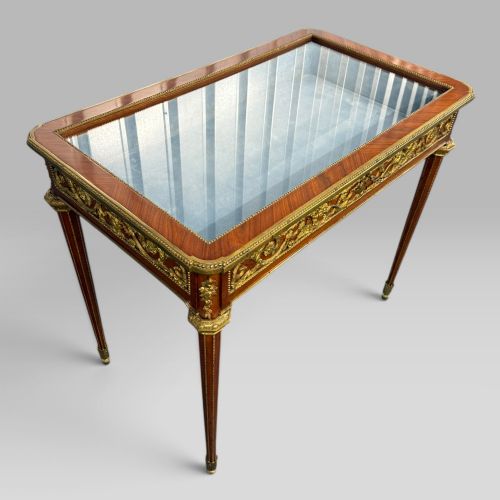
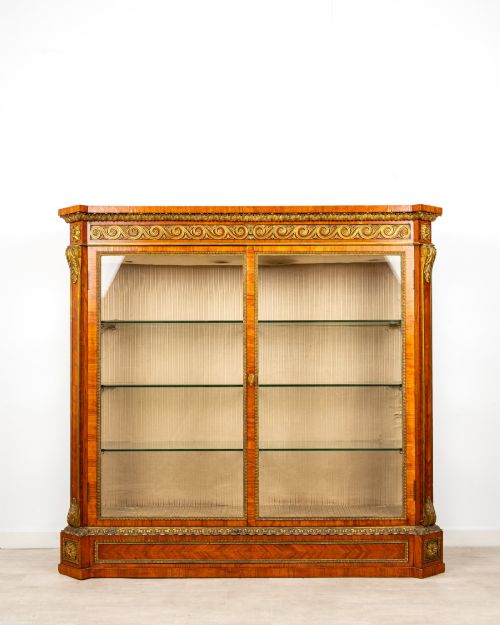
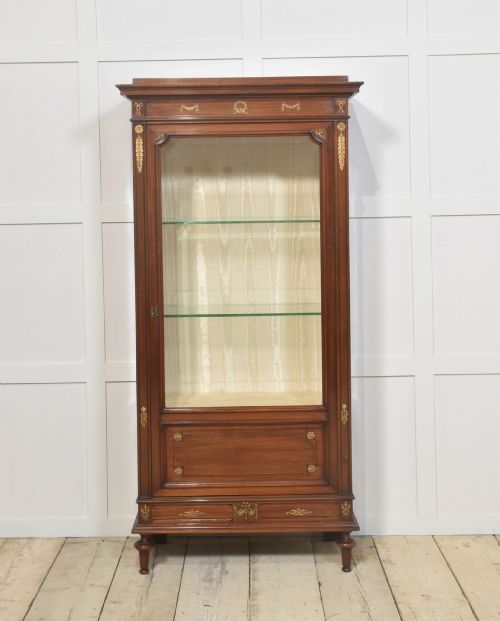
A louis xvi style vitrine provides a glazed cabinet designed to display porcelain, silver and small treasures behind glass panels. These pieces draw upon the neoclassical restraint of the late eighteenth century, favouring straight lines and geometric forms over curving rococo excess.
Most examples found here date from the nineteenth century, including the Edwardian era and around nineteen hundred, reflecting later revivals of French taste. Makers such as H. J. Hatfield and Sons, Paul Sormani, Maison Gouffe and Lampre produced these cabinets in mahogany, satinwood and kingswood.
Forms vary from oval free-standing cabinets and marble-topped china cabinets to table vitrines and tall display pieces mounted with ormolu or gilt bronze. Interiors often feature fabric or velvet lining to showcase the items placed inside.
Materials and construction
Cabinet makers utilised fine timbers including mahogany, satinwood and kingswood, frequently employing marquetry and inlay to pattern the surfaces. Frames incorporate glass panes supported by timber structures or freestanding bronze frameworks.
Mounts in ormolu and gilt bronze provide classical embellishment around the doors, legs and cornices. Marble tops supply a durable and decorative surface on selected cabinets, while interior linings of velvet and fabric offer a soft backdrop for displayed objects.
Retail Price Guide 2026
Typical UK retail prices for louis xvi style vitrine, calculated from the Sellingantiques database of over a million retail prices indexed since 2003. This retail price guide relies exclusively on Sellingantiques data; no external sources or auction records are used, so the figures do not describe the wider market.
Some cabinets feature curved glass panes so precisely bent they trick the eye into thinking the display items float in open air.
Distinctions in quality
Quality rests upon the precision of the cabinet work and the crispness of the gilt bronze or ormolu mounts. Finer pieces display finely chased metalwork and expertly fitted glass doors that hang true within their frames.
The choice of timbers and the sophistication of any inlay or Vernis Martin decoration elevate an example above standard production. Attribution to known makers like Paul Sormani or Maison Gouffe also marks out the higher tier of workmanship.
H. J. Hatfield and Sons·Paul Sormani·Maison Gouffe·Lampre
The Louis XVI Style Vitrine Glossary
- Vitrine
- A glass-fronted cabinet designed for displaying porcelain, curiosities and fine objects. These pieces protect contents from dust while allowing all-round visibility.
- Ormolu
- Finely ground high-carat gold cast and chased upon a bronze base, used extensively as decorative mounts on French furniture. The technique creates a rich golden finish that contrasts with dark timber.
- Gilt bronze
- Bronze that has been coated with a thin layer of gold, providing durable metallic ornamentation. It shares the decorative purpose of ormolu in neoclassical design.
- Vernis Martin
- A type of decorative lacquer developed in eighteenth-century France and emulated later, known for translucent layers and painted scenes. It appears on specialist cabinet panels.
- Kingswood
- A richly figured timber with dark violet and brown striations, favoured for fine marquetry and veneer work. It brings distinct patterning to revival furniture.
Frequently Asked Questions
What is a louis xvi style vitrine used for?
These cabinets serve to display collections of porcelain, glassware and small decorative objects in a drawing room or salon. The glass panels and shelves keep items visible while protecting them from dust.
Interior linings of velvet or fabric further enhance the presentation of delicate items, turning storage into an intentional display feature.
How do I date a louis xvi style vitrine?
Most pieces matching this description date from the nineteenth century revival periods rather than the original eighteenth-century reign. Examining the timber construction, hardware and joinery helps determine whether a piece originates from the Belle Epoque or Edwardian eras.
Signature plaques or attributions to makers such as Paul Sormani or Maison Gouffe offer clearer chronological markers.
Where should I place a vitrine in my home?
A vitrine requires a stable location away from direct sunlight, which can fade interior fabrics and delicate objects over time. Free-standing oval or rectangular models suit corners or flat walls where ambient light can pass through the glass panels.
Freestanding oval formats work particularly well when positioned to allow light from multiple angles.
How do I care for marble and ormolu mounts?
Marble tops benefit from regular dusting with a soft cloth and immediate cleaning of any liquid spills to prevent staining. Mild soap and water suffice for occasional deeper cleaning.
Ormolu and gilt-bronze mounts require only gentle dry dusting, avoiding abrasive polishes that might wear away the gold surface.