

Inlaid China Cabinet
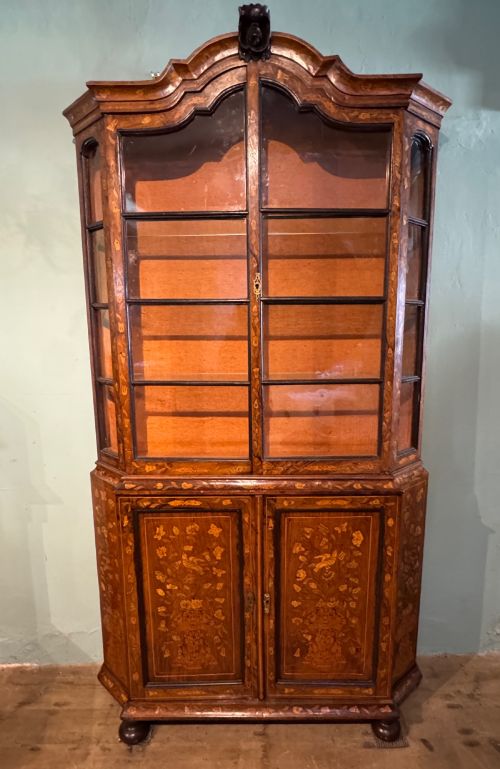
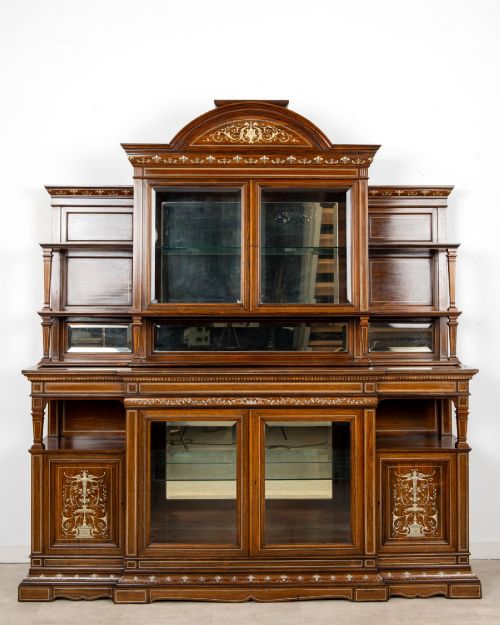
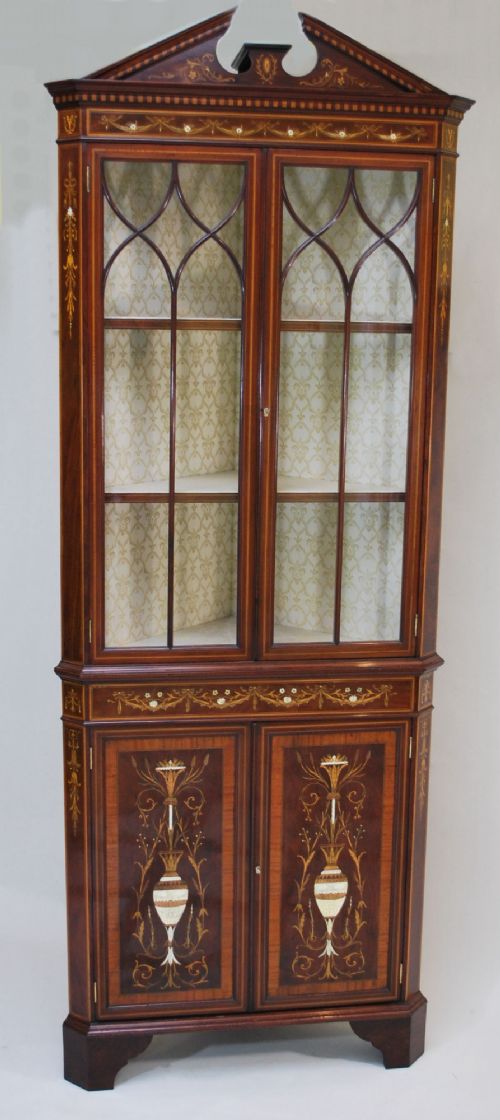
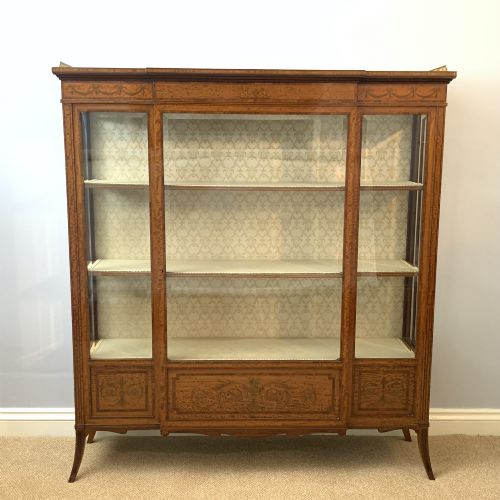
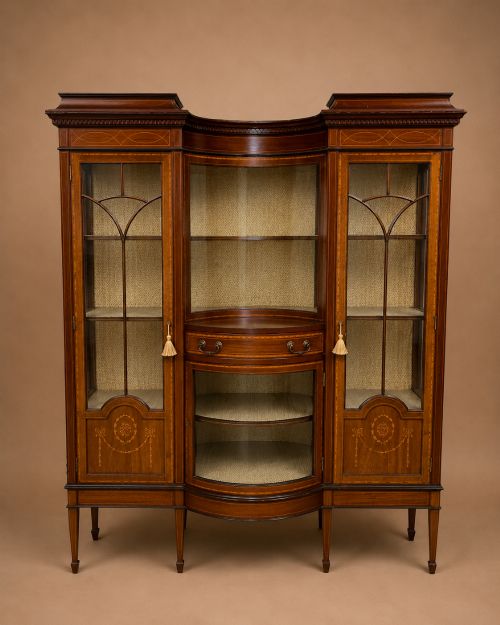
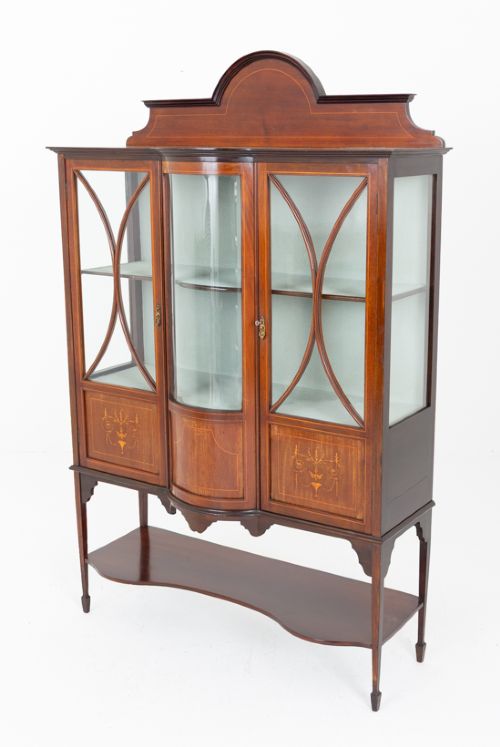
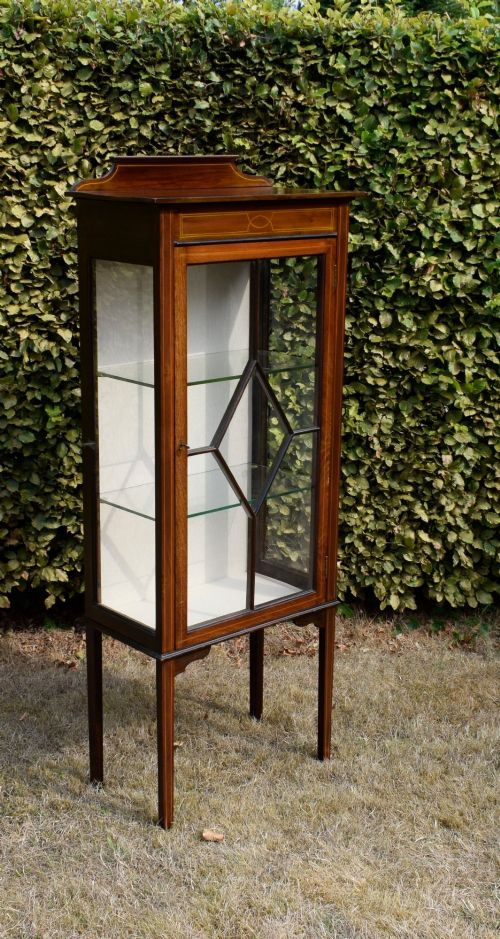
An inlaid china cabinet brings together timber, glass, and decorative marquetry to display ceramics and treasured possessions.
Inlaid China Cabinet
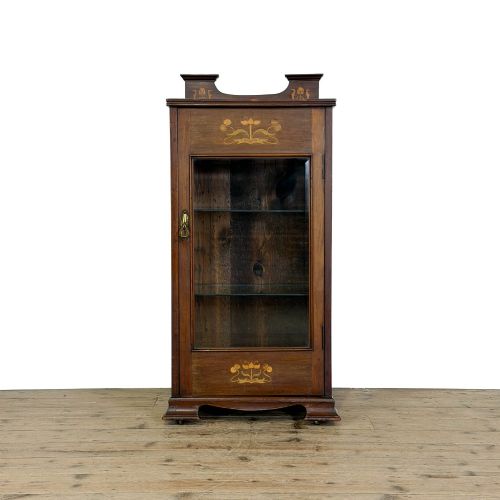
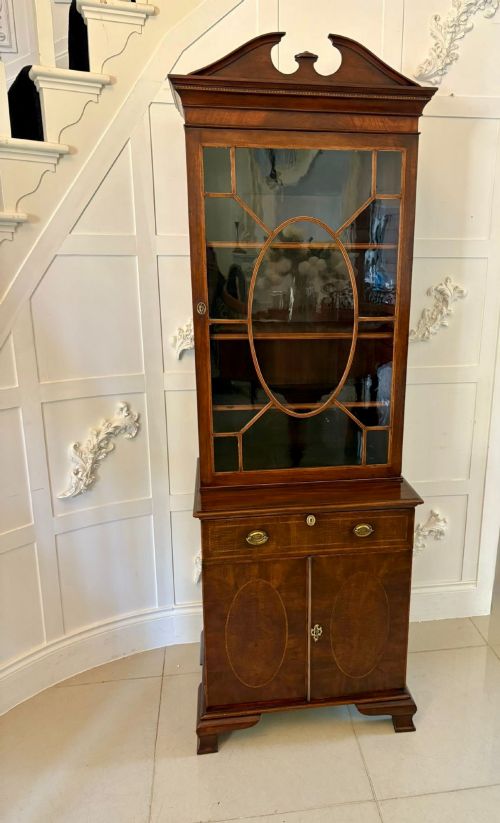
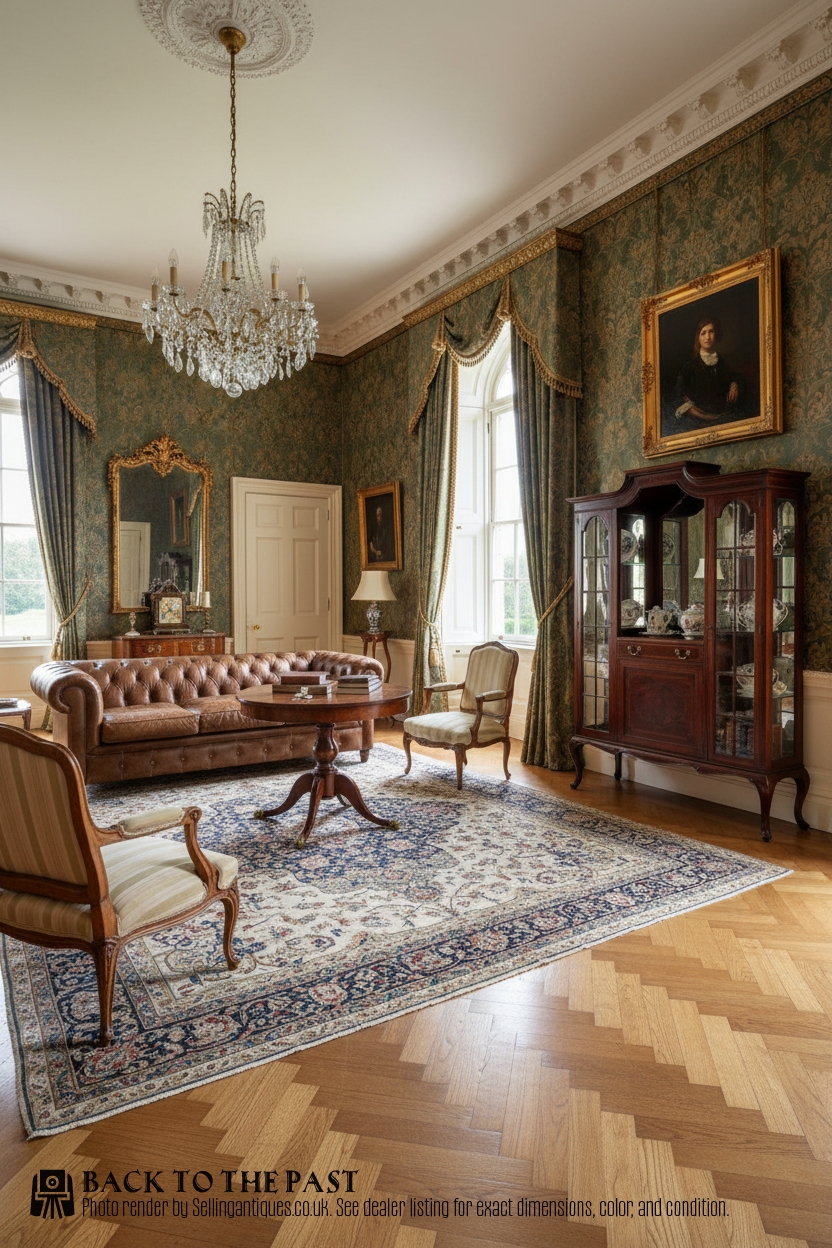
When searching for an inlaid china cabinet, buyers encounter pieces primarily originating from the Edwardian era, the Victorian period, and the nineteenth century.
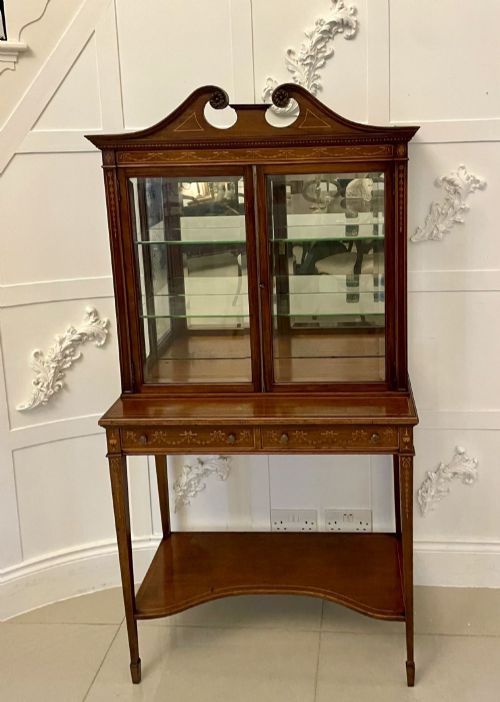
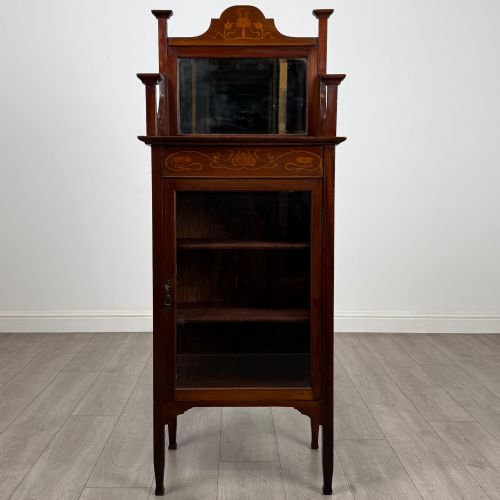
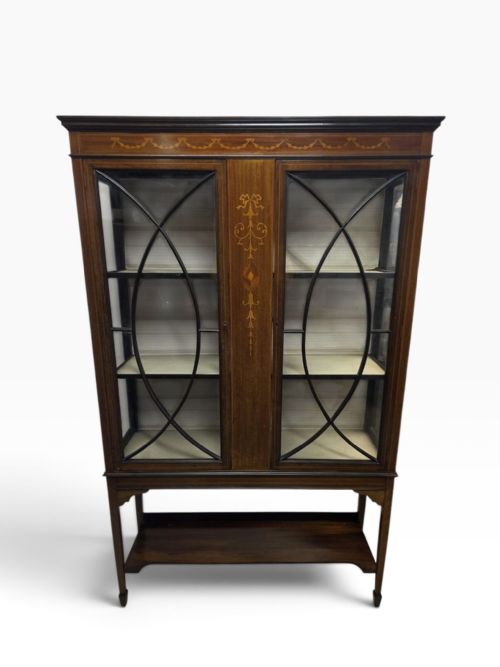
The most common version met on this page is the Edwardian mahogany display cabinet, frequently ornamented with satinwood inlay and Sheraton Revival styling.
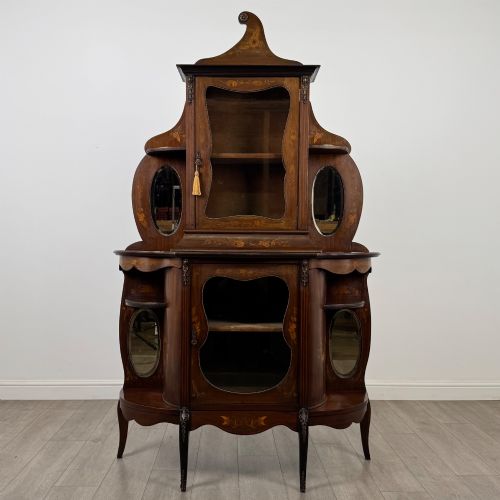
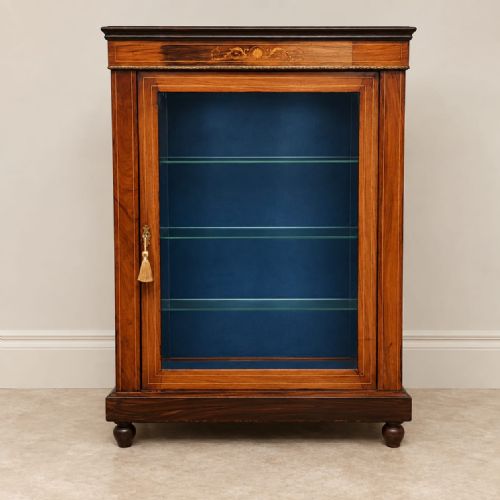
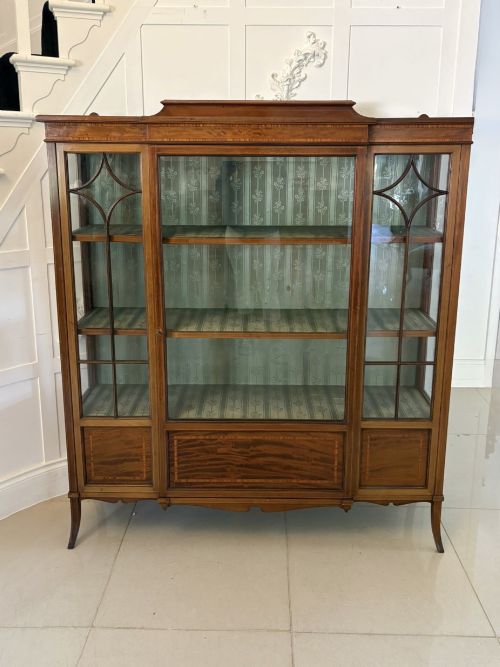
Forms range from floor-standing corner cupboards and pier cabinets to breakfront display cases and two-part cabinets designed to hold fine porcelain and glassware behind glazed doors.
Materials and Technique
Cabinet makers constructed the carcases using primary timbers such as mahogany, walnut, oak, and satinwood, often incorporating fabric linings and mirror backs inside the display compartments.
Decorative surfaces rely upon intricate marquetry and satinwood inlay, utilising contrasting woods and brass hardware to define panels, doors, and cornices.
Glazing techniques involve fitted glass panes held within wooden framing to protect contents while maintaining visibility from multiple angles.
Inlaid China Cabinet Retail Price Guide 2026
Typical asking prices for inlaid china cabinet among the pieces listed under this phrase on Sellingantiques today, from the lower quarter to the upper quarter. They describe what is for sale here now, not the wider market.
Some Edwardian cabinets hide delicate floral marquetry so intricate that even the teacups inside seem to blush.
Assessing Quality
The standard of craftsmanship shows in the crispness of the marquetry and the precision of the timber joints, distinguishing workshop output from mass-produced joinery.
Superior examples incorporate figured veneers like fiddleback mahogany alongside balanced proportions and refined proportions in curved bow-front or serpentine doors.
Attribution to documented makers and the retention of original brass fittings and glass elevate the standing of a piece within its period.
Collinson and Lock·Edwards and Roberts·Shapland and Petter·Maple and Co·August Ungethüm
The Inlaid China Cabinet Glossary
- Marquetry
- Decorative patterns formed by fitting together small pieces of veneered wood into a larger design. This technique covers cabinet doors and panels with floral or geometric motifs.
- Satinwood
- A lustrous tropical timber with a yellowish colour and a satiny sheen. It serves extensively for contrasting stringing and detailed inlay work.
- Sheraton Revival
- A late nineteenth and early twentieth century design movement inspired by late eighteenth century neoclassical furniture. Pieces in this style feature slender forms and delicate classical ornament.
- Pier Cabinet
- A low display cabinet built to fit the wall space between windows. These narrow pieces typically feature a single glazed door and flat top.
- Breakfront
- A cabinet design where the central section projects forward from the flanking sides. This architectural arrangement adds depth and visual interest to larger display cases.
Inlaid China Cabinet: Frequently Asked Questions
What fits inside an inlaid china cabinet?
These cabinets house porcelain tea sets, figurines, and decorative glassware behind protective glass doors. Shelving configurations inside accommodate objects of varying heights.
Collectors utilise the enclosed space to keep dust away from delicate ceramics while maintaining clear visibility across the room.
How do I identify a Sheraton Revival cabinet?
Sheraton Revival pieces date predominantly from the Edwardian period and late nineteenth century. They draw inspiration from eighteenth century neoclassical designs.
Look for symmetrical satinwood inlay, tapered legs, and refined proportions rather than heavy Victorian ornamentation.
Where should I place a corner cabinet?
Corner cupboards and cabinets fit directly into room angles to utilise unused space. They suit dining rooms and drawing rooms where floor space is at a premium.
Positioning them away from direct sunlight protects the timber and interior fabric from fading.
What is the difference between a pier cabinet and a display cabinet?
Pier cabinets were originally designed to stand against the narrow wall pier between windows. They are typically lower and shallower than general display cabinets.
Display cabinets can stand freely anywhere in a room and often feature larger multi-door or breakfront structures.