






Napoleon III Vitrine
A napoleon iii vitrine brings French nineteenth century display and storage into a room with glazed panels, gilt metal mounts and fine timber.
Identifying the napoleon iii vitrine
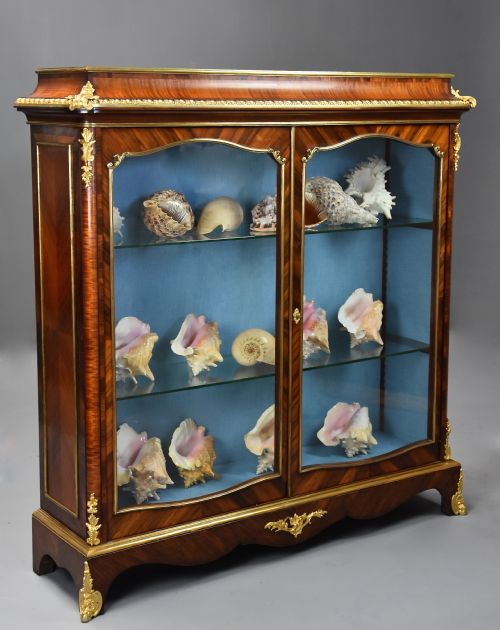
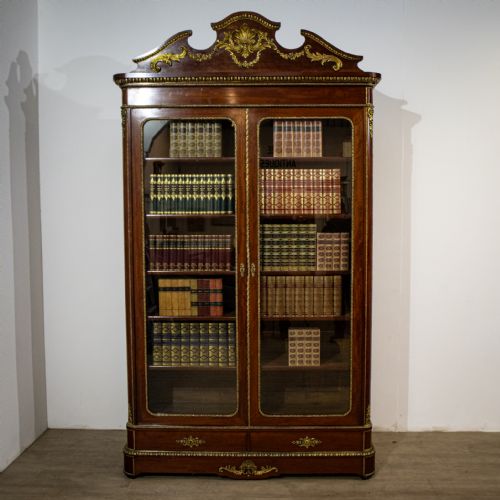
A napoleon iii vitrine is a piece of nineteenth century French furniture intended for the display of precious objects, porcelain and books. These cabinets emerge from the period spanning the eighteen sixties and eighteen seventies, drawing heavily upon earlier French revival styles such as Louis XV and Louis XVI alongside French Rococo Revival.
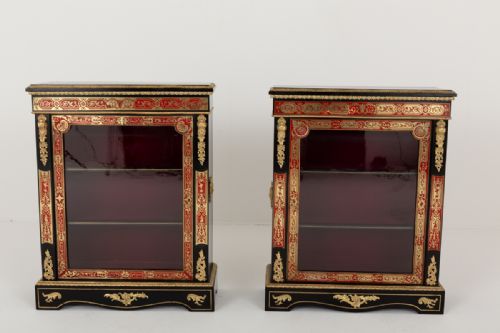
Buyers encounter forms that range from freestanding pier cabinets and display cabinets to glazed bookcases and china cabinets. The evidence shows compact examples described as neat sized alongside pairs of inlaid vitrines.
Surfaces frequently feature glass panels designed to show contents from multiple angles while protecting them from dust. The overarching aesthetic relies upon Continental cabinet making traditions tailored for formal nineteenth century interiors.
Materials and construction
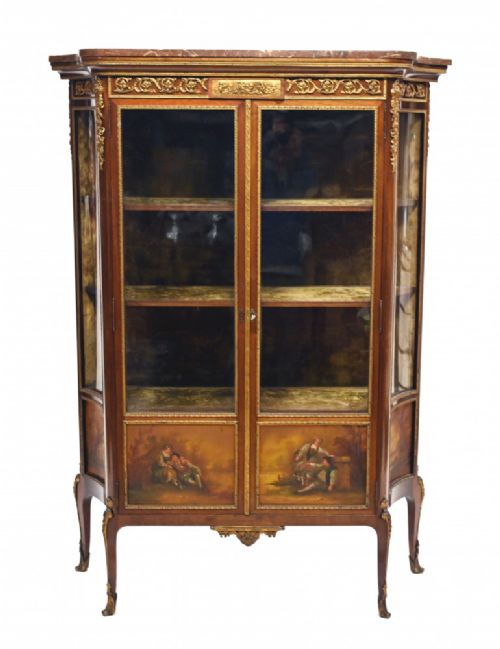
Makers constructed these cabinets using a foundation of carcase timbers overlaid with decorative veneers including kingwood, satinwood and ebonised wood. Some examples employ tortoiseshell and brass inlay executed in the intricate Boulle technique, while others incorporate painted Vernis Martin panels.
Metal ornament plays a central role in the physical structure, utilising cast ormolu mounts to highlight corners, feet and cornices. Tops frequently utilise fitted marble slabs, paired with glazed doors and fitted interior shelving.
Retail Price Guide 2026
Typical UK retail prices for napoleon iii vitrine, calculated from the Sellingantiques database of over a million retail prices indexed since 2003. This retail price guide relies exclusively on Sellingantiques data; no external sources or auction records are used, so the figures do not describe the wider market.
Some cabinets are described as neat sized, proving that nineteenth century collectors also struggled with compact drawing room dimensions.
Judging the range
Quality in a napoleon iii vitrine rests upon the crispness of the ormolu mounts and the precision of the timber work. Finer pieces demonstrate meticulous hand chiselling on the brass and bronze elements rather than generic cast repetition.
The choice and execution of veneer dictate the visual depth of the cabinet, particularly where Boulle marquetry or exotic woods like kingwood are employed. Structural harmony between the glazed display space and the underlying timber frame separates standard production from exceptional examples.
The Napoleon III Vitrine Glossary
- Vitrine
- A glazed display cabinet designed for showing porcelain and ornaments. It forms the primary object type seen in nineteenth century French collections.
- Ormolu
- Gilt bronze mounts applied to furniture for decorative effect. This technique characterises the hardware found on French revival pieces.
- Boulle
- A form of marquetry employing brass and tortoiseshell inlaid in contrasting patterns. The method honours the historic French cabinet maker Andre Charles Boulle.
- Kingwood
- A dense exotic timber prized for its rich figuring and warm colour. Cabinet makers utilised it extensively for decorative veneering.
- Vernis Martin
- A decorative lacquer technique developed in eighteenth century France and revived during the nineteenth century. It produces painted panels with a glossy, translucent finish.
Frequently Asked Questions
What is a napoleon iii vitrine?
A napoleon iii vitrine is a nineteenth century French display cabinet featuring glass panels for showing collectibles and fine objects.
These pieces reflect the revival of earlier royal French styles during the period of the second empire and the subsequent decades.
How were these cabinets used?
Owners used them in formal reception rooms to display prized porcelain, miniatures, books and curiosities.
The glass doors kept dust away while allowing guests to admire the contents from across the room.
Where do these pieces originate?
They originate from France during the nineteenth century, particularly from the eighteen sixties, seventies and eighties.
The design vocabulary draws directly upon French cabinet making traditions from earlier monarchies.