




Ebonised Vitrine Cabinet
An ebonised vitrine cabinet brings dark elegance and visible display to a room, framing precious objects behind glazed panels.
Ebonised Vitrine Cabinet
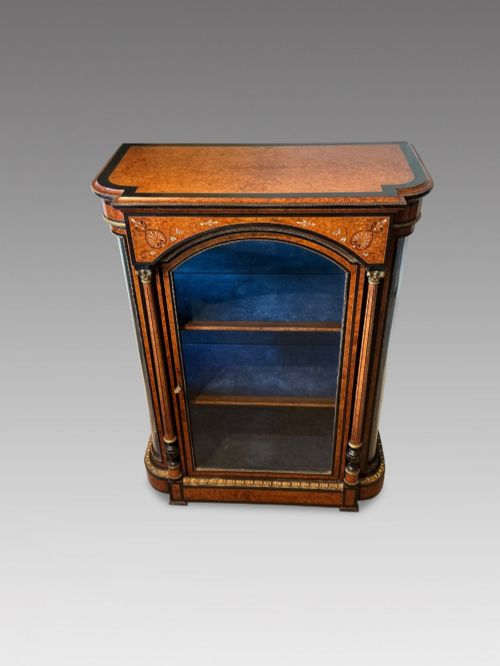
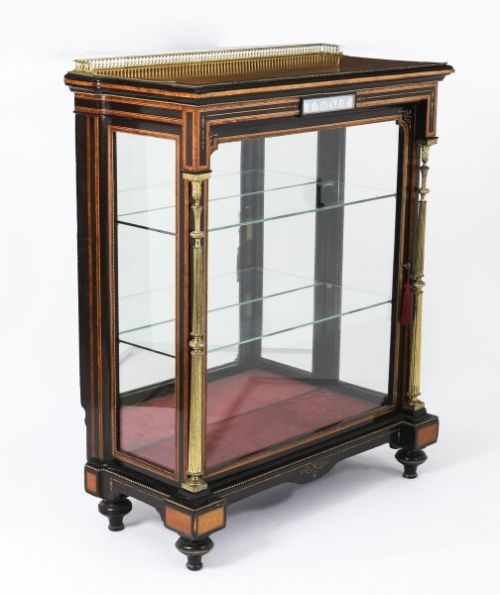
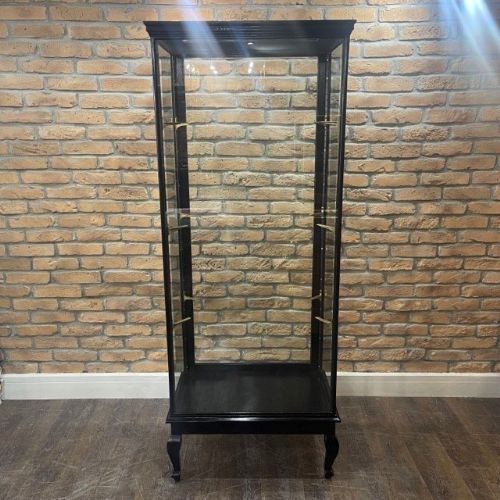
An ebonised vitrine cabinet combines dark wood surfaces with glass doors to showcase collections and books. The forms span Victorian pier cabinets, French Napoleon III designs, and later countertop or tower display cases.
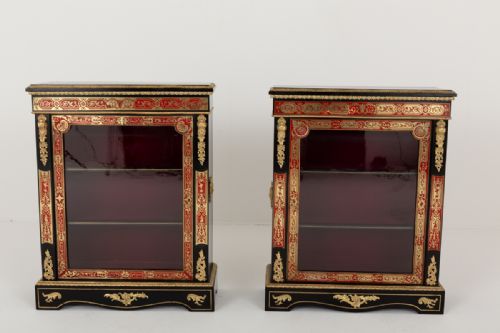
Most examples originate from the nineteenth century, including Victorian and Aesthetic Movement pieces, alongside French styles like Boulle revival work. Twentieth century examples extend into shop display furniture and tall tower cabinets.
Buyers encounter everything from compact pier cabinets designed for tight spaces to large architectural bookcases and pairs of matching French display furniture.
Materials and construction
Cabinet makers utilised ebonised wood as a primary finish, often combining the darkened timber with contrasting amboyna, burr walnut, and tortoiseshell veneers. Metal details such as brass inlays and cast ormolu mounts punctuate the dark surfaces.
Materials recorded across the selection include glass, ebonised wood, brass, ormolu, tortoiseshell, burr walnut, fabric, and velvet.
Design and execution
The standard of an ebonised vitrine cabinet rests on the precision of its marquetry and the crispness of its metal mounts. Pieces featuring detailed Boulle inlay or parcel-gilt highlights demonstrate a higher level of workshop skill than plain carcasses.
The integration of secondary timbers such as amboyna and burr walnut alongside the ebonised surfaces alters the visual weight and depth of the piece. Superior examples maintain balanced proportions, whether built as a neat pier cabinet or a large tower showcase.
Quincy Showcase Works Illinois, Sage And Co Shop Display Counter
The Ebonised Vitrine Cabinet Glossary
- Ebonised
- Wood finished to resemble ebony through staining or painting. This dark surface creates a stark contrast against brass mounts and inlaid materials.
- Vitrine
- A glass-fronted display cabinet intended for the presentation of porcelain, curiosities, or books. The glazing permits all-round visibility of the contents.
- Pier cabinet
- A low display cabinet designed to fit against the wall space between windows. These narrow pieces often feature single glazed doors and flat tops.
- Boulle
- A form of marquetry utilising tortoiseshell and brass inlaid in contrasting patterns. Developed in France, it defines many Napoleon III period cabinets.
- Ormolu
- Gilt bronze mounts applied to furniture for decoration. These cast metal elements accent corners, frames, and cornices.
- Aesthetic Movement
- A late nineteenth century design style emphasising visual beauty over narrative content. Cabinets from this movement often combine ebonised surfaces with gold inlay.
Ebonised Vitrine Cabinet: Frequently Asked Questions
What is an ebonised vitrine cabinet?
An ebonised vitrine cabinet is a glass-fronted display piece finished in dark, ebony-mimicking wood. These cabinets serve to exhibit collections while protecting objects from dust behind glazed doors.
They appear in various forms, from narrow Victorian pier cabinets to large French Boulle furniture and twentieth century shop counters.
How do I date an ebonised vitrine cabinet?
Dating relies on observing stylistic markers such as Victorian proportions, Napoleon III Boulle marquetry, or later twentieth century manufacturing methods. Materials like ormolu mounts, brass inlays, and secondary woods such as amboyna provide further chronological clues.
The integration of specific design movements, including the Aesthetic Movement around eighteen eighty, helps narrow the period of production.
What items can I display inside?
These cabinets house ceramics, glassware, small sculptures, and bound books behind their glazed panels. Adjustable shelving allows for the arrangement of objects of varying heights.
The glass doors keep dust away from delicate collections while maintaining clear visibility from the room.