






Pair of Vitrines
A pair of vitrines brings balanced display and mirrored elegance to a room, showcasing collections behind glazed panels.

Pair of Vitrines
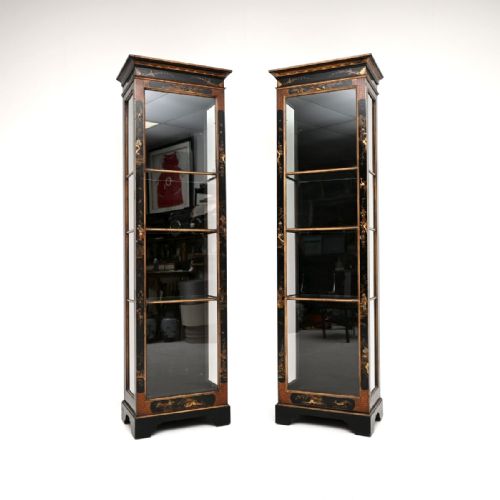
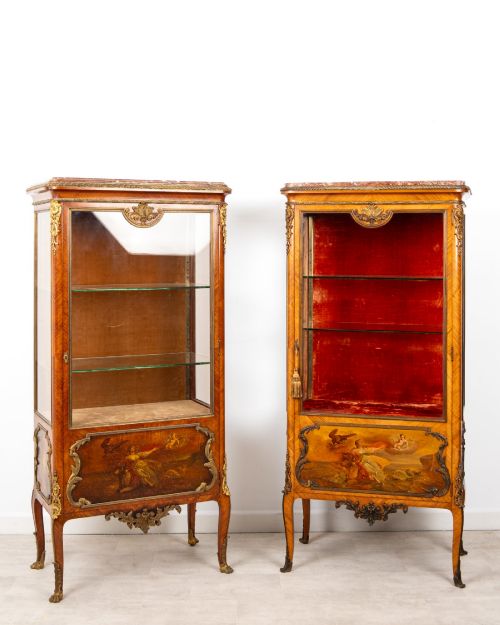
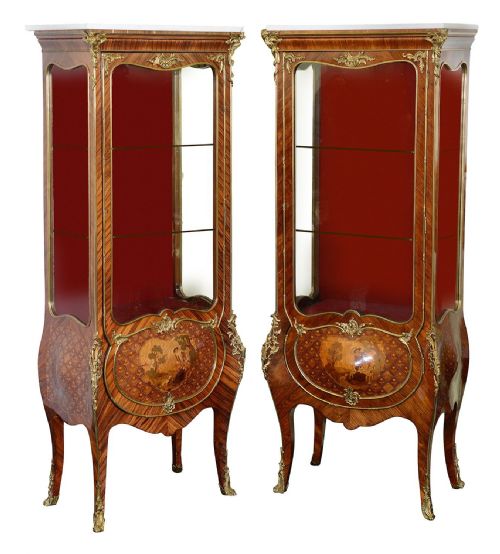
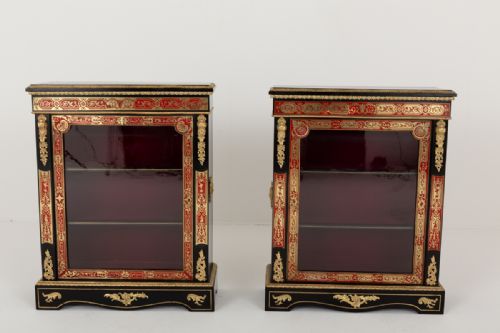
A pair of vitrines encompasses matching display cabinets, pier cabinets, and glazed bookcases sourced from nineteenth-century parlours to twentieth-century interiors. These dual pieces offer symmetrical placement for displaying ceramics, books, and curiosities within a room.
The selection ranges from Victorian walnut marquetry and Edwardian chinoiserie lacquer to Art Deco and interwar designs in mahogany and oak. French influence appears frequently through boulle inlay, ormolu mounts, and vernis martin decoration on kingwood carcases.
Buyers encounter corner cabinets, bijouterie tables, and tall pier units designed to flank a fireplace or anchor opposite walls. Each pair maintains a matched appearance in timber, proportion, and glazing style.
Judging the Range
Quality rests in the precision of the timber matching and the crispness of the marquetry or parquetry cut across both cabinets. Superior examples display refined hand-carved ormolu mounts and seamless integration of brass inlays rather than mass-produced uniformity.
The integrity of the structural joinery, the clarity of the original glass, and the fidelity of internal shelving distinguish standard workshop output from exhibition pieces produced by notable makers.
Pair of Vitrines Retail Price Guide 2026
Typical asking prices for pair of vitrines among the pieces listed under this phrase on Sellingantiques today, from the lower quarter to the upper quarter. They describe what is for sale here now, not the wider market.
One unexpected pair once advertised counter display duties for Frys Chocolate before retiring to domestic life.
Edwards and Roberts·C Hindley and Sons·Arthur Reynolds of Ludlow·Paul Somani
The Pair of Vitrines Glossary
- Vitrines
- Glass-fronted display cabinets designed specifically for showing porcelain, silver, and curiosities. They often feature glazed sides to maximise light penetration.
- Ormolu
- Gilt-bronze decorative mounts applied to furniture. The technique involves coating cast bronze with a mercury-gold amalgam before firing.
- Marquetry
- Decorative patterns formed by fitting together thin veneers of various wood species, ivory, or shell. Craftsmen arrange these elements onto a solid wood carcase.
- Boullework
- A style of marquetry using brass and tortoiseshell developed in France. The technique produces contrasting dark and metallic patterns across cabinet doors.
- Vernis Martin
- A type of simulated Japanese lacquer developed in France during the eighteenth century. It uses multiple resin layers to create translucent painted scenes.
Pair of Vitrines: Frequently Asked Questions
How were pairs of vitrines used originally?
These cabinets served in formal reception rooms and drawing rooms to exhibit prized porcelain, glassware, and family collections. Placing them as a matched pair provided architectural symmetry to a grand interior.
Lower display tables and pier cabinets held smaller curiosities and bijouterie, allowing guests to inspect items at close range. Taller floor-standing units protected delicate objects from dust while keeping them visible.
How do I care for wood and ormolu?
Maintain stable indoor humidity levels to prevent timber veneers from drying out and lifting from the carcase. Dust wooden surfaces regularly with a soft, dry cloth rather than applying silicone-based polishes.
Keep ormolu mounts clean by gently dusting with a soft brush. Avoid liquid cleaners on gilt bronze to prevent wearing away the gold finish.
What defines a French revival style?
French revival pieces draw inspiration from court furniture associated with Louis reigns, featuring curved cabriole legs, extensive ormolu mounts, and intricate marquetry. Makers of the nineteenth century reinterpreted these baroque and rococo motifs for contemporary drawing rooms.
These designs often incorporate kingwood, tulipwood, and vernis martin panels to emulate eighteenth-century aesthetics. The resulting cabinets emphasise decorative flourish and fluid silhouettes.
How do I distinguish Victorian from Edwardian pieces?
Victorian cabinets generally employ darker timbers such as burr walnut and mahogany, frequently enhanced with dense marquetry, heavy cornices, and elaborate ormolu mounts. The overall aesthetic leans toward rich textures and formal presence.
Edwardian examples often utilise lighter woods like satinwood or feature painted finishes, including chinoiserie lacquer. Their proportions tend to be more slender, reflecting a shift toward brighter, airier domestic interiors.