

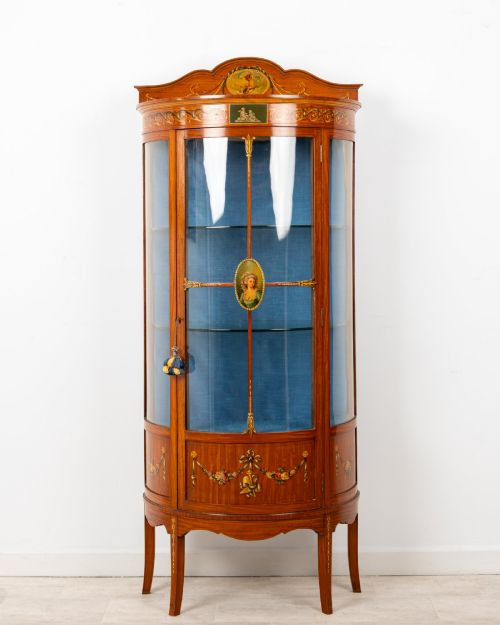


Warm Brown Vitrine
A warm brown vitrine is a glazed display cabinet that frames treasured collections in rich timber tones.
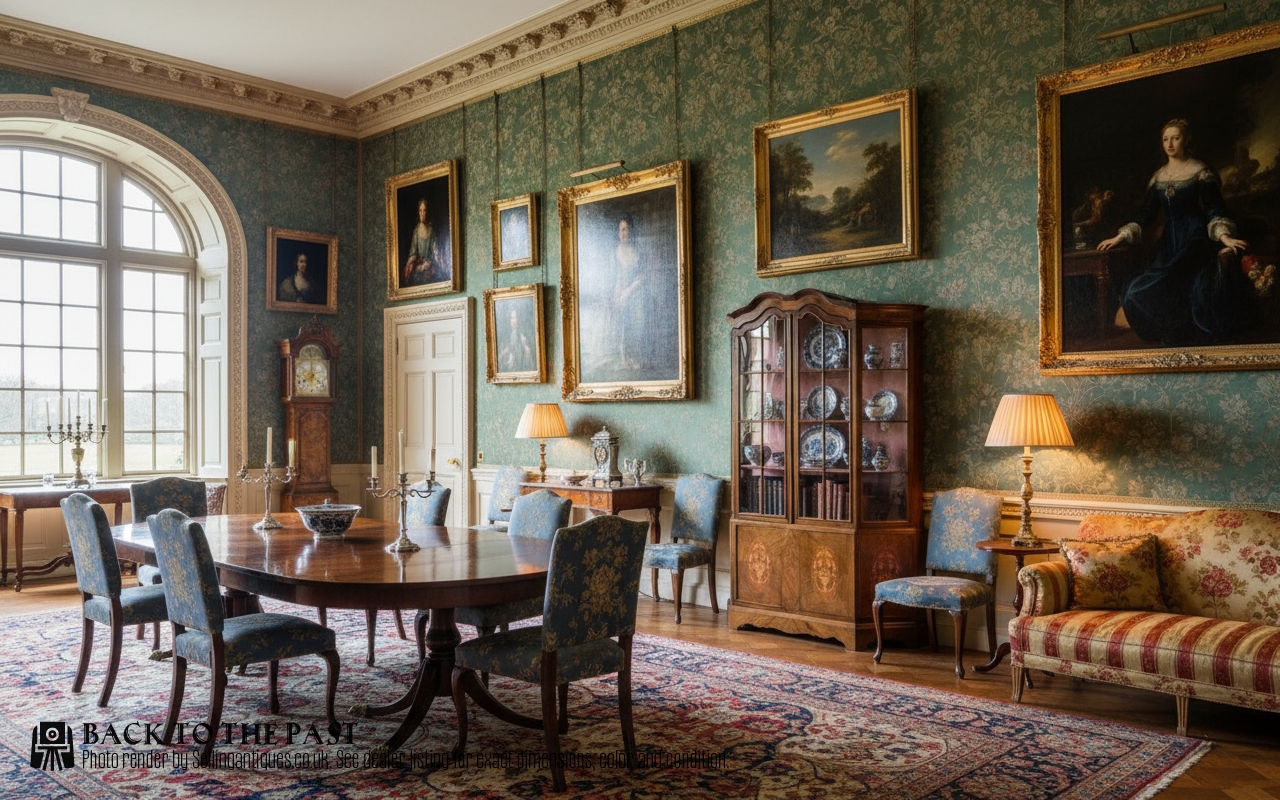
Warm Brown Vitrine
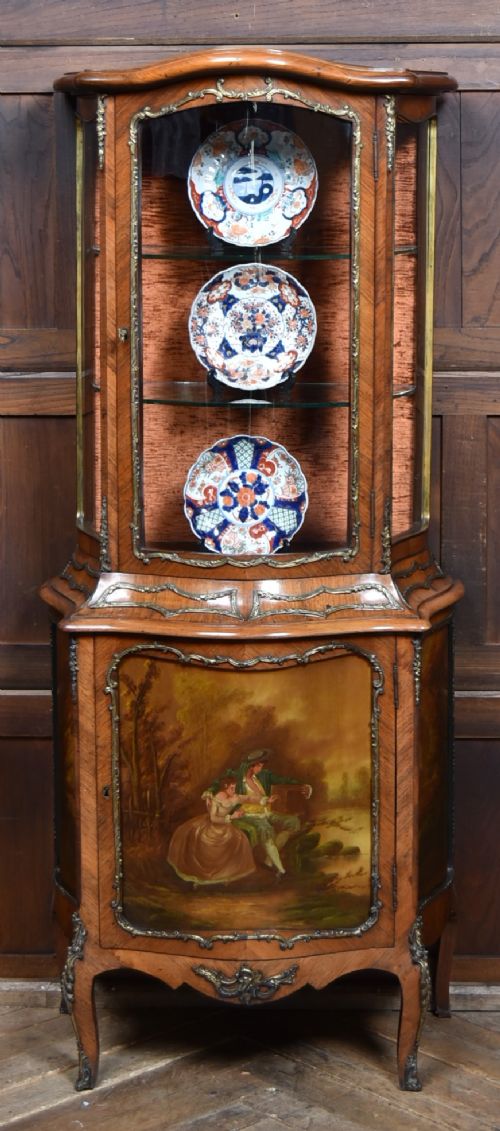
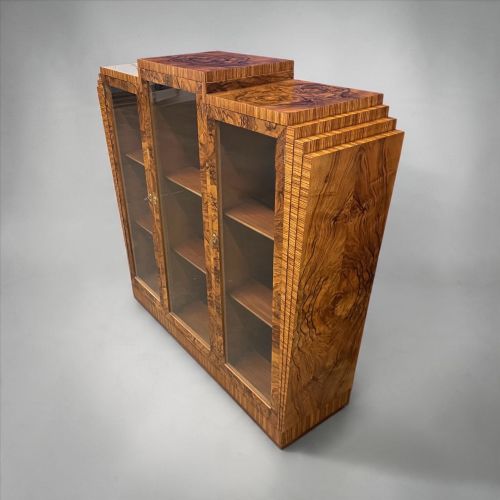
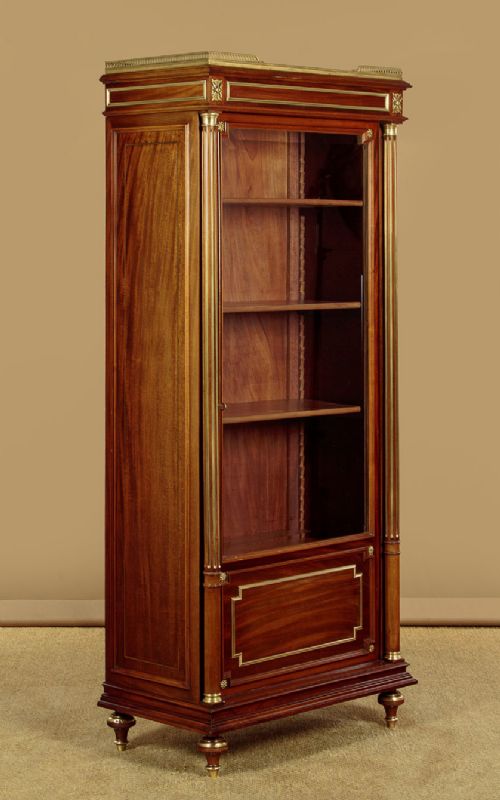
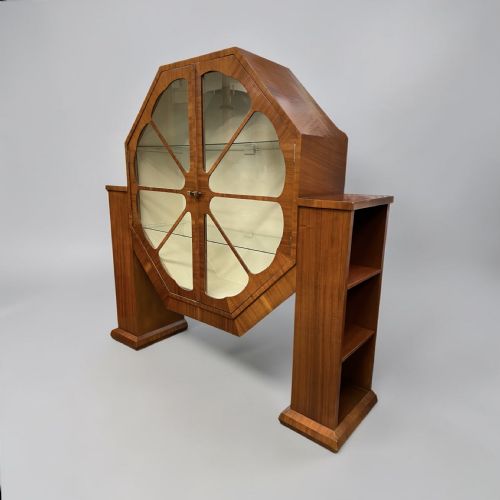
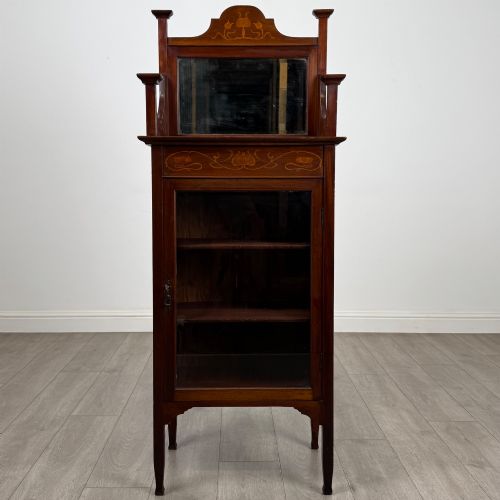
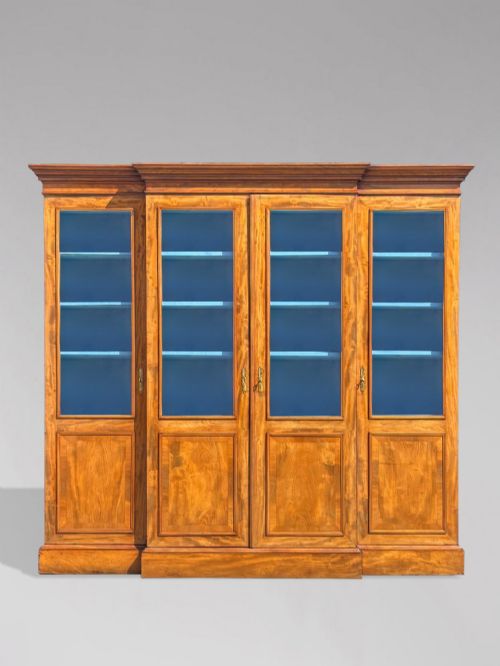
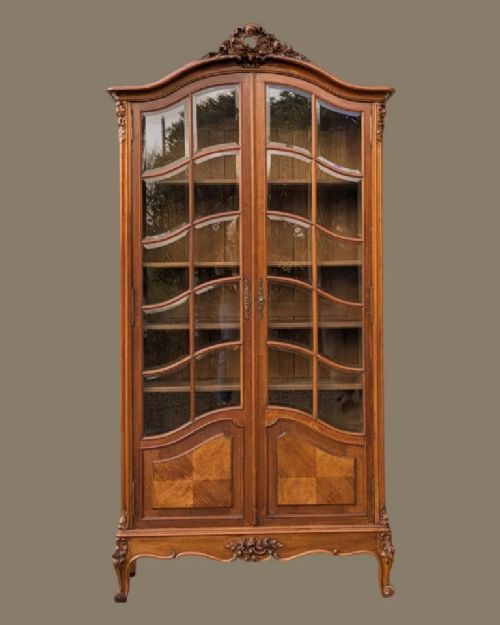
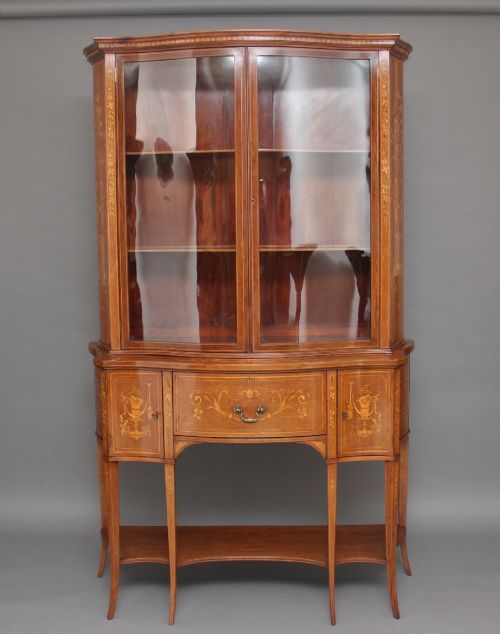
When searching for a warm brown vitrine, collectors look at timber display cabinets, bookcases, and glazed cupboards designed to showcase objects behind glass. The warm brown vitrine versions seen on this page span the eighteenth, nineteenth, and twentieth centuries, taking forms from bow-front cabinets to tall bookcases on stands.
Makers and styles range from plain Biedermeier and Arts and Crafts designs to elaborate French Louis Philippe, Louis XVI, and Rococo revivals. Buyers encounter everything from single-door pier cabinets to substantial four-door bookcases.

Materials and construction
Cabinet makers built these warm brown vitrine pieces using solid and veneered hardwoods like walnut, mahogany, satinwood, and kingwood over sturdy carcass timbers. Timber choice dictated the underlying colour and grain pattern, providing a rich brown foundation for decorative work.
Surface ornamentation involved intricate inlay, marquetry, and painting, set off by glass panes, brass fittings, and occasional ormolu mounts. Glazing bars divided the doors to frame the interior contents, while specialist techniques such as Vernis Martin decoration appeared on French pieces.
Warm Brown Vitrine Retail Price Guide 2026
Typical asking prices for warm brown vitrine among the pieces listed under this phrase on Sellingantiques today, from the lower quarter to the upper quarter. They describe what is for sale here now, not the wider market.
Glazed display cabinets on this page include corner cupboards, tall bookcases on stands, and low pier cabinets.
Distinctions in quality
Quality in a warm brown vitrine rests on the depth of timber figure, the crispness of marquetry or inlay, and the finesse of the joinery. Finer pieces demonstrate meticulous hand-fitting of doors, well-chosen veneers that match symmetrically across panels, and carefully cast brass or ormolu mounts.
Simpler examples rely on proportion and timber grain alone, whereas high-end pieces incorporate specialised stylistic details like barley twist supports, painted satinwood panels, or sophisticated neoclassical motifs executed by known workshops.
C Hindley and Sons·Epstein·Francois Linke
The Warm Brown Vitrine Glossary
- Marquetry
- Decorative woodwork where pieces of veneer are fitted into a ground to form intricate patterns or pictures. Craftsmen use contrasting woods to create pictorial designs on cabinet doors.
- Ormolu
- Gilded bronze mounts applied to furniture for decorative effect during the eighteenth and nineteenth centuries. This metalwork adds metallic contrast to dark timber surfaces.
- Pier cabinet
- A low cabinet designed to fit against the wall space between windows. These pieces often feature a single glass door and inlaid timber decoration.
- Biedermeier
- A Central European style emphasising clean lines and utilitarnian comfort without excessive ornamentation. Walnut is frequently utilised in these pieces to highlight natural wood grain.
Warm Brown Vitrine: Frequently Asked Questions
What is a vitrine used for?
A vitrine is designed to display delicate collections, ceramics, and ornaments while protecting them from dust and handling. The glass panels allow light to enter from multiple angles.
Historically, these cabinets served as focal points in drawing rooms and parlours where hosts exhibited their finest acquired objects.
How do I identify an Edwardian vitrine?
Edwardian cabinets often feature light satinwood inlay, painted neoclassical motifs, and mahogany or walnut veneers. They frequently draw inspiration from earlier Sheraton or Regency designs.
Construction methods from this period around 1900 show machine assistance alongside traditional hand-finishing techniques.
Are Art Deco display cabinets brown?
Art Deco display cabinets from the 1930s frequently employ warm brown walnut veneers with dramatic grain patterns. These pieces often lack the heavy carving of earlier Victorian furniture, favouring smooth geometric curves.
Some examples incorporate contrasting light woods or feature bold architectural silhouettes suited to modern interiors.
How should I clean a mahogany vitrine?
Dust mahogany and walnut surfaces gently with a soft, dry cloth to prevent accumulation. Avoid modern silicone sprays that can damage antique French polish or wax finishes.
Apply traditional beeswax sparingly when the timber appears dry, buffing it gently to maintain the natural sheen of the wood.