

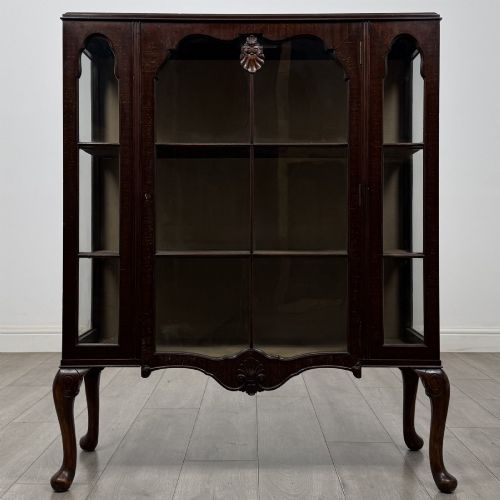
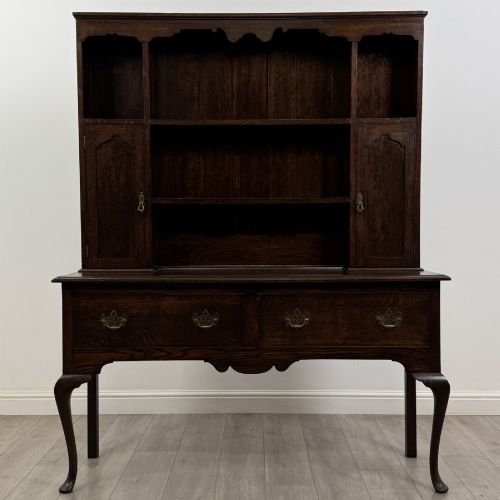
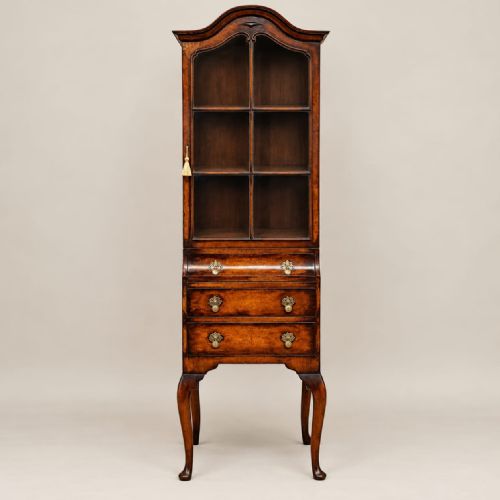
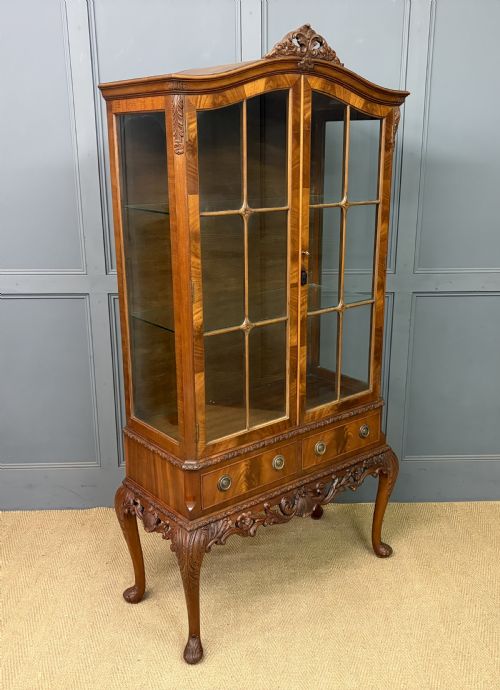
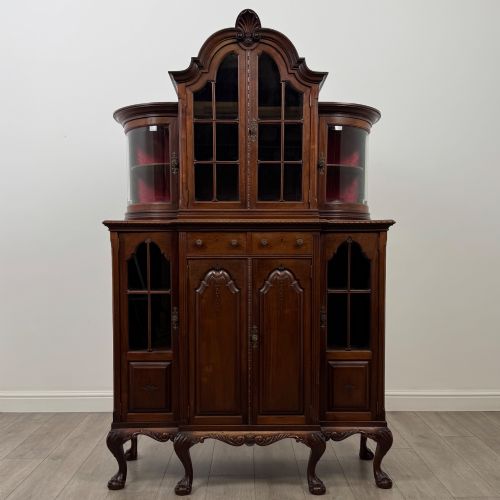
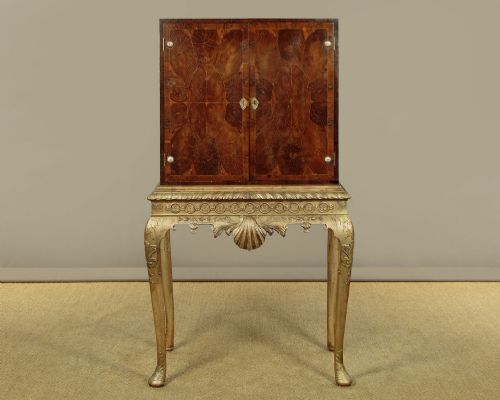
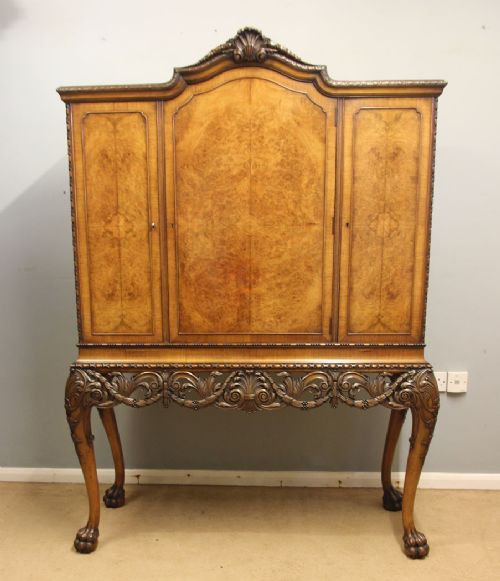
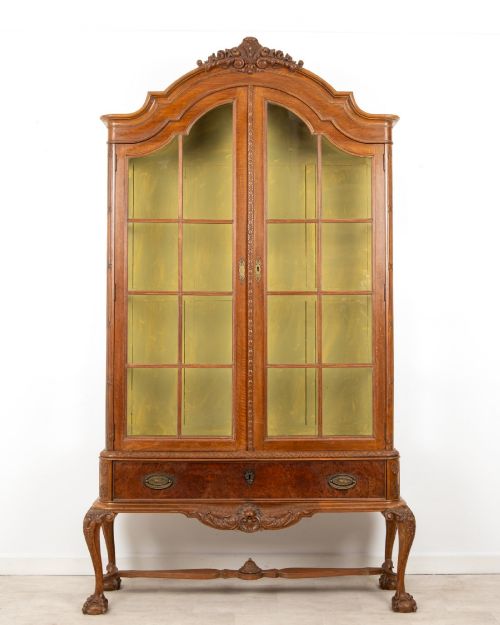


Queen Anne Display Cabinet
A queen anne display cabinet brings timber of deep grain and glass-fronted elevation together to frame cherished objects.
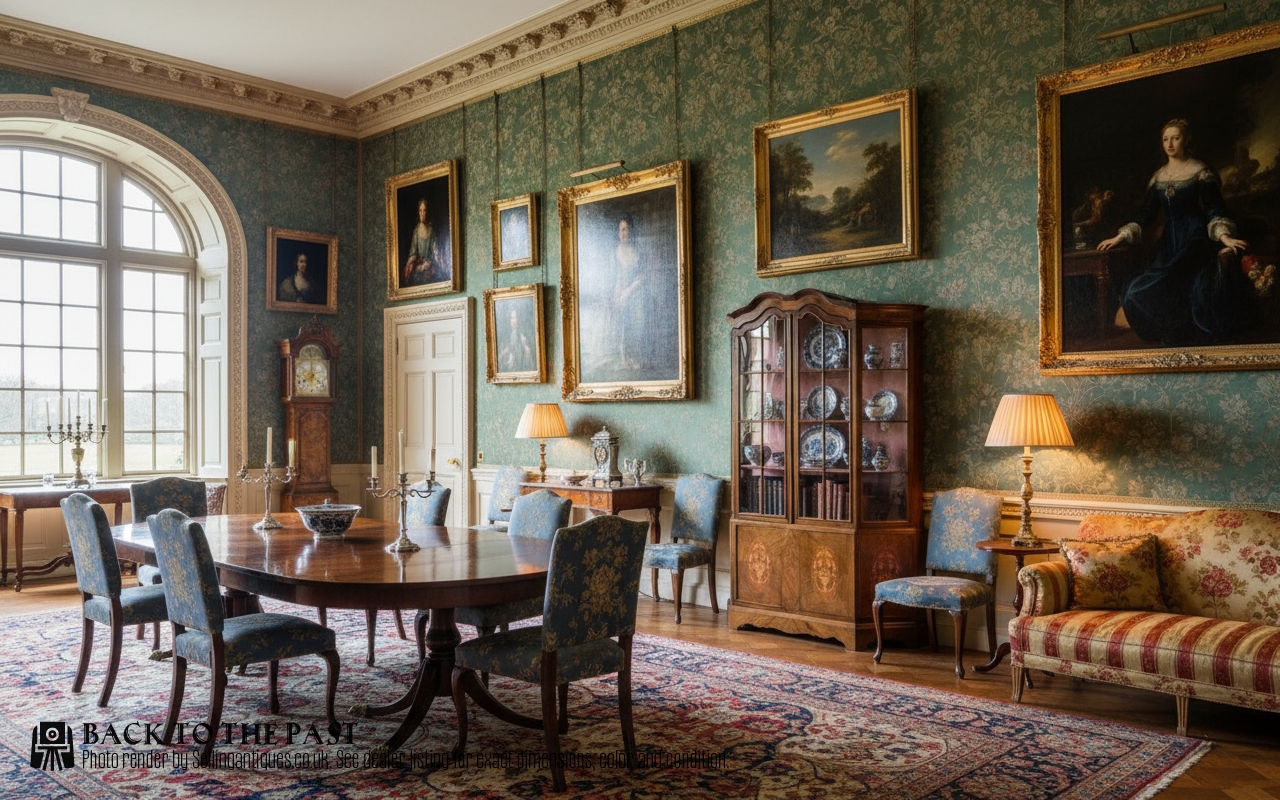
Queen Anne Display Cabinet
A queen anne display cabinet is a piece of furniture designed to house and exhibit porcelain, books, and small decorative items behind glazed doors. The selection includes freestanding display cabinets, bookcases, corner cabinets, and cabinets on stands.
Most examples found here date from the 20th century, particularly the Edwardian era and the 1920s and 1930s, alongside 18th-century originals and Victorian interpretations. Styles span Queen Anne revival and George I style, showing the enduring appeal of traditional silhouettes.
Distinguishing quality
The choice of veneer sets the visual standard for a queen anne display cabinet, with tightly figured burr walnut commanding attention over plain walnut timbers. Selection of grain patterns across multiple doors demonstrates the care taken by the maker in matching the wood.
Execution of the glazing bars and the proportion of the legs, whether cabriole or straight, determine the structural elegance of the piece. Superior examples show meticulous joinery and balanced proportions that respect the historical precedents of the style.
Queen Anne Display Cabinet Retail Price Guide 2026
Typical asking prices for queen anne display cabinet among the pieces listed under this phrase on Sellingantiques today, from the lower quarter to the upper quarter. They describe what is for sale here now, not the wider market.
Some corner cupboards are so secretive they vanish entirely into the architectural angles of old rooms.
Maple & Co.·Waring & Gillow·Epstein
The Queen Anne Display Cabinet Glossary
- Burr Walnut
- A specialised wood cut from the abnormal growths on walnut trees, prized for its swirling, highly figured grain patterns. It is sliced into thin veneers for cabinet fronts.
- Breakfront
- A piece of furniture where the central section projects forward from the flanking sections. This technique creates visual depth and architectural interest.
- Cabriole Leg
- A furniture leg that curves outward in a convex arc before tapering inward in a concave arc, often ending in a pad or claw foot. It is a defining characteristic of the style.
- Escutcheon
- A flat plate of brass or other metal placed around a keyhole to protect the surrounding wood from wear. They often serve a decorative function on cabinet doors.
- Glazing Bars
- The narrow wooden strips that hold the individual panes of glass within a door or window frame. Fine glazing bars create delicate geometric patterns.
Queen Anne Display Cabinet: Frequently Asked Questions
What is a queen anne display cabinet?
A queen anne display cabinet is a glazed storage unit intended for showing porcelain, books, or collections while protecting them from dust. These pieces draw on 18th-century design principles, often featuring prominent wood grains and glass panels.
The form varies from corner cupboards and narrow bookcases to large breakfront cabinets and elevated pieces on stands. They serve as both practical storage and focal points within a room.
How do I date a walnut cabinet?
Dating requires examining the construction methods, timber preparation, and the specific revival style employed by the maker. Pieces range from 18th-century originals to Edwardian and 19th-century interpretations, as well as 1930s revival items.
The presence of burr walnut veneer, specific brass hardware styles, and labels left by firms help narrow down the period of manufacture. Construction details like hand-cut dovetails also provide clues to the age of the woodwork.
Where should I place a corner cabinet?
A corner cabinet is designed to fit snugly into the intersecting angle of two walls, making efficient use of overlooked spaces. They work well in dining rooms, living spaces, or hallways where a standard rectangular cabinet might obstruct movement.
Because these units often feature curved or canted glazed doors, positioning them near a light source helps illuminate the interior shelves and displayed objects.
How do I care for burr walnut furniture?
Burr walnut veneer requires stable indoor humidity levels and protection from direct sunlight to prevent the timber from drying out or fading. Gentle dusting with a soft cloth keeps the surface clean without damaging the polished finish.
Avoid placing these cabinets near heat sources or damp areas, as extreme environmental shifts can cause the delicate veneers to lift or crack over time.