






Ornate Glass Cabinet
An ornate glass cabinet brings dramatic Victorian and French revival display into a room, framing precious objects behind glazed panels.
Ornate Glass Cabinet
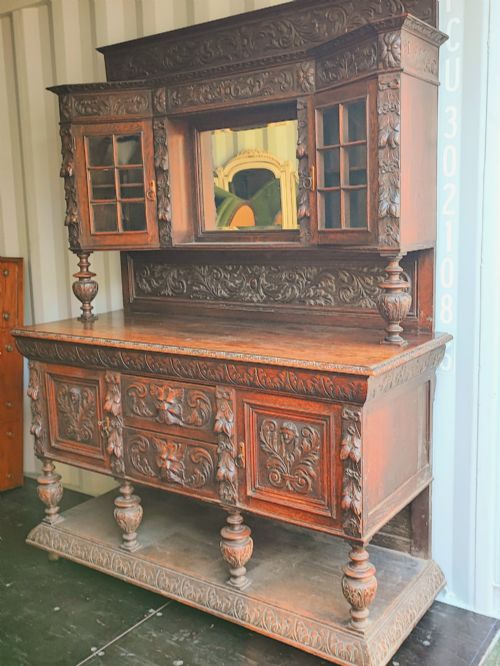
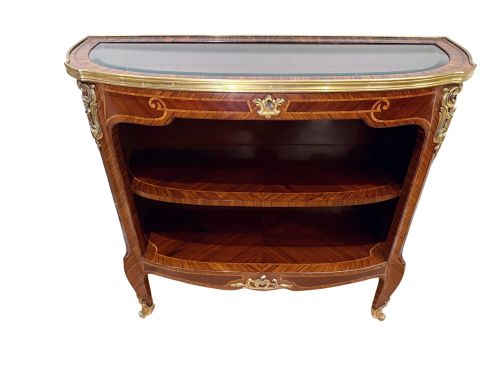
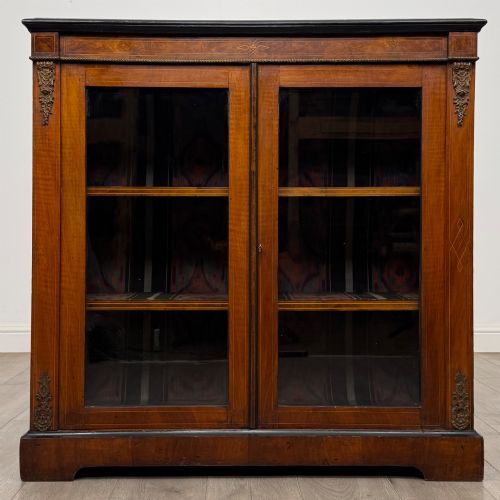
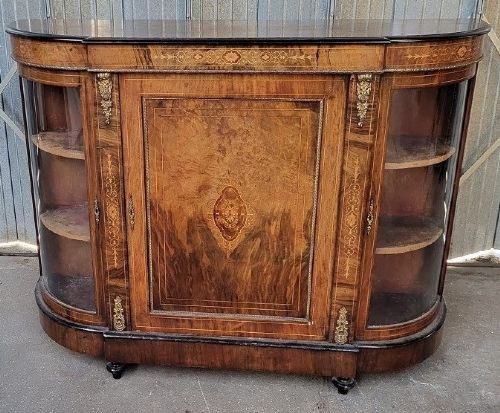
When you search for an ornate glass cabinet, you encounter nineteenth century furniture designed to exhibit ceramics, clocks, and curiosities. These pieces span the Victorian era and French revival periods, taking the form of vitrines, pier cabinets, credenzas, and bookcases with glazed top sections.
The most common examples on this page are walnut and kingwood pieces mounted with ormoulu, alongside French vitrines and inlaid pier cabinets. They combine timber framing with glass panels to create formal display furniture for nineteenth century interiors.
Makers of the period referenced French rococo and Napoleon III styles through curved glass, painted panels, and elaborate mounts. Cabinets range from intimate heart-shaped bijouterie tables to large exhibition quality credenzas.
How they were made
Cabinet makers utilised dense hardwoods including walnut, burr walnut, mahogany, satinwood, and kingwood as the structural foundation. Marquetry inlay and tulipwood banding frequently decorated the exterior surfaces of these display pieces.
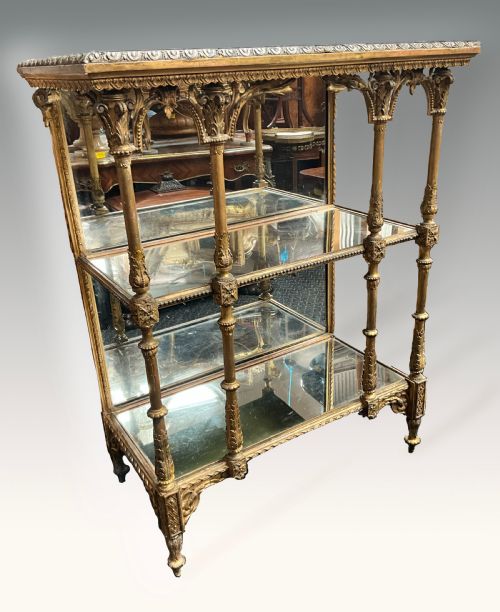
Gilt bronze and ormolu mounts were cast and chased to embellish corners, feet, and friezes, often paired with marble tops. Glass was set into doors and sides, sometimes accompanied by mirrored backs and painted panels to reflect light through the interior.
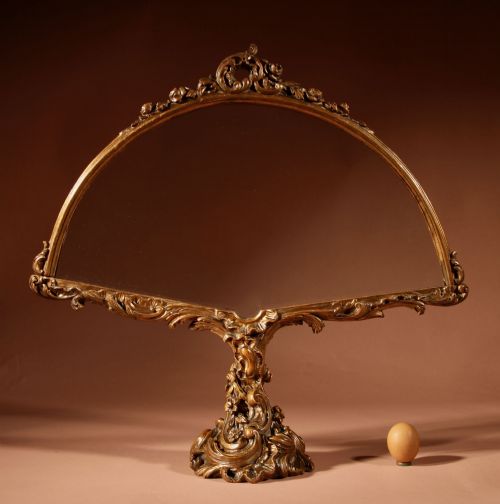
Among the heavy timber and bronze mounts, a delicate heart-shaped table waits to hold your smallest secrets.
What varies in quality
The distinction between standard cabinet making and exceptional work lies in the precision of the timber matching and the crispness of the gilt bronze mounts. Exhibition quality examples display finer marquetry, more complex serpentine or bomb shapes, and heavier ormolu casting.
The integration of materials also defines the tier of a piece, where hand-painted panels and carefully selected burr walnut veneers elevate a standard vitrine into a notable workshop creation.
François Linke·Paul Sormani
The Ornate Glass Cabinet Glossary
- Vitrine
- A glass-fronted cabinet designed specifically for the display of fine porcelain, curiosities, and small decorative objects. The term originates from the French word for glass.
- Ormolu
- Gilded bronze used extensively for decorative mounts on nineteenth century furniture. It provides a bright metallic contrast against dark timbers like walnut and kingwood.
- Credenza
- A low cabinet, frequently featuring glass doors or glazed side sections, popular during the Victorian period for display and storage. They often incorporate marquetry inlay and marble tops.
- Pier Cabinet
- A narrow display cabinet built to stand against the wall space between windows. These pieces usually feature a single glazed door and brass or ormolu mounts.
- Boulle
- A style of marquetry using brass and tortoiseshell inlaid in intricate patterns, seen on nineteenth century French furniture. It adds intense visual texture to cabinet surfaces.
Ornate Glass Cabinet: Frequently Asked Questions
What is an ornate glass cabinet used for?
These cabinets were originally manufactured in the nineteenth century to showcase valuable collections of porcelain, silver, and small decorative curiosities.
Today, they serve the same purpose in a domestic interior, protecting delicate items behind glass while offering a decorative focal point.
How do I identify a Victorian piece?
Victorian cabinets often utilise native and imported timbers like walnut, burr walnut, and mahogany, frequently combined with marquetry inlay. They reflect revival aesthetics such as French rococo and Jacobean styles.
Dates can be estimated through construction methods, timber selection, and the presence of characteristic brass or ormolu mounts.
Where should I place a vitrine?
Vitrines and pier cabinets suit drawing rooms, living spaces, or hallways where natural light can pass through the glass panels. Placing them away from direct sunlight protects the interior timbers and displayed objects.
Because many examples feature finished backs or mirrored panels, they can stand against walls or act as room accents.
What is the difference between a vitrine and a credenza?
A vitrine is an upright display cabinet with glass panels on the front and often the sides, built primarily for viewing objects at eye level. A credenza is a lower, broader cabinet that may combine enclosed cupboards with central glass display sections.
Both forms utilise rich veneers and metal mounts, but they serve different spatial requirements in a room.