




Pair French Display Cabinets
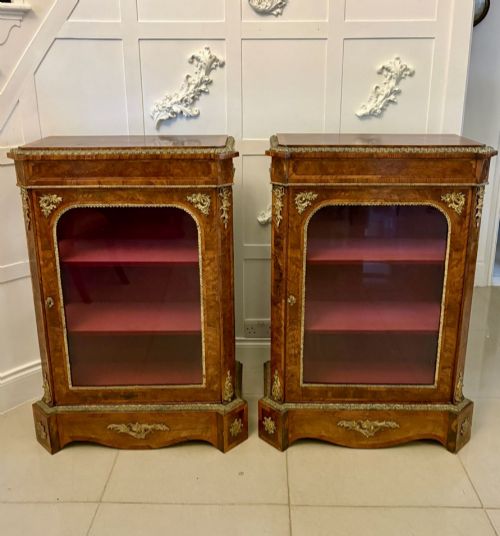
These pair french display cabinets bring architectural symmetry and glass-fronted elegance to a room, offering the ideal stage for treasured objects.
Pair French Display Cabinets
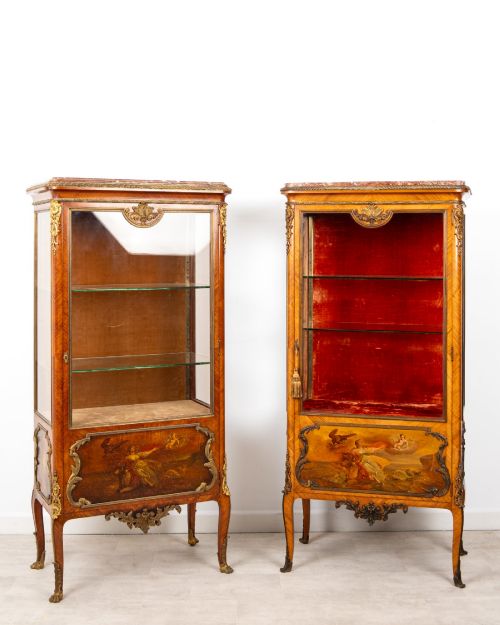
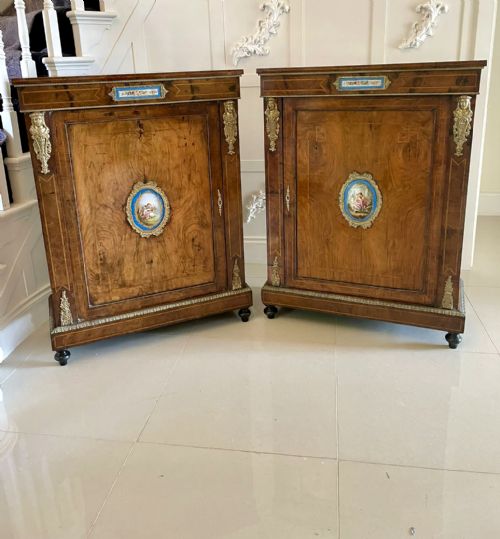
Pair french display cabinets encompass matched sets of vitrines, pier cabinets, and side cabinets originating predominantly from the nineteenth century. These furnishings served as principal drawing room fixtures designed to protect and exhibit porcelain, books, and curiosities behind glazed doors.
The selections span distinct revival aesthetics, including Napoleon III, Louis XV, and Louis XVI styles, alongside Victorian interpretations. Formats range from upright floor-standing pier cabinets and credenzas to corner units and hanging wall cabinets.
Makers and retailers such as Edmé Samson and Cie, Darte Brothers, Paul Somani, and Town and Emanuel appear among the records, reflecting the international market for Parisian and English craftsmanship of the period.
Materials and construction
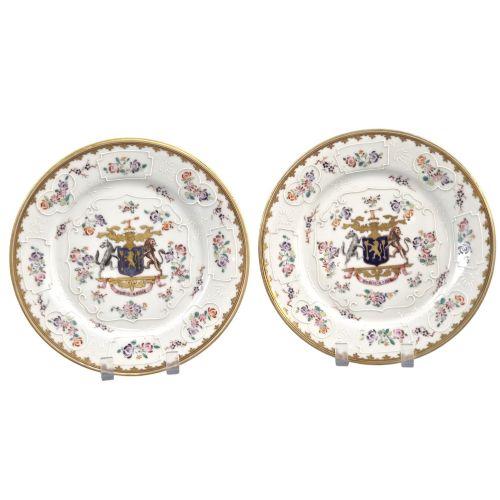
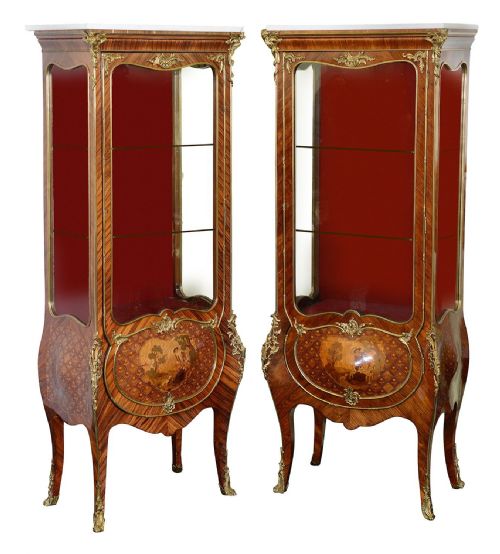
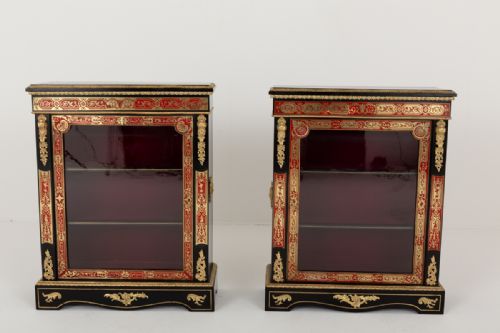
Makers utilised dense timbers such as burr walnut, kingwood, mahogany, satinwood, and ebonised wood as foundations for intricate marquetry, parquetry, and Boulle brass-and-tortoiseshell inlay. Vernis Martin painted panels frequently adorn cabinet doors alongside inset armorial and pictorial porcelain plaques.
Chiseled ormolu mounts, brass banding, and white marble tops complete the structural vocabulary of these pieces, framing glass panels designed to showcase interior shelves.
The documented woods include burr walnut, ebonised wood, kingwood, mahogany, and satinwood.
Evaluating workmanship
Distinctions in quality rest upon the crispness of the bronze ormolu cast work, the precision of the Boulle marquetry, and the depth of timber grain selection such as figured burr walnut. Superior examples demonstrate rigorous alignment in matched pairs, refined hand-painted detail on Vernis Martin panels, and integrated structural integrity across heavy marble tops and glazed doors.
Edmé Samson and Cie·Darte Brothers·Paul Somani·Town and Emanuel
The Pair French Display Cabinets Glossary
- Boulle
- A form of marquetry utilising brass and tortoiseshell inlaid in counter-changed patterns, named after the cabinetmaker André-Charles Boulle.
- Vernis Martin
- A simulated Japanese lacquer technique developed by the Martin brothers in eighteenth-century France, later revived on nineteenth-century vitrines.
- Ormolu
- Gilded bronze mounts applied to furniture edges and corners for decorative accent and structural protection.
- Vitrine
- A glass-fronted cabinet designed specifically for the display of fine porcelain and curiosities.
- Pier Cabinet
- A low, narrow cabinet built to fit the wall space between windows.
Pair French Display Cabinets: Frequently Asked Questions
What is a pair of pier cabinets?
Pier cabinets are narrow furniture pieces built to occupy the wall space or pier between domestic windows. They typically feature a single glazed door and flat sides.
In pairs, they provide symmetrical balance to a reception room while offering enclosed display space for porcelain and small objects.
How do I distinguish Boulle work?
Boulle work involves precise cutting of brass and tortoiseshell veneer fitted together in contrasting positive and negative patterns. It reflects seventeenth-century French techniques revived during the nineteenth century.
Genuine examples show meticulous hand-engraving on the metal surfaces to define leaves, scrolls, and figures.
What are Vernis Martin panels?
Vernis Martin is a decorative lacquer finish mimicking Asian export screens through successive layers of translucent varnish over painted scenes. The technique creates a luminous, glossy surface depicting figures or landscapes.
On display cabinets, these panels usually form the lower door sections beneath the glass viewing area.
Where should I place display cabinets?
These cabinets suit drawing rooms, libraries, or formal hallways where controlled lighting protects delicate objects behind glass. Symmetrical placement as a pair anchors a focal point along a main wall.
Ensure placement avoids direct sunlight to protect antique timber finishes and tortoiseshell inlay.