


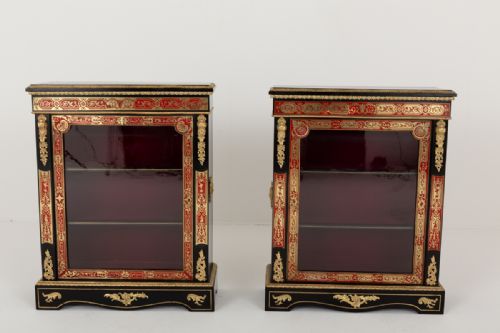


Tortoiseshell Display Cabinet
A tortoiseshell display cabinet brings dramatic tortoise-shell marquetry and gleaming brass inlay into a room to hold treasured ornaments.
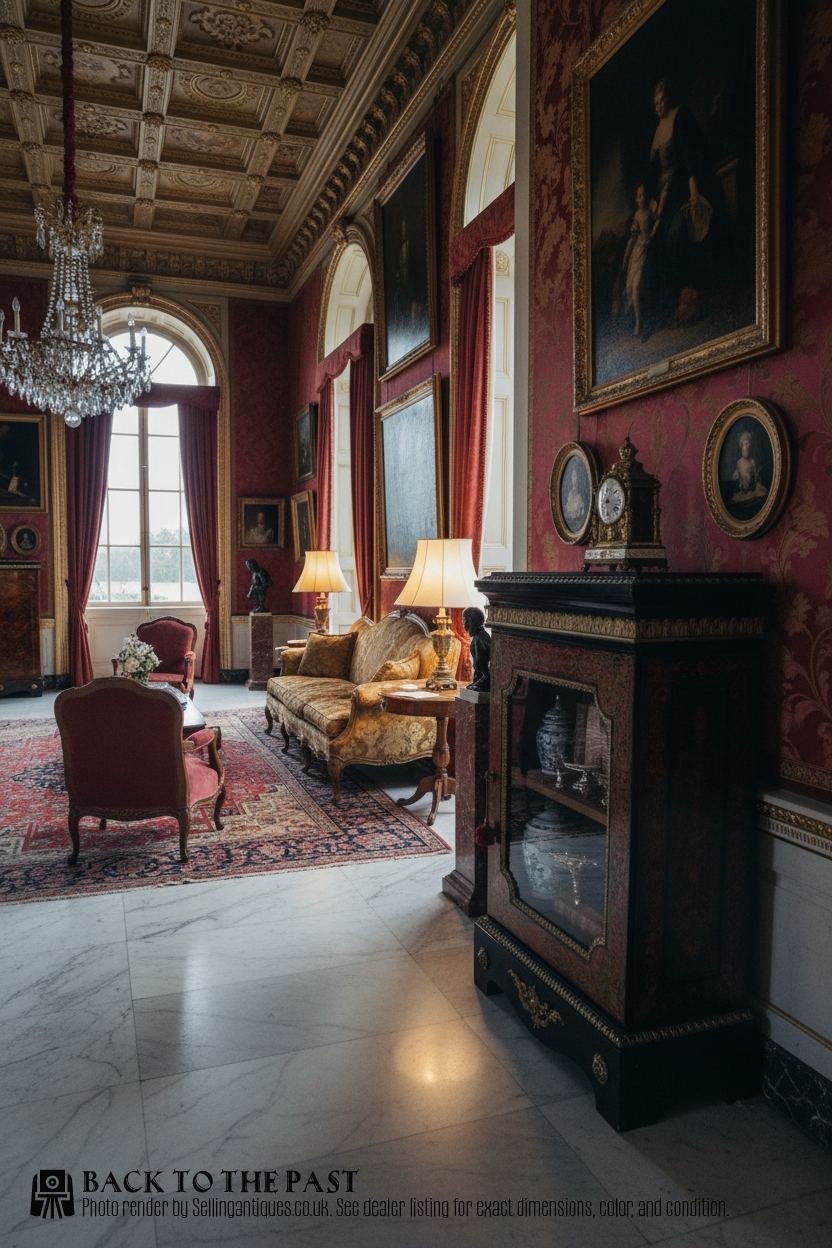
Tortoiseshell Display Cabinet
When you search for a tortoiseshell display cabinet, you are looking at nineteenth-century French and Victorian case furniture designed to showcase precious objects behind glass. The pieces on this page span from the middle to the end of the nineteenth century, taking forms such as pier cabinets, credenzas, vitrines, and bookcases.
Most examples you will meet belong to the Napoleon III period and the Victorian Boulle Revival, alongside French Revival and Aesthetic Movement pieces. These cabinets range from intimate corner cabinets and side cabinets to large serpentine credenzas and bookcases.
Makers of the era drew heavily on earlier Louis XVI style vocabulary while creating functional display furniture for contemporary homes. The primary vehicle for the tortoiseshell appearance is Boulle marquetry, which combines dark shell materials with metallic inlay.
What varies in quality
The refinement of the Boulle marquetry work sets the standard for these pieces, distinguishing meticulous brass and tortoiseshell cutting from simpler execution. The crispness of the cast ormolu mounts and the precision of their fitting to the ebonised carcase indicate the maker's level of skill.
Proportion and scale also separate standard production from exceptional pieces, particularly in large credenzas, bibliotheques, and matched pairs of pier cabinets. The depth of the colour in the tortoiseshell ground and the harmony of the wood grain contribute to the visual weight of the cabinet.
The listings show nineteenth-century pieces spanning the Victorian period, 1850 to 1890, utilising ebonised wood, brass, tortoiseshell, and bamboo.
The Tortoiseshell Display Cabinet Glossary
- Boulle marquetry
- A decorative technique of inlaying brass and tortoiseshell, developed in seventeenth-century France and revived extensively during the nineteenth century. It creates a contrasting metallic and dark patterned surface.
- Ormolu
- Gilded bronze used for mounts, feet, and decorative trims on nineteenth-century furniture. It frames the glass doors and highlights the corners of these cabinets.
- Pier cabinet
- A narrow cabinet designed to stand against the wall space between windows. These tall, slender pieces are common formats for nineteenth-century display furniture.
- Credenza
- A low cabinet, often fitted with side cupboards and a central glass door for display. Nineteenth-century versions frequently feature serpentine fronts and rich ormolu mounts.
- Ebonised wood
- Timber stained or painted black to imitate ebony. It serves as the dark background that makes the brass and tortoiseshell inlay stand out.
Tortoiseshell Display Cabinet: Frequently Asked Questions
What is a Boulle cabinet?
A Boulle cabinet is a piece of furniture decorated with tortoiseshell and brass marquetry in the style popularised by André-Charles Boulle. These cabinets feature intricate metallic patterns set against a dark tortoiseshell background.
Nineteenth-century makers revived this technique for display cabinets, credenzas, and pier cabinets, often adding ormolu mounts to complete the look.
How do I style a tortoiseshell cabinet?
These cabinets work best as focal points in a room against plain walls that allow the tortoiseshell and brass inlay to catch the light. Keep the surrounding decor relatively simple to let the detailed marquetry stand out.
Use the glass shelves to display small ceramics, glassware, or metalwork, taking advantage of the enclosed space to protect delicate objects.
What is the difference between a pier cabinet and a credenza?
A pier cabinet is tall and narrow, built to fit into the wall space between windows or architectural columns. They typically have a single glass door enclosing shelves.
A credenza is a low, wider piece of furniture that often includes side cupboards flanking a central display section. Both formats utilise tortoiseshell marquetry and ormolu mounts in nineteenth-century designs.
Are these cabinets French or English?
Many of the pieces on this page are French in origin, specifically from the Napoleon III period and the French Revival. English makers also produced similar furniture during the Victorian era, influenced by continental styles.
Terms like Boulle Revival and Louis XVI style indicate the design vocabulary used by makers in both countries during the nineteenth century.