





Brass Inlaid Vitrine
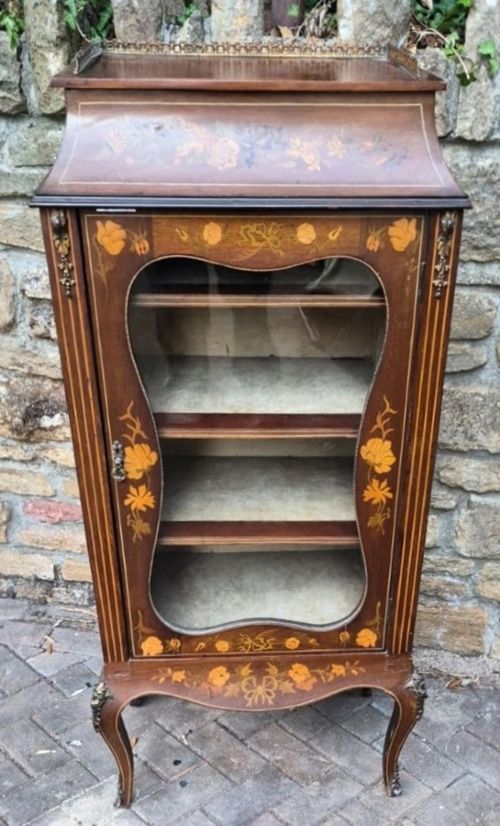
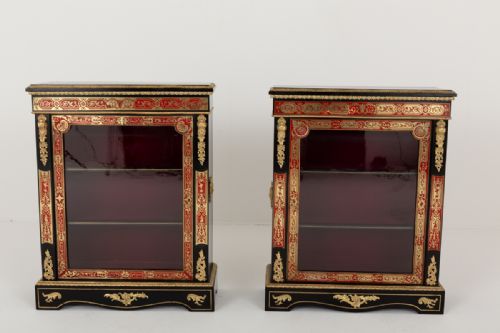
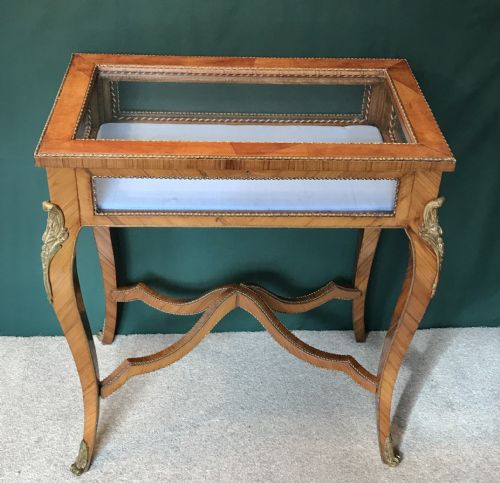
These brass inlaid vitrine examples are display cabinets and tables designed to showcase fine possessions under glass.
Brass Inlaid Vitrine
A brass inlaid vitrine unites glass panels with timber cabinetry to protect objects while keeping them fully visible. You encounter forms ranging from tall pier cabinets to low bijouterie tables.
The pieces on this page span Victorian, Edwardian and nineteenth-century periods, drawing heavily on French Napoleon III, Louis XV Revival and Sheraton styles. Mahogany, ebonised wood and kingwood serve as the primary foundational timbers.
Display cabinets and side tables predominate in this selection, often featuring curved glass doors or hinged tabletops for viewing smaller items. French workshops contribute significantly to the boulle and ormolu-mounted varieties seen here.
Distinctions in quality and execution
The precision of the brass inlay reveals the skill of the original workshop, particularly where complex curves and corners meet. Superior examples demonstrate seamless integration between the metalwork and the surrounding wood.
Choice of timber underpins the overall calibre, with figured mahogany and rich kingwood marking out finer productions. The weight and chasing of ormolu mounts further separate standard cabinetry from exceptional showroom pieces.
Listings feature items spanning the Victorian, Edwardian, and nineteenth-century periods, constructed from mahogany, rosewood, and ebonised wood.
Edwards and Roberts
The Brass Inlaid Vitrine Glossary
- Vitrine
- A glass-fronted cabinet designed for the display of curiosities and fine objects. These pieces rely on large glazed panels to maximise visibility from multiple angles.
- Boulle
- A form of marquetry consisting of brass and tortoiseshell inlaid into wood, popular in French furniture. This technique creates a rich interplay of metallic reflection and dark contrast.
- Bijouterie table
- A glass-topped table used for displaying small valuables, jewellery and ornaments. They frequently feature hinged lids for easy access to the interior compartment.
- Ormolu
- Gilt bronze mounts applied to furniture as decorative accents. The technique involves treating bronze with a gold amalgam to achieve a bright, durable finish.
- Marquetry
- Inlay work using various coloured woods to form decorative pictures and patterns. It provides pictorial enrichment across cabinet doors and tabletops.
Brass Inlaid Vitrine: Frequently Asked Questions
What is a brass inlaid vitrine used for?
These cabinets and tables provide dust-free storage for collections of porcelain, silver and small curiosities. The glass panels allow owners to view their items without handling them directly.
Historically, they served as drawing room centrepieces where households displayed their most prized possessions to visiting guests.
How do I identify a French nineteenth century piece?
Look for characteristic design elements such as boulle work, ormolu mounts and curved Louis XV revival silhouettes. French pieces frequently utilise mahogany or ebonised wood as a dark canvas for brass.
Construction details and timber ageing provide further clues to nineteenth-century origins when compared against later Edwardian reproductions.
Where should I place a vitrine in my home?
Position your cabinet or table away from direct sunlight to protect the interior contents and timber finish from fading. Rooms with stable indoor temperatures help preserve the integrity of the wood and glue.
Ensure the piece has sufficient clearance around glass doors or hinged tabletops for comfortable daily viewing.
What is the difference between a cabinet and a table?
Cabinets stand vertically with side and front glass panels, offering multiple interior shelves for taller items. Tables sit lower to the ground with a glazed top surface designed for looking down at objects.
Bijouterie tables often feature a shallow interior well beneath the glass, whereas pier cabinets utilise wall space efficiently.