
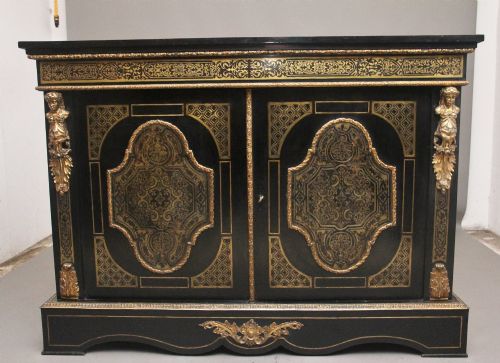
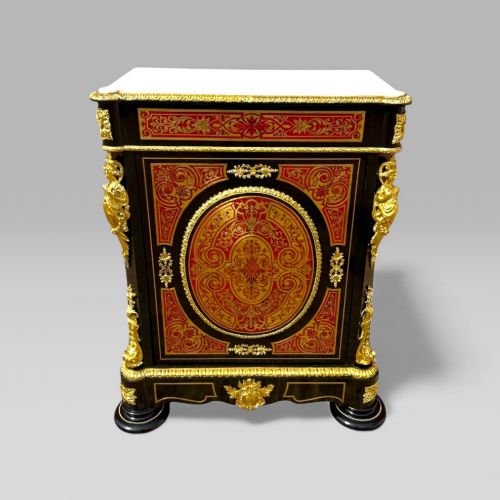

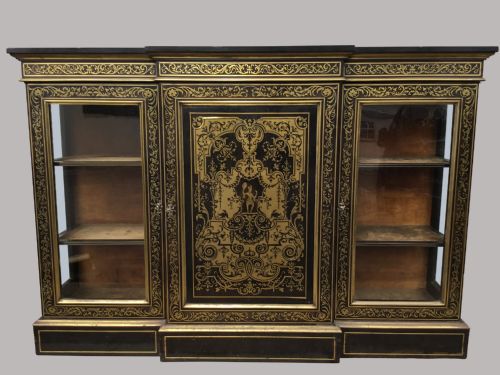


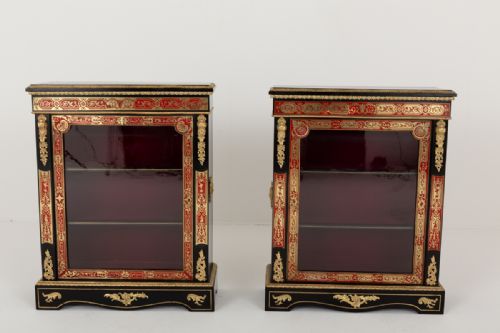


Boulle Marquetry Cabinet
These boulle marquetry cabinet pieces bring brass and tortoiseshell richness into a room, offering grand French display surfaces.
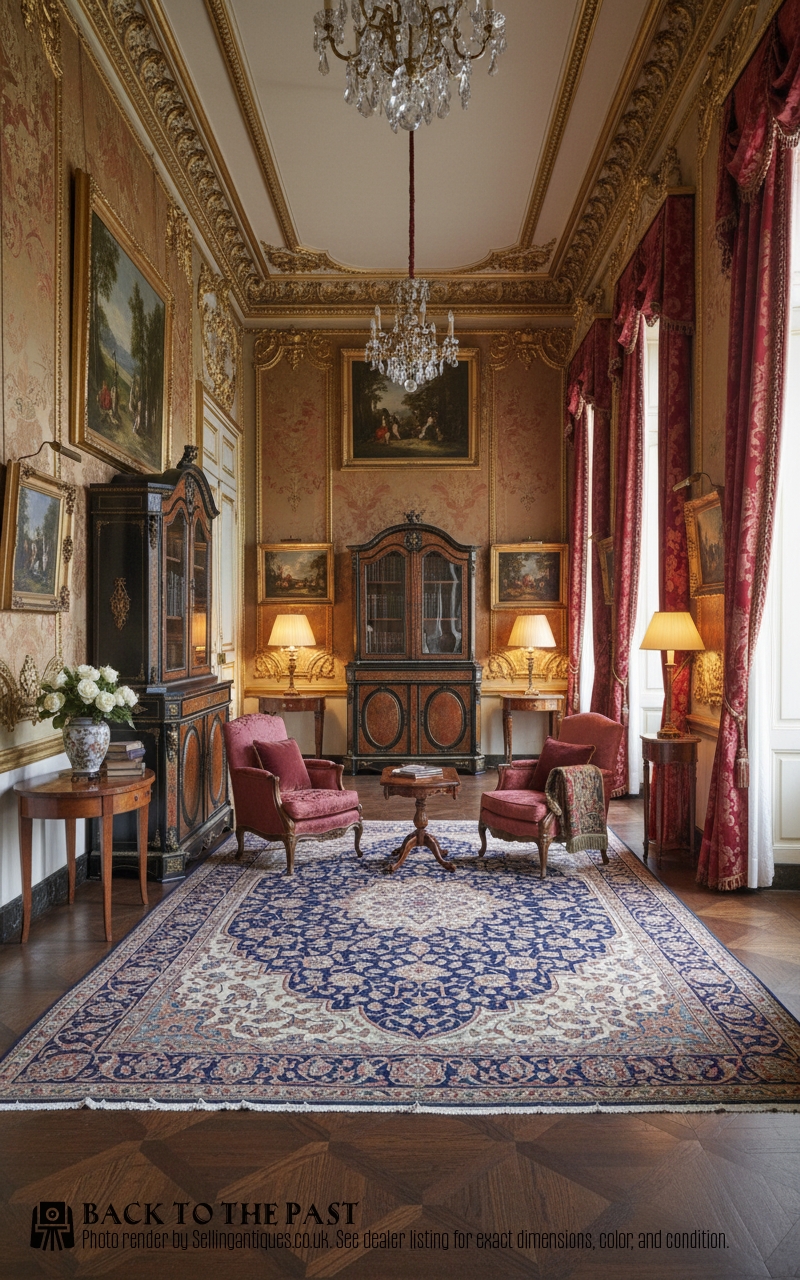
What a Boulle Marquetry Cabinet Is
A boulle marquetry cabinet combines ebonised wood with ornate brass and tortoiseshell inlay work. Buyers hunting for a boulle marquetry cabinet will primarily encounter nineteenth century examples, including French Napoleon III, Victorian, and Louis XVI style pieces.
Forms on this page include display cabinets, side cabinets, pier cabinets, breakfront side cabinets, and vitrines. These items serve as prominent display and storage furniture for living spaces.
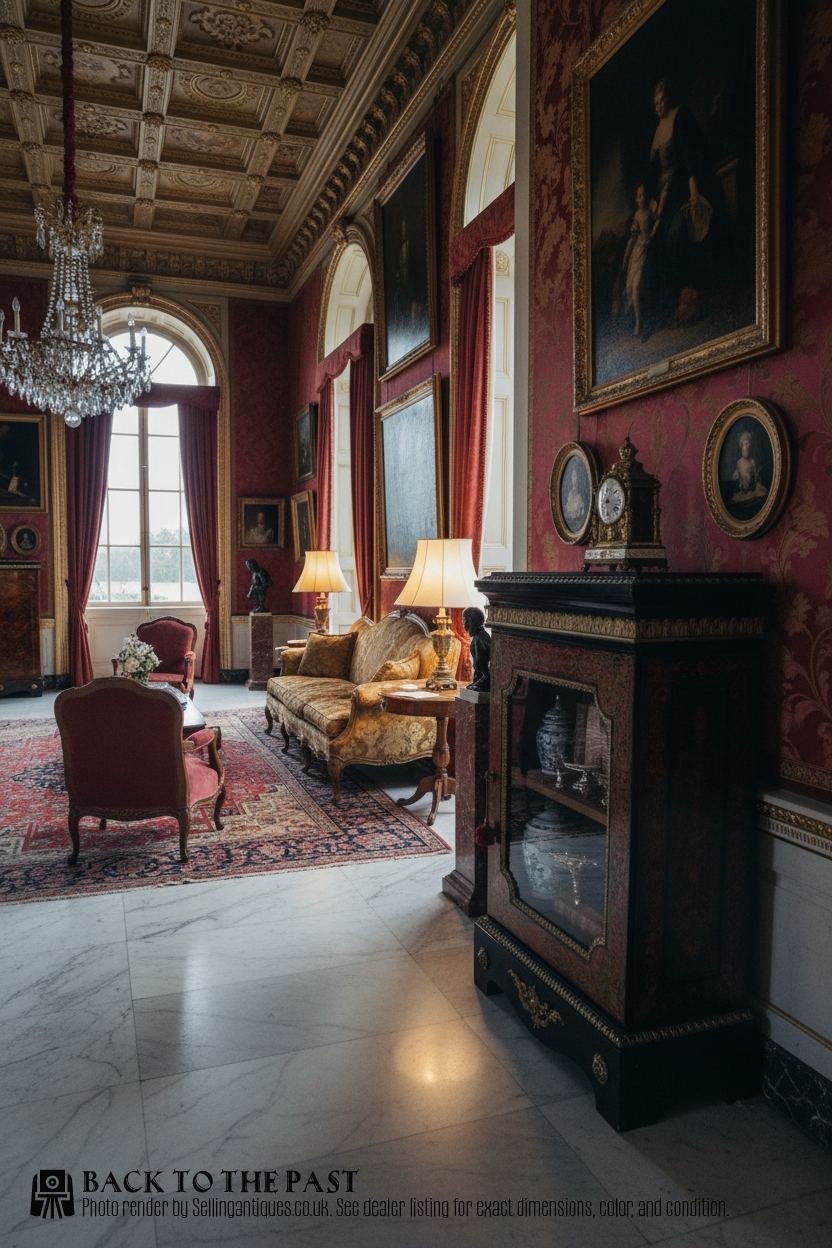
Materials and Construction
Maker workshops utilised ebony or ebonised wood as the primary carcase material, providing a dark contrast to the metallic inlay. Brass and tortoiseshell form the characteristic marquetry patterns across the doors and panels.
Retail Price Guide 2026
Typical UK retail prices for boulle marquetry cabinet, calculated from the Sellingantiques database of over a million retail prices indexed since 2003. This retail price guide relies exclusively on Sellingantiques data; no external sources or auction records are used, so the figures do not describe the wider market.
Materials recorded across the inventory include brass, tortoiseshell, ebony, ebonised wood, ormolu, glass, marble, and general wood.
Judging Quality
Quality rests in the precision of the brass and tortoiseshell cutting and the crispness of the ormolu mounts. Finer examples display meticulous detail in the marquetry patterns across larger surfaces like breakfront forms.
The integration of materials such as marble tops and quality glass panes separates standard production from superior nineteenth century workshop output.
The Boulle Marquetry Cabinet Glossary
- Boulle marquetry
- A decorative technique using cut brass and tortoiseshell inlaid into wood, named after André-Charles Boulle. It creates elaborate contrasting patterns across furniture surfaces.
- Ormolu
- Gilded bronze mounts applied to furniture for decorative enrichment. These mounts frame panels and protect corners.
- Pier cabinet
- A piece of furniture designed to fit narrow wall spaces between windows. They often feature glass doors for displaying collections.
- Vitrine
- A glass-fronted display cabinet intended for showing porcelain and small objects. The sides and doors incorporate glazing to maximise visibility.
- Ebonised wood
- Timber treated to imitate ebony. This dark finish provides the traditional background for metallic inlay work.
Frequently Asked Questions
What is a boulle marquetry cabinet used for?
These cabinets serve as principal display furniture in reception rooms and parlours. They hold decorative objects behind glass doors while adding visual richness to an interior.
The upper surfaces also provide space for placing decorative items, whilst the enclosed sections conceal items from dust.
How do I identify a Napoleon III boulle piece?
Napoleon III pieces utilise dense brass and tortoiseshell marquetry set into ebonised wood carcases. They frequently feature elaborate ormolu mounts and curved or breakfront forms.
Comparison with Victorian and Louis XVI style items shows shared decorative vocabularies originating from French revivalist workshops.
Where should I place a pier cabinet?
Pier cabinets fit well against narrow wall spaces between windows or architectural openings. Their compact widths make them suitable for rooms where larger side cabinets might overwhelm the floor plan.
Positioning them away from direct sunlight protects the tortoiseshell and wood surfaces from fading.
What maintenance do these cabinets need?
Maintenance involves dusting with a soft dry cloth and avoiding chemical polishes that damage delicate brass and tortoiseshell surfaces. Keeping them away from sudden temperature shifts prevents wood movement.
Checking ormolu mounts and glass fittings periodically helps maintain the structural integrity of the piece.