






Ebonised Boulle Cabinet
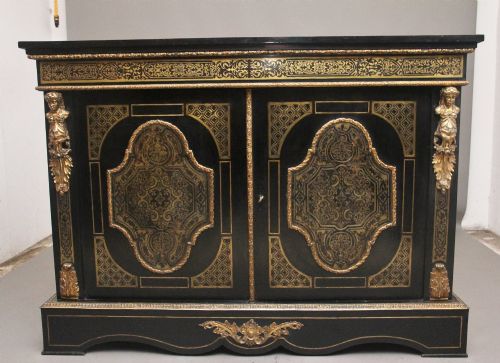
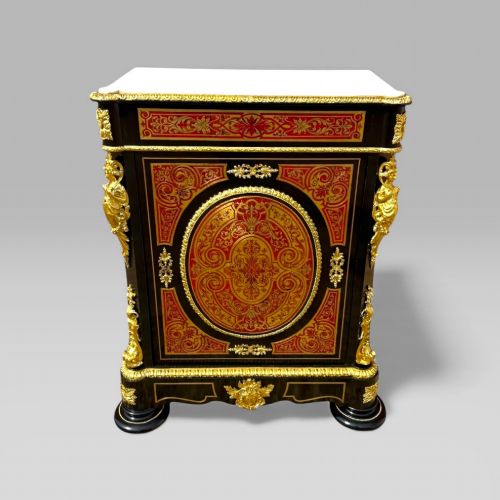
These ebonised boulle cabinet pieces bring the dark glamour of nineteenth century France into a room through intricate brass and tortoiseshell marquetry.
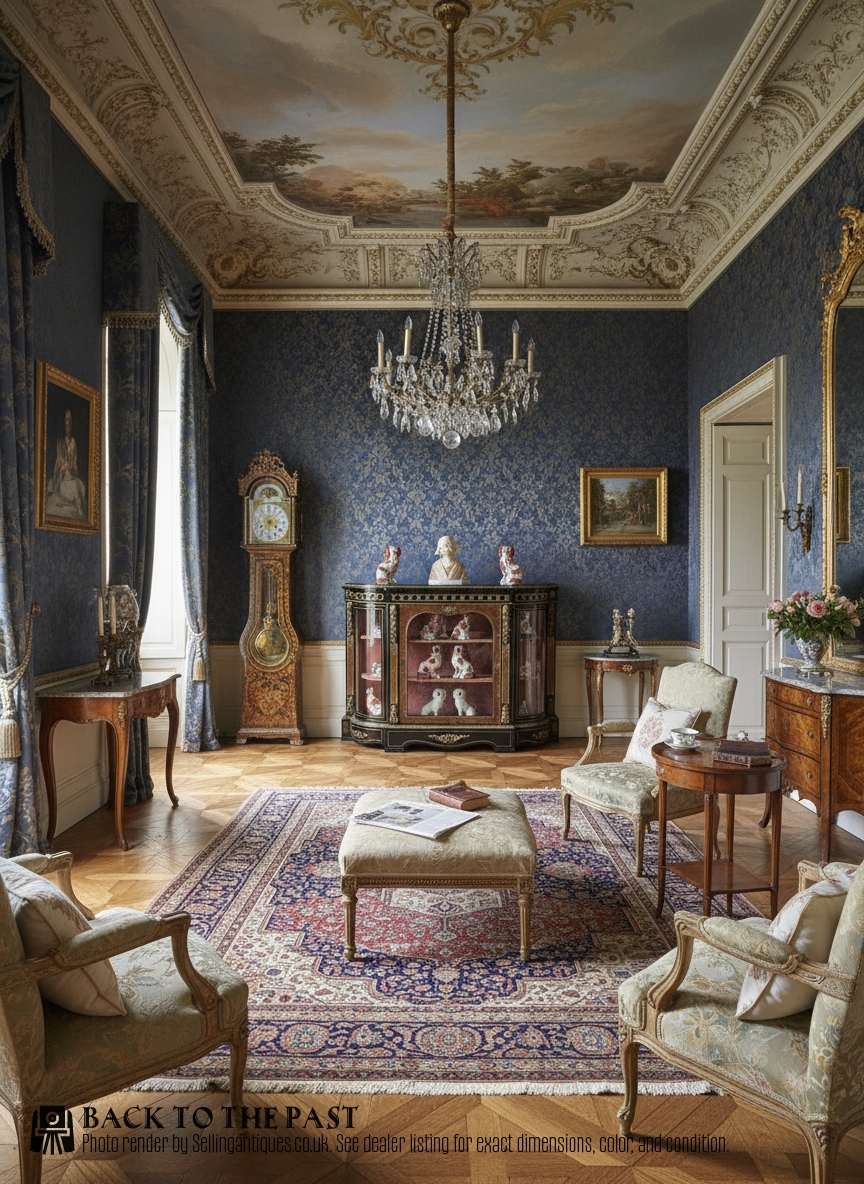
Ebonised Boulle Cabinet
An ebonised boulle cabinet sits at the intersection of French Revival furniture and nineteenth century interior display. Buyers searching for an ebonised boulle cabinet find grand pieces designed to hold collections while making a strong visual statement in a drawing room.
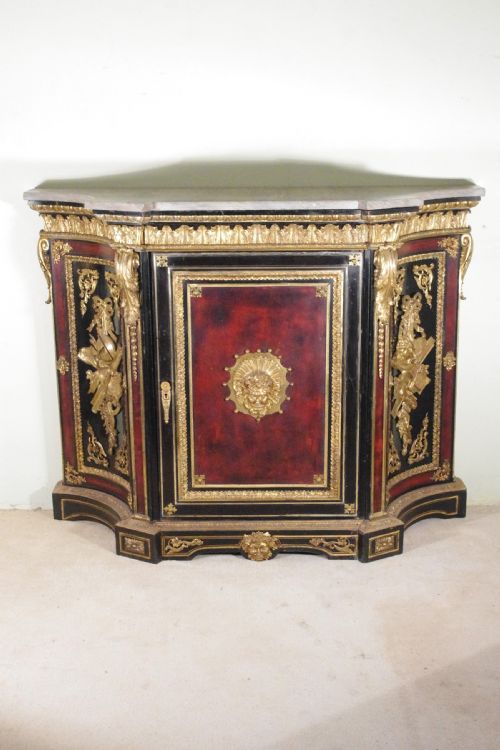
The form appears most frequently as a pier cabinet, credenza, or side cabinet dating from the 1860s and 1870s. These Napoleon III creations adapt earlier court aesthetics for Victorian and later collectors who favoured opulent French styling.
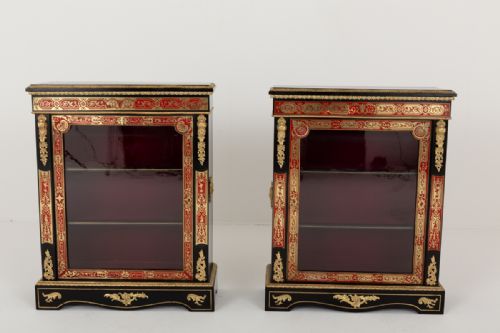
Display cabinets with glass doors and side cabinets featuring single or double doors dominate the available selection. Each object type serves to showcase decorative items while displaying the characteristic metallic inlay across its dark wooden surface.
Materials and construction
The structural carcass relies on ebonised wood, which provides a dense, dark ground that mimics costly ebony. Artisans then apply elaborate marquetry using brass and tortoiseshell, creating contrasting metallic and amber patterns.
Gilt bronze or ormolu mounts frame the edges, doors, and feet, adding sculptural weight and bright metallic highlights to the design. Glass panels appear on display variants, while velvet interiors sometimes line the compartments.
Ebonised Boulle Cabinet Retail Price Guide 2026
Typical asking prices for ebonised boulle cabinet among the pieces listed under this phrase on Sellingantiques today, from the lower quarter to the upper quarter. They describe what is for sale here now, not the wider market.
Materials across the inventory consistently include ebonised wood, brass, tortoiseshell, and ormolu.
Assessing quality
Quality rests in the precision of the marquetry and the crispness of the cast ormolu mounts. Finer examples display tightly fitted brass and tortoiseshell where individual lines remain sharp and uninterrupted across the wooden surface.
The weight and depth of the gilt bronze mounts separate standard production from superior work. Better pieces feature heavier, more deeply chased ormolu that integrates seamlessly with the ebonised structure.
The Ebonised Boulle Cabinet Glossary
- Ebonised
- Wood treated to imitate ebony, giving a deep black finish that contrasts sharply with metallic inlay. This treatment is common in nineteenth century revival furniture.
- Boulle
- A style of marquetry using brass and tortoiseshell, named after André-Charles Boulle. Artisans cut the materials together to create matching positive and negative patterns.
- Ormolu
- Gilt bronze mounts applied to furniture for decoration and protection. The technique involves coating bronze with a gold amalgam.
- Pier cabinet
- A low cabinet designed to stand against the wall space between windows. These pieces often feature a single glass door and flat top.
- Credenza
- A large side cabinet or sideboard used for serving or display. Nineteenth century interpretations frequently incorporate rich marquetry and ormolu framing.
Ebonised Boulle Cabinet: Frequently Asked Questions
What is an ebonised boulle cabinet?
An ebonised boulle cabinet is a nineteenth century French furniture piece made from dark ebonised wood inlaid with brass and tortoiseshell. These items often feature ormolu mounts and glass doors for display.
Such cabinets were produced during the Napoleon III period, reflecting a revival of earlier court styles adapted for Victorian drawing rooms.
How do you date these cabinets?
Dating relies on stylistic markers from the nineteenth century, particularly the Napoleon III and French Revival aesthetics popular around eighteen sixty to eighteen seventy. Construction methods and material combinations also point to this era.
Archival examples confirm that similar side cabinets and pier cabinets consistently date from the Victorian nineteenth century epoch.
Where were they used?
These cabinets served primarily in formal nineteenth century drawing rooms and reception spaces. They functioned both as display surfaces for decorative objects and as enclosed storage.
Glass-fronted display variants and credenzas allowed owners to showcase porcelain and curiosities while adding French elegance to the interior.
How do you care for tortoiseshell inlay?
Tortoiseshell and brass marquetry requires stable environmental conditions away from direct sunlight and excessive heat. Gentle dusting with a soft, dry cloth preserves the polished surface without damaging the delicate inlay.
Avoid moisture and chemical polishes, as these can destabilise the adhesives holding the brass and shell to the ebonised wood base.