

Brass Inlay Side Cabinet
A brass inlay side cabinet brings warmth and structure to a room, offering refined surface space alongside enclosed storage.
Brass Inlay Side Cabinet
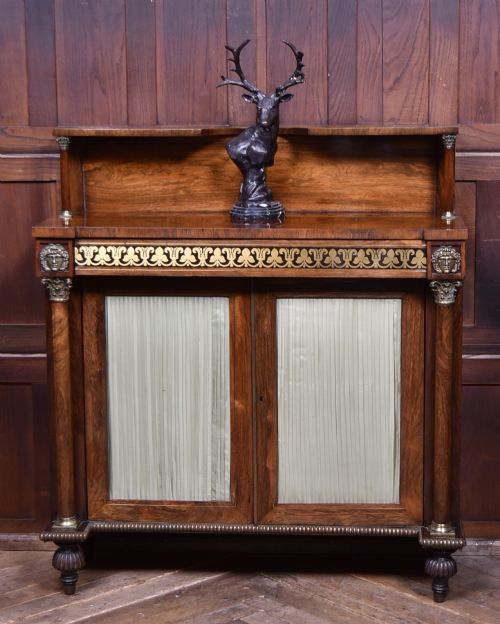
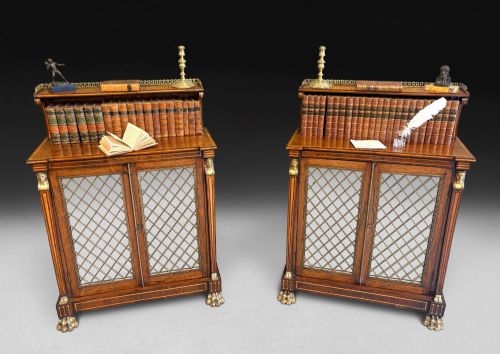
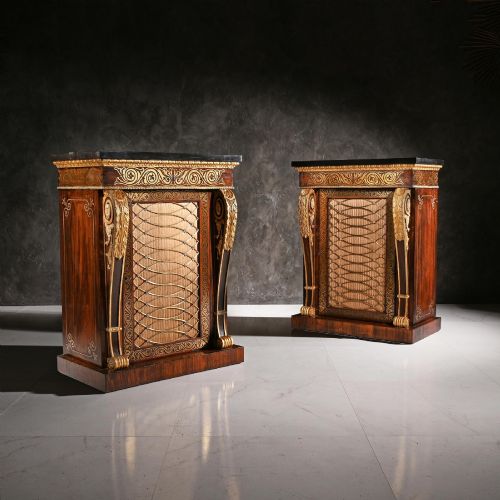
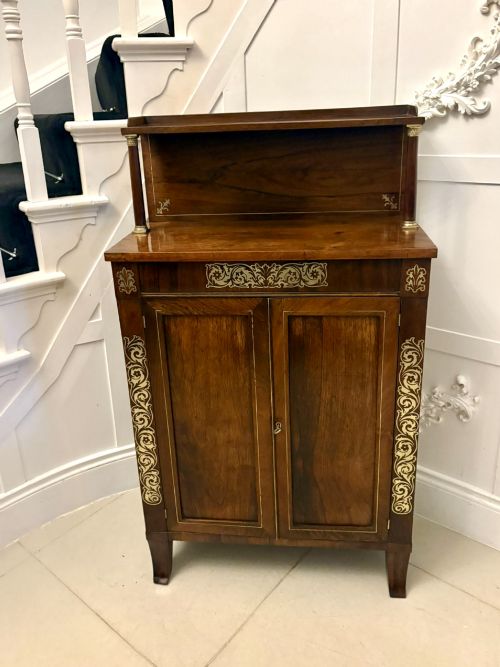
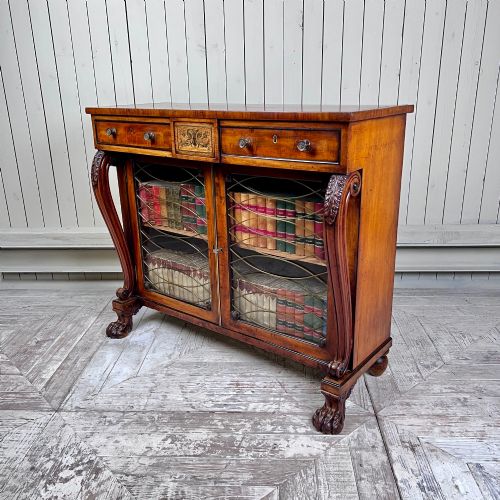
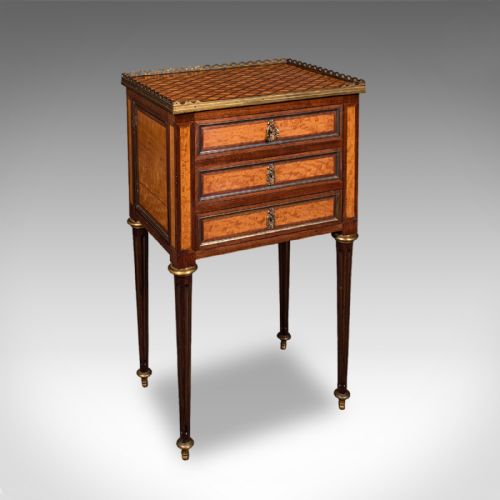
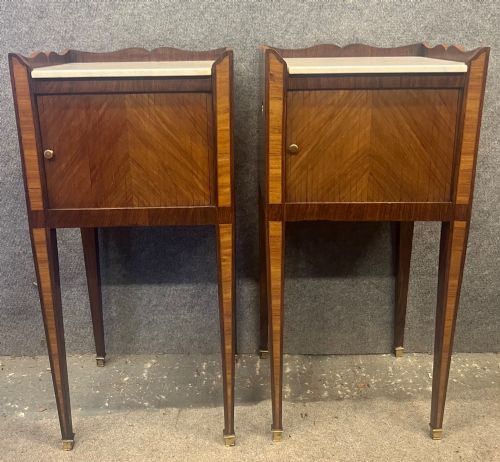
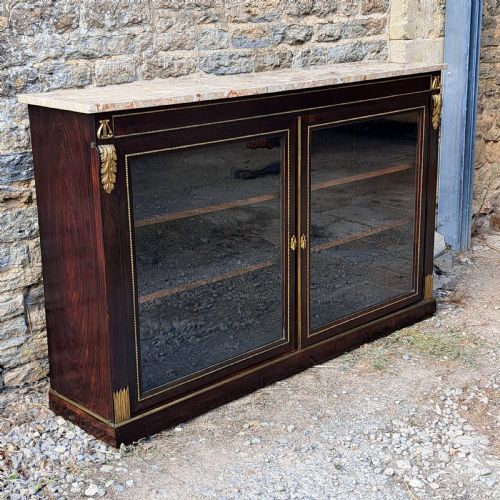
A brass inlay side cabinet is a storage piece designed to sit against a wall in a principal room or bedroom, combining timber construction with metallic ornamentation. The pieces seen here span periods from the Regency era through to the mid-twentieth century, with Victorian and French revival examples appearing frequently alongside earlier designs.
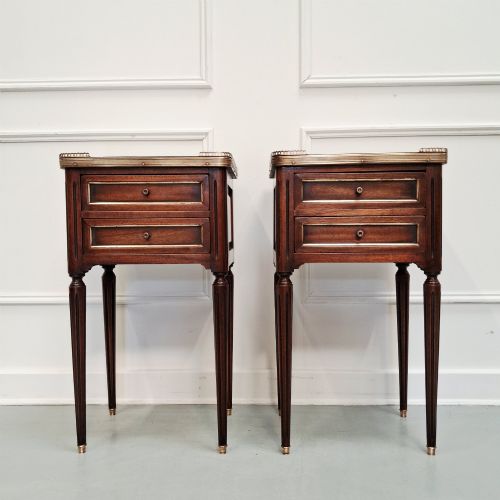
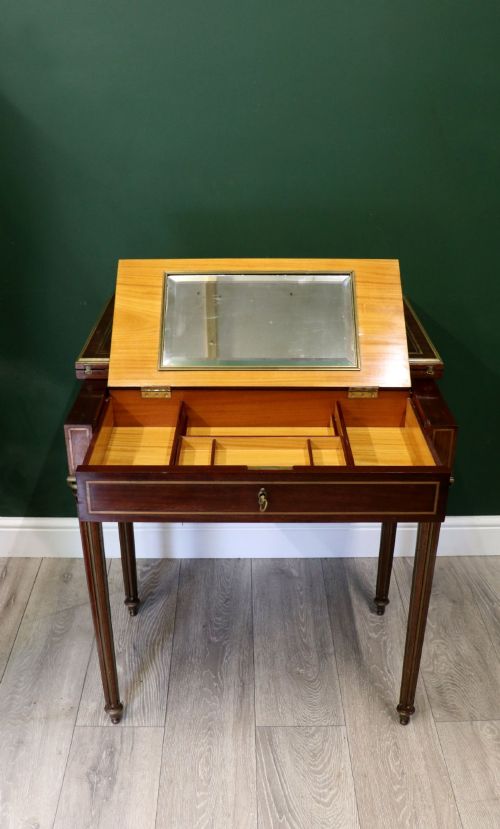
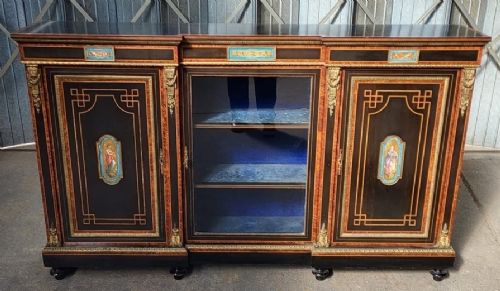
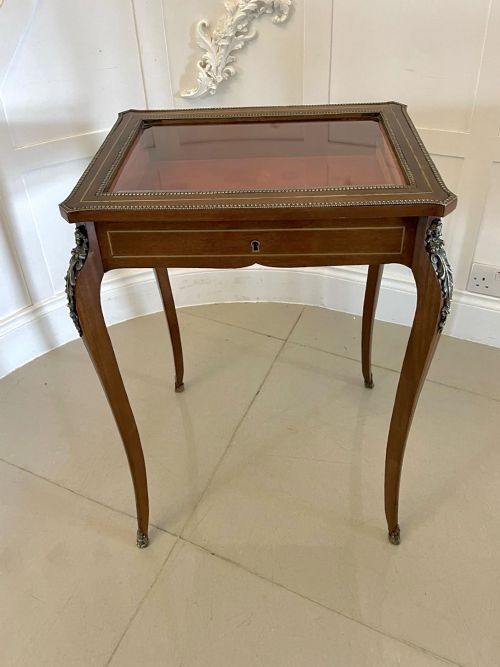
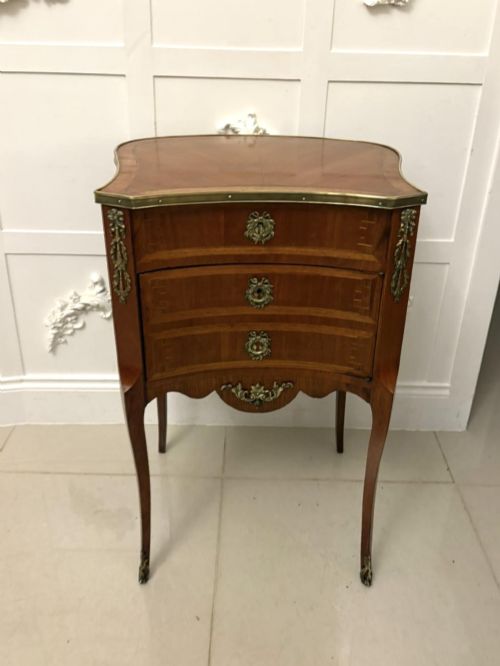
Forms range from traditional chiffoniers and bookcase cabinets to compact bedside tables and pier cabinets. Rosewood, mahogany, and walnut provide the primary foundations for these items, often enhanced by ebonised finishes or marquetry details.
Origin points encompass English cabinetmakers working in the Regency and Victorian styles, alongside continental workshops producing French Louis XV and Napoleon III variations. Buyers will also encounter occasional tables and bedside cabinets carrying distinct regional flourishes.
How They Were Made
Craftsmen built these cabinets using dense native and exotic hardwoods such as rosewood, mahogany, pollard oak, and walnut as a carcase, frequently applying veneers to achieve uniform grain patterns. Ebonised wood and tortoiseshell served to create dramatic contrasting backgrounds for metallic decoration.
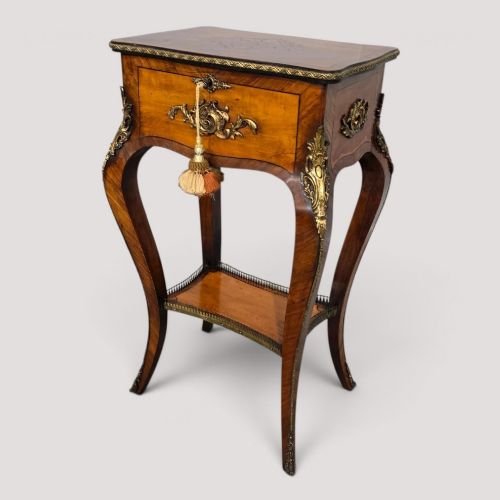
Brass was beaten, wire-drawn, or cast into intricate lines, scrolls, and Boulle marquetry patterns before being hand-set into channels carved into the timber surface. Ormolu mounts and fine brass handles completed the structural hardware, while marble tops added weight and utility to specific French commodes and consoles.
Brass Inlay Side Cabinet Retail Price Guide 2026
Typical asking prices for brass inlay side cabinet among the pieces listed under this phrase on Sellingantiques today, from the lower quarter to the upper quarter. They describe what is for sale here now, not the wider market.
Tortoiseshell and brass team up in Boullework, proving that beetles and brassware make surprisingly posh roommates.
What Varies in Quality
The precision of the brass inlay work dictates much of the distinction between standard and superior pieces, particularly where metal meets wood in tight curves or complex geometric scrolls. Tighter joints and smoother transitions indicate higher workshop standards during production.
Selection of timber veneers and the depth of the figure in rosewood or burr walnut influence visual impact. Heavier mounts, genuine tortoiseshell use, and the retention of original brass handles or ormolu elevate individual items within their period.
Louis Constantin Le Gaigneur
The Brass Inlay Side Cabinet Glossary
- Boulle
- A style of marquetry using brass and tortoiseshell inlaid together, popular in French furniture. This technique creates a rich decorative surface of contrasting metallic and organic tones.
- Chiffonier
- A low cabinet featuring shelves or a drawer, originating in the Regency and Victorian periods. It typically stands against a wall for display and storage.
- Pier Cabinet
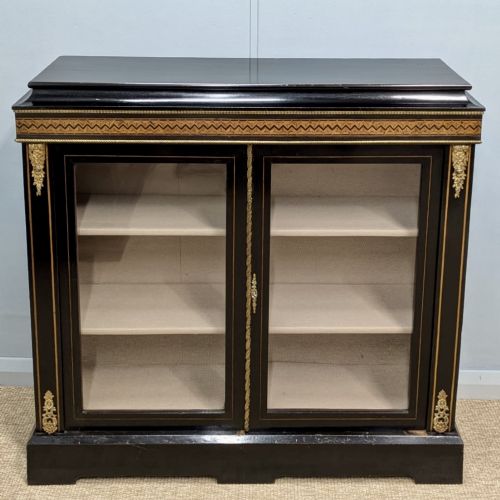
- A narrow cabinet designed to fit the wall space between windows. These pieces often incorporate glass doors and velvet linings for display.
- Ormolu
- Gilded bronze used for furniture mounts and decorative feet. The technique imparts a bright gold-coloured finish to metal elements.
- Marquetry
- The art of applying pieces of veneer to a structure to form decorative patterns. Craftsmen utilise various coloured woods and metals to create pictorial or geometric designs.
Brass Inlay Side Cabinet: Frequently Asked Questions
What is a brass inlay side cabinet used for?
These cabinets serve to store household items while offering a decorative surface for lamps, books, or ornaments. Their compact footprints allow them to fit easily into living rooms, hallways, and bedrooms.
Historically, larger versions functioned as bookcase cabinets or chiffoniers for dining rooms, while smaller variants acted as bedside tables or pier cabinets for display purposes.
How do I date a brass inlay side cabinet?
Dating relies on examining the timber species, construction methods, and prevailing decorative style of the period. Regency examples often feature rosewood with fine brass line inlay, whereas Victorian pieces frequently display burr walnut or ebonised surfaces.
French revival pieces from later in the nineteenth and early twentieth centuries adopt Louis XV or Napoleon III proportions, often combining marble tops with intricate marquetry.
How do I care for rosewood and mahogany furniture?
Keep wooden cabinets away from direct sunlight and radiators to prevent timber from drying out and veneers from lifting. Regular dusting with a soft, dry cloth preserves the polished finish without buildup.
Avoid using silicone-based polishes or excessive moisture, which can damage old French polish and discolour the delicate brass inlay work over time.
What is the difference between a chiffonier and a pier cabinet?
A chiffonier is typically a low sideboard featuring enclosed cupboards below, sometimes surmounted by a small shelf superstructure. They are characteristic of the Regency and Victorian periods.
A pier cabinet is designed specifically for the narrow wall space between windows, usually featuring a single glass door intended to display porcelain or small collections.