

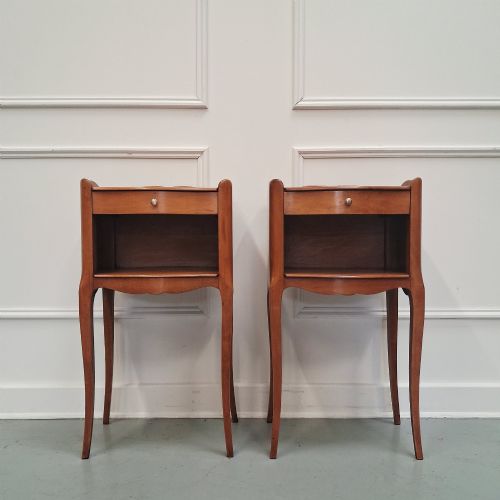
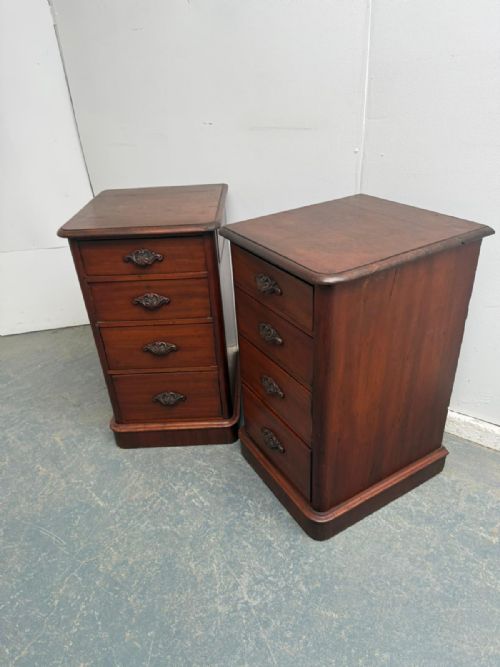
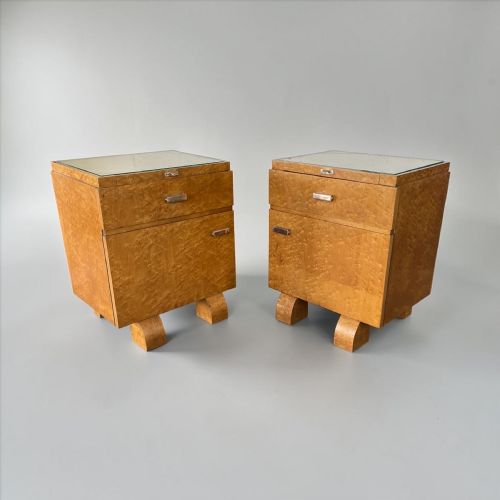
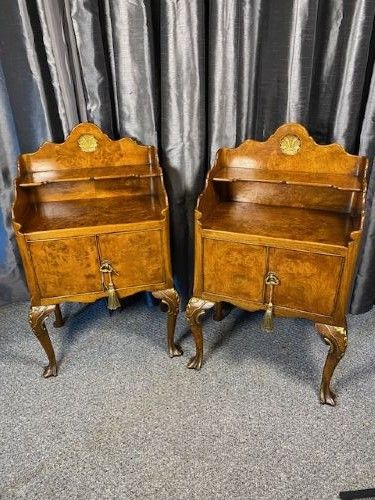
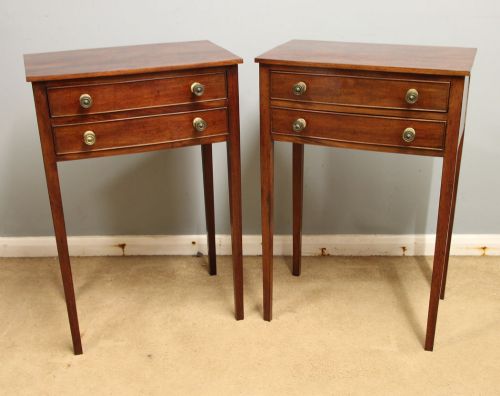
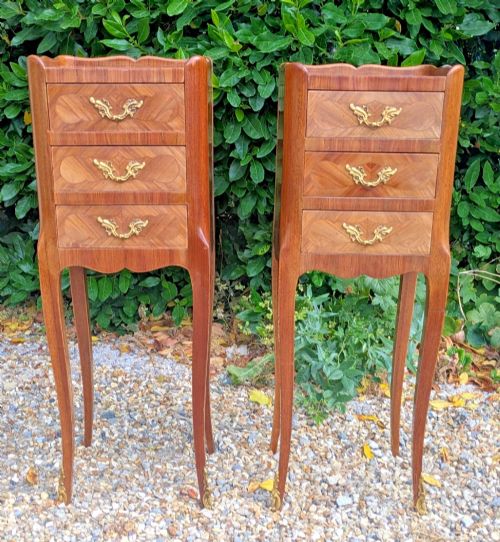
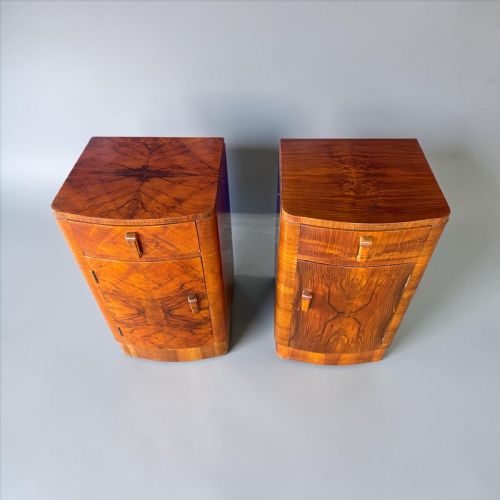
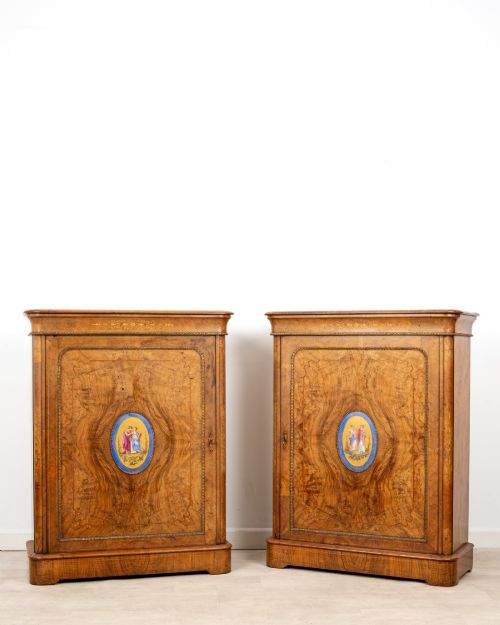
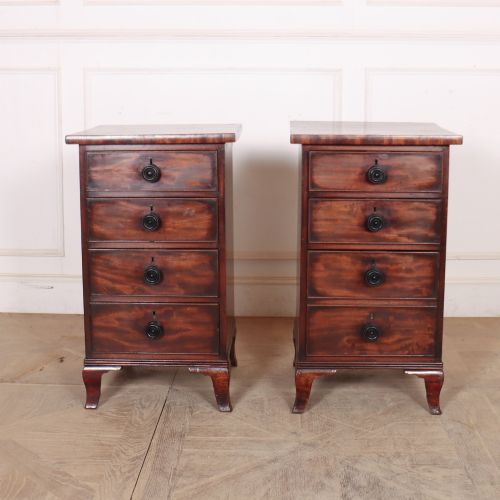
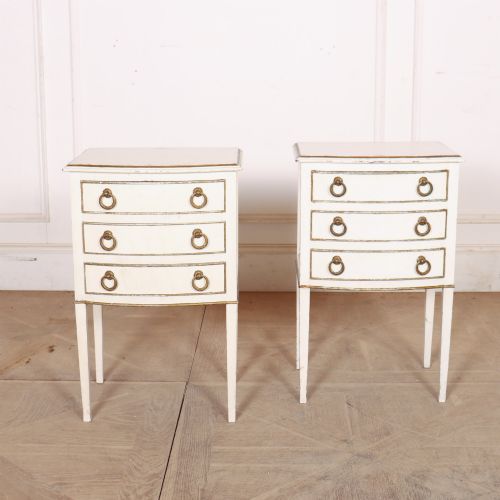
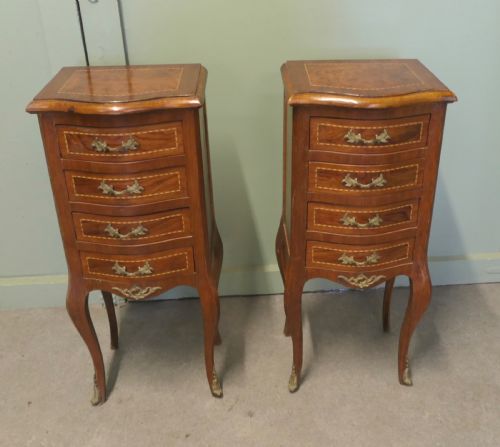
Pair of Side Cabinets
A pair of side cabinets brings symmetry and practical surface space to a room, uniting utility with period design.
Understanding pair of side cabinets
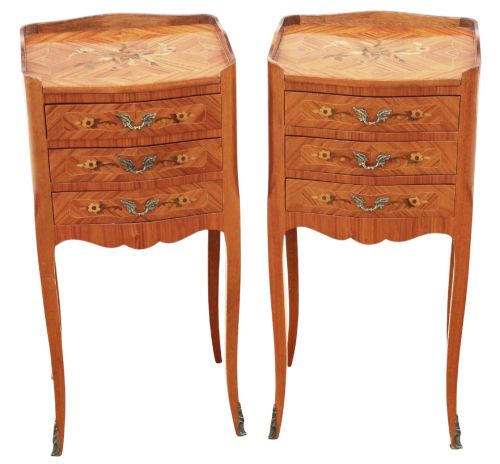
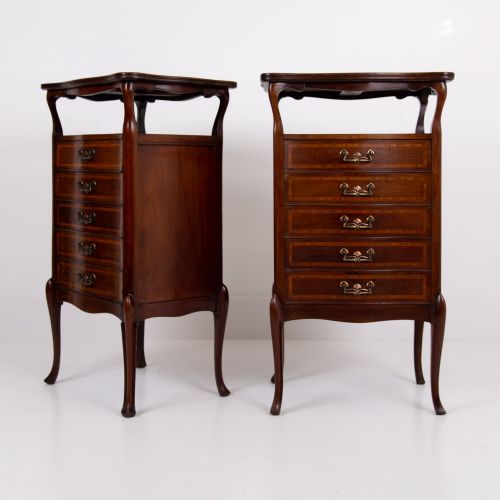
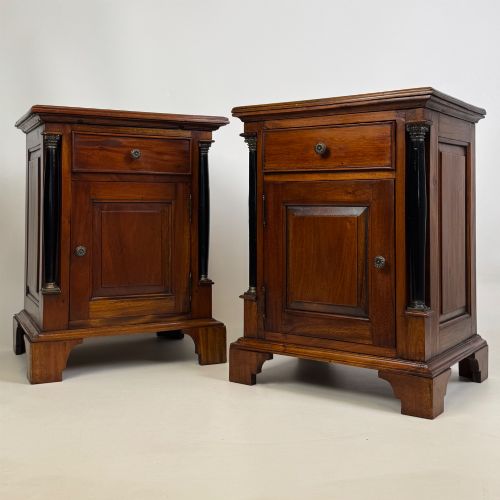
A pair of side cabinets consists of matched storage furniture designed to flank larger items or sit evenly within a room layout. The selections span major periods including Regency, Victorian, and Art Deco, offering distinct historical forms.
The archive and current listings show considerable variation in scale and timber, ranging from substantial display cabinets in ebonised wood and amboyna to smaller bedside units in mahogany and walnut. Architectural styles draw on French Louis XV Revival, Napoleon III, and Grand Regency influences.
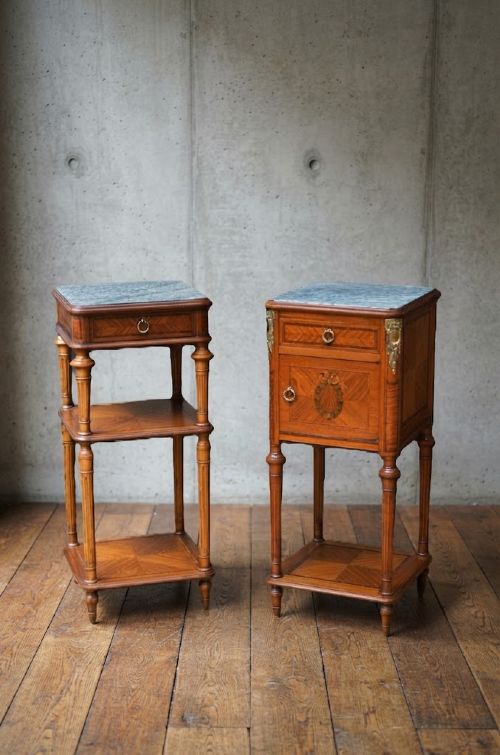
Buyers encounter formats that combine cupboard storage with display glass or open shelving. Ormolu mounts, marble tops, and marquetry frequently punctuate the primary timber carcasses across both nineteenth and twentieth-century examples.
Materials and construction
Cabinet makers utilised dense hardwoods such as mahogany, walnut, kingwood, and rosewood, often applying veneers of amboyna, satinwood, and burr walnut over solid framing. Marquetry and brass inlay decorate surfaces alongside cast ormolu mounts and giltwood accents.
Marble inserts appear frequently on continental and French revival pieces, providing durable, polished counter surfaces. Glass panels are incorporated into display doors, while brass fittings secure hinges, locks, and handles.
Retail Price Guide 2026
Typical UK retail prices for pair of side cabinets, calculated from the Sellingantiques database of over a million retail prices indexed since 2003. This retail price guide relies exclusively on Sellingantiques data; no external sources or auction records are used, so the figures do not describe the wider market.
Periods represented across the archive and active listings span Regency, Victorian, 1860, and 1930.
Judging the standard of workmanship
Quality rests upon the precision of the timber matching in veneers and the crispness of applied brass inlay, marquetry, and ormolu mounts. Finer examples display meticulous joinery in carcass construction and drawer linings, ensuring structural integrity over centuries.
The choice of secondary timbers and the retention of original marble tops or glass panes dictate the integrity of a piece. Finer workshops invested heavily in hand-carved details and balanced grain selection across both matched units.
Louis Constantin Le Gaigneur·Maurice Adams·Bowman Brothers
The Pair of Side Cabinets Glossary
- Ormolu
- Gilded bronze mounts applied to furniture for decorative enrichment. This technique gained prominence in French and nineteenth-century revival pieces.
- Marquetry
- Inlaid patterns of various woods applied to a carcass to create pictorial or geometric designs. It requires high skill to align across two matching cabinets.
- Ebonised
- Timber treated to resemble ebony, typically achieved by staining fruitwood or other light woods black. This finish defines many Victorian examples.
- Boulle
- A method of marquetry using tortoiseshell and brass inlay, named after French cabinet maker André-Charles Boulle. It appears on Napoleon III pieces.
- Amboyna
- A highly prized exotic burl timber exhibiting a rich, mottled grain. Cabinet makers utilised it for decorative veneering on high-status surfaces.
Frequently Asked Questions
How are side cabinets matched?
Matched pairs share identical dimensions, timber selection, and decorative schemes created during the same period by the same workshop.
Minor variations in grain pattern naturally occur due to the use of solid or veneered wood, but overall construction remains entirely consistent.
Where should I place these?
These cabinets work well flanking a bed, framing a fireplace, or serving as balanced storage in a hallway or reception room.
Their matched nature creates visual symmetry and provides functional surface space for lamps or display items.
How do I care for marble tops?
Marble surfaces require regular wiping with a soft, damp cloth and gentle soap to prevent staining from liquids or oils.
Avoid acidic cleaning agents or abrasive pads that can etch or dull the polished stone finish over time.
What timber types are common?
Mahogany, walnut, and oak dominate the construction of these units, frequently enhanced by exotic veneers like kingwood and amboyna.
Lighter woods such as satinwood and maple appear in later Art Deco and Edwardian designs.