

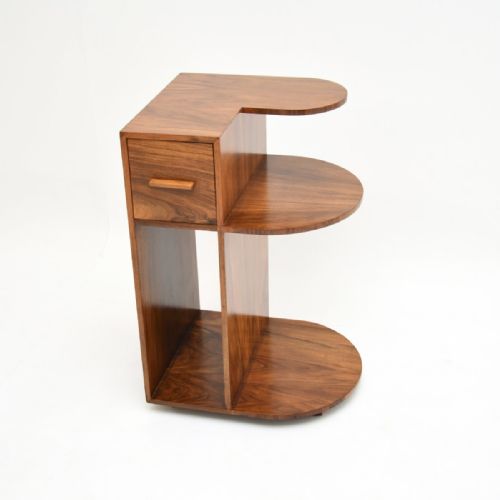
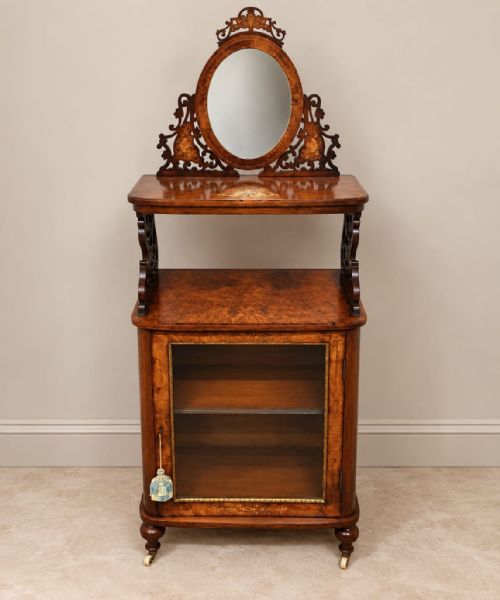
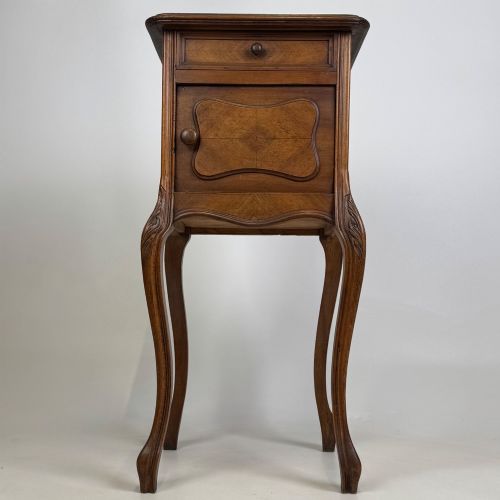
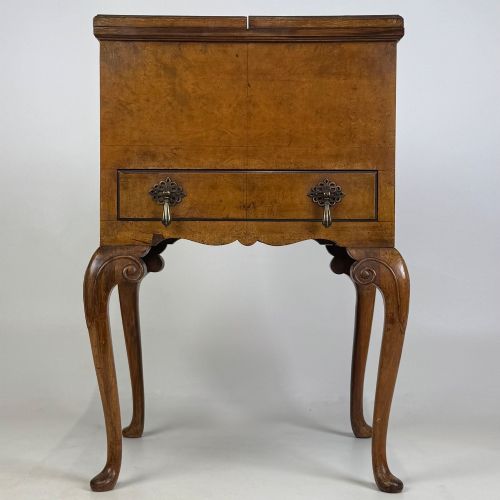
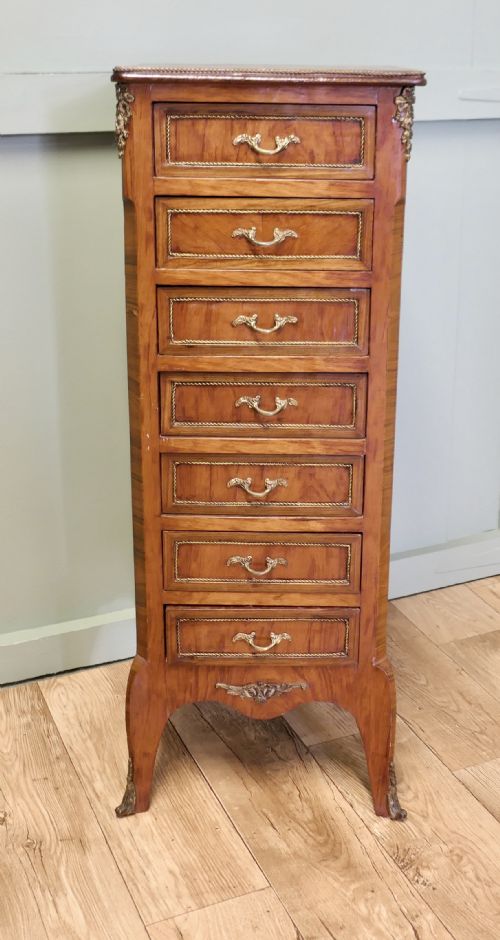
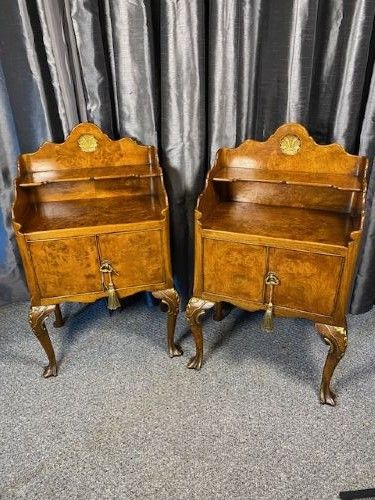
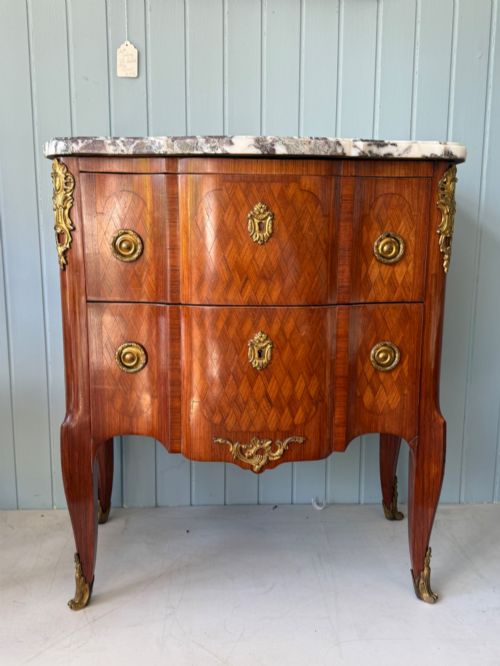
Antique Walnut Side Cabinet
An antique walnut side cabinet brings rich grain and practical enclosed storage into a room, offering a functional surface topped with timber, marble or glass.
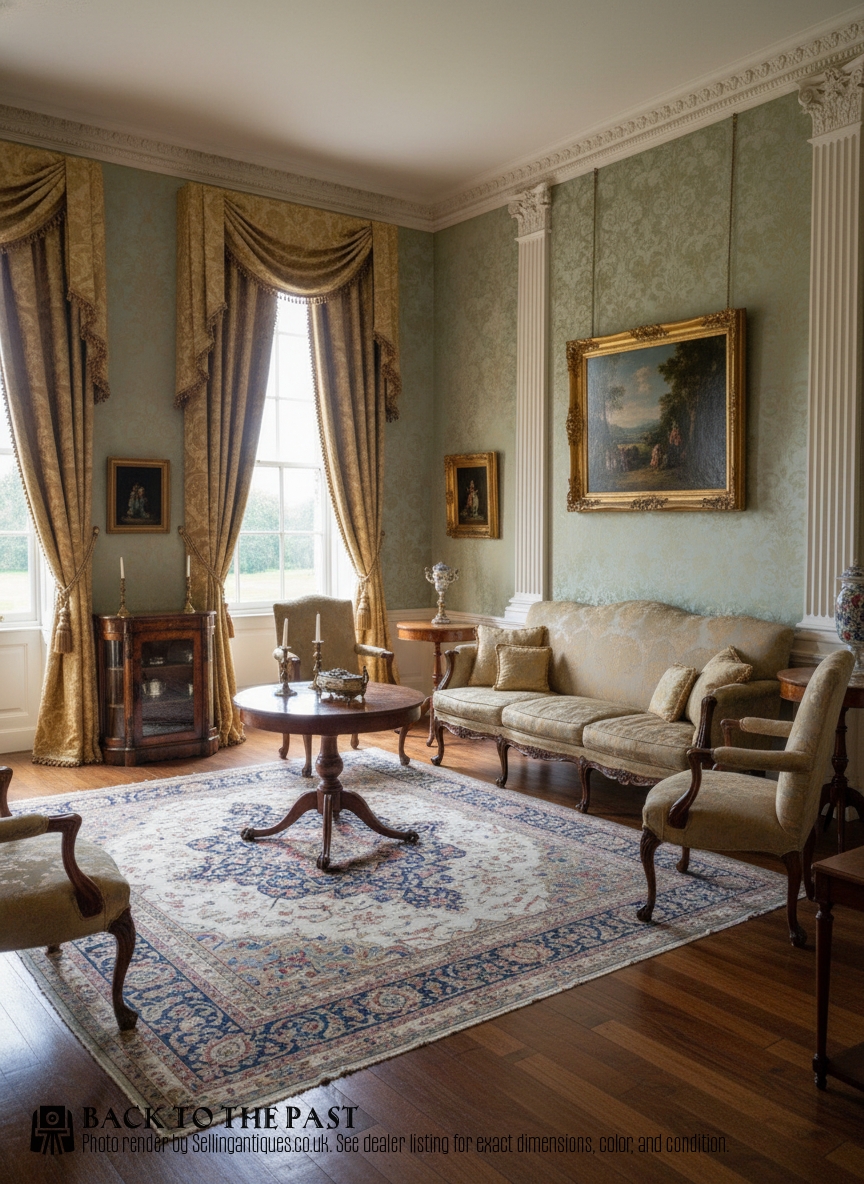
Forms and Origins
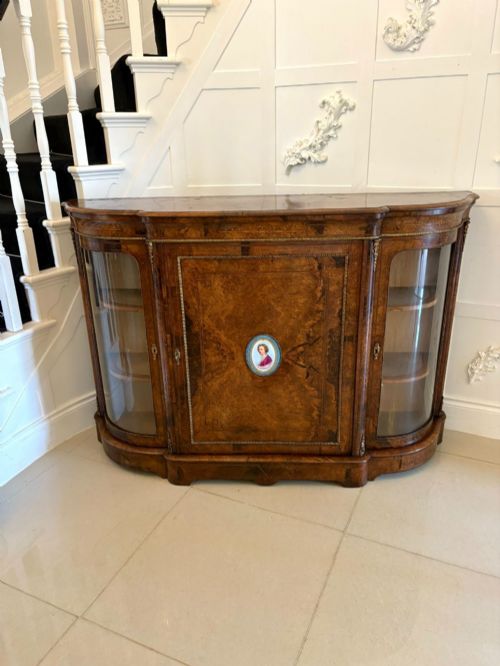
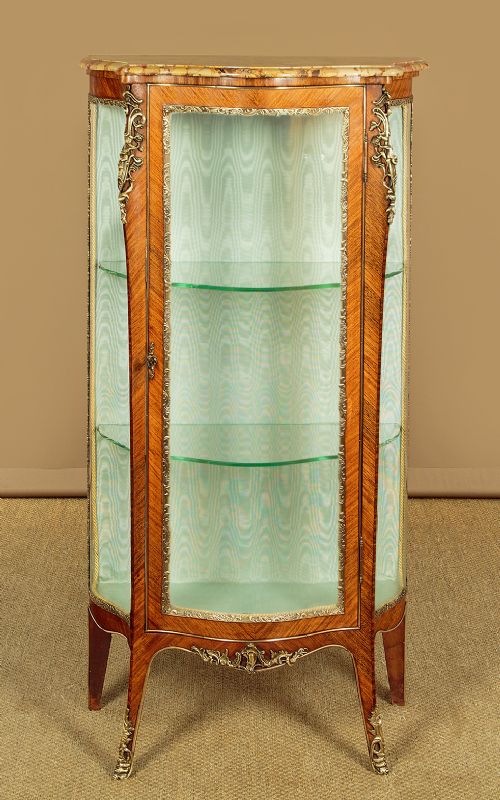
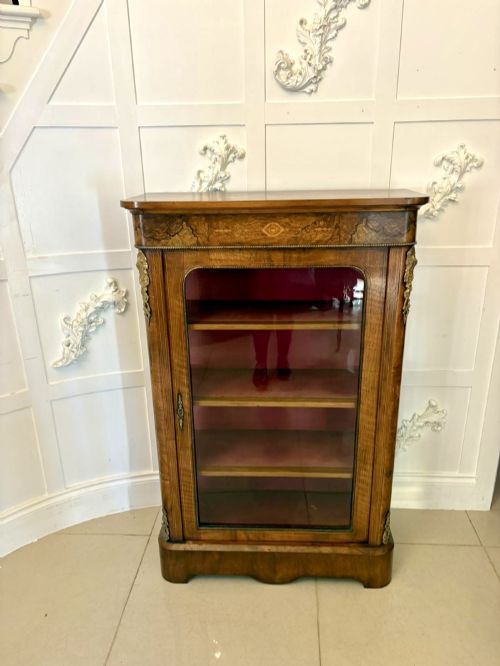
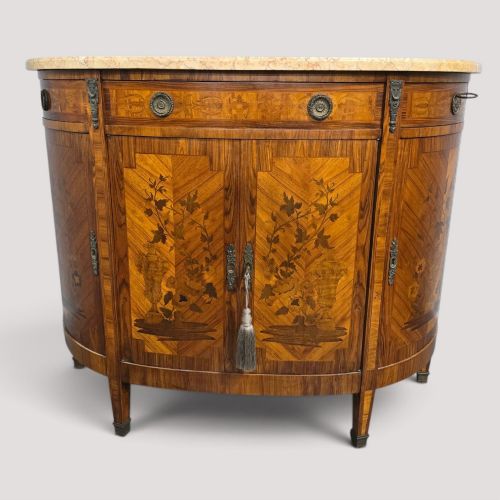
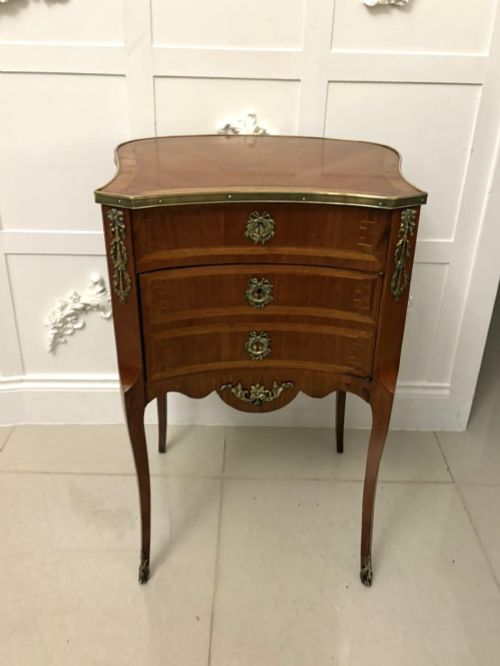
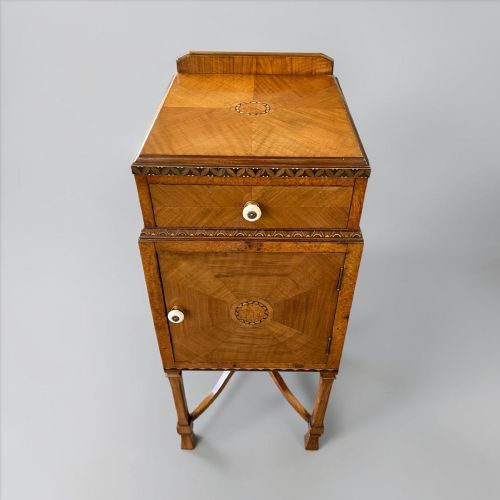
An antique walnut side cabinet covers a broad family of storage furniture, including bedside cabinets, credenzas, music cabinets, and pier cabinets from the nineteenth century. Buyers searching this phrase most frequently encounter Victorian pieces, alongside French interpretations and Louis XV style variants.
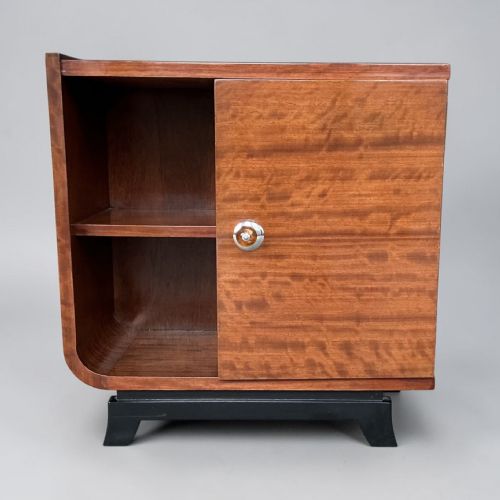
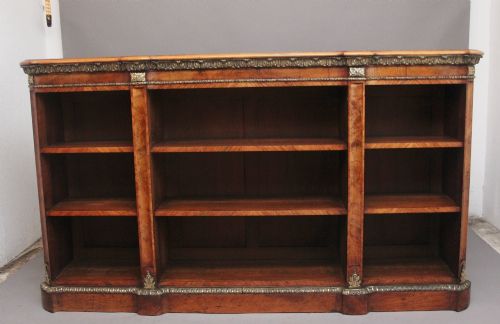
The selection ranges from compact bedside cupboards and lamp stands to larger display cabinets and credenzas equipped with glass doors or open shelving. Pieces frequently originate from English workshops or French makers, spanning the eighteen-fifties through to the early twentieth century.
Materials and Construction
Cabinet makers utilised solid walnut and decorative burr walnut veneers, frequently enhancing surfaces with satinwood inlay, floral marquetry, and wood inlay patterns. Structural and decorative detailing often incorporates brass, ormolu mounts, porcelain plaques, and mirrored doors.
Many larger side cabinets and French bedside pieces integrate fitted marble tops, while music cabinets and bedside cupboards provide specialised interior compartments, drawers, and pot cupboard storage.
Retail Price Guide 2026
Typical UK retail prices for walnut side cabinet, calculated from the Sellingantiques database of over a million retail prices indexed since 2003. This retail price guide relies exclusively on Sellingantiques data; no external sources or auction records are used, so the figures do not describe the wider market.
The listings on this site record walnut side cabinets spanning the nineteenth century, including Victorian and Louis XV style pieces.
Craftsmanship and Materials
Quality rests in the selection of timber veneers, where intensely figured burr walnut and precise floral marquetry or satinwood inlay set finer examples apart from plainer constructions. The integration of decorative metal mounts, original marble tops, and porcelain plaques dictates the decorative ambition of each piece.
Structural refinement shows in the execution of carved pediments, mirror doors, and the precision of fitted interiors such as shelves and drawers designed for sheet music or bedside storage.
Trapnell and Gane·Gill and Reigate
The Antique Walnut Side Cabinet Glossary
- Burr Walnut
- A highly figured timber grain derived from tree growths, prized for its swirling patterns on cabinet doors and panels.
- Credenza
- A low dining or drawing room side cabinet, frequently featuring glass display doors or central cupboards.
- Ormolu
- Gilt-bronze mounts applied to furniture for decorative enrichment, common on French and nineteenth-century pieces.
- Marquetry
- Elaborate wood inlay work forming floral or geometric patterns across the cabinet surfaces.
- Pier Cabinet
- A narrow display cabinet designed to fit wall spaces between windows.
Frequently Asked Questions
What is the difference between a credenza and a side cabinet?
A credenza is a specific form of low side cabinet often featuring glass doors or decorative porcelain plaques, historically used for serving or display in formal rooms.
Other side cabinets encompass narrower pier cabinets, music cabinets, and bedside cupboards designed for different domestic functions.
How do I identify a Victorian walnut side cabinet?
Victorian examples date from the nineteenth century and typically display rich burr walnut veneers, sometimes augmented by satinwood inlay, floral marquetry, or carved wooden pediments.
Many of these pieces incorporate glass doors, mirrored panels, or ormolu mounts characteristic of nineteenth-century revival styles.
Are French walnut side cabinets different from English ones?
French side cabinets, particularly bedside variants, frequently feature original fitted marble tops and ornate brass mounts in Louis XV or revival styles.
English pieces tend to focus on marquetry inlay, satinwood crossbanding, and configurations such as music cabinets or open bookcases.
Where should I place a walnut side cabinet at home?
Bedside cabinets and pot cupboards suit bedroom settings as lamp stands and nightstands with enclosed storage for small items.
Larger credenzas, display cabinets, and pier cabinets fit living rooms and hallways where their timber grain, glass doors, and shelved interiors can be appreciated.