
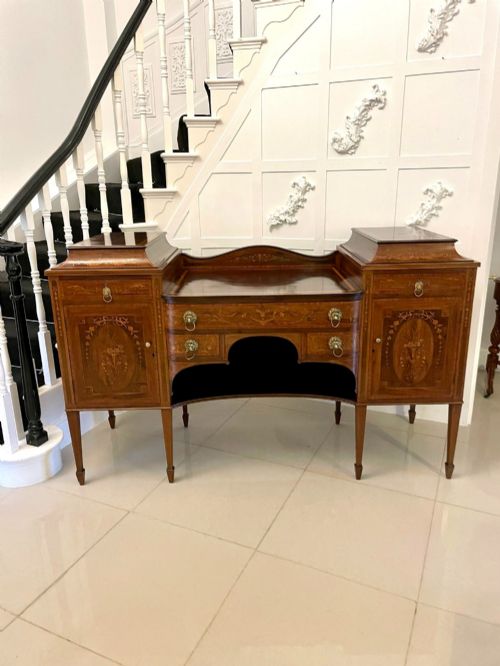


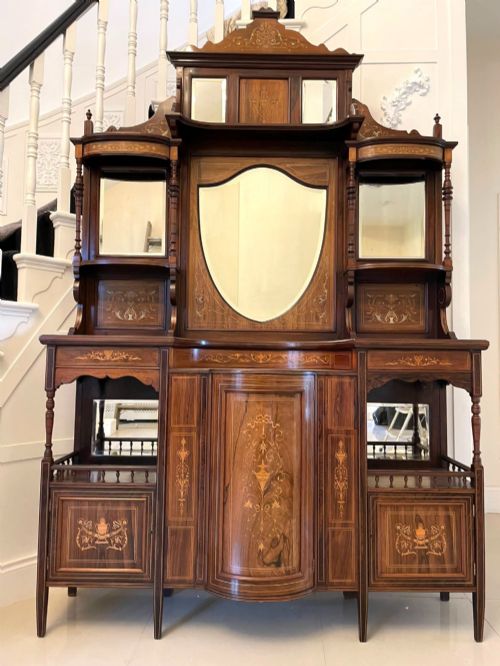
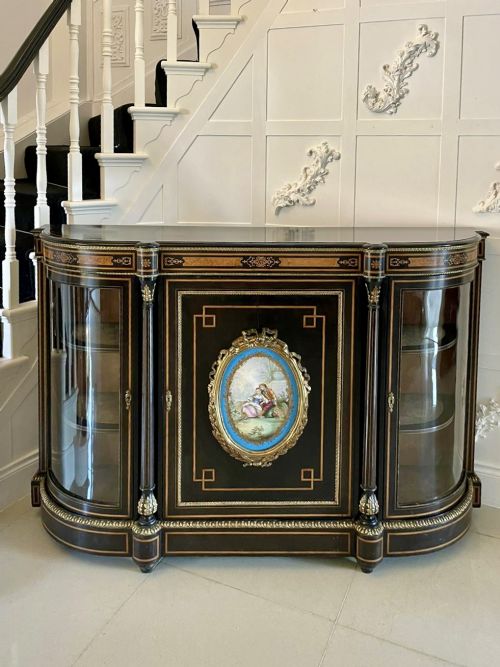
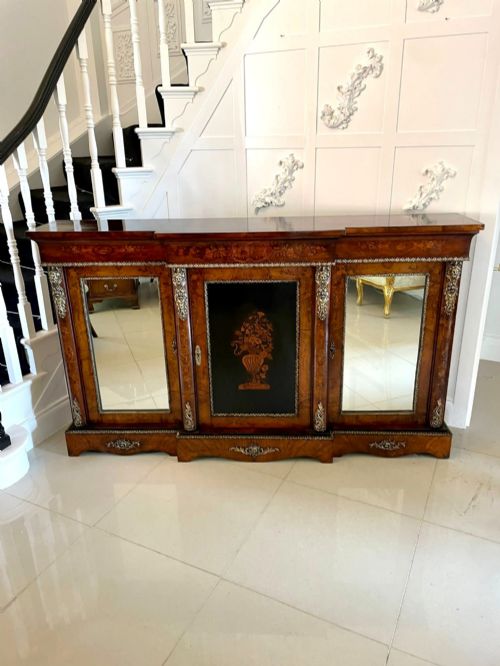
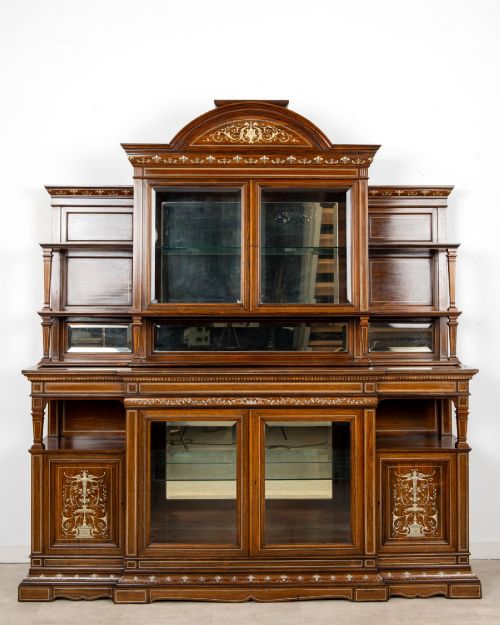
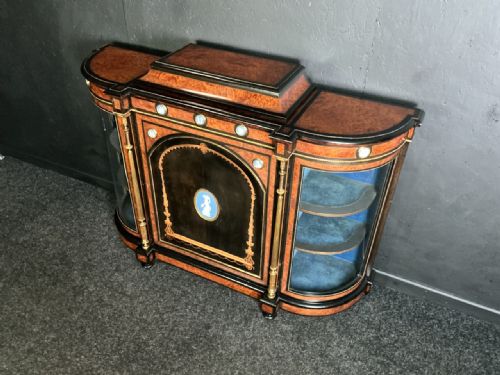
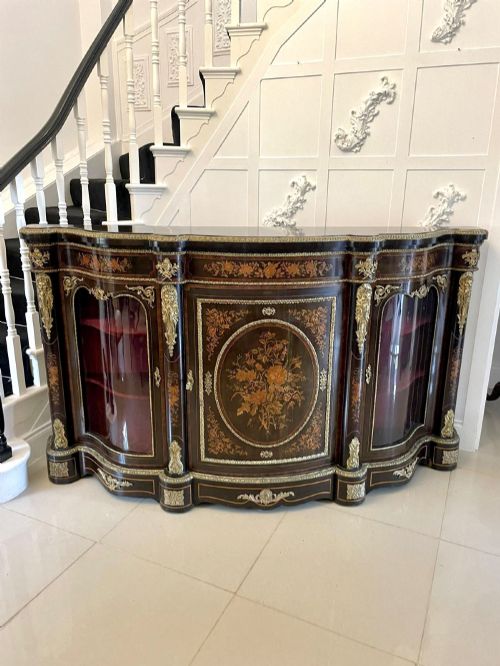
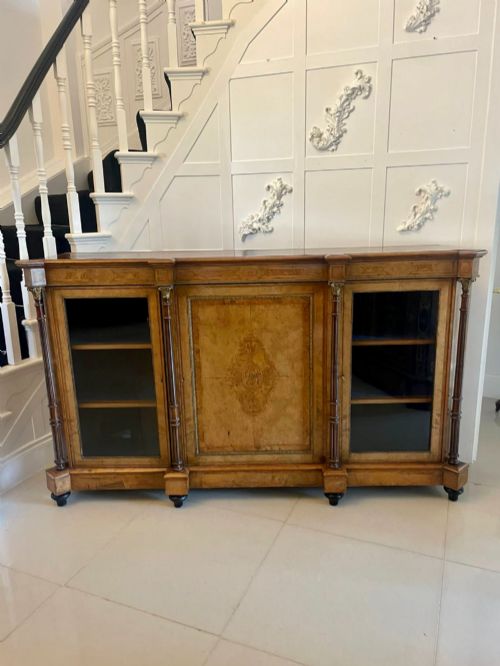
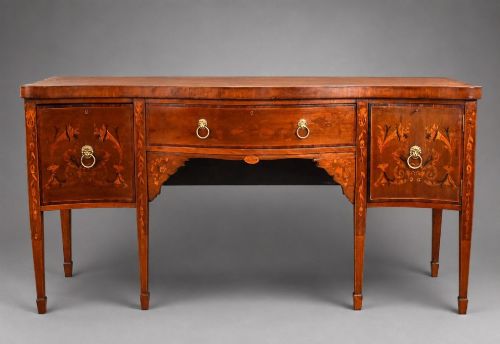
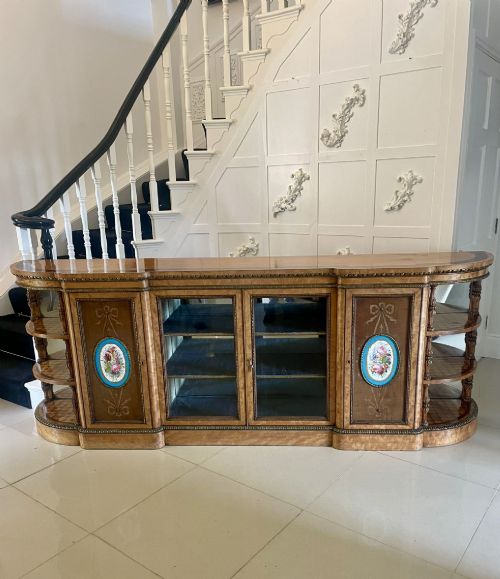
Marquetry Credenza Sideboard
When you want a marquetry credenza sideboard, you are looking at substantial nineteenth-century display furniture built to anchor a formal room with timber and brass.
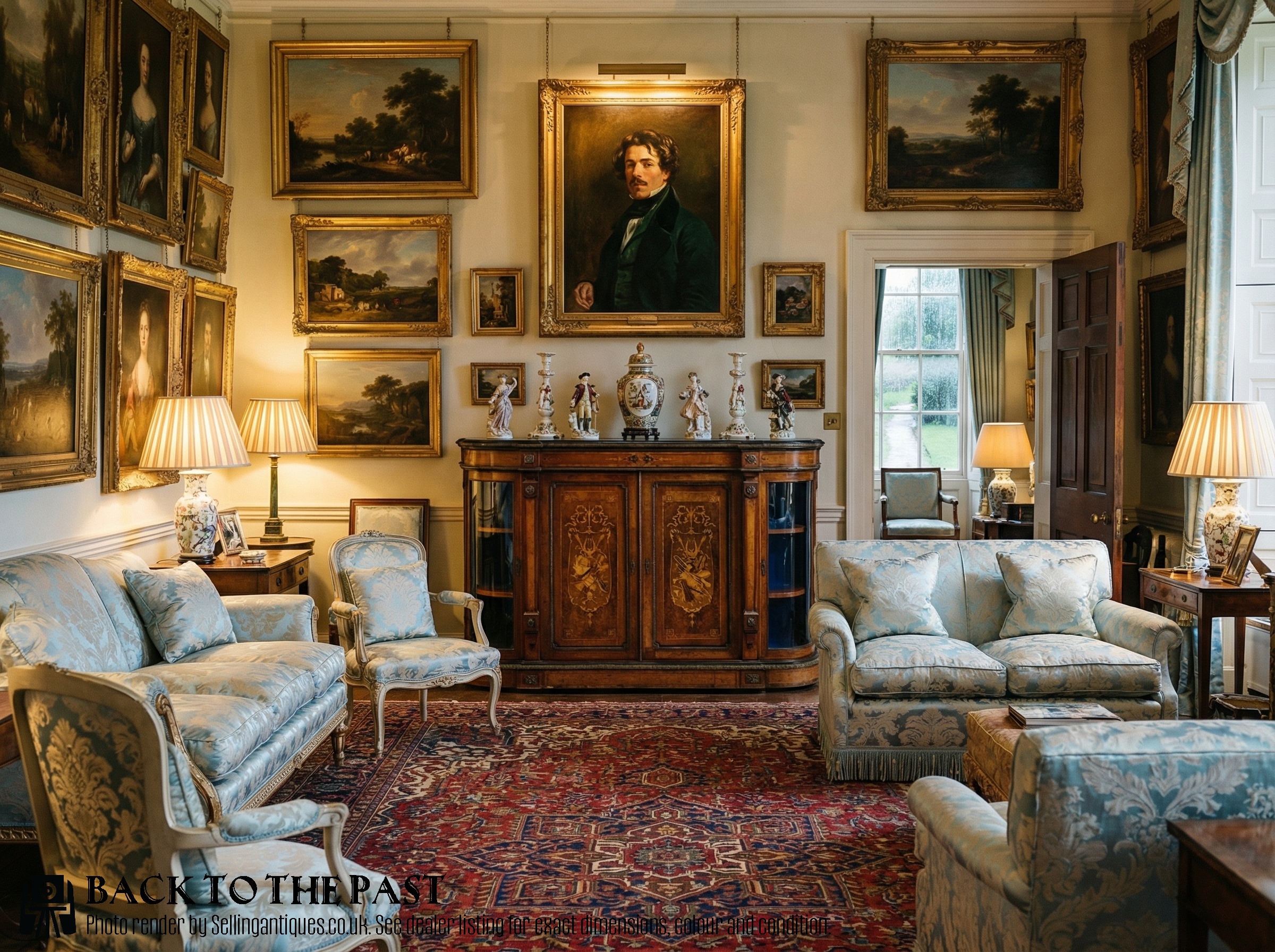
Marquetry Credenza Sideboard
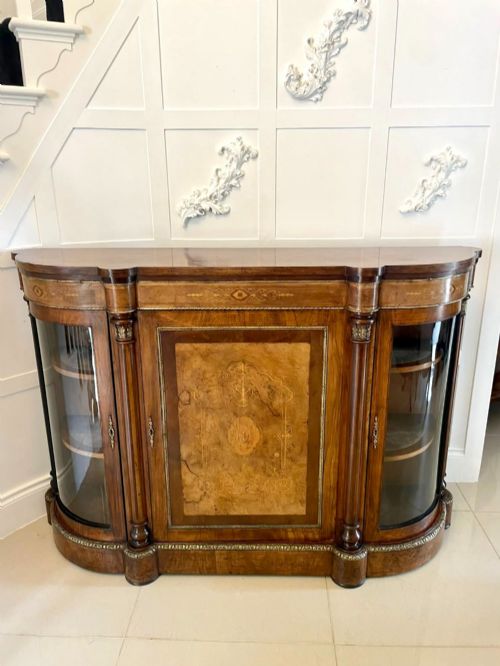
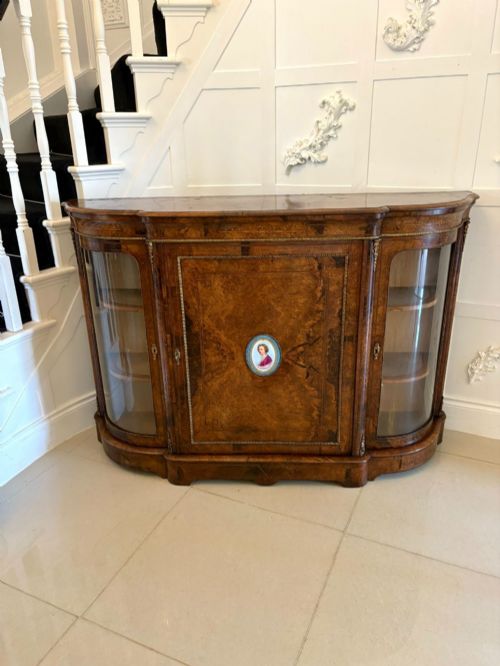
A marquetry credenza sideboard combines the enclosed storage of a low cabinet with decorative wood inlay and often central glass doors for display. The Victorian era dominates these listings, frequently rendered in burr walnut with serpentine fronts and mounted with ormolu.
Makers working within nineteenth-century revival styles produced these pieces for grand drawing rooms and dining spaces. Alongside walnut examples, listings feature mahogany, rosewood, and satinwood, stretching from mid-Victorian productions into Edwardian interpretations.
Materials and construction
Cabinetmakers utilised figured veneers like burr walnut, amboyna, and satinwood over stable carcases, laying down intricate floral marquetry panels by hand. Ormolu mounts cast in bronze provide gilded accents along the pilasters and borders.
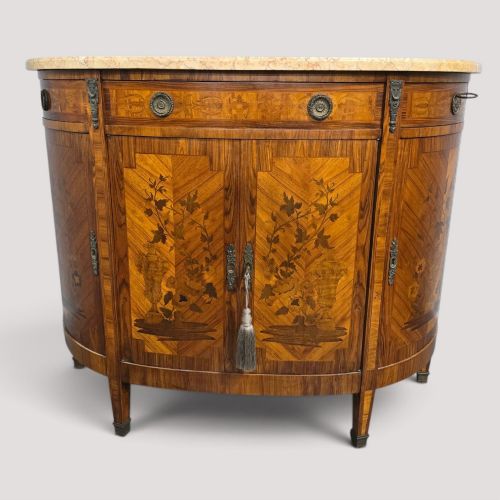
Glass panels are often set into curved or flat doors framed by contrasting stringing in ebony and boxwood. Polished marble tops appear on French variants, adding weight and surface durability to the timber frames.
Marquetry Credenza Sideboard Retail Price Guide 2026
Typical asking prices for marquetry credenza sideboard among the pieces listed under this phrase on Sellingantiques today, from the lower quarter to the upper quarter. They describe what is for sale here now, not the wider market.
Listings span the nineteenth and early twentieth centuries, featuring periods from Georgian and Victorian up to Edwardian revival styles.
Factors determining quality
The density and selection of the burr walnut veneer establish the visual depth of the primary surfaces. Finer examples display symmetrical grain matching and crisply rendered floral marquetry without lifting veneers.
Mount quality separates standard workshop output from exhibition pieces, where heavy ormolu castings are meticulously chased. Maker attribution, through stamps or signatures from houses like Gillows or Edwards and Roberts, elevates the standing of a piece.
Hewetsons London·Collinson and Lock·Gillows·Maison Gagneau·James Hicks·Edwards and Roberts
The Marquetry Credenza Sideboard Glossary
- Marquetry
- Decorative wood inlay forming pictorial or floral patterns using various tinted veneers. These precise insertions sit flush into the background timber.
- Credenza
- A low dining or drawing-room cabinet designed for serving or display, typically featuring central cupboards flanked by glass doors. The form evolved significantly during the Victorian period.
- Ormolu
- Gilded bronze mounts used extensively to edge and ornament nineteenth-century furniture cabinets. The technique involves applying a mercury-gold amalgam to cast bronze.
- Burr Walnut
- Highly figured timber harvested from walnut tree growths, prized for its swirling, knotted grain patterns. It forms the primary veneered surface on many nineteenth-century pieces.
- Serpentine
- A front contour that curves outward at the centre and inward toward the ends, creating a undulating profile. This shaping requires expert carpentry during assembly.
Marquetry Credenza Sideboard: Frequently Asked Questions
How do I date a Victorian credenza?
Dating relies on examining the timber species, mounting styles, and construction methods recorded across nineteenth-century examples. Mid-century pieces often showcase heavy ormolu mounts and burr walnut veneers, while later Edwardian items lean toward satinwood and Sheraton revival motifs.
Maker stamps and stamps from firms such as Edwards and Roberts help narrow the production window. Comparing the complexity of the floral marquetry against known exhibition pieces offers further chronological context.
Where should I place a credenza sideboard?
These large cabinets require a substantial wall in a dining room, hallway, or living area to anchor the space properly. Their shallow depth relative to their length allows them to sit comfortably without blocking primary walkways.
Keep them away from direct sunlight and strong heat sources to protect the delicate wood veneers and marquetry inlay from drying out. The top surface provides an ideal display area for lamps, ceramics, or framed artwork.
Are French and English credenzas different?
English examples on this page frequently feature burr walnut with robust ormolu mounts and floral marquetry panels. They emphasise architectural presence and timber figure.
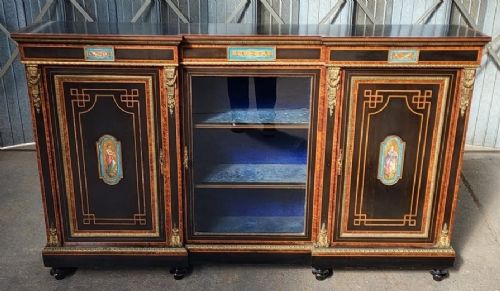
French variations often incorporate marble tops, ebonised finishes, or boullework, reflecting distinct continental tastes from Napoleon III and Louis periods. Both traditions share high standards of cabinetmaking and decorative surface work.