


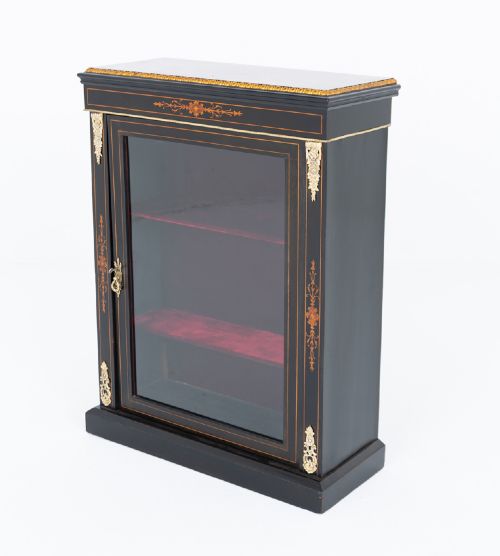
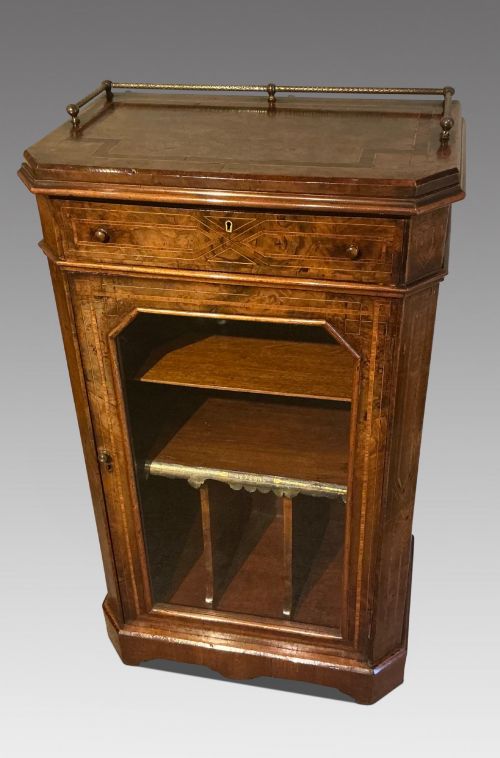
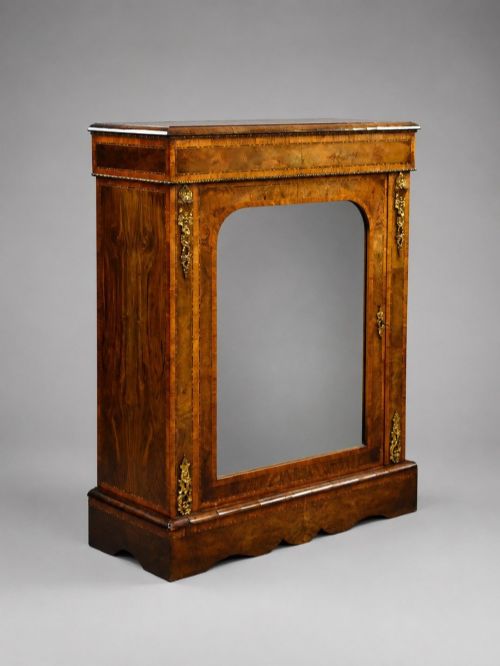


Glazed Music Cabinet
A glazed music cabinet offers a slender home for sheet music, bringing glass-fronted display to period parlours.
Glazed Music Cabinet
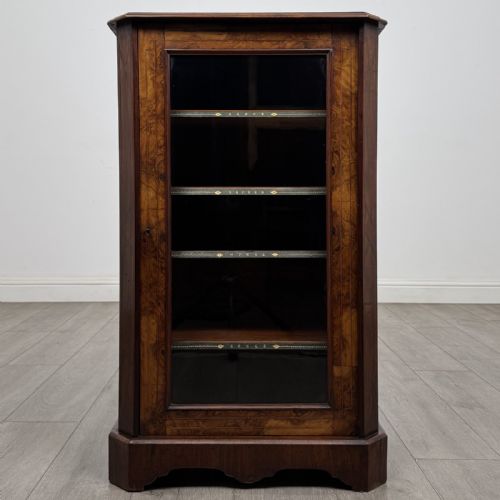
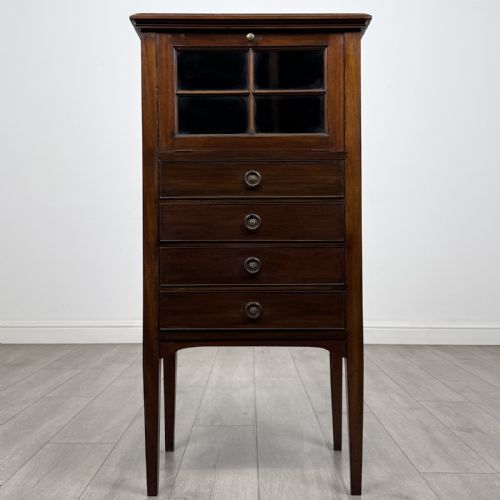
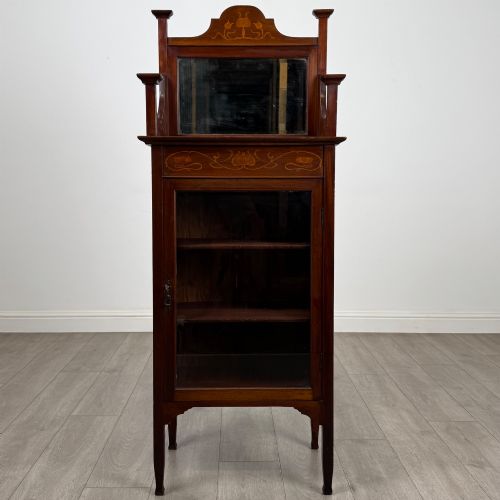
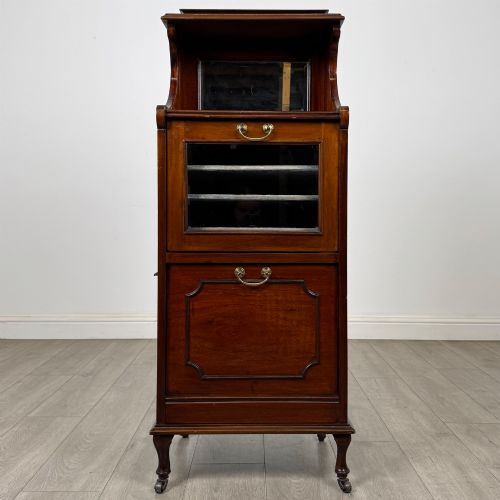
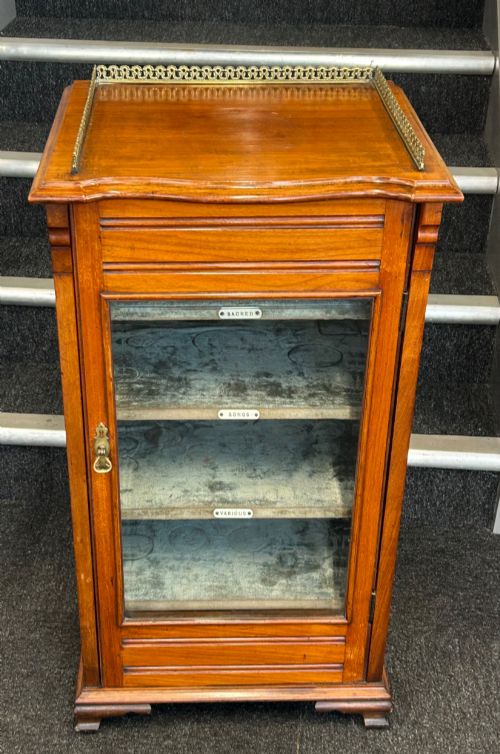
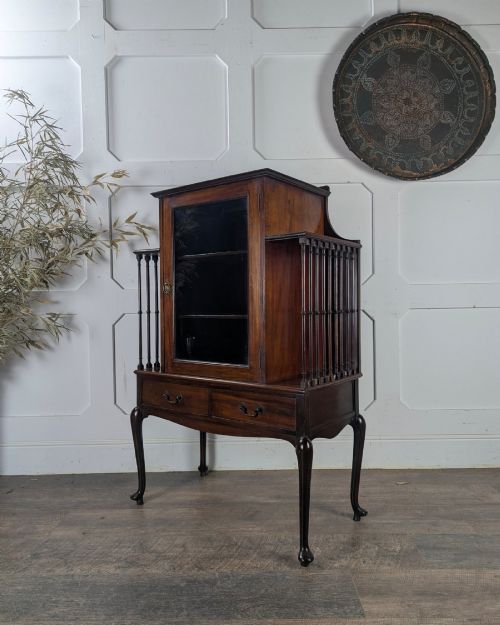
A glazed music cabinet stands as a tall, upright piece designed specifically to store sheet music while displaying items behind a glass door. The listings show forms spanning the Victorian and Edwardian eras, with a strong presence of late nineteenth-century examples.
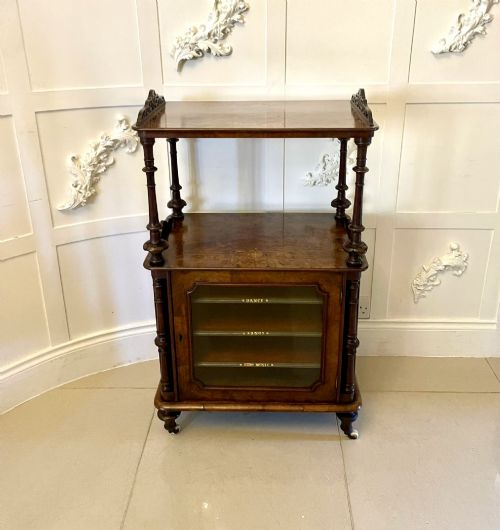
Most pieces encountered here are constructed from walnut, burr walnut, and mahogany, frequently enhanced with boxwood inlay or gilt stringing. They serve equally well today as display cabinets, bedside cupboards, or media storage for contemporary homes.
The format typically includes a single glazed door opening to reveal internal shelving originally intended for sorting musical scores. Origins remain predominantly English, reflecting the domestic parlour culture of the Victorian and Edwardian periods.
How they were made
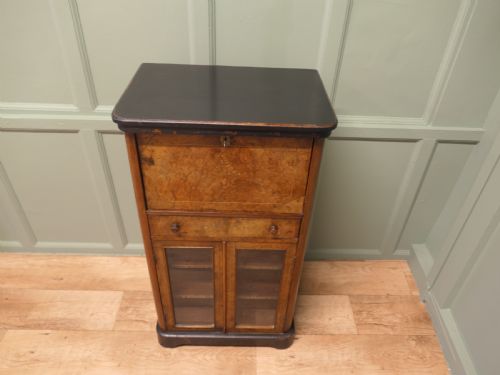
Cabinet makers utilised dense timber stocks such as mahogany, rosewood, and walnut, frequently selecting burr walnut veneers to achieve rich, figured grain patterns across the primary surfaces. Inlaid details in boxwood and contrasting timbers add linear definition to the door frames and cornices.
Glazing relies on clear glass held within wooden frames, occasionally complemented by brass hardware such as drop handles and hinges. Internal storage configurations utilise timber shelving fitted securely within upright carcasses designed to bear the weight of paper scores.
Glazed Music Cabinet Retail Price Guide 2026
Typical asking prices for glazed music cabinet among the pieces listed under this phrase on Sellingantiques today, from the lower quarter to the upper quarter. They describe what is for sale here now, not the wider market.
Materials recorded across these listings include glass, brass, mahogany, walnut, burr walnut, fabric, rosewood, and mirror.
What varies in quality
Quality rests primarily in the selection of timbers and the precision of the decorative inlay rather than the basic utility of the carcass. Burr walnut and figured rosewood distinguish the finer examples from standard mahogany or hardwood constructions.
Refinement shows in the crispness of the boxwood stringing, the symmetry of the wood grain on the door panels, and the integration of original brass fitments. The delicacy of the proportions and the joinery of the glazed door frame separate workshop standards.
The Glazed Music Cabinet Glossary
- Burr walnut
- A prized timber harvested from walnut tree growths, displaying swirling, highly figured grain patterns. It is used extensively on high-end Victorian cabinet doors.
- Stringing
- Thin inlay lines of contrasting wood, such as boxwood, embedded into the surface of the cabinet. This technique outlines drawers, doors, and cornices for decorative effect.
- Canterbury
- A low multi-partitioned stand for sheet music or books, occasionally incorporated into the lower section of hybrid cabinets. The term originates from an Archbishop who commissioned the first design.
- Ebonised
- Timber treated with a dark stain or finish to imitate ebony. This process appears frequently on nineteenth-century frames and mouldings.
- Gilt strung
- Fine lines of metallic leaf or yellow-tinted inlay set into channels within the wood. It provides a bright contrast against dark walnut or mahogany.
Glazed Music Cabinet: Frequently Asked Questions
What fits inside a glazed music cabinet?
These cabinets house original sheet music, folios, and scores on their internal wooden shelves. Collectors today also utilise the shelves for small display items or books.
The vertical proportions and glass doors make them suitable for narrow spaces where traditional bookcases prove too bulky.
How do I date a music cabinet?
Dating relies on timber selection, inlay styles, and structural hallmarks recorded across the Victorian and Edwardian periods. Walnut and rosewood predominate in nineteenth-century examples, whilst lighter mahogany often marks the turn of the twentieth century.
Secondary woods and hardware fastenings offer further clues to the decade of manufacture.
Where were these cabinets placed originally?
Victorian and Edwardian households positioned these pieces in drawing rooms, music rooms, and parlours. They kept sheet music clean and organised near pianos or gramophones.
Today, buyers place them in living rooms, hallways, and studies as display furniture.
Are all music cabinets glazed?
Not all examples feature glass doors, though the pieces gathered here specifically highlight glazed versions. Some period variants utilise drop fronts or solid panelled wooden doors.
Glazed doors distinguish display-oriented cabinets from purely functional storage cupboards.