

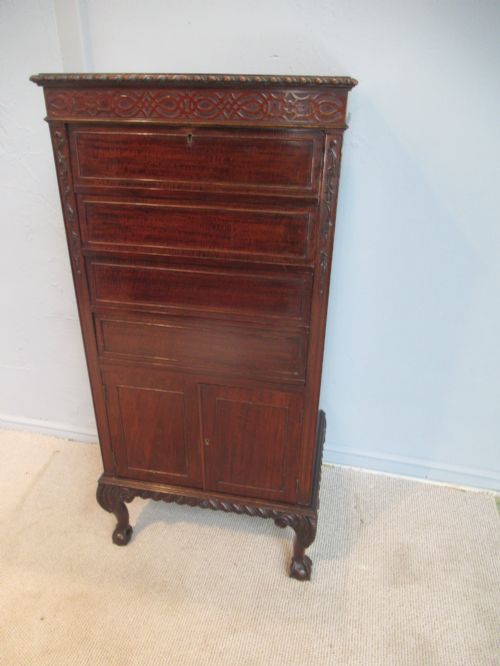


Antique Sheet Music Chest
An antique sheet music chest keeps loose folios orderly inside drop-front drawers, offering a clever way to house scores without folding them.
Antique Sheet Music Chest
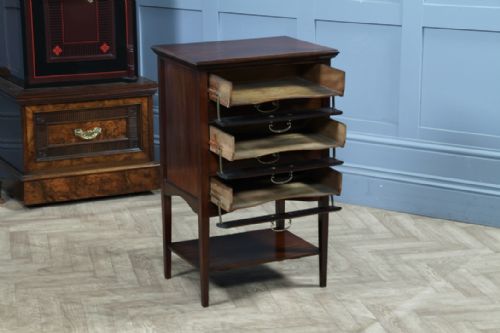
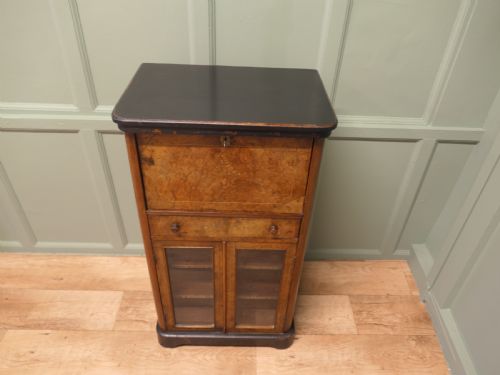
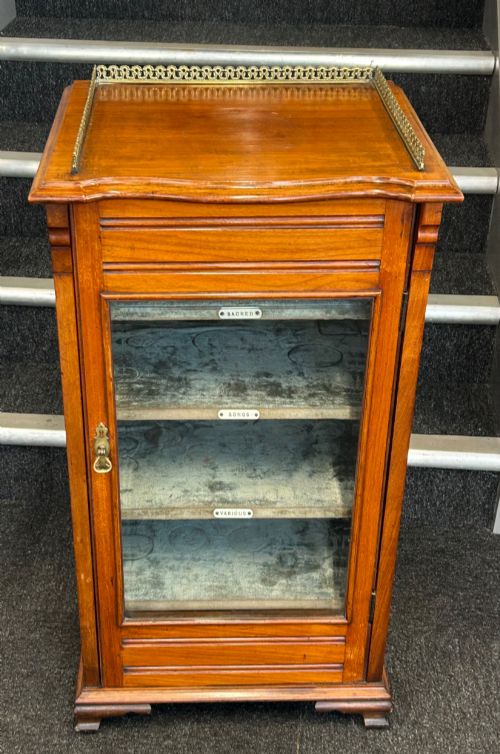
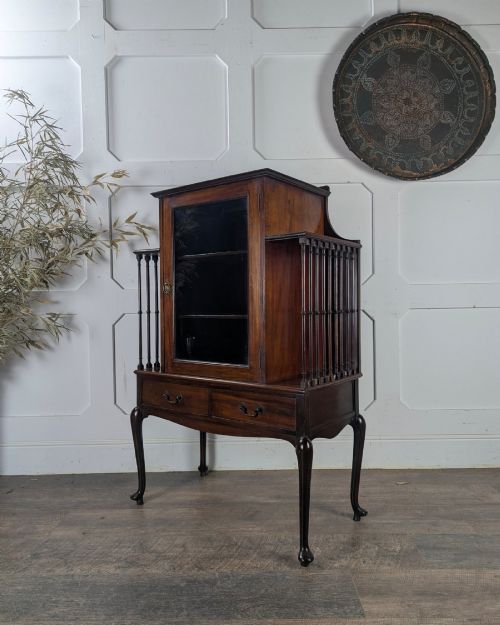
An antique sheet music chest is a tall, slender piece designed specifically to store unbound musical scores flat in shallow compartments. Buyers searching for an antique sheet music chest encounter specialised storage furniture typically rising on legs or small plinths rather than sprawling wide.
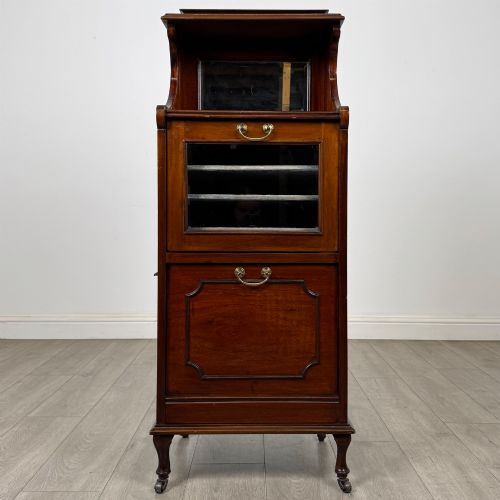
The pieces appearing in these records belong largely to the Edwardian period or date from around nineteen hundred to nineteen twenty. Most examples function as music cabinets or drop-front drawer chests built to accommodate standard folio sizes without bending the paper corners.
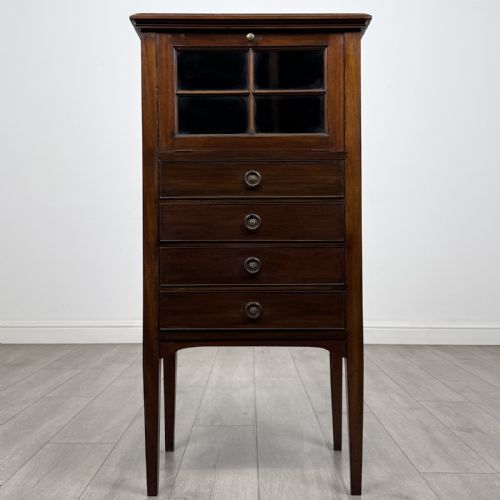
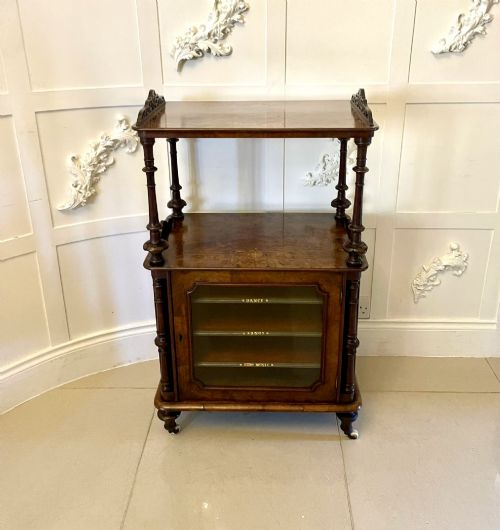
Many of these cabinets double as display units or feature shallow tiers suited to domestic parlours. The proportions remain narrow to fit tight spaces beside a piano or in a corner of the drawing room.
Materials and construction
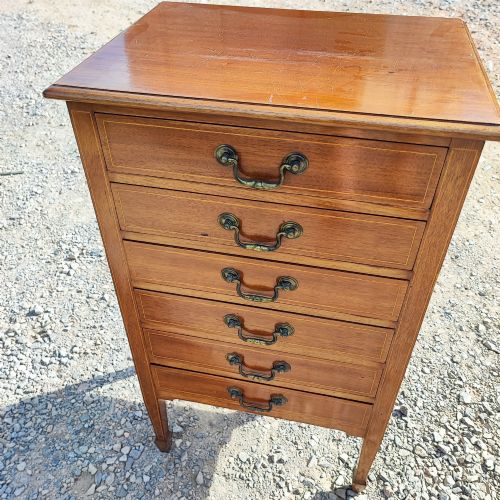
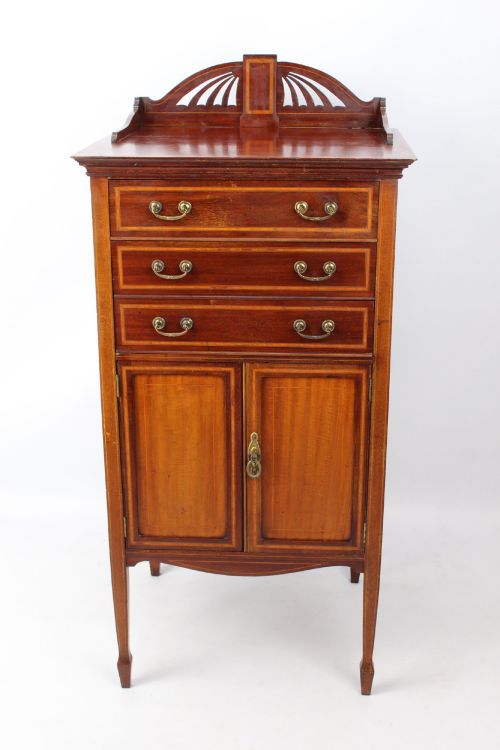
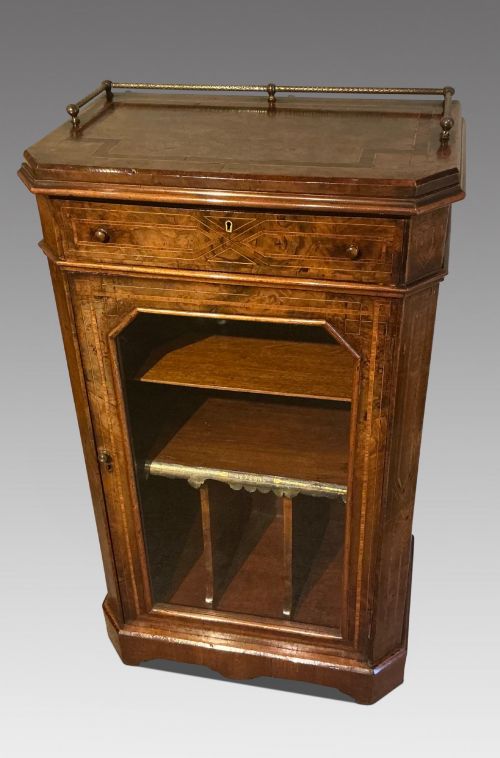
Joiners built these chests primarily in mahogany and walnut, frequently applying fine wood veneers over secondary timbers. Selected pieces incorporate satinwood inlay to create subtle decorative banding along the top and drawer edges.
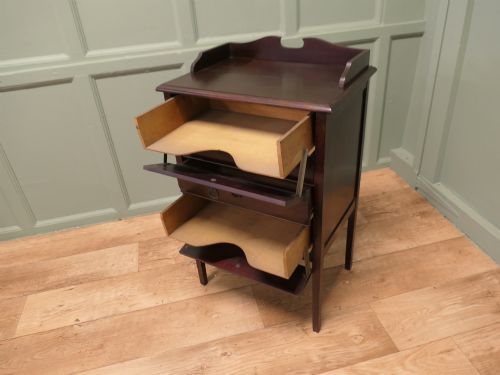
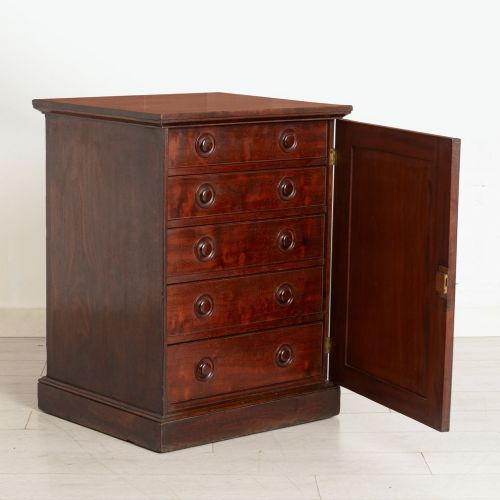
Hardware details rely on cast brass for handles, drop-pulls, and hinges. Glass panels appear on variants configured for display, while internal mechanisms use clever drop-front drawer designs that tilt forward when opened to let fingers slip easily beneath each sheet.
Antique Sheet Music Chest Retail Price Guide 2026
Typical asking prices for sheet music chest among the pieces listed under this phrase on Sellingantiques today, from the lower quarter to the upper quarter. They describe what is for sale here now, not the wider market.
Recorded pieces span the Edwardian era and the early twentieth century up to nineteen twenty, utilising mahogany, walnut, satinwood, and brass.
Markers of quality
Quality reveals itself in the precision of the timber matching and the subtlety of the satinwood inlay work. Superior chests utilise solid mahogany or walnut rather than heavier veneer applications, showing careful grain selection across the main carcass.
The mechanical action of the drop-front drawers dictates the tier of craftsmanship. Better examples operate smoothly without binding, featuring well-fitted internal divisions and cast brass hardware that bears crisp detailing.
The Antique Sheet Music Chest Glossary
- Drop-front drawer
- A drawer featuring a hinged front that tilts downward when pulled open. This mechanism provides easy access to the papers stored inside without requiring the user to lift heavy folios.
- Satinwood inlay
- A decorative technique using thin contrasting strips of light-coloured satinwood set into the primary timber surface. Cabinetmakers employed this method to frame drawer fronts and top panels.
- Edwardian period
- The era spanning the reign of King Edward VII from nineteen hundred to nineteen ten. Furniture from this time often shows lighter proportions and delicate neoclassical revival details.
- Music cabinet
- A specialised tall furniture form created to hold sheet music and scores. These pieces typically feature multiple shallow drawers or internal shelves.
Antique Sheet Music Chest: Frequently Asked Questions
What is a sheet music chest?
A sheet music chest is a tall, narrow piece of furniture fitted with multiple shallow drawers designed to hold musical scores flat. These cabinets keep paper folios organised and protected from dust in a parlour or music room.
The drop-front design tilts forward to allow easy browsing through individual pieces of sheet music without bending the edges.
How do you date an Edwardian music cabinet?
Edwardian music cabinets date from the opening decade of the twentieth century. They often feature mahogany or walnut construction with light satinwood stringing.
The proportions tend to be slender and upright, reflecting the domestic interior fashions of the period around nineteen hundred to nineteen ten.
What woods were used for these chests?
Cabinetmakers built these pieces using hardwoods like mahogany and walnut. Wood veneer and satinwood inlay frequently appear as decorative elements.
Brass hardware provides the finishing touch on handles and drawer pulls across the surviving examples.
Can these chests store modern items?
The shallow drawers work well for storing papers, documents, or flat collectibles. Artists and writers often use them to keep prints and drawings organised.
Their narrow footprint allows them to fit easily into modern studies and living spaces while maintaining period character.