


Edwardian Sheet Music Cabinet
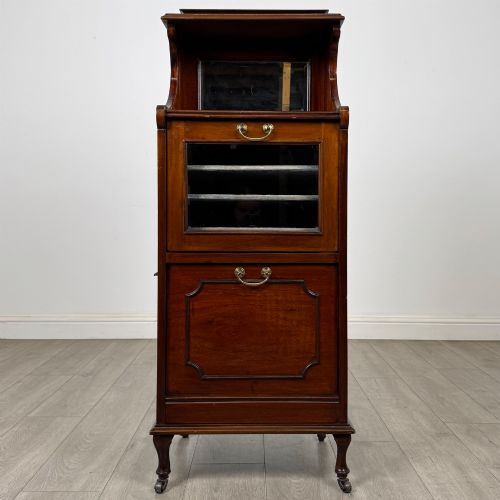
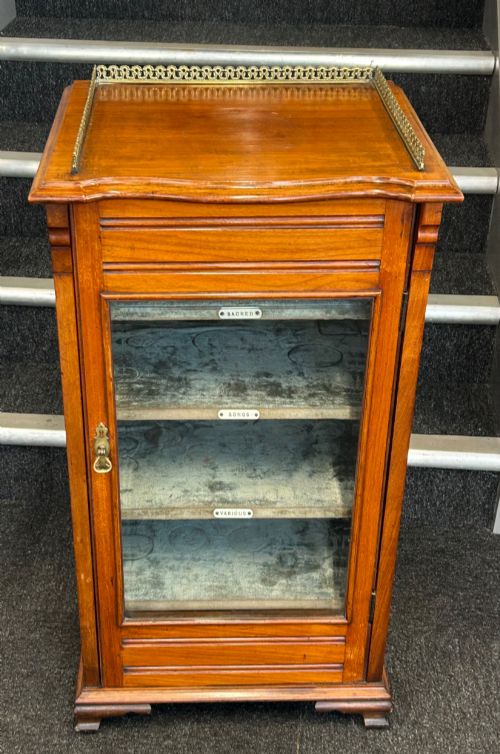
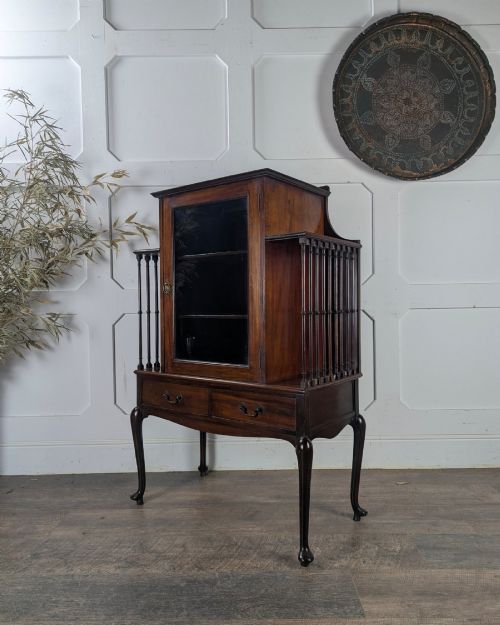
An Edwardian sheet music cabinet holds paper scores in neat drop-front drawers or vertical partitions, offering a practical piece of period furniture built for the Victorian or Edwardian parlour.
Edwardian Sheet Music Cabinet
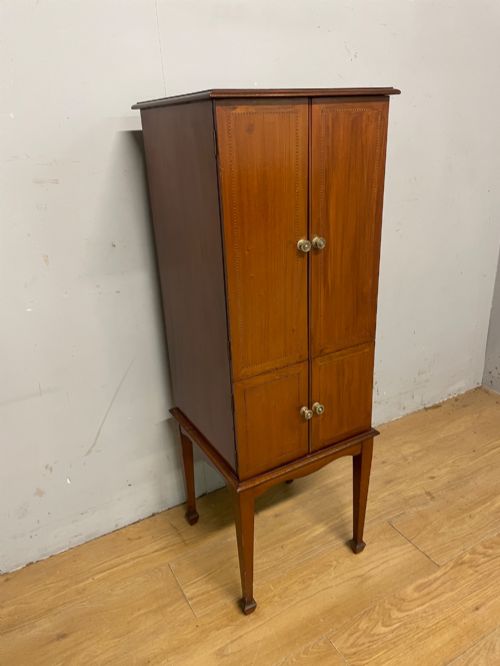
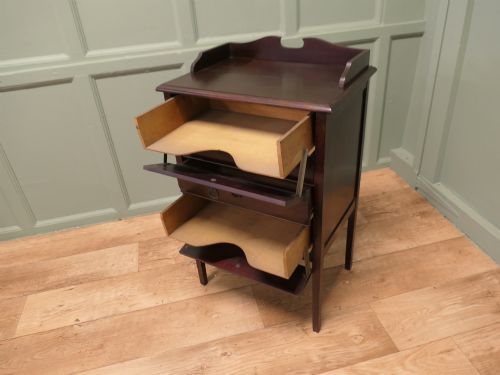
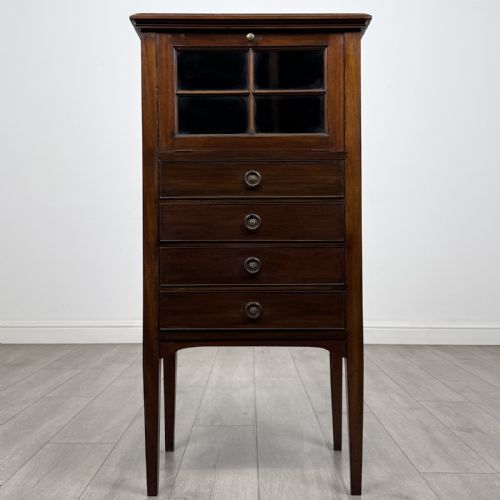
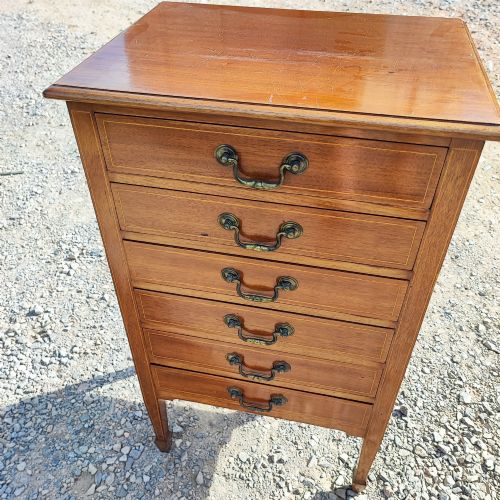
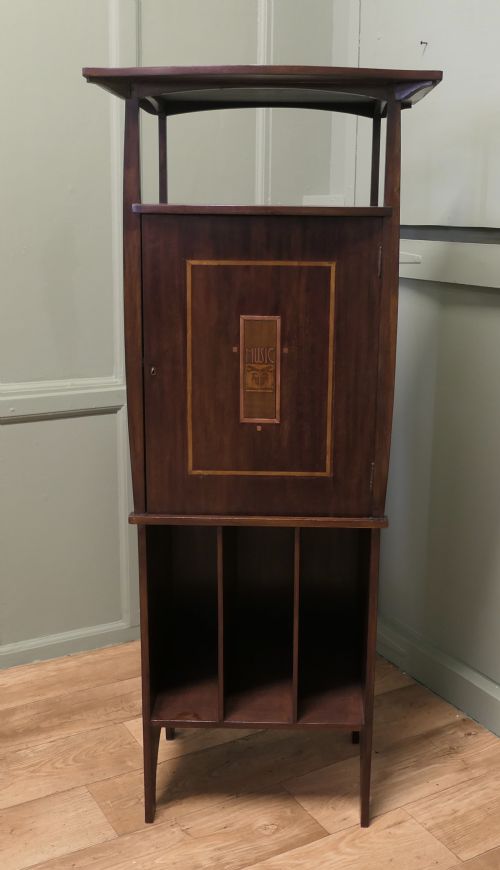
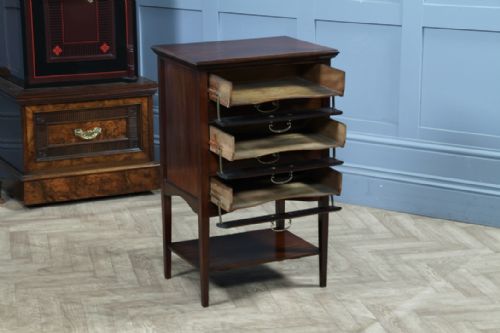
An Edwardian sheet music cabinet is a specialised tall and slim piece of furniture designed specifically to store unbound musical scores, manuscripts, and folios. When you search for this phrase, you meet compact case pieces often fitted with multiple shallow drop-front drawers that tilt forward for easy sorting.
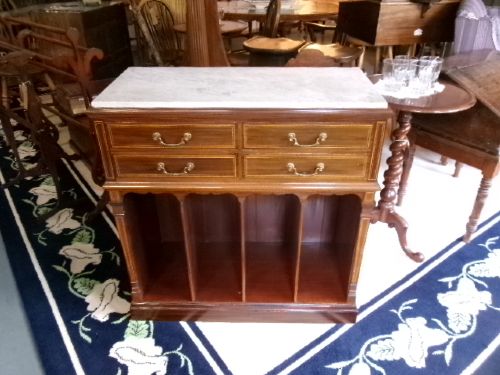
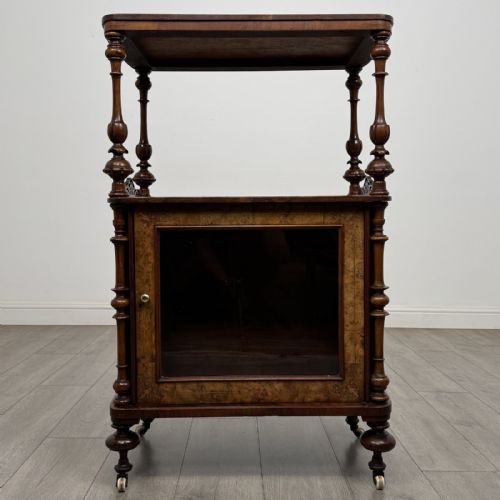
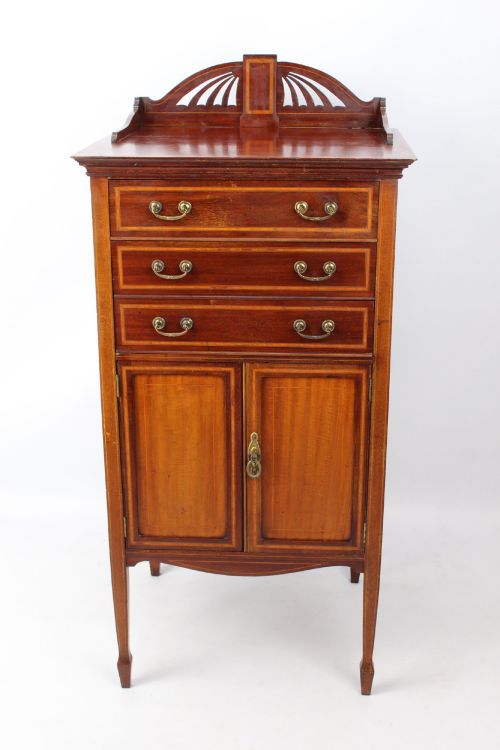
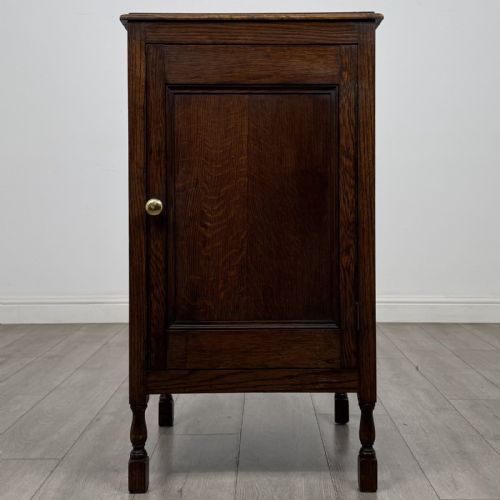
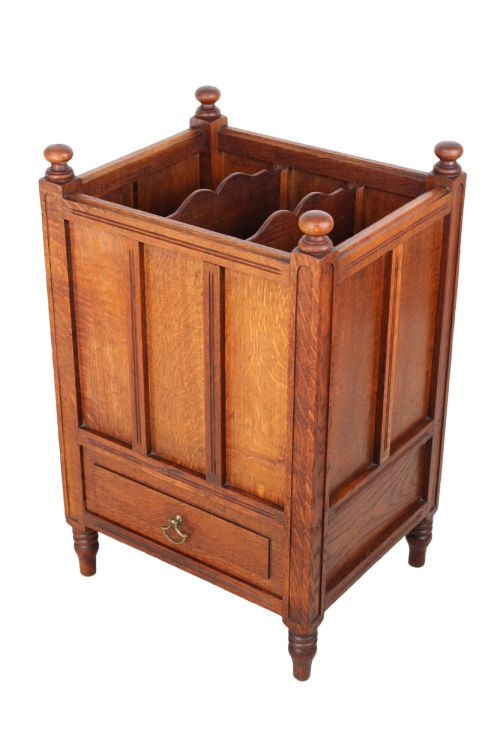
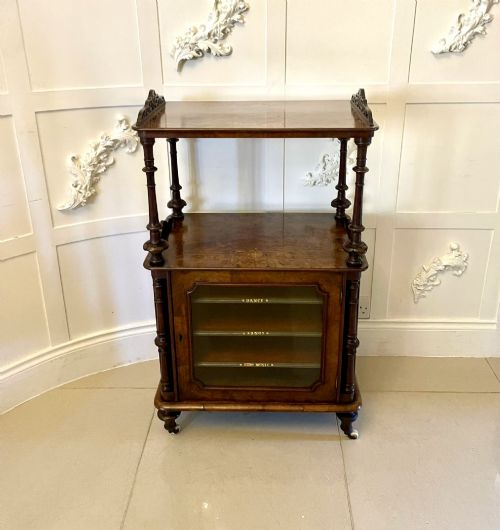
The materials seen here span walnut, burr walnut, mahogany, oak, and rosewood, frequently enriched with stringing or marquetry inlay. Alongside dedicated music cabinets, the selection includes related forms like canterburys, open magazine racks, and piano stools that served the same domestic role in the parlour.
Materials and construction
Cabinet makers built these pieces using solid timbers and decorative veneers such as mahogany and burr walnut over a supportive secondary wood. Brass handles, drop-pulls, and hinges complete the hardware, while occasional glazed doors or ceramic elements appear across the examples.
Drop-front drawers required precise joinery so the mechanisms tilt smoothly without jamming under the weight of heavy paper. Inlaid models often display delicate boxwood or ebony stringing set flush into the door panels and top surfaces.
Edwardian Sheet Music Cabinet Retail Price Guide 2026
Typical asking prices for edwardian sheet music cabinet among the pieces listed under this phrase on Sellingantiques today, from the lower quarter to the upper quarter. They describe what is for sale here now, not the wider market.
The listings show Edwardian and Victorian periods most frequently, with materials spanning mahogany, walnut, burr walnut, and oak.
What separates the best examples
The grade of timber and the complexity of the cabinetwork dictate the tier of quality. Finer examples utilise figured burr walnut or rich mahogany with skilled marquetry inlay, whereas simpler utility versions rely on plain oak or standard mahogany.
Hardware choice and internal layout also signal superior execution. Brass fittings of substantial weight and drawers that operate smoothly distinguish workshops of higher repute from basic commercial production.
GM Elwood·JS Henry·Denby and Spinks·Keeble London
The Edwardian Sheet Music Cabinet Glossary
- Canterbury
- A low stand or cabinet with partitions for holding sheet music, folios, or books, often mounted on castors. The form dates back to the late eighteenth century and continued into the Edwardian period.
- Drop-front
- A drawer or flap hinged at the bottom edge that tilts forward to grant access to the contents. This design prevents paper scores from creasing inside shallow filing slots.
- Marquetry
- Decorative woodwork where veneers of different coloured timbers are fitted together to form pictorial or geometric patterns. It appears frequently on Edwardian cabinet doors and tops.
- Stringing
- Thin lines of contrasting wood inlaid into grooves on the surface of a cabinet to form borders or geometric outlines. It is a defining detail of Sheraton Revival furniture.
- Whatnot
- An open set of shelves used for displaying ornaments or holding books and papers in a principal room. They share the tall, slender proportions common in Edwardian music rooms.
Edwardian Sheet Music Cabinet: Frequently Asked Questions
What is an Edwardian sheet music cabinet used for today?
These cabinets suit modern homes as compact storage units for sheet music, documents, art supplies, or small collections. Their shallow drawers fit paper items neatly without wasting vertical space in a room.
They also function well as bedside tables or hallway units where floor space is limited. The varied wood tones blend easily with existing antique or contemporary furnishings.
How do you tell an Edwardian music cabinet from a Victorian one?
Edwardian cabinets generally display lighter timbers, simpler lines, and restrained Sheraton Revival inlay reflecting the tastes of the early twentieth century. Victorian versions often feature heavier dark mahogany, bolder carvings, and denser burr walnut veneers.
Construction details and registration marks can also help narrow the decade of manufacture. Comparing the hardware style provides further clues to the period of origin.
Are drop-front drawers better than standard drawers?
Drop-front drawers tilt outward to let you thumb through sheet music titles from above without pulling the entire drawer completely out of the carcass. This mechanism reduces wear on fragile paper edges.
Standard drawers rely on internal vertical dividers to keep scores upright. Both systems serve the same storage purpose but offer different methods of access.
What woods were used for sheet music cabinets?
Mahogany and walnut form the majority of the examples, frequently enhanced by burr walnut figuring on the main doors. Oak and rosewood appear less frequently in specific Arts and Crafts or multi-functional pieces.
Inlays often incorporate lighter woods like boxwood to create contrasting borders. Secondary timbers inside the drawers typically include pine or oak.