
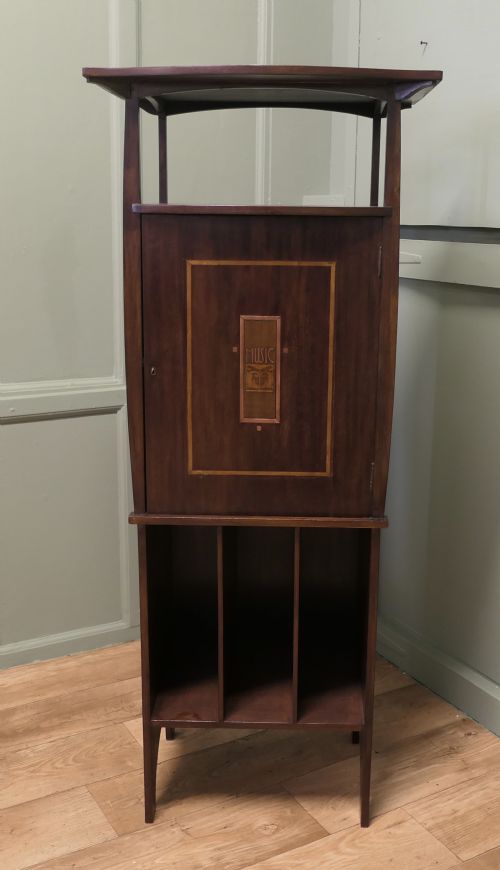


Antique Sheet Music Organiser
An antique sheet music organiser keeps scores tidy and brings period character to a room.
Antique Sheet Music Organiser
When you search for an antique sheet music organiser, you are looking at specialised storage designed for domestic music rooms and parlours. These pieces include music cabinets, music canterburys, and multi-functional side cabinets that accommodate sheet music, magazines, and records. The selection spans the eighteenth century through to the nineteen-thirties, taking in styles from Victorian and Edwardian periods to Arts and Crafts and Art Nouveau.
You are most likely to meet Edwardian mahogany music cabinets on this page, often decorated with boxwood and wood inlay. These upright pieces typically feature internal shelving or drop-front compartments suited for filing paper scores. Alongside them, the record cabinets and magazine racks reflect how domestic storage evolved as musical formats changed over time.
How they were made
Cabinet makers utilised dense hardwoods such as mahogany, walnut, and rosewood for their durability and grain. Finer examples incorporate satinwood and boxwood inlay to create decorative borders and panels on the exterior surfaces.
Metal hardware, particularly brass hinges, handles, and gallery rails, provides functional support and contrast to the dark timber. Glass elements and carved wood details occasionally appear on French Art Nouveau and Arts and Crafts designs.
A Canterbury provides the ideal vertical filing system for sheet music when cabinet drawers prove too heavy to pull.
What varies in quality
The distinction between standard production and exceptional work rests on the precision of the joinery and the sophistication of the timber selection. Finer cabinets display matched wood veneers, subtle inlay work, and robust internal divisions designed to bear the weight of heavy paper.
Attribution to known designers or prominent retailers elevates a piece beyond standard workshop output. Maker involvement, such as pieces by GM Elwood for JS Henry, or distinct stylistic interpretations of the Arts and Crafts and Art Nouveau movements, marks out the superior examples.
GM Elwood for JS Henry
The Antique Sheet Music Organiser Glossary
- Music cabinet
- A specialised upright piece of furniture featuring drop fronts or multiple shallow drawers designed specifically to hold sheet music.
- Canterbury
- A low, open-partitioned stand traditionally used for holding sheet music or loose folios, often fitted with castors and a carrying handle.
- Fall front
- A hinged door or panel that drops down to a horizontal position when opened, commonly seen on sheet music cabinets for easy access to scores.
- Inlay
- A decorative technique where contrasting woods or materials are set into the surface of the primary timber to create patterns.
- Edwardian
- A stylistic period spanning the reign of King Edward VII, characterised by lighter furniture forms and classical revival motifs.
Antique Sheet Music Organiser: Frequently Asked Questions
What is a music cabinet?
A music cabinet is a dedicated piece of furniture designed to store sheet music and scores neatly in a domestic setting. These units typically feature specialised shallow drawers or drop-front compartments that keep paper items flat and organised.
They emerged strongly during the Victorian and Edwardian eras when home piano playing was widespread. Today, collectors value them both as functional storage and as representatives of period woodwork.
How do I use one today?
An antique music organiser serves well in modern interiors for storing sheet music, art prints, or documents. The shallow drawers and compartments keep paper flat without folding or creasing.
Larger variations, such as side cabinets and record storage units, adapt easily to living spaces for holding modern media or books. Their varied styles allow them to function as bedside tables or hallway storage.
What is a music canterbury?
A music canterbury is an open stand with upright partitions designed to hold folios, magazines, or sheet music vertically. Originating in the eighteenth century, these pieces often include low legs and castors for easy movement around a room.
They offer quick access to frequently played pieces rather than long-term filing. Finer examples incorporate carrying handles and subtle wood turnings.
How do I tell Edwardian from Victorian pieces?
Victorian music furniture tends to be heavier, utilising dark rosewood or walnut with ornate carving and formal proportions. Late Victorian examples often introduce subtle curves and multi-functional designs.
Edwardian pieces generally favor lighter mahogany timbers complemented by delicate boxwood inlay and satinwood banding. The overall aesthetic feels airier and reflects the Arts and Crafts or early Art Nouveau influences of the early twentieth century.