



Vintage Music Chest
A vintage music chest organises sheet music and scores with deep drawers or a fall front, offering a practical cabinet for any room.
Vintage Music Chest
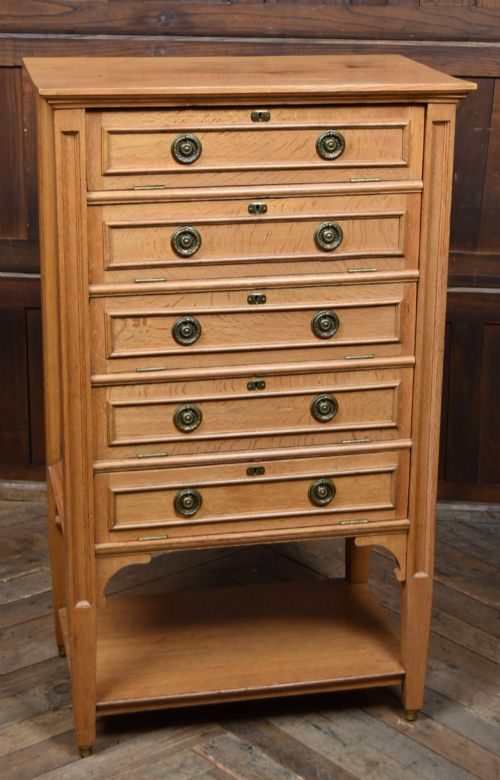
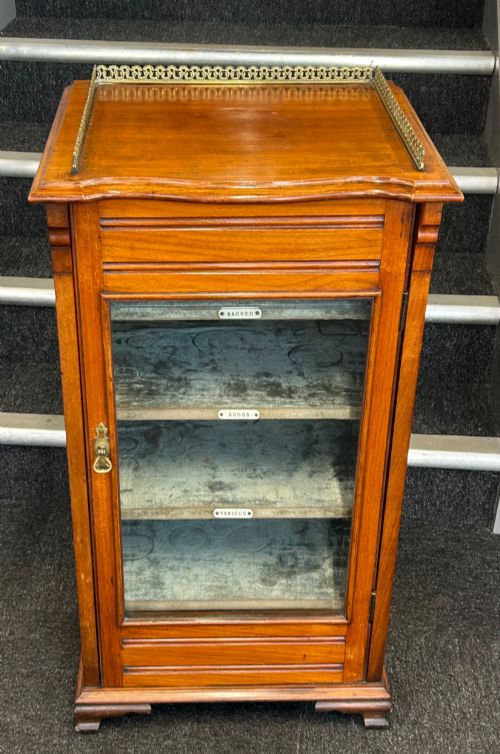
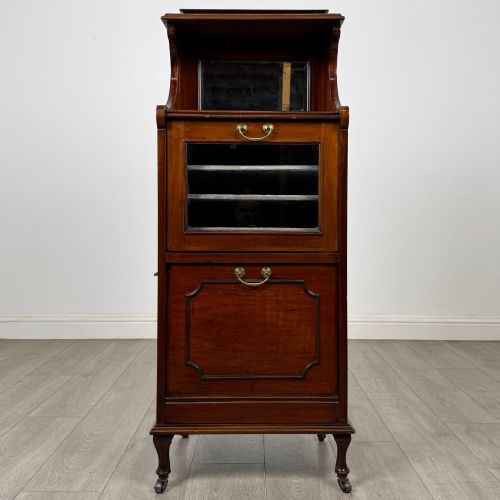
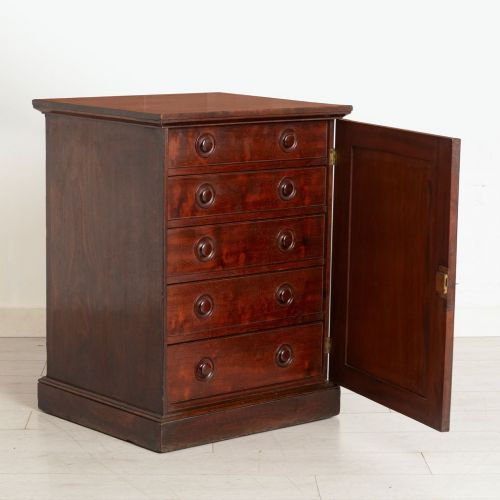
A vintage music chest serves to store sheet music, folios, and documents in domestic settings. The pieces seen on this page span the Victorian and Edwardian eras through to the 1930s, alongside earlier musical boxes.
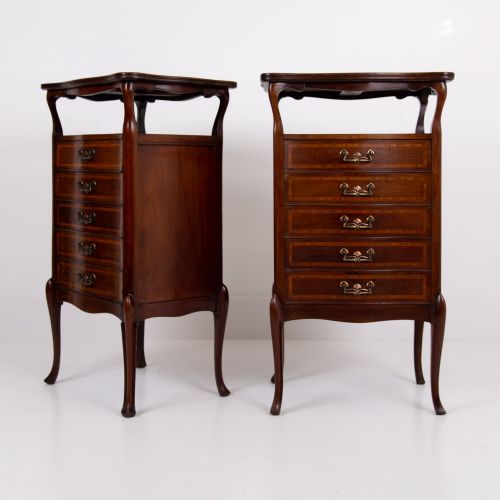
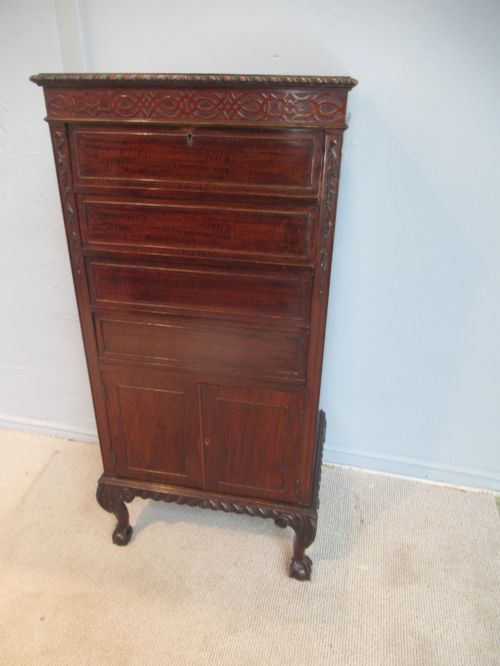
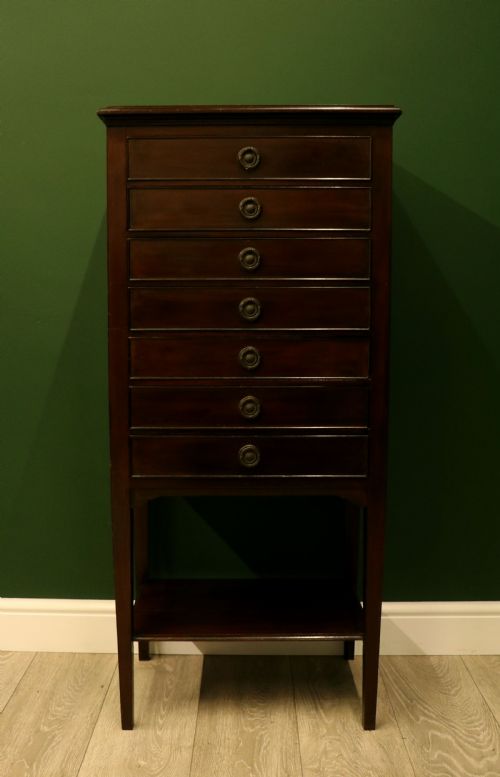
Most examples take the form of dedicated music cabinets or filing cabinets in timber. Buyers will regularly encounter Edwardian mahogany designs, walnut variants, and occasional music boxes featuring brass details or glass elements.
Origins include English workshops and French cabinets designed in the Art Nouveau style. Forms range from slim drawer chests and fall-front boxes to side cabinets and music boxes with bells.
How they were made
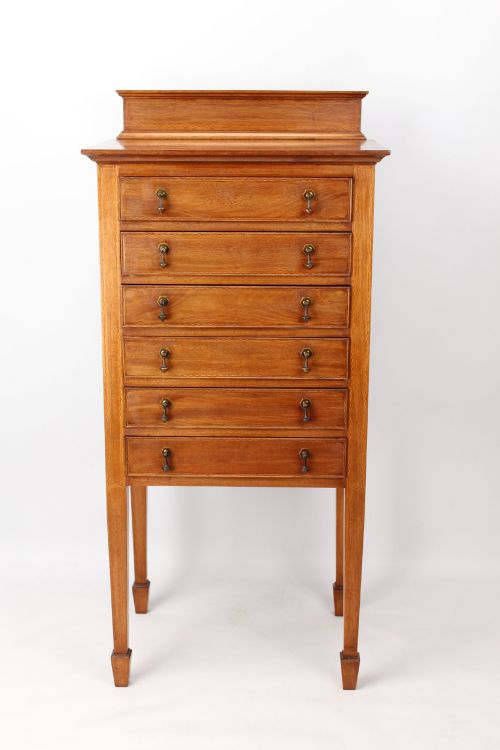
Cabinet makers utilised dense hardwoods such as mahogany, walnut, rosewood, and oak for the primary structures. Surfaces often feature satinwood inlay, marquetry, or ebonised wood highlights.
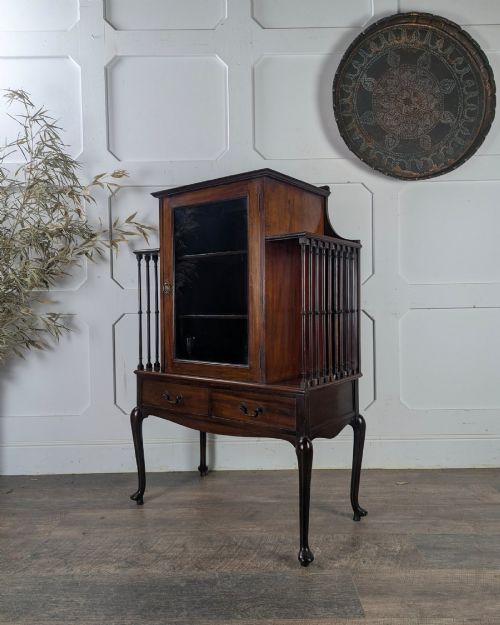
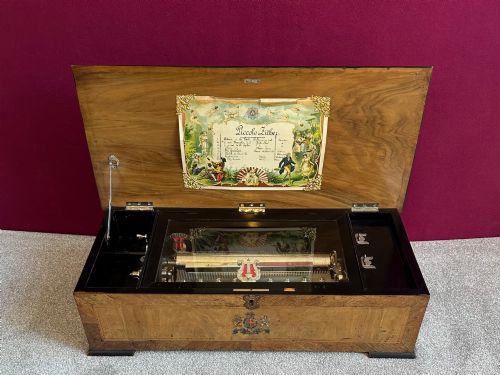
Hardware includes brass handles, hinges, and occasional fittings on fall-front doors and multi-drawer carcases. Glass panels appear on display variants, while musical mechanisms incorporate tuned combs and bells.
Some musical boxes come equipped with visible bells, ensuring the tunes arrive with an audible metallic tinkle.
What varies in quality
The refinement of the timber figure and the complexity of the marquetry or satinwood inlay set finer pieces apart from plain utilitarian boxes. Construction details, such as dovetailed drawer linings and well-fitted fall-front mechanisms, reflect superior cabinet-making standards.
The presence of specialised internal divisions for sheet music or folios adds to the utility and desirability of a piece. Original brass hardware and intact internal mechanisms on musical boxes distinguish well-preserved examples.
Keeble London
The Vintage Music Chest Glossary
- Fall front
- A hinged door that folds downwards to reveal internal shelves or document compartments. This feature allows easy access to stacked sheet music.
- Marquetry
- Decorative woodwork where pieces of veneer are fitted into a ground to form floral or geometric patterns. It appears frequently on Edwardian and Victorian cabinet doors.
- Canterbury stool
- A low piece of furniture combining seating with partitions below for holding music or books. These items bridge the gap between seating and storage.
- Satinwood
- A lustrous yellowish timber used for contrasting inlay and stringing on mahogany and rosewood furniture. Craftsmen selected it to highlight drawer edges and panels.
Vintage Music Chest: Frequently Asked Questions
What is a music chest used for?
A music chest stores sheet music, folios, and scores in dedicated shallow drawers or behind a fall-front door. These cabinets kept paper flat and protected in period drawing rooms.
Today, they function as versatile small chests for documents, letters, or general household organisation in studies and living spaces.
How do I date an Edwardian music cabinet?
Edwardian music cabinets usually feature mahogany or walnut timbers combined with satinwood inlay and light stringing. The styling often reflects Chippendale Revival or early twentieth-century tastes.
Look for construction characteristics like machine-sawn timber elements alongside hand-finishing to help confirm the manufacturing era.
What is the difference between a music cabinet and a music box?
A music cabinet is a piece of furniture designed with drawers or shelves specifically sized for storing paper scores. They rely on internal wooden partitions for organisation.
A music box contains an internal mechanical movement with a pinned cylinder and comb that plays automated tunes, sometimes accompanied by bells.
Are these cabinets suitable for modern homes?
The compact proportions of these chests make them ideal for placement in hallways, studies, or bedrooms without occupying excessive floor space. Their multiple drawers offer practical storage for modern stationery or collections.
They integrate easily alongside contemporary interiors while introducing period timber warmth and craftsmanship.