
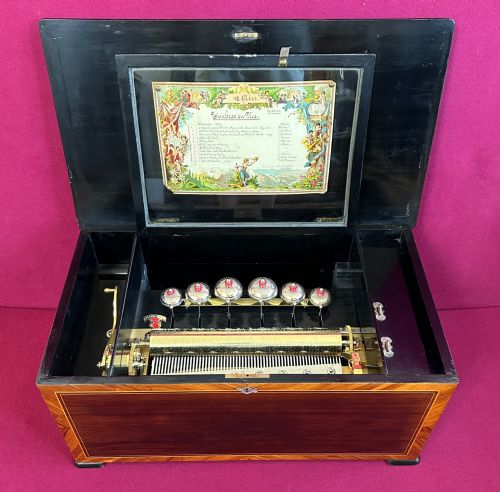


Inlaid Wooden Musical Box
These inlaid wooden musical box examples bring mechanical ingenuity and cabinet-maker artistry together, offering rich acoustic charm for any collector.
Inlaid Wooden Musical Box
An inlaid wooden musical box represents a sophisticated intersection of Victorian craftsmanship and mechanical engineering. When searching for an inlaid wooden musical box, you encounter pieces primarily spanning the nineteenth century, including specific dates from eighteen sixty to eighteen ninety.
The selection here encompasses traditional music boxes alongside an unusual musical chair incorporating marquetry inlay. Most pieces originate from Swiss workshops, frequently combining domestic cabinet-making with complex pinned cylinders and steel combs.
Victorian examples dominate the listings, showcasing rectangular cases built to house intricate brass and steel movements. Certain specimens integrate visible bells or multiple airs to expand their acoustic repertoire.
How They Were Made
Cabinets utilise dense timbers such as rosewood, walnut, and ebonised wood, often embellished with intricate boxwood marquetry inlay. These wooden cases provide the necessary resonance chamber for the internal metal components.
Inside, precision engineering relies on brass cylinders and steel combs tuned to play specific airs. Some advanced configurations incorporate glass covers to protect the moving parts while keeping the pinned cylinders and bells in view.
One extraordinary seating option hides a complete musical movement inside a marquetry inlaid chair.
What Varies in Quality
The sophistication of the musical movement defines the upper tier of these pieces, particularly those featuring multiple airs or visible bells. Movements signed by established makers command attention through superior mechanical precision and richer acoustic output.
Cabinet-work separates standard boxes from exceptional examples, with elaborate marquetry inlay and choice timbers like figured walnut or rosewood elevating the visual presence. The integration of fully restored works ensures both aesthetic integrity and functional longevity.
Langdorff and Fils·Nicole Freres
The Inlaid Wooden Musical Box Glossary
- Air
- A distinct tune or melody that the pinned cylinder programmes the comb to play. Most boxes feature multiple airs.
- Comb
- The tuned steel plate with vibrating teeth that produces musical notes when plucked by pins on the rotating cylinder.
- Marquetry
- Decorative veneer work using contrasting woods to create pictorial designs on the exterior of the box.
- Cylinder
- The rotating brass barrel set with precise pins that dictate the timing and sequence of the musical notes.
- Bells
- Optional external or visible strike components added to the movement to enrich the auditory experience.
Inlaid Wooden Musical Box: Frequently Asked Questions
How do I wind a musical box?
Most nineteenth-century boxes utilise either a dedicated winding key or an integrated lever mechanism attached to the spring barrel.
Carefully wind the mechanism until resistance is felt, avoiding over-winding to protect the internal spring assembly.
Where were these music boxes made?
A significant proportion of these mechanical instruments originate from Swiss workshops renowned for precision metalwork and assembly.
British cabinet-makers and retailers often housed these imported Swiss movements within locally styled timber cases.
How do multiple airs work?
The pinned brass cylinder shifts laterally across the steel comb to engage different sets of pins for each distinct tune.
Mechanisms often include an indicator dial to show which air is currently selected for playback.
How should I care for the wood?
Keep the wooden case away from direct sunlight and fluctuating heat sources to prevent timber shrinkage or veneer lifting.
Apply a minimal amount of appropriate furniture wax periodically to maintain the lustre of rosewood or walnut surfaces.