






Victorian Musical Box
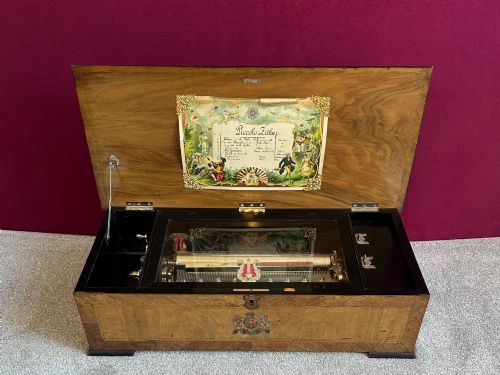
A victorian musical box brings mechanical melody into the room through pinned brass cylinders and tuned steel combs.
Victorian Musical Box
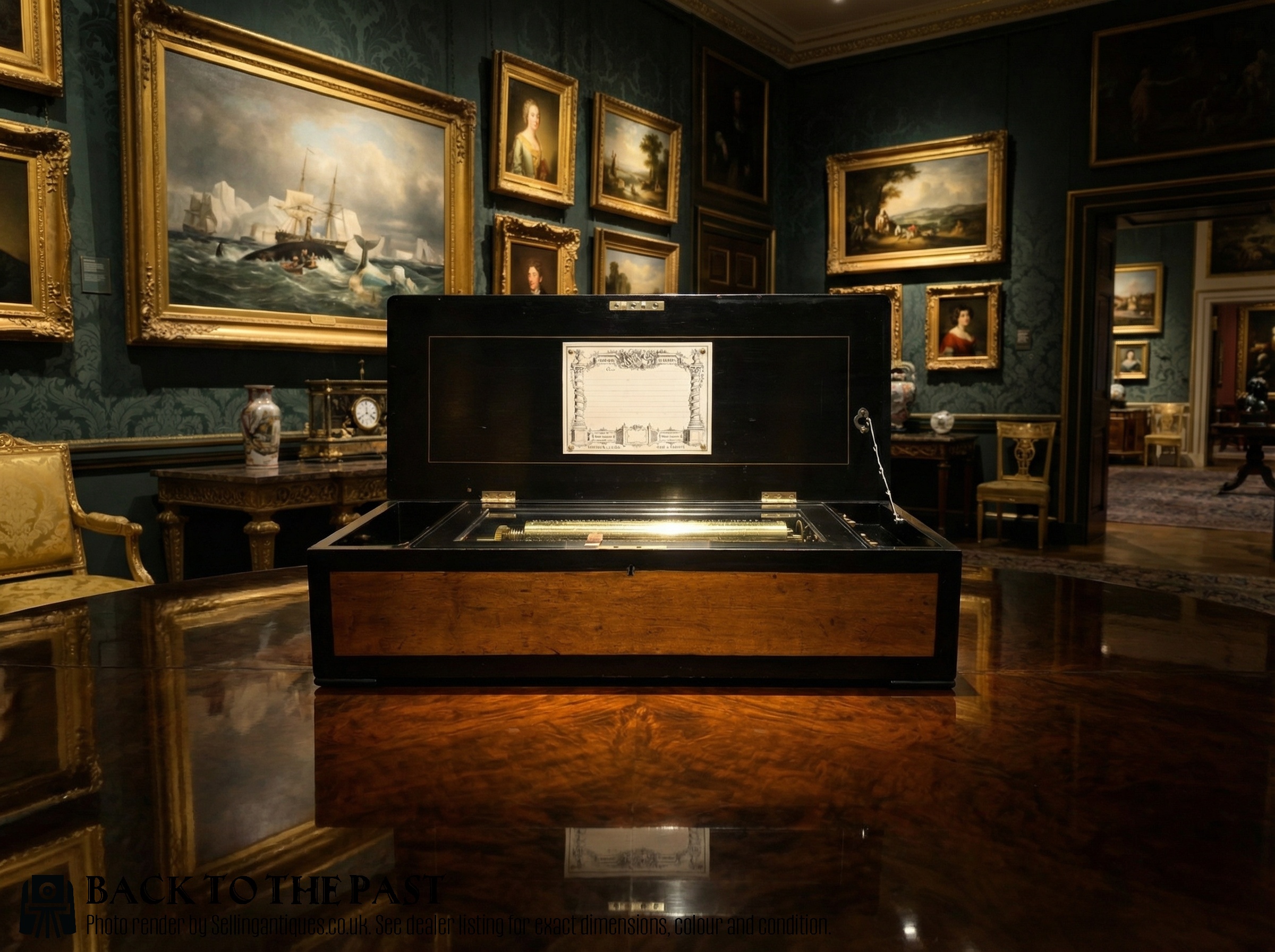
A victorian musical box is a mechanical instrument housed in a timber case, designed to play popular tunes automatically when wound. The most common form on this page is the wooden cylinder box containing a pinned metal cylinder that plucks a tuned comb.
Makers housed these movements in rosewood, walnut, ebonised wood or burr walnut, frequently incorporating marquetry inlay on the exterior. Beyond standard rectangular cases, the evidence records variants featuring bells in view, drums, or interchangeable discs.
The phrase encompasses specific Swiss mechanisms alongside related musical novelties from the nineteenth century. These range from twelve-air cylinder machines to disc-playing polyphons and musical cigar boxes.
How They Were Made
Cased pieces rely heavily on dense hardwoods like rosewood and walnut, often contrasted with boxwood stringing and intricate marquetry. Internal mechanics combine solid brass base plates with steel pins driven into rotating cylinders.
Sound production depends on precision steel combs secured to the bedplate, where individual teeth are hand-tuned to specific notes. Additional musical complexity is achieved by connecting pins to auxiliary percussion components such as bells, drums, or zither attachments.
Victorian Musical Box Retail Price Guide 2026
Typical asking prices for victorian musical box among the pieces listed under this phrase on Sellingantiques today, from the lower quarter to the upper quarter. They describe what is for sale here now, not the wider market.
Listings feature movements housed in rosewood, walnut, ebonised wood and burr walnut cases dating across the nineteenth century.
What Varies in Quality
Quality rests primarily on the acoustic richness and mechanical complexity of the movement. Boxes playing a higher number of airs or featuring visible bells and drums demand greater precision in cylinder pinning and comb tuning.
Cabinetwork differentiates standard production from finer pieces through the depth of rosewood or burr walnut veneers, inlaid marquetry, and the overall solidity of the timber housing.
Nicole Freres·Langdorff And Fils·B A Bremond·Lochmanns·LeCoultre
The Victorian Musical Box Glossary
- Air
- A distinct tune or musical piece played by the mechanism. A greater number of airs indicates a longer cylinder or multiple revolutions.
- Cylinder
- The rotating brass barrel set with tiny steel pins that pluck the comb. Pins must be precisely aligned to strike the correct teeth.
- Comb
- The tuned steel plate with vibrating teeth that produce the notes. Each tooth is individually tuned to pitch.
- Polyphon
- A later mechanical music player that uses flat metal discs instead of cylinders. These large discs allow tunes to be easily swapped.
- Marquetry
- Decorative woodwork formed by fitting thin veneers of different coloured timbers into geometric or floral patterns on the case lid.
Victorian Musical Box: Frequently Asked Questions
How do these boxes work?
A wound spring turns a brass cylinder set with hundreds of tiny steel pins. As the cylinder rotates, these pins pluck the tuned teeth of a steel comb to create melody.
More advanced movements engage additional components like drums or bells during rotation. This adds rhythmic accompaniment to the main comb melody.
What is an air?
An air simply refers to an individual tune recorded on the musical box cylinder. Boxes typically play a sequence of six, eight, twelve or more distinct melodies before repeating.
Changing between tunes is managed by a small internal lever that shifts the cylinder laterally. This brings a fresh set of pins into alignment with the comb.
How do disc and cylinder boxes differ?
Cylinder boxes use a pinned brass barrel dedicated to a fixed set of tunes. The music is permanently pinned into that specific metal cylinder.
Disc players like the polyphon utilise flat, removable metal sheets punched with holes. Owners can swap these discs easily to play entirely different pieces of music.
Where were they made?
The majority of nineteenth-century mechanical movements originated in Swiss workshops and factories. Swiss makers dominated the production of fine musical cylinders and complex multi-air mechanisms.
These movements were frequently exported to British retailers who housed them in local timber cases. Rosewood, walnut and marquetry cabinets often reflect British taste of the period.