



Tabletop Music Box
These tabletop music boxes deliver precise mechanical tunes straight from the Victorian and Edwardian eras, offering a tangible piece of domestic acoustic engineering.
Tabletop Music Box
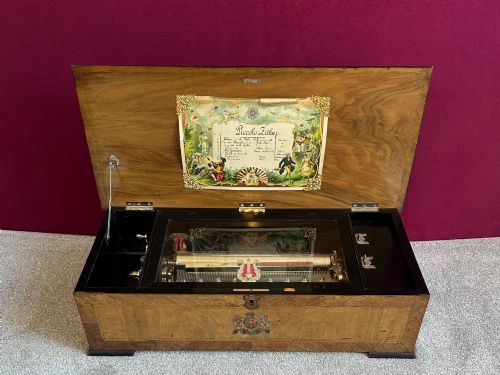
A tabletop music box is an automated mechanical instrument housed in a timber case, designed to sit upon a surface and play programmed tunes through a pinned cylinder or disc. When you search for a tabletop music box, you encounter pieces originating primarily from the Victorian and Edwardian periods, stretching from eighteen sixty into the early twentieth century.
The specimens appearing on this page take the form of Swiss cylinder boxes and larger disc-playing instruments like the Symphonium. These domestic players range from eight-air cylinder arrangements to robust machines designed for heavier table placement.
How they were made
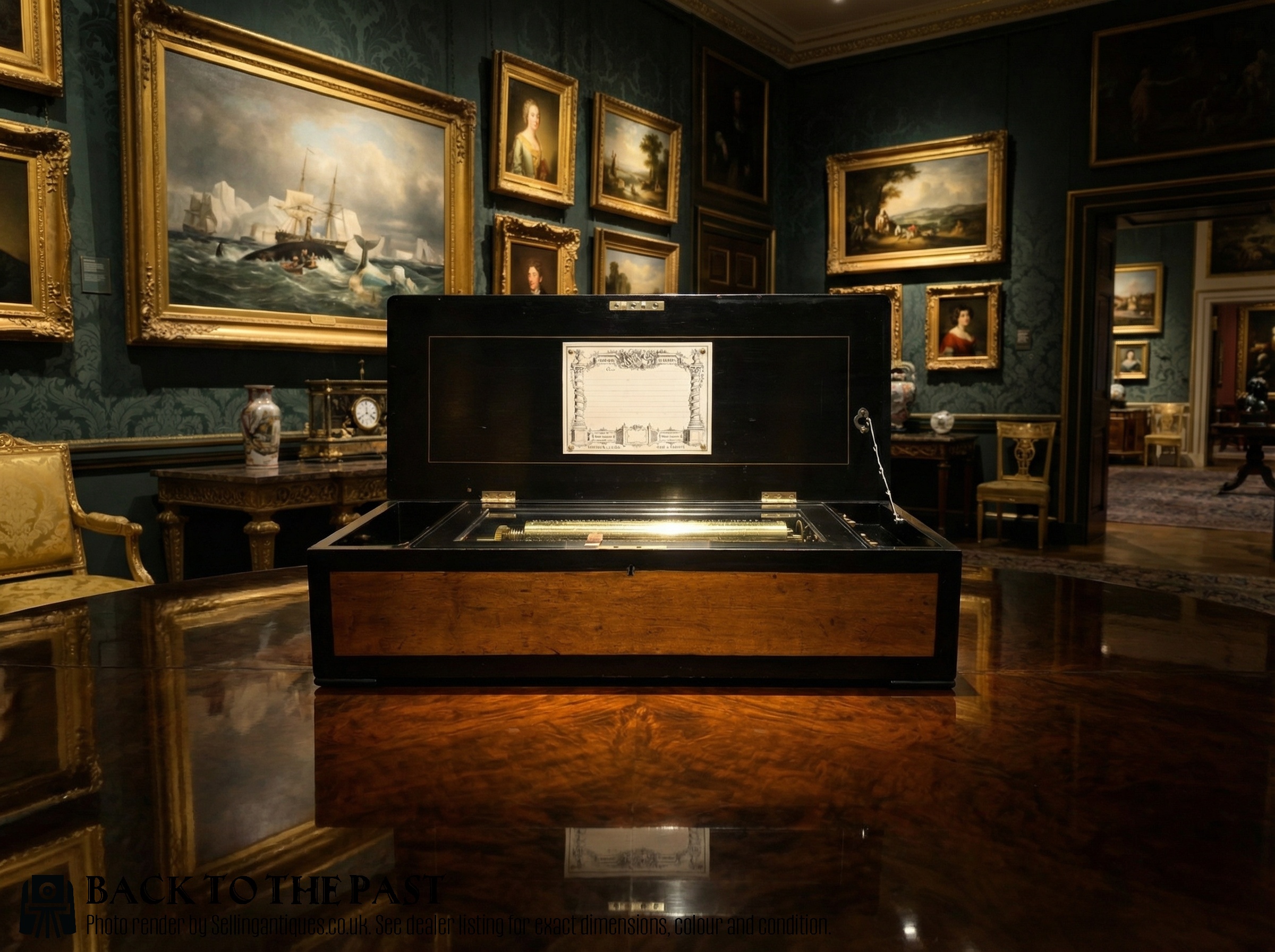
Cases utilise dense hardwoods such as walnut, ebonised wood, rosewood, and burr walnut, often complemented by boxwood stringing and protective glass covers over the movement. Steel forms the tuned combs and the rotating pins of the cylinders, while brass provides structural plates, gears, and winding components.
Swiss makers pinned metal cylinders meticulously by hand to pluck precise sequences on steel teeth, ensuring each air played with distinct mechanical harmony. Casing construction relied on traditional cabinet-making joinery to house and amplify the resonant acoustic vibrations produced by the internal metal works.
Tabletop Music Box Retail Price Guide 2026
Typical asking prices for tabletop music box among the pieces listed under this phrase on Sellingantiques today, from the lower quarter to the upper quarter. They describe what is for sale here now, not the wider market.
Every cylinder is a tiny mechanical memory bank, whispering Victorian parlour tunes through carefully positioned steel pins.
What varies in quality
Quality separates mass-produced units from finer workshop pieces through the complexity of the pinned air arrangements and the crispness of the comb tuning. An eight-air cylinder movement by a notable maker demonstrates greater mechanical ambition than a standard baseline mechanism.
The choice of cabinet materials significantly dictates overall merit, moving from simple stained timber to richly figured burr walnut and rosewood cases with sophisticated internal joinery. Preserved fully restored works retain their original acoustic clarity much better than those with heavily altered components.

B A Bremond·Nicole Freres
The Tabletop Music Box Glossary
- Cylinder
- A rotating metal barrel set with countless tiny pins that pluck the tuned teeth of a comb to create music. This cylindrical drum forms the core mechanism of traditional Swiss music boxes.
- Comb
- A flat piece of tuned steel with multiple teeth that vibrate when struck by rotating pins or discs. The precision of the cutting dictates the musical pitch.
- Air
- A single tune or musical piece played within a programmed sequence on the cylinder. Boxes are frequently categorized by the total number of airs they can perform.
- Symphonium
- A large tabletop disc-playing music box that utilises interchangeable flat metal discs rather than pinned cylinders to produce its sound. These heavier instruments deliver a powerful acoustic presence.
Tabletop Music Box: Frequently Asked Questions
How do these music boxes work?
Inside the timber case, a wound spring drives a brass gear train that rotates a pinned metal cylinder or a flat disc. As the cylinder turns, the raised pins precisely pluck individual tuned teeth on a steel comb to generate melodies.
Different airs are achieved by the careful arrangement of pins across the surface of the cylinder. Once the mechanism completes its programmed sequence, a lever pauses the rotation until played again.
What is an air?
An air refers to an individual tune or musical selection programmed into the mechanical repertoire of the instrument. Boxes listed often specify their capacity, such as an eight-air arrangement.
Each complete rotation or shift of the cylinder transitions the mechanism to the next programmed melody. More airs require longer cylinders or shifting mechanisms within the walnut or rosewood case.
How do I date a music box?
Dating relies heavily on style markers, serial numbers, and material choices associated with Victorian and Edwardian manufacturing periods. Mid-Victorian examples often feature distinct rosewood cases, whilst later Edwardian pieces utilise walnut cabinetry.
Makers frequently stamped serial numbers onto the brass movement plates or recorded them in workshop ledgers. Consulting these records alongside known operational decades helps narrow down the exact period of creation.
Where should I place one?
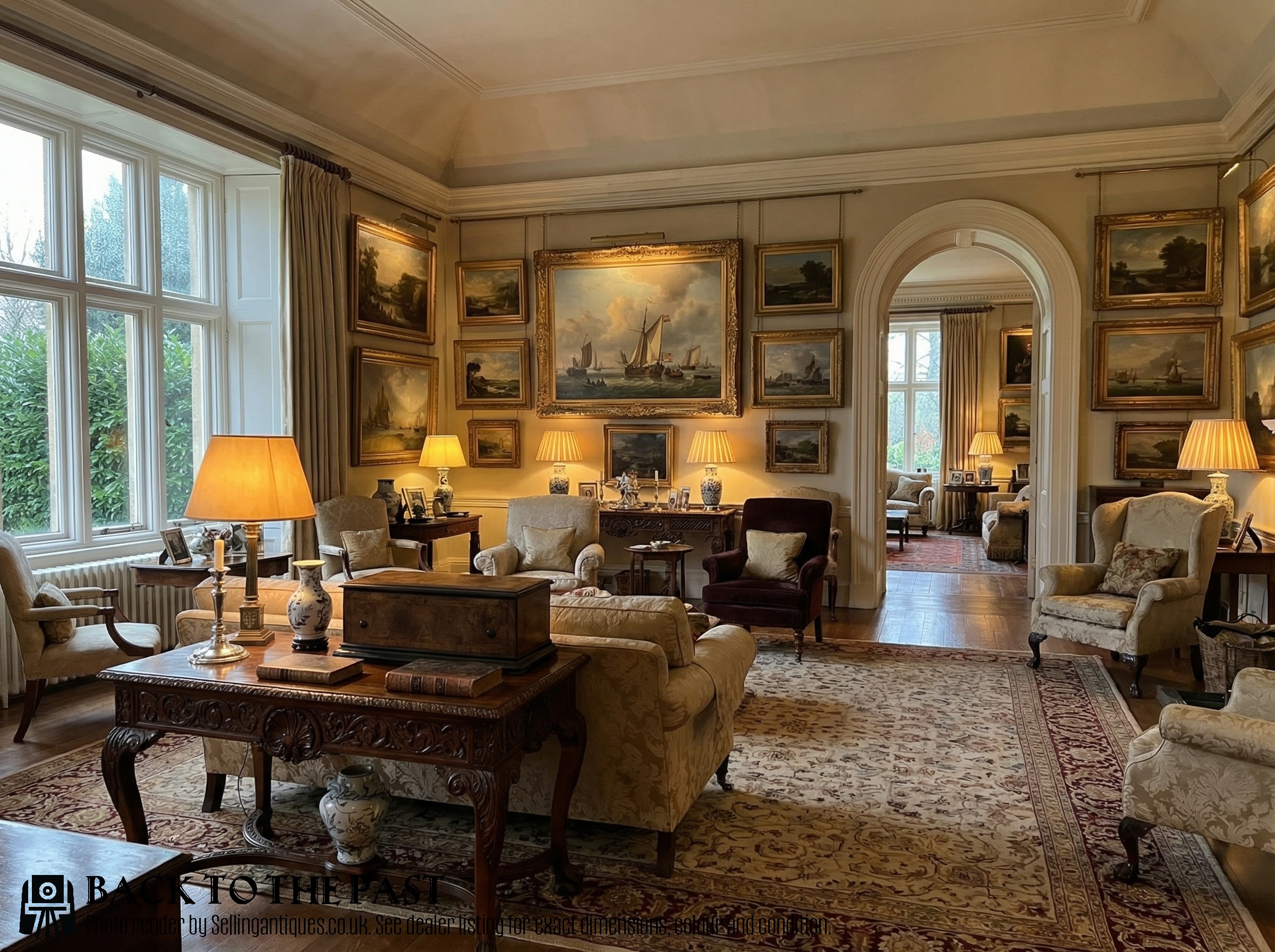
These instruments require a stable, level surface such as a heavy sideboard, console table, or dedicated desk where their acoustic properties can resonate properly. Placing them away from direct sunlight and excessive moisture protects the delicate internal steel and timber veneers.
Because they operate as decorative furniture pieces as well as musical devices, positioning them in living spaces allows easy access for winding and playing.