




Brown Wooden Music Box
A brown wooden music box brings mechanical melody into the room through polished cases of walnut, rosewood, and burr walnut.
Brown Wooden Music Box
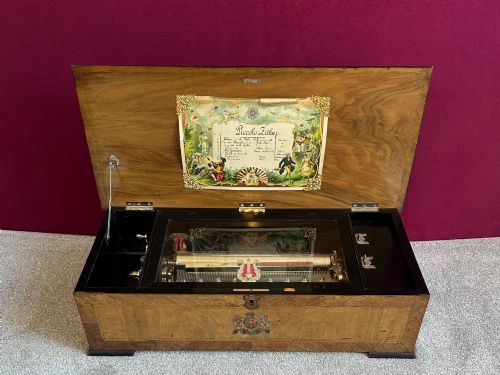
A brown wooden music box is a mechanical instrument housed in timber cases that range from simple walnut boxes to elaborate marquetry cabinets. When searching this phrase, a buyer encounters domestic items designed to play pinned cylinders or discs for entertainment.
The versions most likely met on this page date from the Victorian and Edwardian eras, spanning the mid-nineteenth century to the early twentieth century. These pieces encompass table top models, cylinder boxes with bells, and larger music cabinets.
Origins include Swiss workshops alongside British iterations, utilising local and exotic hardwoods like gonçalo alves and inlaid fruitwood. The forms vary from portable tabletop boxes to substantial furniture pieces housing scores.
How they were made
Construction relies on dense timbers such as walnut, rosewood, and ebonised wood to house the delicate interior mechanism. Cabinetmakers formed the outer shells with precision, often incorporating burr veneers and marquetry inlay.
Internal components combine brass pins and steel combs to produce the sound, sometimes augmented by glass lids or additional bells. Key wound movements and complex cylinder mechanisms required expert fitting within the wooden enclosures.
Brown Wooden Music Box Retail Price Guide 2026
Typical asking prices for brown wooden music box among the pieces listed under this phrase on Sellingantiques today, from the lower quarter to the upper quarter. They describe what is for sale here now, not the wider market.
Listings span periods from the eighteenth century through the Victorian and Edwardian eras, incorporating walnut, rosewood, and brass components.
What varies in quality
Quality rests upon the execution of the woodwork and the complexity of the musical movement within the case. Pieces featuring intricate marquetry, elaborate fruitwood inlay, and secondary elements like bells indicate higher workshop ambition.
The density and figuring of the timber, from plain walnut to heavily figured burr walnut and gonçalo alves, separate standard production from superior examples. Sound production capacity, seen in multi air cylinders and symphonium formats, further distinguishes the grade.
B A Bremond·Nicole Freres
The Brown Wooden Music Box Glossary
- Cylinder
- A brass roll set with tiny pins that pluck the steel teeth of a comb to create the tune. This rotating element determines the specific airs a box can play.
- Marquetry
- The art of applying decorative pieces of veneer to a structure to form intricate patterns. Fruitwood and contrasting timbers are typically employed for this surface enrichment.
- Gonçalo Alves
- A dense exotic hardwood known for its distinct figuring, utilised in cabinet construction. It provides both structural weight and visual depth.
- Symphonium
- A type of large music box that plays interchangeable metal discs rather than pinned cylinders. These table top instruments produce rich acoustic volume.
- Comb
- The tuned steel plate with multiple teeth that vibrates when struck by the cylinder pins. Its integrity governs the acoustic clarity of the music.
Brown Wooden Music Box: Frequently Asked Questions
How do cylinder music boxes work?
A wound spring turns a pinned brass cylinder which causes individual teeth on a steel comb to vibrate and produce notes. The arrangement of pins dictates the melody.
Additional elements like bells or mandolin attachments interact with the comb to alter the tonal quality of the piece.
What woods were used for cases?
Cabinetmakers utilised a variety of timbers including walnut, burr walnut, rosewood, and ebonised wood for the primary structures. Marquetry inlay often incorporated fruitwood for contrast.
Exotic species like gonçalo alves also appear on Edwardian examples.
How are different periods identified?
Victorian pieces frequently feature rosewood or walnut cases with inlaid details and mechanical cylinder movements. Edwardian examples often take the form of larger music cabinets.
Eighteenth-century designations in this category typically reflect stylistic revivals or specific dating of foundational design elements within the listings.
Where were these boxes made?
Many fine cylinder musical boxes originated in Switzerland, housed in locally constructed timber cases. Other pieces reflect British cabinetmaking traditions.
Workshops in these regions produced everything from portable tabletop units to large floor-standing music cabinets.
How should a music box be maintained?
Keep the wooden case away from direct heat sources and fluctuating humidity to protect the veneer and internal glues. Regular gentle cleaning of the exterior preserves the polished finish.
Mechanisms benefit from professional attention if the spring tension or comb alignment requires adjustment.