

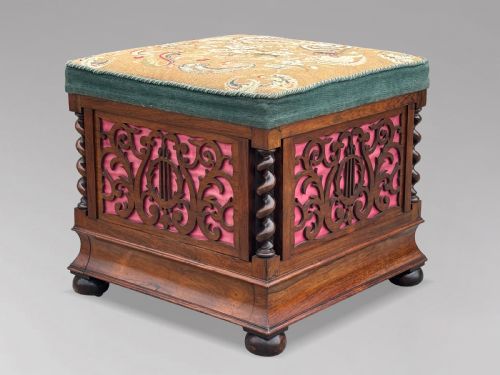


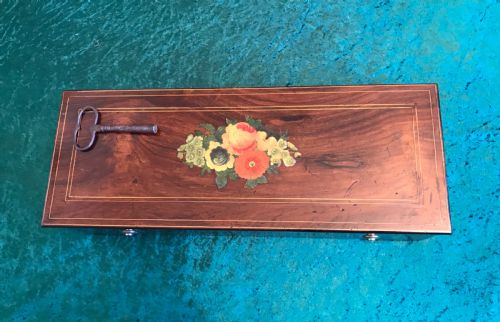


Rosewood Music Box
These rosewood music box pieces deliver mechanical melody housed in rich, dark timber, offering a tangible connection to nineteenth-century domestic entertainment.
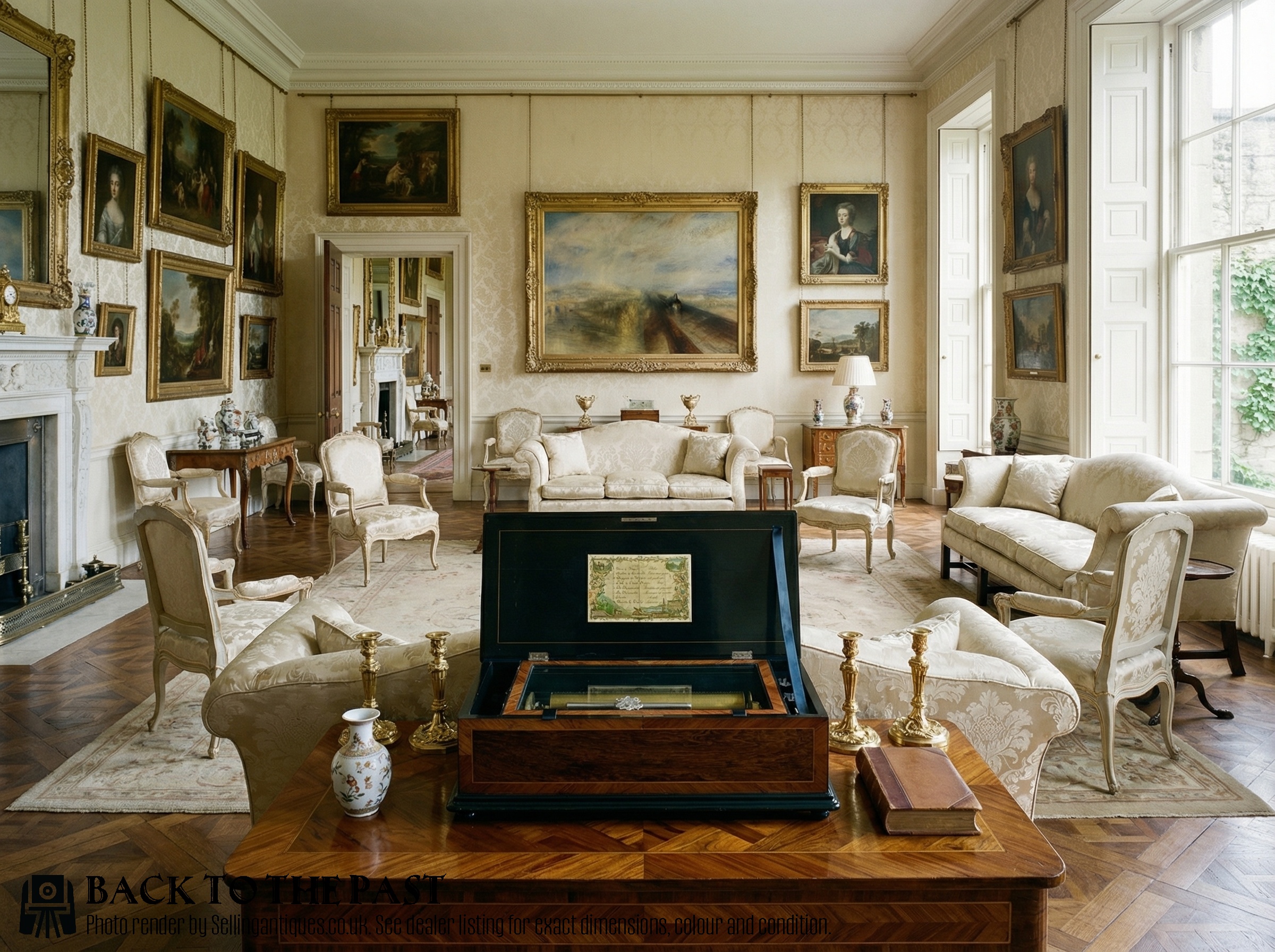
Rosewood Music Box
A rosewood music box is a mechanical sound-producing device enclosed in a wooden case, predominantly appearing here from the Victorian period and nineteenth century alongside related forms like canterburys, piano stools, and music cabinets. The core objects range from small eight-air cylinders to large multichime mechanisms featuring bells in view.
Most examples date from the middle to late nineteenth century, spanning eras from George III and George IV through to Edwardian times. Alongside dedicated musical boxes, buyers will encounter sheet music storage items and seating constructed in the same dense tropical timber.
How they were made
Cases utilise solid rosewood and ebonised wood, frequently decorated with contrasting boxwood marquetry inlay, whilst internal mechanisms combine steel combs, brass cylinders, and occasionally glass covers. Velvet linings appear inside compartments, and structural elements incorporate walnut or secondary timbers.
The mechanical movement relies on pinned brass cylinders rotating against tuned steel teeth, sometimes accompanied by striking bells operated via dedicated hammers. Case construction employs traditional joinery, integrating carrying handles, hinged lids, and inlaid motifs into the exterior surfaces.
Rosewood Music Box Retail Price Guide 2026
Typical asking prices for rosewood music box among the pieces listed under this phrase on Sellingantiques today, from the lower quarter to the upper quarter. They describe what is for sale here now, not the wider market.
Listings feature periods spanning George III, George IV, Victorian, and Edwardian eras, constructed in rosewood, brass, glass, steel, and velvet.
What varies in quality
Quality rests in the complexity of the musical arrangement, shifting from simple six-air movements up to elaborate multi-air cylinders featuring visible bells and intricate marquetry decoration. The precision of the steel comb and the crispness of the pinned cylinder determine the acoustic fidelity of the piece.
Cabinetwork distinguishes standard production from superior examples, with dense grain matching, fine boxwood stringing, and well-executed brass mounts elevating certain pieces. Maker attribution, such as signed works by Nicole Freres or LeCoultre, marks a clear tier of distinction in the surviving record.
Nicole Freres·LeCoultre
The Rosewood Music Box Glossary
- Rosewood
- A dense, heavy tropical hardwood prized for its dark purple-brown grain and polished finish. It forms the primary structural and decorative material for these nineteenth-century cases.
- Marquetry
- Decorative veneer work forming pictures or geometric patterns using various woods like boxwood. This technique frequently embellishes the lids of better musical boxes and cabinets.
- Canterbury
- A partitioned stand originally designed for holding sheet music or books. These pieces often feature carrying handles and divisions matching the aesthetic of contemporary music boxes.
- Comb
- The tuned steel plate with vibrating teeth plucked by pins on the rotating cylinder. Its condition and integrity govern the musical output of the instrument.
Rosewood Music Box: Frequently Asked Questions
How do I wind the movement?
Most nineteenth-century boxes utilise an integrated winding lever or a separate key to tension the internal spring.
Care must be taken not to over-wind the mechanism, stopping as soon as resistance is felt.
What does an eight-air mechanism mean?
The term air refers to a distinct musical tune or melody pinned onto the revolving brass cylinder.
An eight-air box cycles through eight different pieces of music before repeating the sequence.
Where should I place a music box?
Position the piece on a stable, level surface away from direct sunlight and rapid temperature fluctuations.
Stable indoor conditions protect the rosewood veneer and sensitive internal steel components from moisture damage.
How do I identify a Victorian piece?
Victorian examples typically display characteristic mid-to-late nineteenth-century proportions, dark rosewood timber, and often boxwood marquetry inlay.
Dates are frequently confirmed by style, mechanism type, and historical hallmarks or signatures on the comb.