

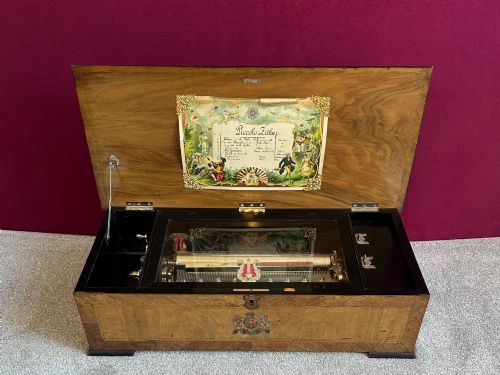


Brass Cylinder Music Box
A brass cylinder music box brings mechanical sound into a room, offering a tactile connection to nineteenth-century engineering.
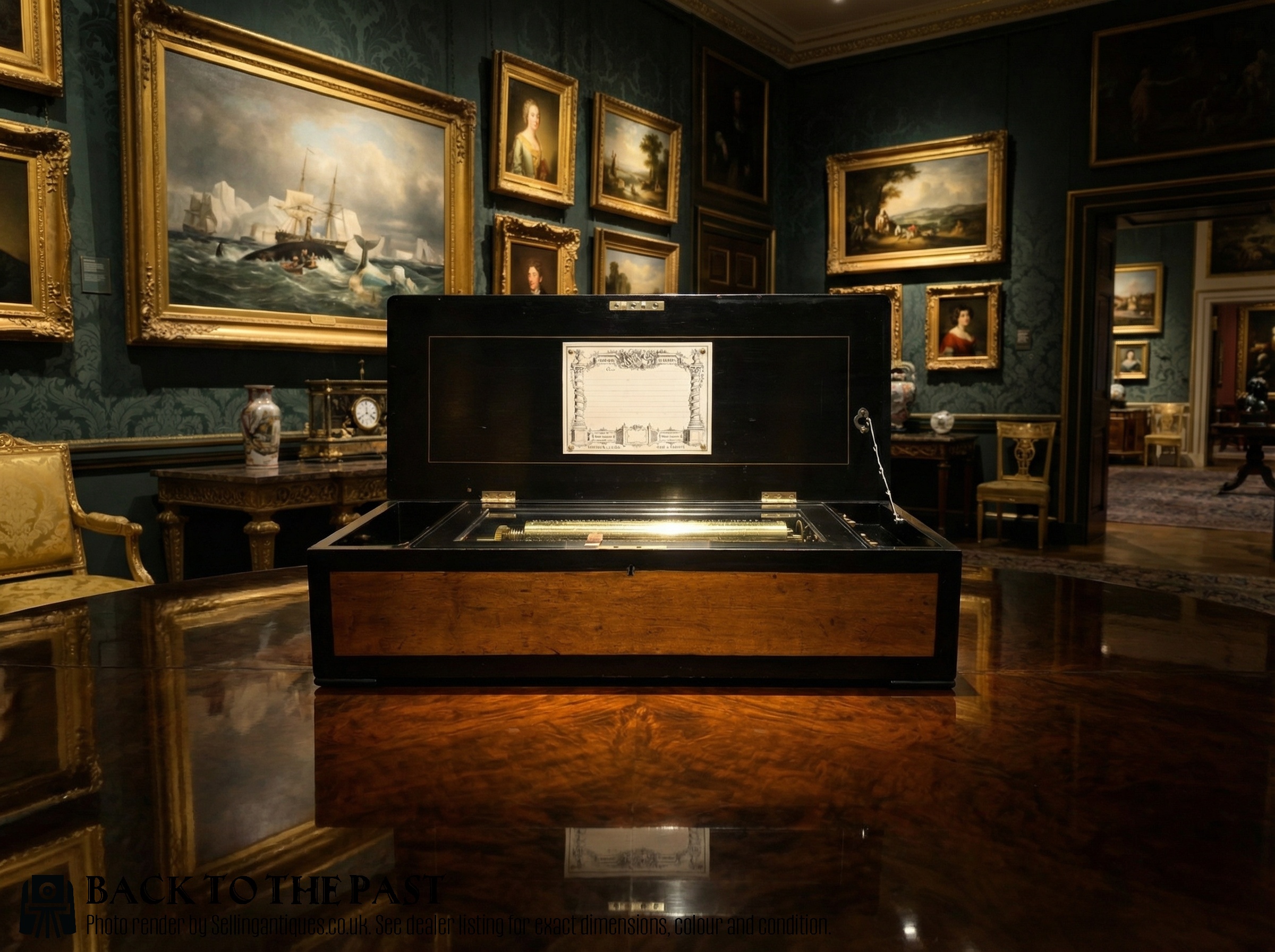
Brass Cylinder Music Box
A brass cylinder music box is a mechanical instrument designed to play pre-set tunes using a pinned metal cylinder revolving against a tuned comb. The examples found here date from the Victorian period, spanning the mid-nineteenth century up to nineteen hundred.
Most pieces on this page appear as rectangular wooden cases enclosing the brass mechanism, often featuring eight or twelve airs. The origins are firmly rooted in the Victorian era, representing a period of refined domestic mechanical entertainment.
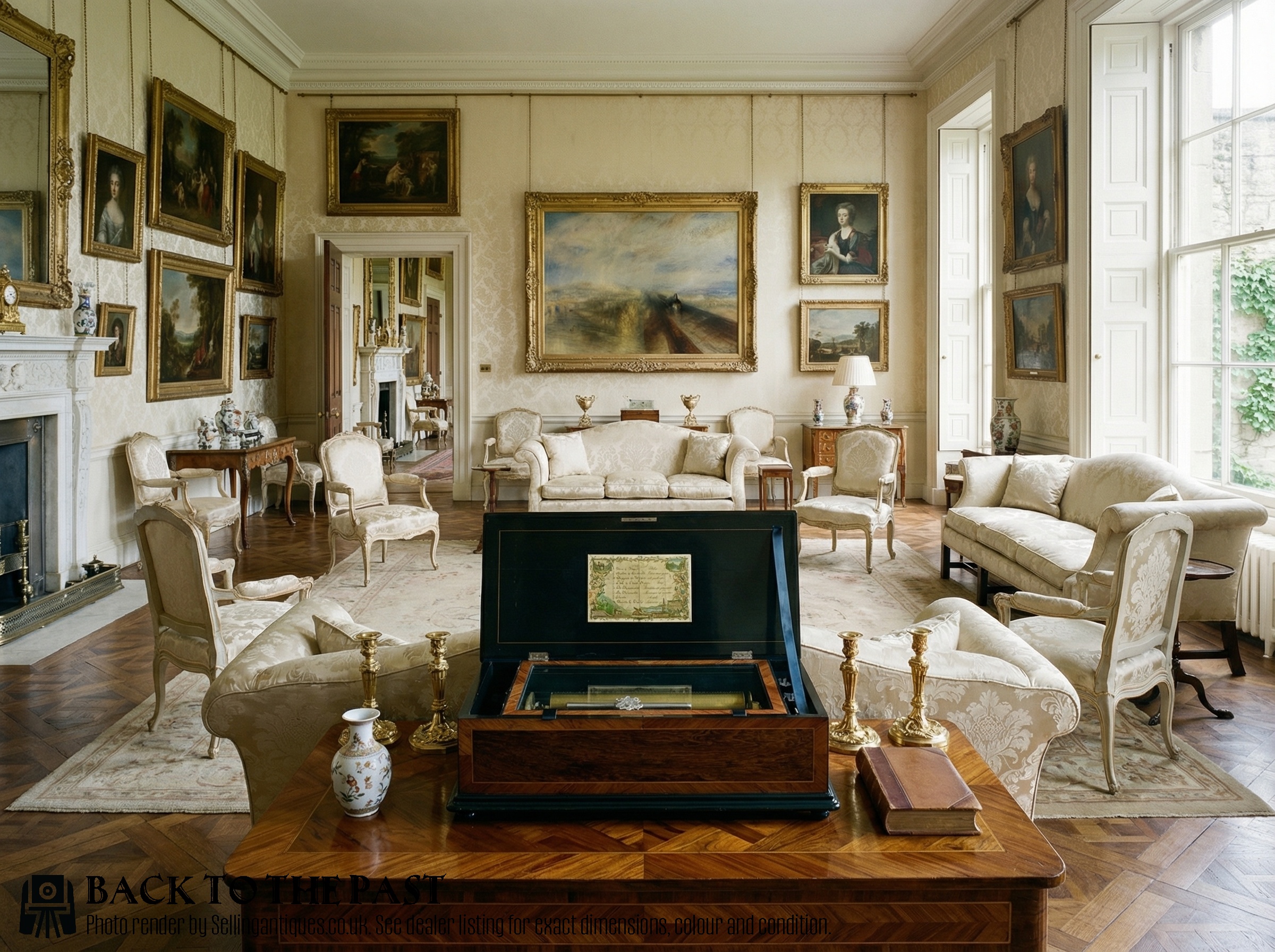
How they were made
The construction relies on brass and steel for the internal movement, where steel pins on a revolving brass cylinder pluck tuned steel teeth on a comb. The cases themselves are fashioned from woods such as rosewood, walnut, and ebonised wood, frequently incorporating glass lids to display the machinery.
Makers utilised paper components for tune sheets affixed inside the lid, detailing the musical programme. The precise alignment of brass pins and steel combs required skilled hand-fitting to ensure correct pitch and timing.
Brass Cylinder Music Box Retail Price Guide 2026
Typical asking prices for brass cylinder music box among the pieces listed under this phrase on Sellingantiques today, from the lower quarter to the upper quarter. They describe what is for sale here now, not the wider market.
Inside the lid, a fragile paper tune sheet quietly whispers the Victorian playlist before a single note even sounds.
What varies in quality
Quality separates through the complexity of the musical arrangement, moving from standard eight-air mechanisms up to larger twelve-air configurations. The fidelity of the sound and the precision of the brass pins dictate the musical standard of the piece.
Cabinetwork differentiates the pieces further, distinguishing simple wooden housings from finely figured rosewood or walnut cases. The reputation of makers such as Nicole Freres or LeCoultre also defines the upper tier of the range.

Nicole Freres·LeCoultre
The Brass Cylinder Music Box Glossary
- Air
- A tune played by the musical box. Most pieces list eight or twelve airs on their internal paper tune sheet.
- Comb
- The tuned steel plate with teeth that are plucked by the pins on the cylinder. Each tooth corresponds to a specific musical note.
- Cylinder
- The rotating brass barrel set with steel pins. Its rotation determines the rhythm and sequence of the notes.
- Tune sheet
- The paper index glued inside the lid that lists the musical programme. It names the specific airs the box plays.
Brass Cylinder Music Box: Frequently Asked Questions
How many tunes do they play?
These boxes typically play eight or twelve distinct airs, depending on the complexity of the cylinder mechanism.
The specific programme is recorded on a paper tune sheet located inside the case lid.
What woods are used for the cases?
The housings are constructed from various timbers including rosewood, walnut, and ebonised wood.
Glass elements are frequently incorporated to allow visibility of the internal brass and steel movement while playing.
How do I date a music box?
Dating relies on the stylistic cues of the Victorian period and the specific decades indicated around eighteen sixty to nineteen hundred.
Makers' marks and serial numbers stamped on the brass movement also assist in establishing the era of production.
Where were they made?
The pieces originate primarily from Swiss workshops, reflecting the centre of nineteenth-century mechanical music production.
Firms such as Nicole Freres and LeCoultre produced notable examples during this Victorian timeframe.