

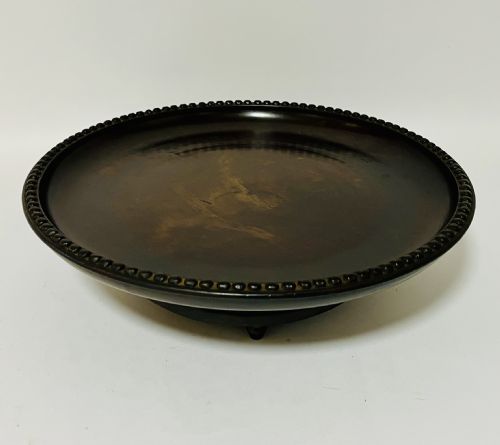


Ebonised Musical Box
These ebonised musical box pieces combine mechanical brass and steel works with dark timber cases, offering tactile sound and period presence.
Ebonised Musical Box
An ebonised musical box brings together nineteenth-century mechanical innovation and dark cabinet-making, turning a cylinder and comb into a domestic performance. Most examples encountered here date from the Victorian period, originating from Swiss workshops that specialised in pinned cylinders playing multiple airs.
Beyond standard tabletop music boxes, the wider selection spans occasional forms such as musical wooden fruit bowls and cigar boxes. These variations demonstrate how makers incorporated musical movements into everyday functional objects during the nineteenth and early twentieth centuries.
How they were made
The exterior cases rely on ebonised wood, often enhanced with contrasting boxwood stringing, marquetry, or secondary timbers like rosewood, walnut, and burr walnut. Woodworkers shaped these materials into robust housing designed to resonate sound effectively while protecting the internal mechanism.
Inside, the mechanical heart comprises a brass cylinder set with tiny pins that pluck a tuned steel comb. More elaborate models incorporate visible bells or multiple airs, requiring precise alignment between the revolving barrel and the vibrating teeth to produce a clear melody.
Ebonised Musical Box Retail Price Guide 2026
Typical asking prices for ebonised musical box among the pieces listed under this phrase on Sellingantiques today, from the lower quarter to the upper quarter. They describe what is for sale here now, not the wider market.
Listings feature Victorian and early twentieth-century pieces, spanning traditional cylinder music boxes, musical cigar boxes, and Swiss wooden fruit bowls.
What varies in quality
Quality rests significantly upon the precision of the musical arrangement and the complexity of the movement. Pieces by recognised makers like Nicole Freres or Langdorff and Fils display superior pin placement and comb integrity, resulting in a cleaner, more resonant sound.
Cabinet work also dictates overall distinction, separating standard production boxes from those featuring crisp marquetry, well-figured burr walnut, or specialised additions such as visible bells. The integration of the movement into decorative items like fruit bowls reveals varying degrees of ambition in design.
Langdorff and Fils·Nicole Freres
The Ebonised Musical Box Glossary
- Air
- A distinct tune played by the musical movement during one rotation of the cylinder. Boxes are often described by how many airs they hold.
- Cylinder
- The rotating brass barrel set with pins that strike the steel comb. Each pin must be precisely positioned to pluck the correct note.
- Comb
- The tuned steel plate with individual teeth that vibrate when struck by the pins on the revolving cylinder. The quality of the steel directly affects the tone.
- Ebonised
- Timber treated with a dark stain or finish to imitate ebony. This dark surface finish provides a stark contrast against brass movements and marquetry inlay.
Ebonised Musical Box: Frequently Asked Questions
How do I wind a musical box?
Most cylinder boxes use a built-in key or crank on the side or underside of the case. Wind the mechanism gently until you feel resistance, avoiding over-winding which can strain the spring.
Once wound, use the exterior levers to start, stop, or repeat the selected airs. Allow the current tune to finish completely before shifting any control levers.
What is an ebonised finish?
Ebonising is a finishing technique where fruitwood or another common timber is stained and polished to resemble solid ebony. It was widely used in Victorian cabinet-making to create a sleek, uniform dark surface.
On these boxes, the dark wood surface frames brass fittings, marquetry panels, or glass viewing lids. Maintenance involves simple dusting with a dry cloth to protect the polished surface.
How do multiple airs work?
A pinned brass cylinder shifts slightly along its axis after each rotation to present a fresh set of pins to the comb. This allows a single mechanical movement to cycle through a repertoire of distinct tunes.
Selectors on the case allow the listener to choose a specific tune or let the mechanism play through the entire programmed sequence automatically.
Where were these boxes made?
The vast majority of nineteenth-century musical movements originated in Switzerland, where specialised workshops perfected mechanical pin-and-comb technology. These Swiss movements were then housed in local or exported timber cases.
Swiss folk art styles and urban cabinet-making traditions both influenced the final exterior design. Signed movements often bear the marks of prominent Swiss firms.
How should I care for the mechanism?
Keep the box in a stable environment away from direct sunlight, dampness, and extreme temperature fluctuations that can warp wood and affect the steel comb. Avoid touching the pins and comb directly.
Professional restoration is recommended if the movement jams or loses its tone. Regular gentle use helps keep the mechanical oils and spring tension functioning smoothly.