



Inlaid Rosewood Music Box
These inlaid rosewood music box examples offer rich mechanical sound housed in figured timber, giving any room a traditional presence.
Inlaid Rosewood Music Box
An inlaid rosewood music box brings together intricate mechanical movements and decorative woodwork from the Victorian and Edwardian eras. Buyers searching for an inlaid rosewood music box encounter cabinetwork ornamented with marquetry inlay and contrasting boxwood.
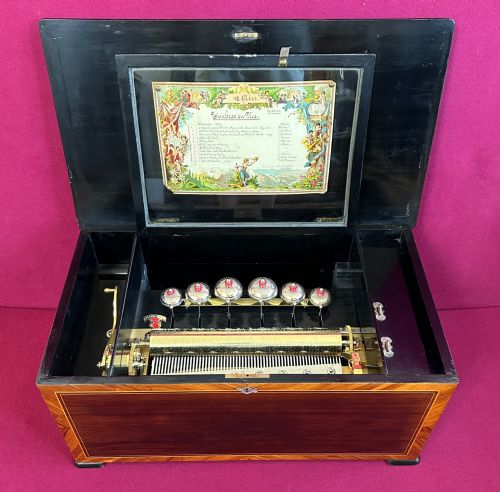
Most items on this page date from the nineteenth century, including pieces built around eighteen seventy-five and the eighteen nineties. Forms range from tabletop music boxes with visible bells to large music cabinets constructed from rosewood and gonçalo alves.
How They Were Made
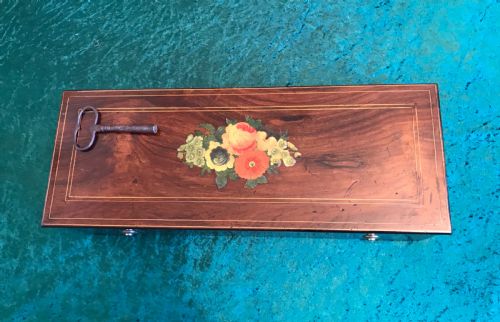
Maker workshops built the cases using rosewood as the primary timber, often embellishing the lids with marquetry inlay and boxwood details. Interiors combined brass components, steel combs, and glass elements to protect the mechanism while allowing the pins and cylinders to operate.
Some configurations incorporated bells in view alongside standard cylinder movements playing multiple airs. Key wound systems required precise engineering of metal gears and pins to ensure accurate tune reproduction.
Listings feature Victorian and nineteenth-century pieces utilising rosewood, brass, boxwood, and marquetry inlay.
What Varies In Quality
Distinction across the range lies in the complexity of the movement and the finesse of the timber decoration. Pieces with multiple airs, visible bells, or signed mechanical works sit at a different level from standard single-cylinder models.
The precision of the marquetry inlay and the retention of original finish on the rosewood cases further distinguish finer examples. Cabinet depth and the inclusion of specialised storage compartments alter the overall scale and architectural presence.
Nicole Freres·LeCoultre
The Inlaid Rosewood Music Box Glossary
- Rosewood
- A dense, dark timber prized for its prominent grain and deep colour, frequently utilised for nineteenth-century cabinetwork. It provides a stable and decorative shell for mechanical movements.
- Marquetry Inlay
- The art of applying small pieces of veneer to a structure to form decorative patterns and pictures. In these items, lighter woods such as boxwood create floral or geometric motifs against the dark rosewood background.
- Cylinder
- The rotating metal barrel set with pins that pluck the teeth of a steel comb to produce notes. Different rows and pin arrangements allow the mechanism to play multiple airs.
- Air
- A distinct musical tune or melody programmed onto the revolving barrel. Boxes often list specific counts such as eight airs or twelve airs.
- Comb
- A flat piece of tuned steel with multiple teeth that vibrate when struck by the cylinder pins. The quality of the metal directly influences the resonance of the sound.
Inlaid Rosewood Music Box: Frequently Asked Questions
What is an inlaid rosewood music box?
An inlaid rosewood music box is a mechanical instrument housed in a wooden case decorated with contrasting veneer work. These pieces generate sound through a pinned metal cylinder striking a steel comb.
Most examples date from the Victorian period and feature intricate marquetry patterns on the lid. They serve as both functional musical devices and decorative table objects.
How do you operate an antique music box?
Operation typically involves winding the spring mechanism using an attached handle or key. Once wound, engaging the lever allows the cylinder to rotate and play the pinned tunes.
Users should handle the winding process with care to avoid over tensioning the internal springs. Keeping the glass cover closed protects the delicate brass and steel components during playback.
How many tunes do they play?
The number of melodies varies by mechanism, with many standard models playing eight or twelve distinct airs. More complex setups incorporate additional components like bells to expand the auditory range.
Each tune corresponds to a specific section of pins arranged across the rotating brass cylinder. The cylinder shifts laterally to change melodies as the mechanism cycles.
How do you date a Victorian music box?
Datings rely on stylistic cues from the case architecture, the complexity of the marquetry, and stamps or signatures on the internal brass movement. Victorian pieces frequently feature nineteenth-century construction methods and specific tune sheet formats.
Consulting the maker name stamped on the comb or bedplate provides a direct link to operational production records. Material choices like ebonised wood or gonçalo alves also point toward specific decades in the eighteen hundreds.