




Mahogany Fall Front Drawers
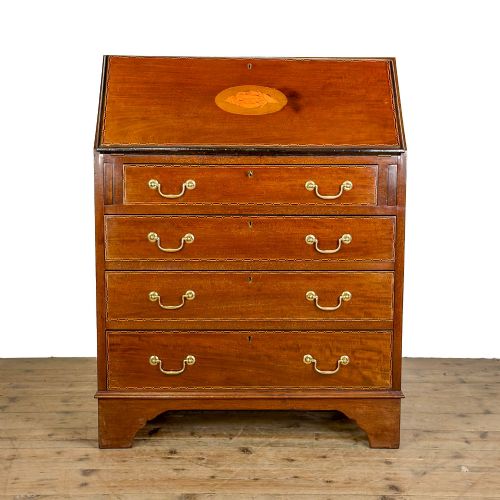
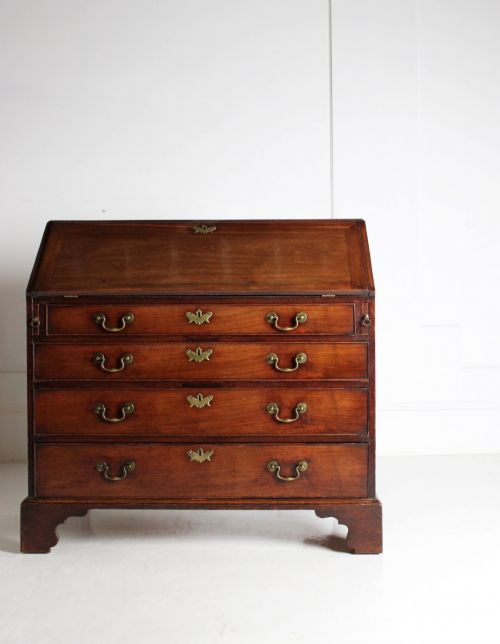
Mahogany fall front drawers bring together timber and hidden compartments, offering a writing surface that conceals fitted interiors.
Mahogany Fall Front Drawers
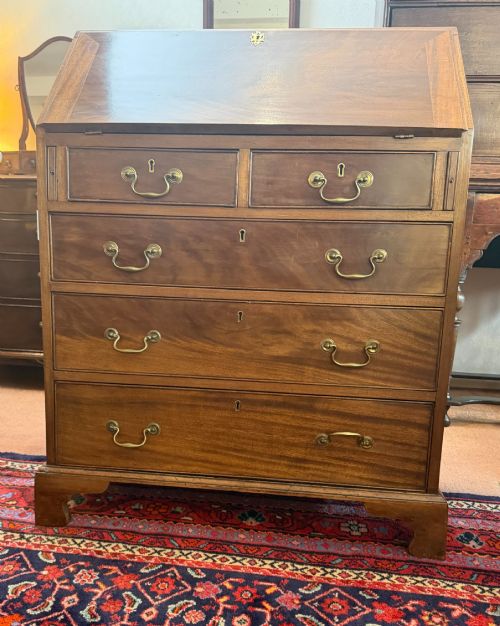
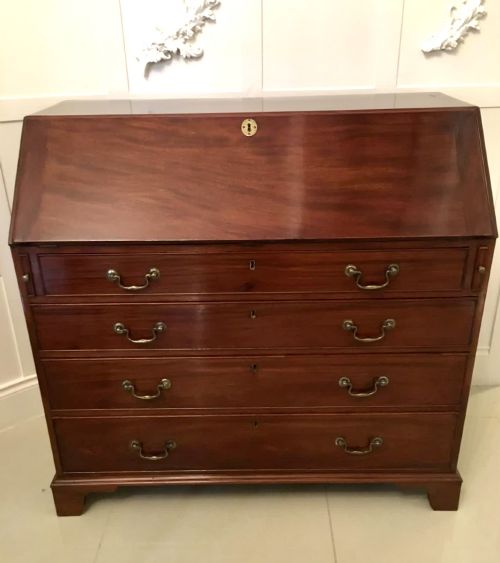
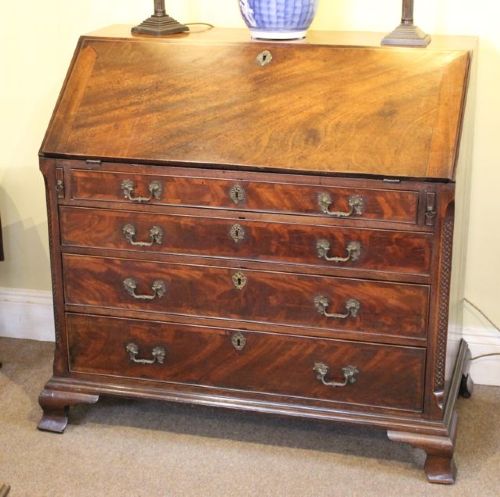
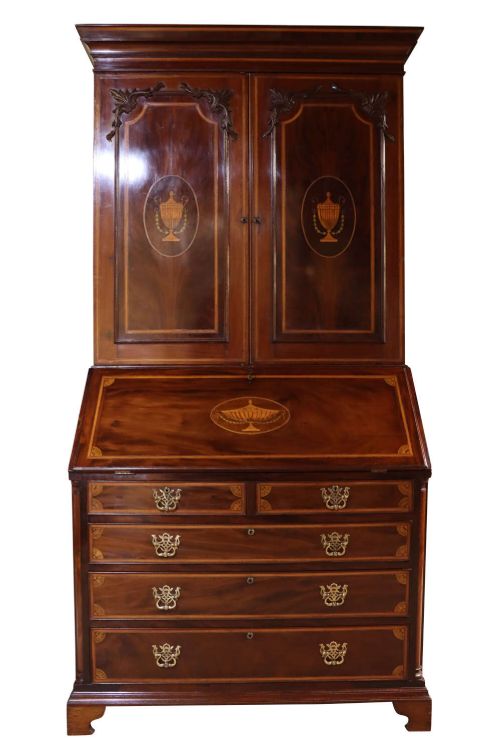
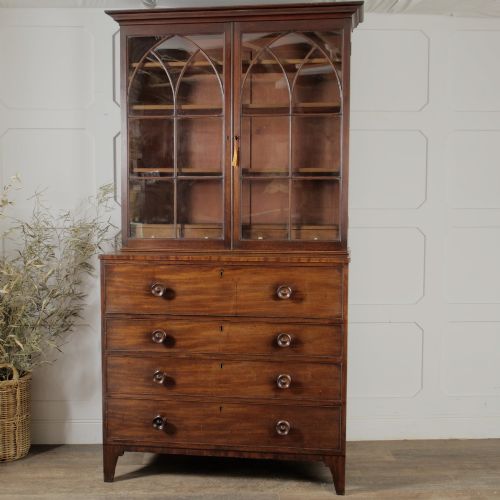
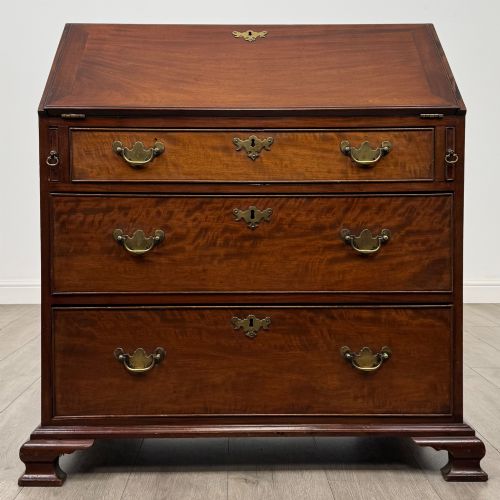
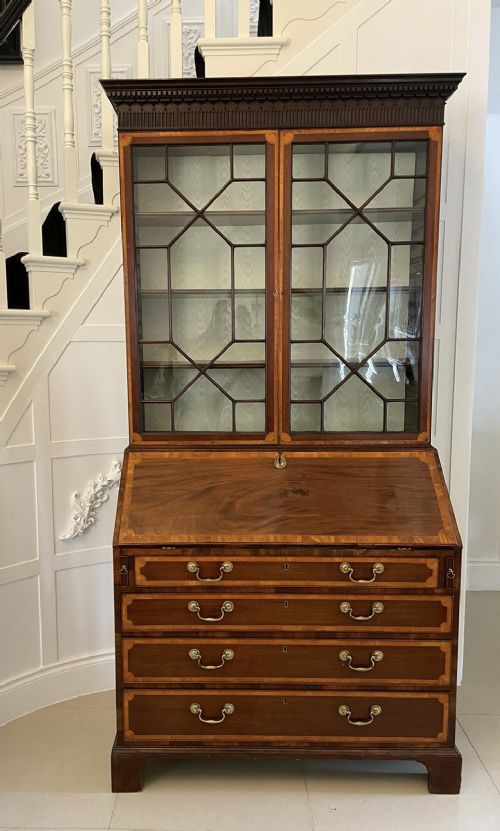
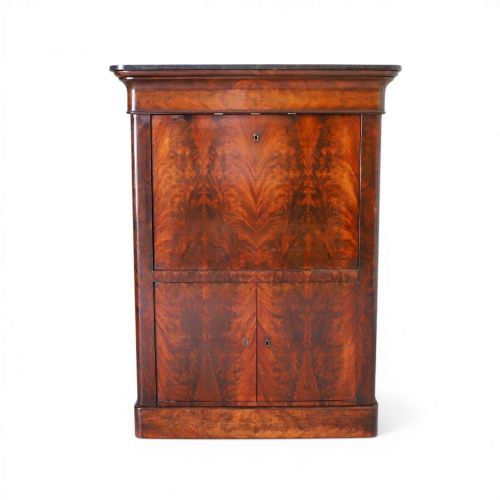
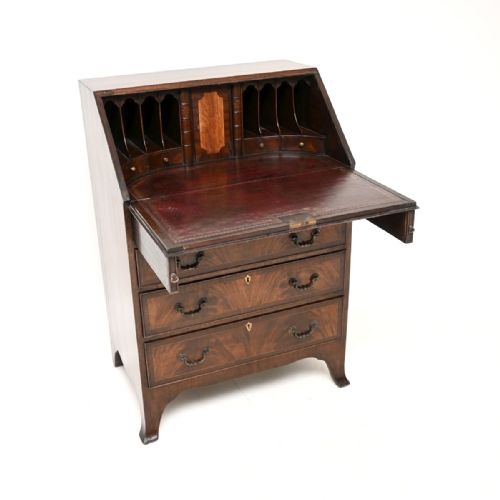
Mahogany fall front drawers typically take the form of bureaux, writing desks, and secretaire bookcases originating from Georgian, Regency, and Edwardian periods. These items combine a sloping or vertical hinged writing flap with internal pigeonholes, small drawers, and secret compartments above standard exterior drawer configurations.
The pieces appearing most frequently span the eighteenth and nineteenth centuries, ranging from compact George III examples to larger bureau bookcases and French secretaire cabinets. Buyers encounter various designations including escritoires and table cabinets sharing the characteristic fall front mechanism.
How they were made
Cabinet makers constructed these pieces primarily using solid mahogany and mahogany veneers, frequently incorporating secondary timbers such as oak for drawer linings. Decorative enhancement relied upon contrasting satinwood inlay, floral marquetry, and brass hardware to accent the exterior surfaces.
The fall front mechanism required precise joinery to support the writing flap when lowered, while internal compartments utilised secret panel releases and miniature pigeonholes constructed with hand dovetailing.
Some fall front desks hide tiny secret drawers behind false pigeonholes for storing private notes and small coins.
What varies in quality
Quality reveals itself in the selection of timber figures, particularly where Cuban mahogany or finely grained veneers show depth and rich colour. Superior examples maintain untouched original surfaces and crisp inlay work without modern alterations.
Internal complexity sets the finer pieces apart, specifically the execution of secret drawers, concealed compartments, and well-proportioned pigeonholes within the fitted writing interior.
The Mahogany Fall Front Drawers Glossary
- Fall front
- A hinged panel that folds down to provide a horizontal writing surface while concealing internal compartments. This mechanism defines bureaux and secretaire cabinets.
- Secretaire
- A piece of furniture incorporating a writing drawer or drop-front desk compartment. These often double as standard chests of drawers.
- Bureau bookcase
- A combination piece featuring a sloping fall front desk base surmounted by a glazed or panelled cabinet for books. These pieces require substantial floor and wall clearance.
- Marquetry
- Decorative veneer work forming pictorial patterns using various coloured woods. Craftsmen applied this technique to elevate the visual appeal of drawer fronts and falls.
- Escritoire
- A writing cabinet or desk, frequently used during the nineteenth century. The term often describes fall front writing furniture with sophisticated internal fittings.
Mahogany Fall Front Drawers: Frequently Asked Questions
How do I use a bureau desk?
Lower the hinged fall front panel to reveal the internal writing surface, pigeonholes, and small drawers.
When writing is finished, lift the panel back into place to conceal correspondence and maintain a tidy exterior.
What is a secret drawer?
A concealed compartment built into the interior of the desk behind pigeonholes or sliding panels.
Cabinet makers designed these hidden spaces to secure valuables and sensitive documents.
How do I date a mahogany bureau?
Examine the construction methods of the internal drawers, timber choices such as Cuban mahogany, and exterior styling details like bracket feet or satinwood inlay.
Georgian pieces typically display hand-cut dovetails and simpler lines compared to later nineteenth-century variations.
Where were these desks placed?
These items traditionally stood in parlours, libraries, and private studies where correspondence took place.
Their compact footprint allowed them to function as both writing desks and storage chests in domestic interiors.