





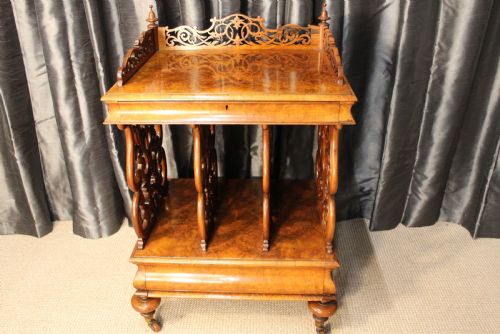


Antique Paper Storage Cabinet
An antique paper storage cabinet brings order to correspondence, sheet music, and folios through fitted drawers and clever tambour doors.
Antique Paper Storage Cabinet
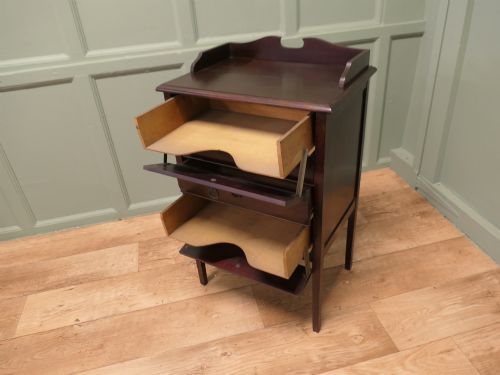
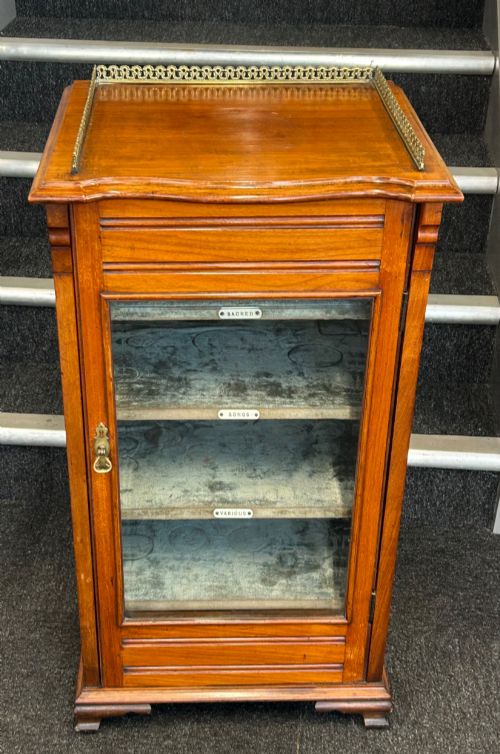
An antique paper storage cabinet appears in several distinct forms across this selection, primarily as vertical filing cabinets, music cabinets, and cartonnier cabinets. Pieces span from the Victorian and Edwardian eras into the 1930s and 1940s, alongside French nineteenth-century examples.
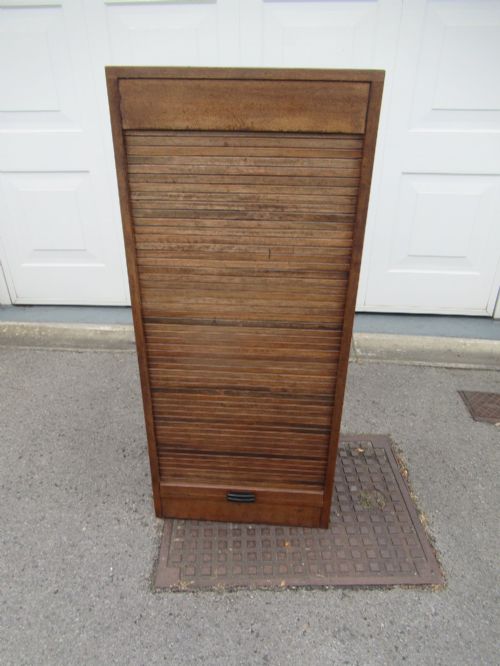
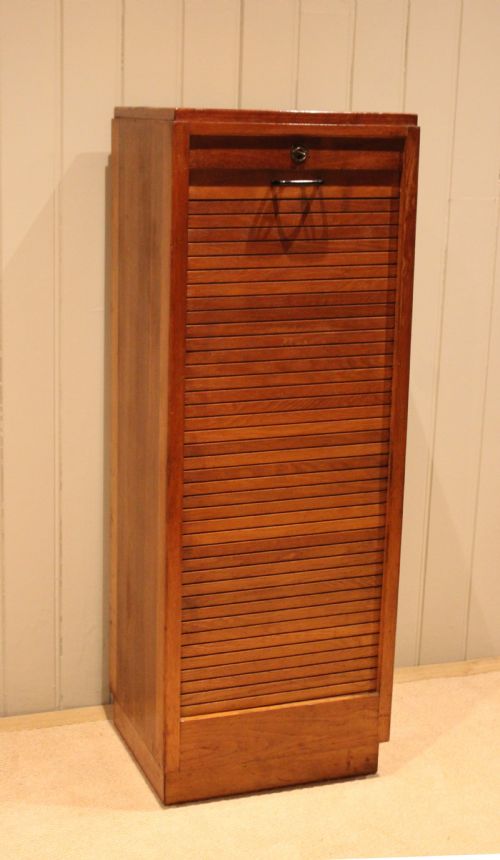
Filing variants often utilise a tambour front or desktop drawers to house documents, while music and folio cabinets provide tailored shelving for sheets and large papers. French cartonnier cabinets introduce compartmentalised leather storage.
Origins divide broadly between British workshop traditions using oak and mahogany, and continental French pieces incorporating kingwood, walnut, and ormolu mounts.
Materials and Construction
Construction relies heavily on timbers such as oak, mahogany, walnut, and rosewood, sometimes enhanced with marquetry inlay, burr walnut veneers, or kingwood. Brass hardware, leather accents, and ormolu mounts complete the detailing on finer pieces.
Tambour construction utilises narrow wooden slats joined flexibly to slide smoothly around a curved track, concealing interior shelving. Freestanding filing drawers and multi-functional side cabinets employ traditional joinery suited to daily office and domestic utility.
Antique Paper Storage Cabinet Retail Price Guide 2026
Typical asking prices for paper storage cabinet among the pieces listed under this phrase on Sellingantiques today, from the lower quarter to the upper quarter. They describe what is for sale here now, not the wider market.
Slide open a tambour front and listen to a century of office machinery sigh.
Quality and Execution
Execution separates standard utility office furniture from decorative parlour pieces through timber selection and cabinetmaking refinement. The choice between plain dark oak and figured burr walnut or rosewood shifts the character entirely.
The precision of the tambour mechanism determines the success of sliding fronts, while the inclusion of brass mounts, leather-lined cartonnier compartments, and inlaid mahogany marks the upper tier of execution.
The Antique Paper Storage Cabinet Glossary
- Tambour
- A flexible door constructed from narrow vertical strips of wood glued to a canvas or fabric backing, allowing it to slide smoothly around a track to enclose cabinet shelving.
- Cartonnier
- A piece of furniture fitted with multiple stationary compartments or pull-out boxes specifically designed for storing papers, documents, and folios.
- Canterbury
- A low stand featuring upright divisions, originally designed to hold sheet music, folios, or books beneath a small table surface.
- Ormolu
- Gilded bronze ornamentation applied to furniture, characteristic of nineteenth-century French cabinetmaking.
- Folio Cabinet
- A specialised storage piece proportioned specifically to hold large loose sheets of paper, prints, or drawings flat.
Antique Paper Storage Cabinet: Frequently Asked Questions
How do tambour doors work?
Tambour doors operate via individual wooden slats fastened to a flexible backing fabric, running along concealed grooves within the cabinet frame.
This design allows the door to slide open around a tight corner, hiding neatly inside the cabinet carcass and saving external clearance space.
What is a cartonnier used for?
A cartonnier serves to organise loose correspondence, documents, and unbound papers inside structured vertical tiers or leather-fronted boxes.
Originating in France, these cabinets keep working papers sorted and protected away from dust.
Can these cabinets hold modern paper sizes?
Many Edwardian and twentieth-century filing cabinets accommodate standard office papers, while music and folio variants are dimensioned for larger sheets.
Interior drawer and shelf dimensions vary considerably across periods, so specific paper compatibility depends on the individual cabinet's internal measurements.
Where were music cabinets placed?
Music cabinets sat in Victorian and Edwardian parlours and drawing rooms adjacent to pianos or music stands.
They stored sheet music and folios close at hand while maintaining a decorative appearance that matched other reception room furniture.