
Vintage Office Filing Cabinet
These vintage office filing cabinet selections bring robust utility and period timber into modern workspaces.
Vintage Office Filing Cabinet
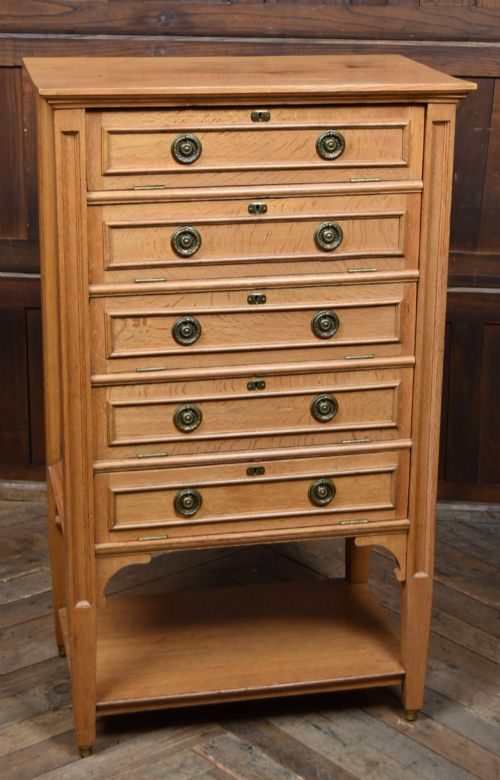
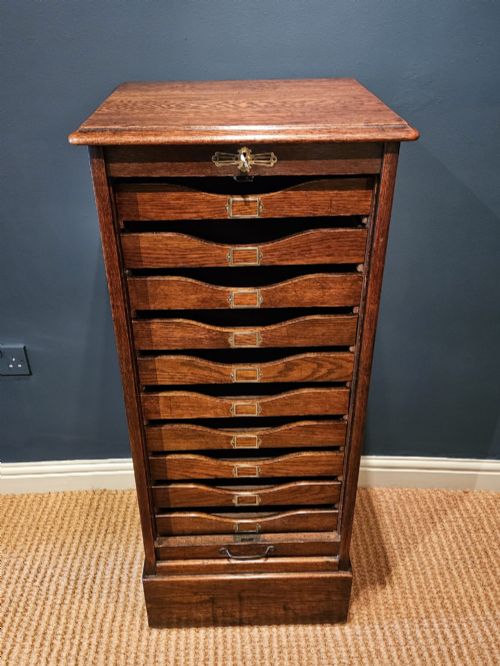
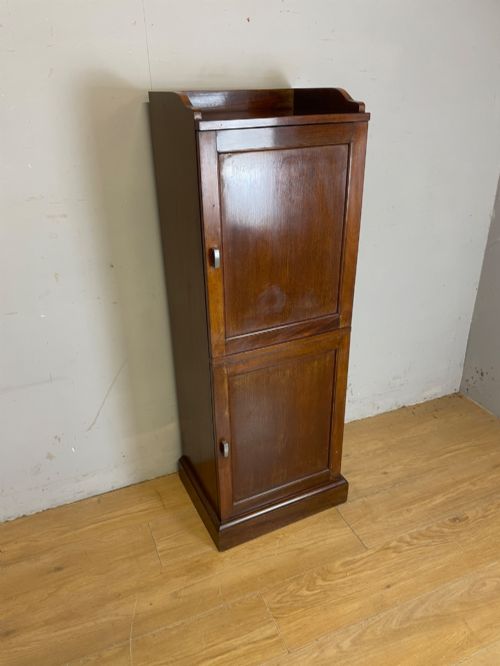
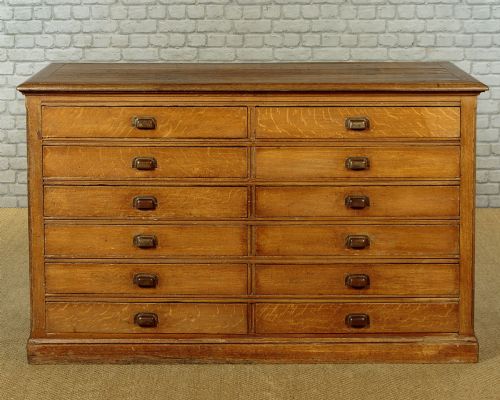
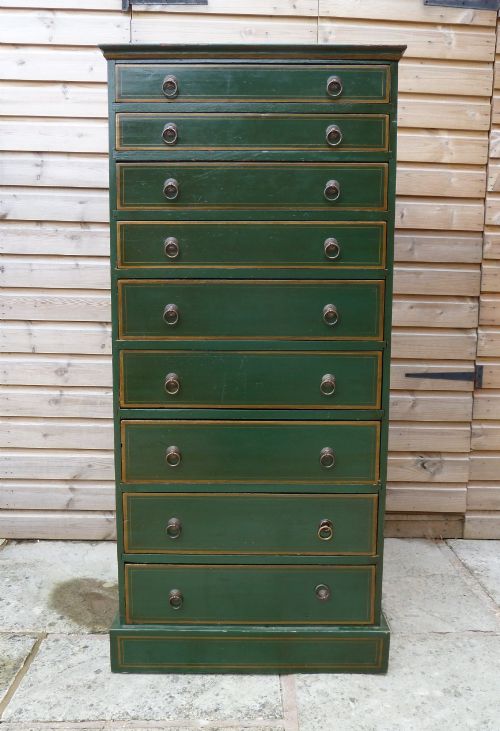
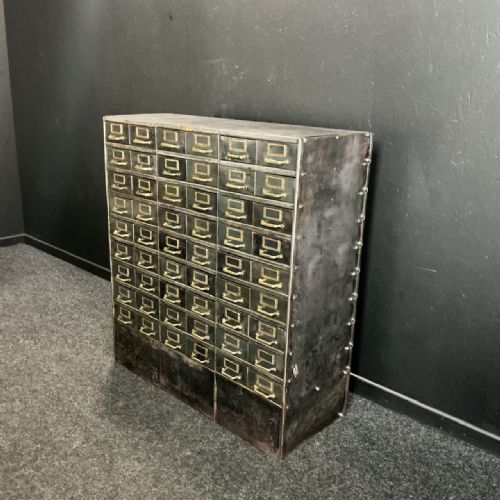
A vintage office filing cabinet serves as a practical storage solution originating from the nineteenth and twentieth centuries. These pieces encompass varied configurations including banks of drawers, tambour front units, and pedestal designs. Buyers seek these items to introduce period character and organised storage into contemporary rooms.
The selections span distinct eras such as the Edwardian period, Victorian times, and the 1920s industrial landscape. Oak and mahogany dominate the offerings, frequently appearing alongside brass hardware and pine structures. Most items reflect commercial and domestic workspaces of the past, adapted for modern administrative use.
Materials and construction methods
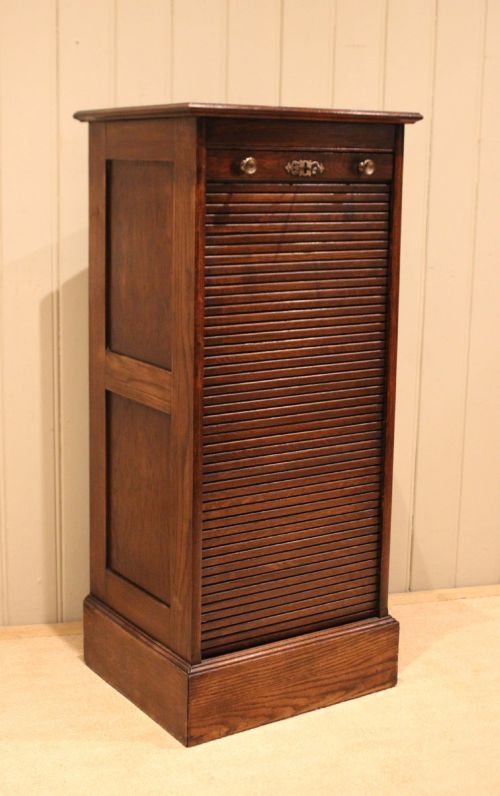
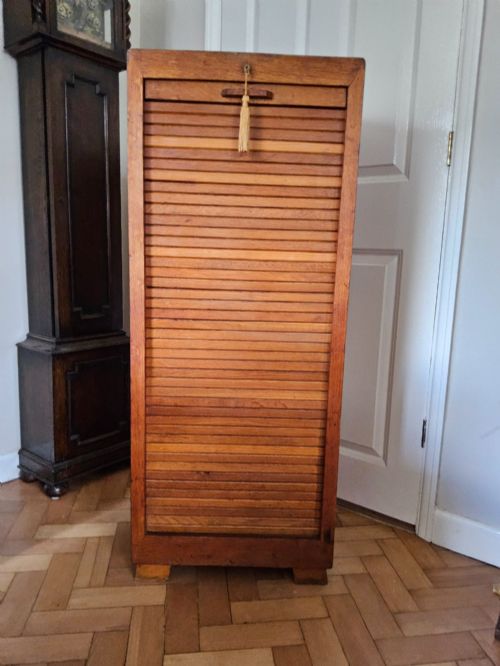
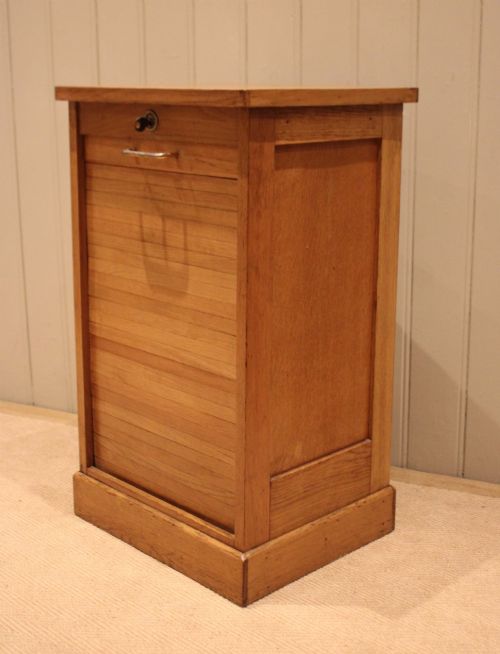
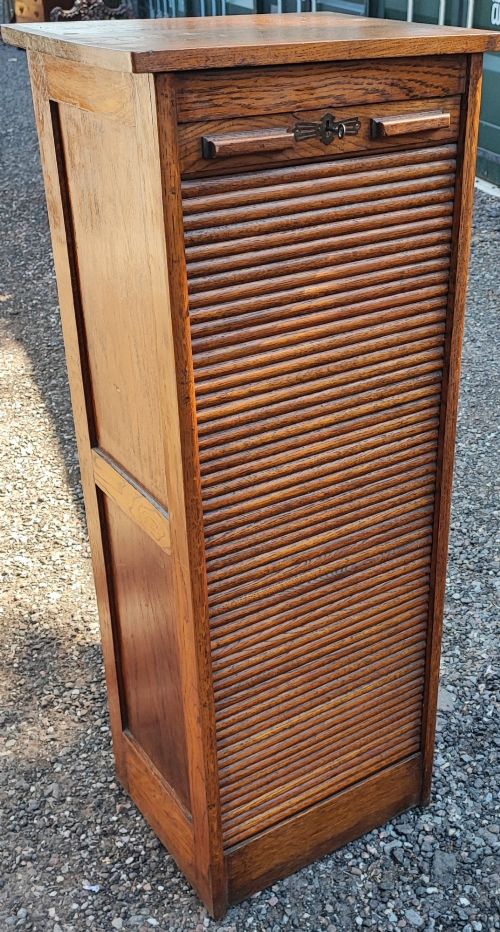
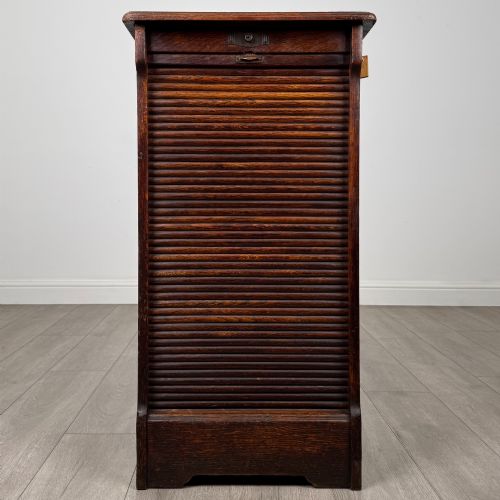
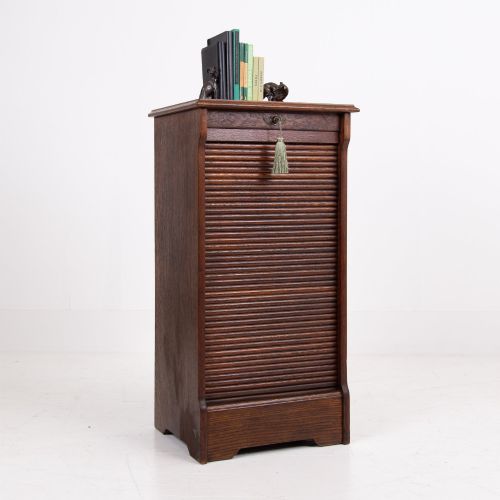
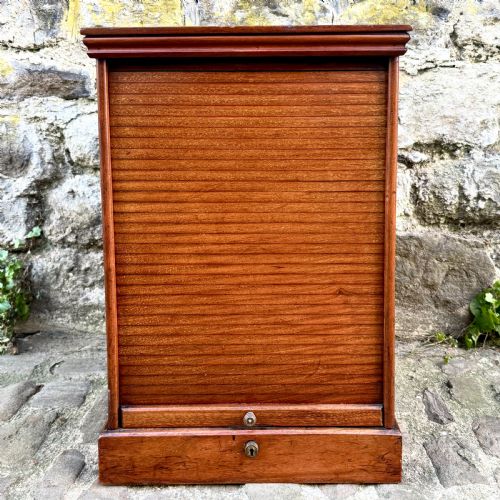
Cabinet makers utilised solid timbers like oak, mahogany, walnut, and pine to construct durable frames and drawer carcases. Joinery techniques such as dovetailed drawer joints ensured longevity under heavy daily office use. Many examples incorporate flexible tambour doors formed from narrow slats running on tracks.
Metal and brass components appear extensively as functional hardware, including shell pulls, label holders, and hinges. Canvas and leather sometimes line internal mechanisms or writing surfaces within specialised campaign pieces. Finishes relied on traditional polish and wax applied directly to the timber grain.
Vintage Office Filing Cabinet Retail Price Guide 2026
Typical asking prices for vintage office filing cabinet among the pieces listed under this phrase on Sellingantiques today, from the lower quarter to the upper quarter. They describe what is for sale here now, not the wider market.
Some nineteenth-century banking pedestals doubled as secure safes, keeping both ledgers and valuables safely locked away behind heavy iron-plated doors.
Distinctions in craftsmanship and design
Quality rests upon the choice of timber and the precision of the joinery, particularly in the smooth operation of tambour doors and deep drawers. Superior examples display figured mahogany or quarter-sawn oak with original brass label holders and shell pulls intact. Finer pieces often feature patented locking mechanisms or complex internal filing systems.
Proportion and scale distinguish standard utility furniture from exceptional architectural commissions. Lesser pieces use secondary woods with simple nailed construction, whereas superior items showcase meticulous attention to interior drawer dividers and panelled backs.
The Vintage Office Filing Cabinet Glossary
- Tambour
- A flexible door composed of narrow strips of wood glued to a canvas backing, allowing it to slide around a curved track to enclose a cabinet. This ingenious mechanism concealed office papers while saving workspace.
- Shell pull
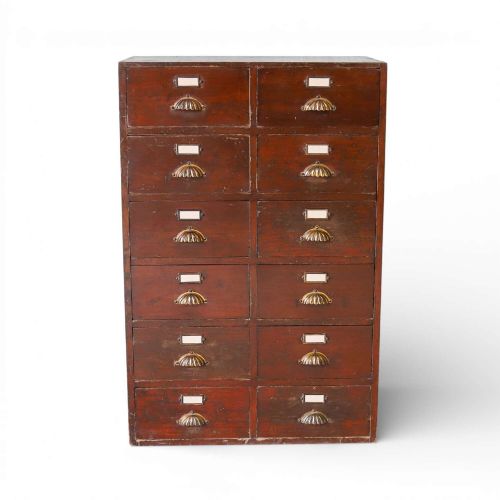
- A pressed metal handle shaped like a seashell that typically incorporates a slot for a paper label holder. These fixtures adorned early filing drawers to identify contents.
- Plan chest
- A large, shallow chest of drawers designed originally for storing architectural blueprints and maps. These pieces offer wide horizontal surfaces with numerous low drawers.
- Campaign furniture
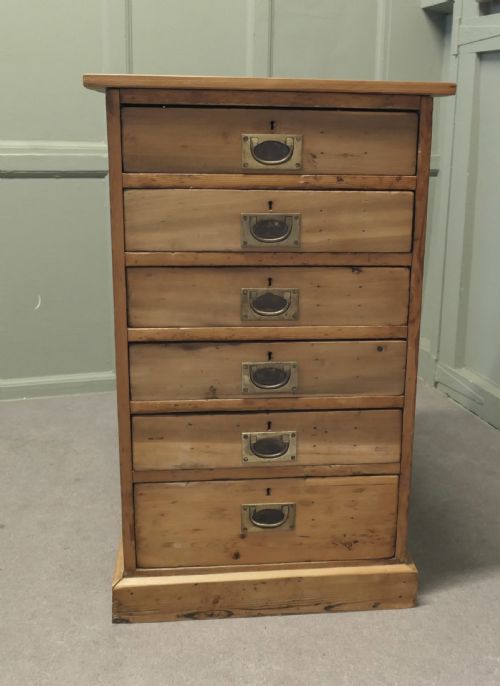
- Portable furnishings constructed in sections with brass corners and recessed handles for military officers on the move. Sturdy timbers and robust hardware characterised these items.
- Pedestal desk
- A heavy office desk or cabinet configuration featuring stacked banks of drawers on one or both sides supporting a top surface. These substantial units anchored nineteenth-century administrative rooms.
Vintage Office Filing Cabinet: Frequently Asked Questions
How do I operate a tambour door cabinet?
Tambour doors run on internal tracks cut into the sides of the cabinet carcase. Gently slide the slatted wooden shutter upward or sideways until it recesses into the body of the unit.
Keep the tracks clean of dust and occasionally apply a suitable wax to ensure smooth movement without forcing the slats.
Will standard modern files fit inside these cabinets?
Older filing systems varied considerably in internal dimensions compared to modern suspension files. Many vintage pieces feature shallow drawers or specialised card index trays rather than contemporary folder rails.
Check the internal drawer dimensions carefully to determine whether your specific documents or folders require bespoke storage adaptations.
How do I care for antique oak and mahogany office furniture?
Protect the wood surfaces by avoiding direct sunlight and maintaining stable room humidity levels. Apply natural beeswax periodically to nourish the timber and preserve the historic sheen.
Refrain from using silicone-based sprays, which can penetrate open-grain woods and damage the traditional finish over time.
How can I tell a Victorian filing cabinet from a 1920s piece?
Victorian examples typically display darker mahogany or walnut timbers with heavy brass hardware and traditional joinery. Pieces from the 1920s often embrace lighter oak, industrial metal elements, or tambour mechanisms designed for rapid office expansion.
Examine the construction details, drawer linings, and patent stamps to narrow down the decade of manufacture.