




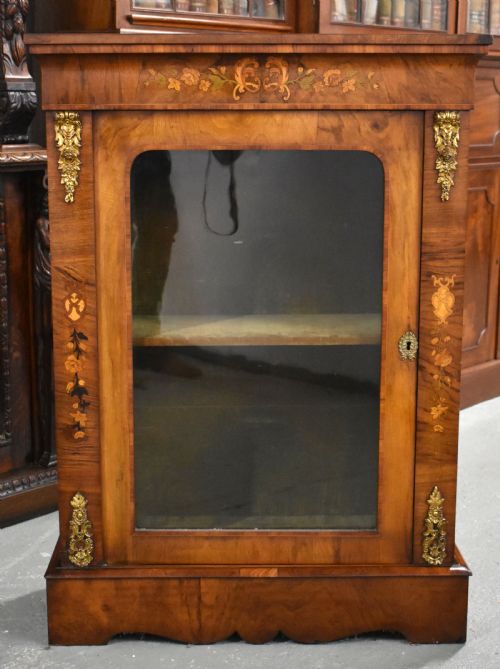


Marquetry Music Cabinet
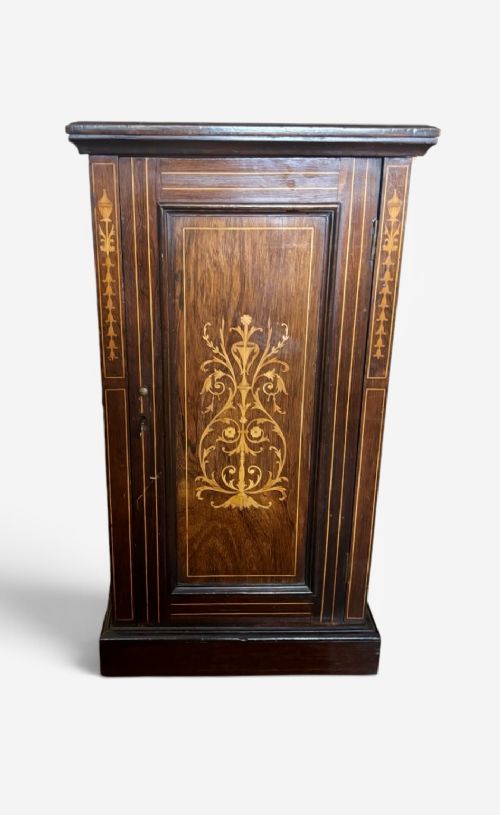
A marquetry music cabinet is a specialised storage piece designed for sheet music, typically surfaced with intricate wood inlay.
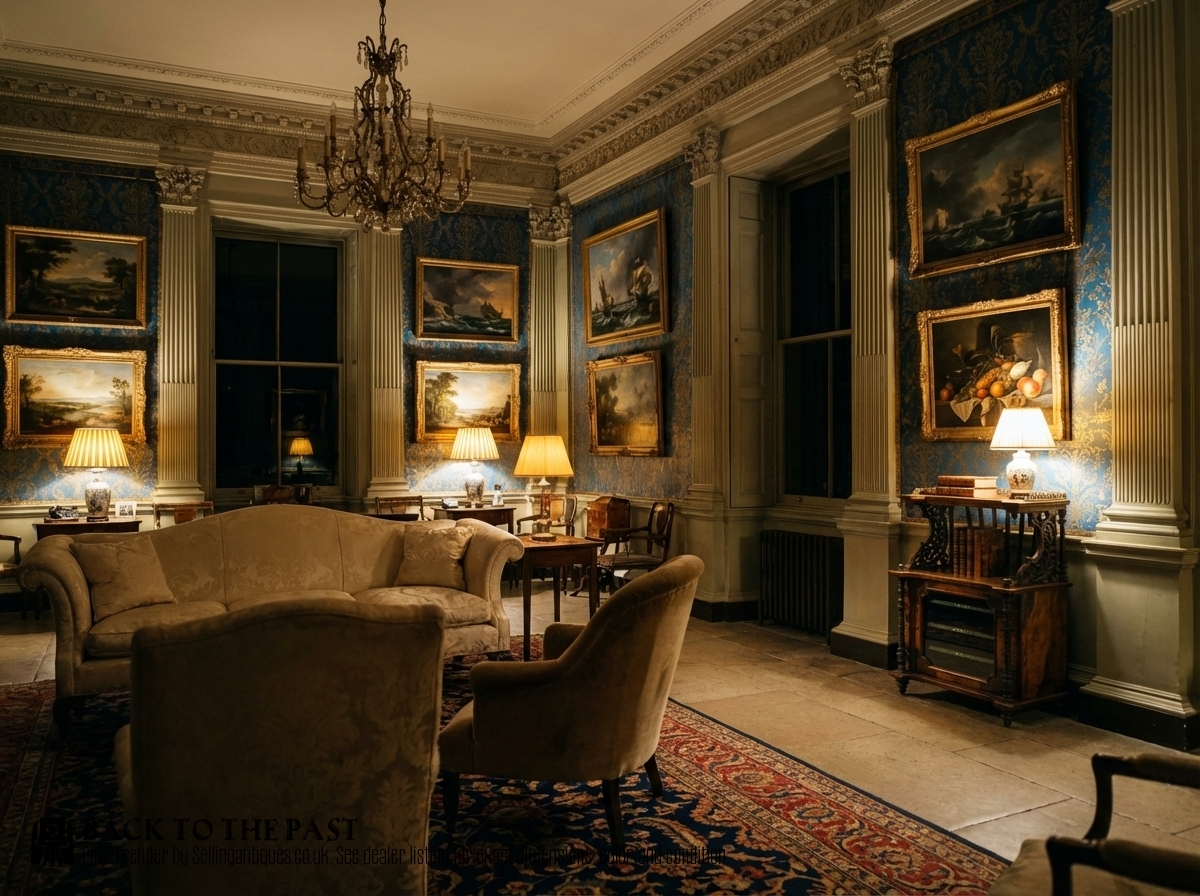
Marquetry Music Cabinet
A marquetry music cabinet is a dedicated piece of furniture designed to house and organise sheet music within the domestic interiors of the nineteenth and early twentieth centuries. These pieces emerge predominantly from the Victorian and Edwardian eras, spanning years from the mid nineteenth century into the early twentieth century.
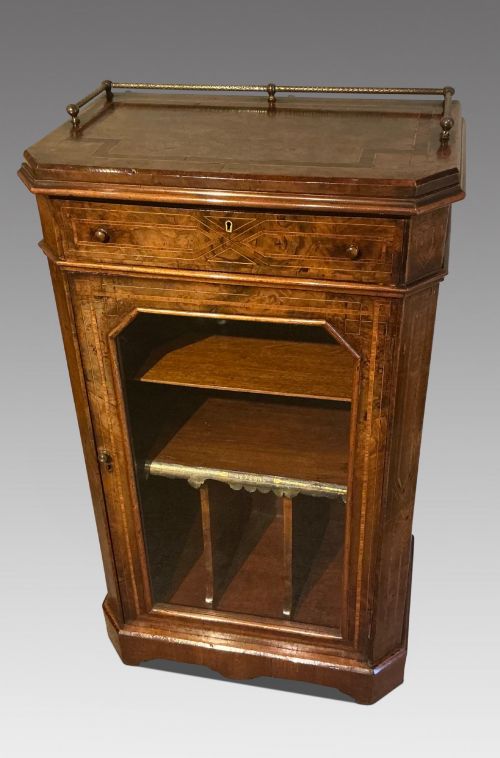
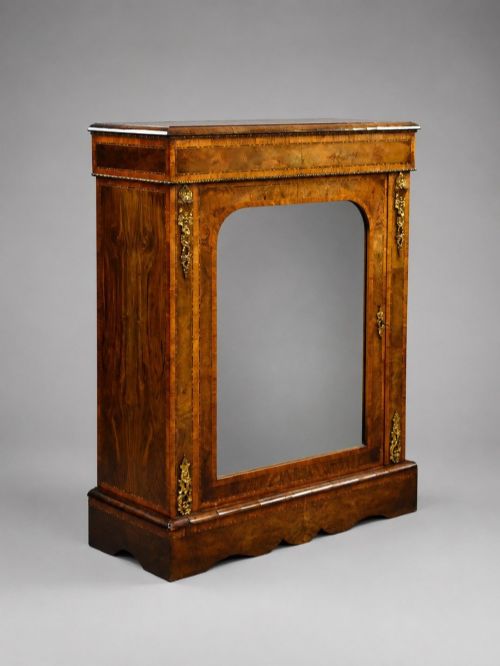
Buyers encountering this page will frequently find side cabinets, pier cabinets, and dedicated music canterburys alongside tall, narrow forms. The prevailing woods on show include walnut, burr walnut, rosewood, and mahogany, often ornamented with contrasting satinwood, boxwood, and brass elements.
Originating in periods associated with parlour socialising, these cabinets combine functional internal shelving or vertical partitions with decorative exterior surfaces. Stylistic variations range from classical Victorian and late Victorian iterations to Louis XV Revival, Edwardian French Revival, and Art Nouveau designs.
How they were made
Cabinet makers utilised dense primary timbers such as mahogany, rosewood, walnut, and gonçalo Alves to construct the core carcase and framework of each music cabinet. Burr walnut and burr yew wood were frequently selected for their pronounced grain patterns on primary display surfaces.
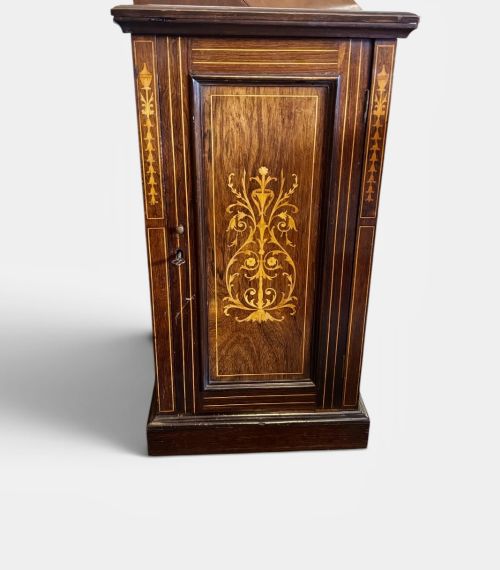
Decoration relied heavily on marquetry and inlay techniques, integrating fine slivers of satinwood, boxwood, and other contrasting woods to form pictorial or geometric motifs. Selected examples incorporate glass panels, mirrored backs, brass mounts, and painted Vernis Martin panels to enhance the visual complexity of the facade.
Marquetry Music Cabinet Retail Price Guide 2026
Typical asking prices for marquetry music cabinet among the pieces listed under this phrase on Sellingantiques today, from the lower quarter to the upper quarter. They describe what is for sale here now, not the wider market.
Listings feature walnut, rosewood, and mahogany most frequently, alongside specialised variations in burr walnut and satinwood.
What varies in quality
The sophistication of the marquetry work dictates much of the distinction between standard production and superior examples, particularly where multi coloured woods and detailed floral or scroll motifs are tightly fitted. Precision in the matching of burr walnut veneers across drawer fronts and doors further separates workshop output.
Internal architecture and secondary woods reveal the standard of construction, with well appointed internal fittings, dovetailed drawer construction, and sturdy specialised partitions for sheet music pointing to higher workshop standards. The choice of heavier primary timbers and refined brass or glass additions elevates the physical substance of the cabinet.
Keeble London·Edwards and Roberts·Shapland and Petter
The Marquetry Music Cabinet Glossary
- Marquetry
- Decorative veneer work applied to a furniture structure in patterns and pictures using thin slices of wood. This technique creates intricate surface designs on doors and panels.
- Pier cabinet
- A low or tall cabinet designed specifically to stand against a narrow section of wall between windows. These pieces often feature glass doors and inlaid timber surfaces.
- Canterbury
- A low stand featuring vertical partitions, originally built to hold sheet music or books. Victorian variations often integrate these divisions beneath a cabinet or table top.
- Vernis Martin
- A type of simulated Japanese lacquer developed in eighteenth century France and revived in later periods. It provides a polished painted surface finish on decorative panels.
- Gonçalo Alves
- A dense exotic hardwood with striking contrasting dark streaks, occasionally utilised for distinctive cabinet construction. It yields a rich surface grain when polished.
Marquetry Music Cabinet: Frequently Asked Questions
What is a marquetry music cabinet?
A marquetry music cabinet is an antique storage unit designed specifically to hold sheet music, characterised by detailed wood inlay work on the exterior.
These pieces typically date from the Victorian and Edwardian periods, utilising timbers such as walnut, rosewood, and mahogany.
How were music cabinets used?
Music cabinets were kept in parlours and drawing rooms to store and protect unbound sheet music for household instruments like pianos.
Internal shelving or vertical partitions kept the paper collections organised and accessible for evening musical gatherings.
How do I date a music cabinet?
Dating relies on identifying the prevailing timber choices, hardware, and stylistic indicators such as Victorian revival motifs or Edwardian satinwood use.
Earlier examples from the mid nineteenth century often feature dense burr walnut and rosewood, whilst later pieces embrace lighter mahogany and satinwood.
Where should I place a music cabinet?
These narrow cabinets suit hallways, living rooms, and studies where floor space is limited but vertical display is desired.
Their finished backs and detailed marquetry doors allow them to sit flush against walls or act as focal accent pieces.