





Victorian Sheet Music Storage
Victorian sheet music storage provides dedicated cabinetry designed to keep scores organised, ranging from enclosed music cabinets to open canterburys.
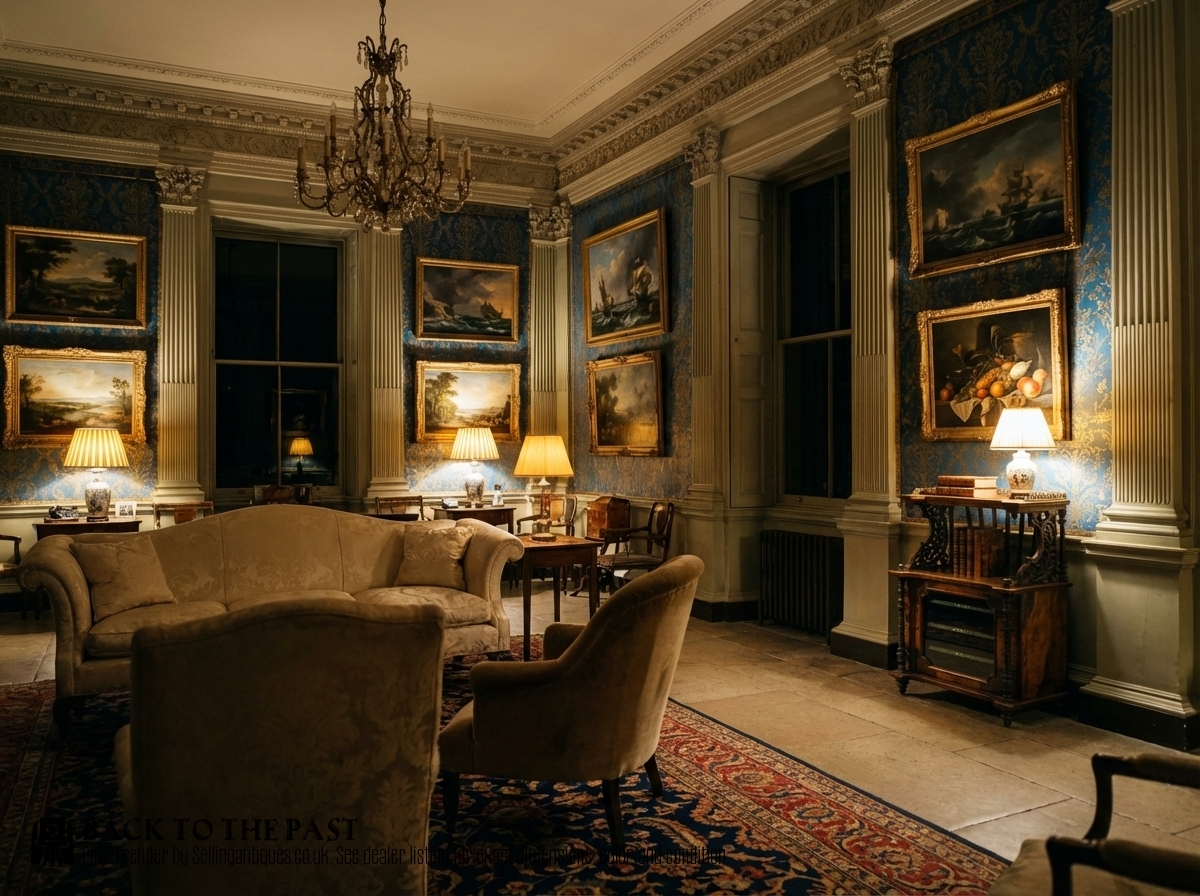
Victorian Sheet Music Storage
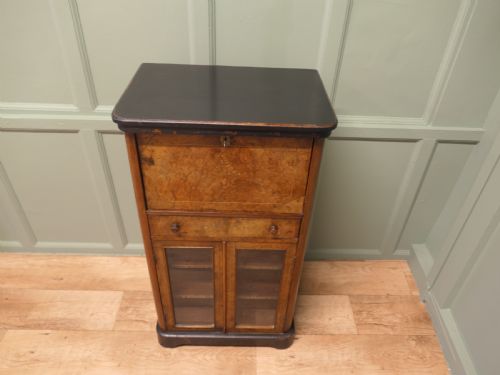
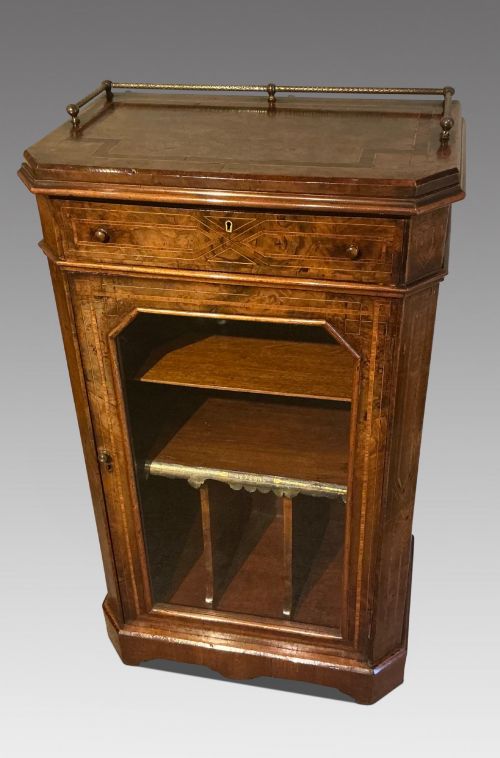
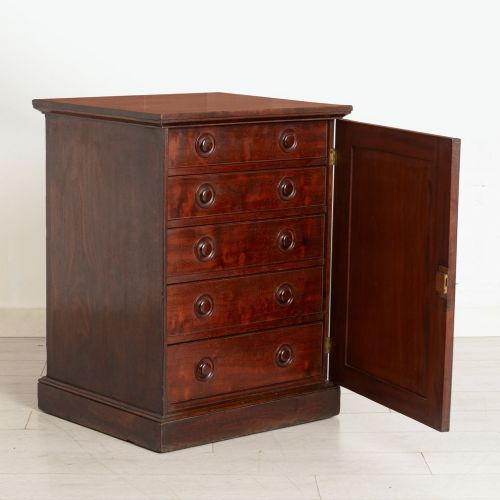
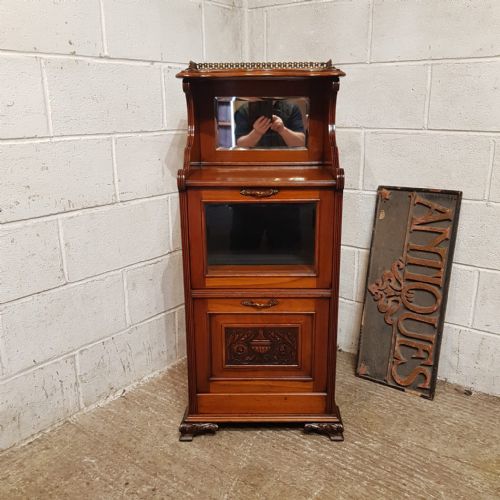
When searching for victorian sheet music storage, buyers encounter pieces built to organise and protect paper scores in the nineteenth century. These items include music cabinets, fall front cabinets, filing cabinets, and open canterburys designed to sit beside a piano or in a parlour.
The most common forms on this page date from the Victorian period, alongside examples spanning the nineteenth century into the Edwardian era. Woods such as burr walnut, mahogany, and rosewood dominate the selection, often featuring internal compartments tailored for folios and sheet music.
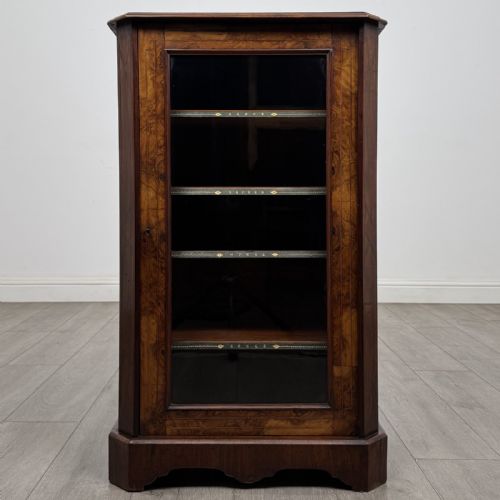
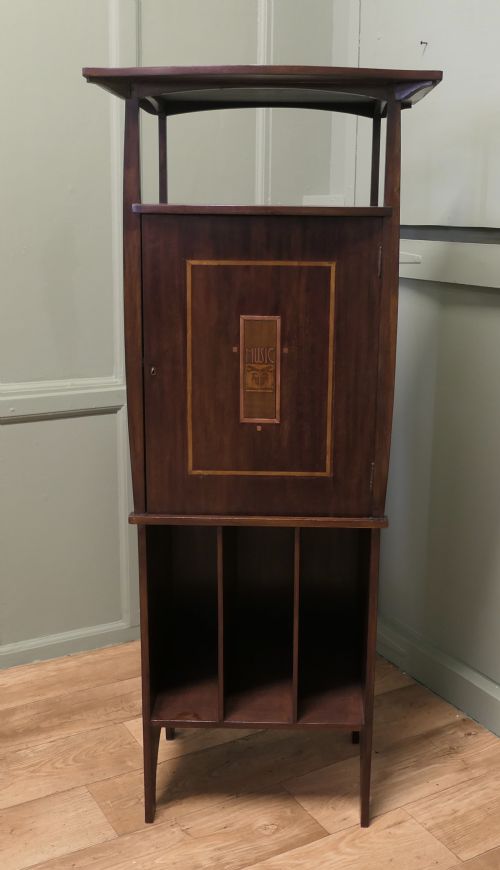
Makers and designers working in styles from Aesthetic Movement to Arts and Crafts produced these storage pieces. Cabinets frequently incorporate glass doors, brass hardware, and marquetry inlay to suit formal drawing rooms.
What varies in quality
Quality rests upon the choice of timber figure, such as richly grained burr walnut or flame mahogany, paired with precise marquetry inlay. Cabinets boasting named maker attribution or documented design provenance command greater attention.
Structural refinement shows in the execution of fall fronts, the smoothness of internal filing mechanisms, and the retention of original brass hardware and glass panels.
Victorian Sheet Music Storage Retail Price Guide 2026
Typical asking prices for victorian sheet music storage among the pieces listed under this phrase on Sellingantiques today, from the lower quarter to the upper quarter. They describe what is for sale here now, not the wider market.
Periods represented across the selection include the Regency era, the Victorian period, and the Edwardian years.
GM Elwood for JS Henry·Henry Ogden and Son·Keeble London
The Victorian Sheet Music Storage Glossary
- Canterbury
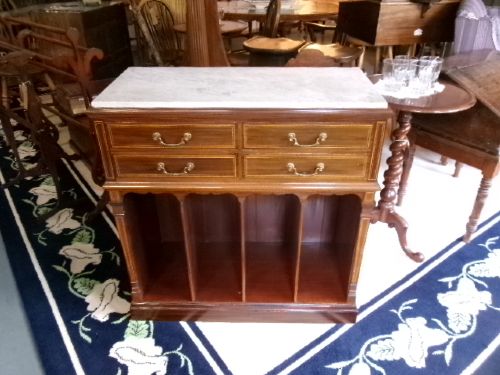
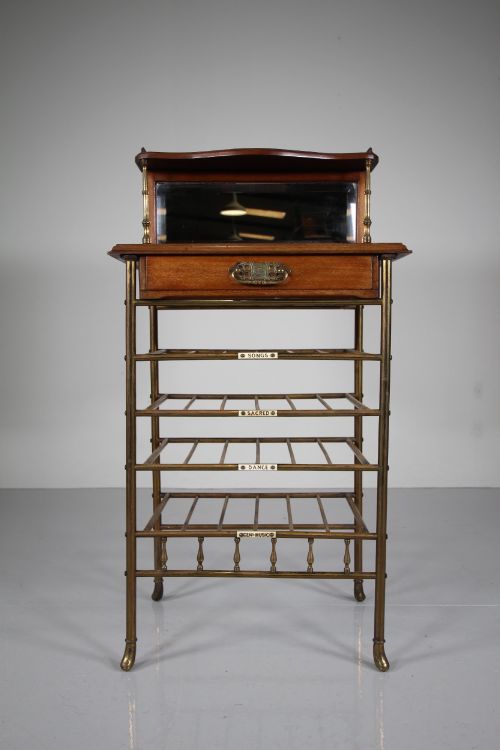
- A low stand featuring upright partitions, originally designed to hold sheet music, magazines, or newspapers. These pieces often incorporate a small drawer at the base.
- Fall Front
- A hinged panel that drops forward to reveal internal storage compartments or a writing surface. This mechanism allows easy access to stacked sheet music.
- Marquetry
- Decorative woodwork where thin pieces of veneer are fitted together to form pictorial or geometric patterns on cabinet doors. This technique highlights the skill of the cabinetmaker.
- Aesthetic Movement
- A late nineteenth century design style emphasising visual beauty over narrative meaning, often featuring ebonised wood and artistic brass mounts. Pieces in this style move away from heavy Victorian revivalism.
- Folio Cabinet
- A specialised piece of furniture built with shallow horizontal shelves or vertical slots designed to store large sheets of paper without bending.
Victorian Sheet Music Storage: Frequently Asked Questions
How do you use a music cabinet today?
These cabinets suit modern living rooms or studies as storage for vinyl records, art prints, and documents. The internal partitions and shallow drawers accommodate flat paper items effectively.
Their compact footprints allow them to function as side tables or bedside units while maintaining period character.
How do you identify an Aesthetic Movement music cabinet?
Aesthetic Movement pieces often display ebonised wood surfaces, stylised floral marquetry, and distinctive brass strap hinges. They reflect an emphasis on artistic reform rather than standard Victorian revival styles.
These cabinets usually present cleaner lines and simpler architectural silhouettes.
Where were these storage pieces placed in a Victorian home?
Sheet music storage units stood adjacent to pianos in drawing rooms and parlours for convenient access during musical evenings. Their finished backs and polished tops allowed them to sit freely within the room rather than against a wall.
Larger side cabinets and folio stands also functioned as general storage for household papers.