




Brass Gallery Music Cabinet
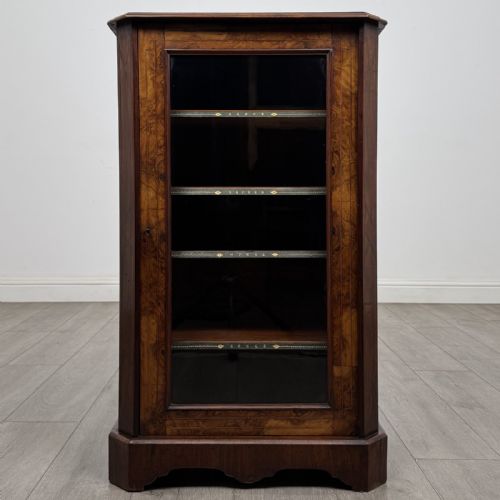
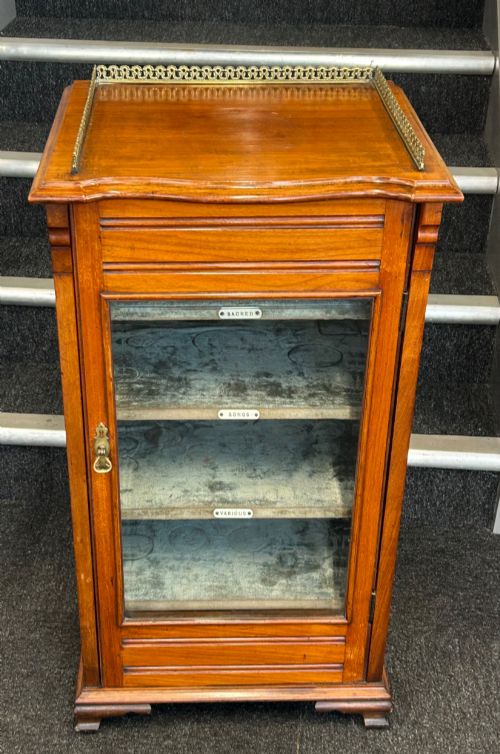
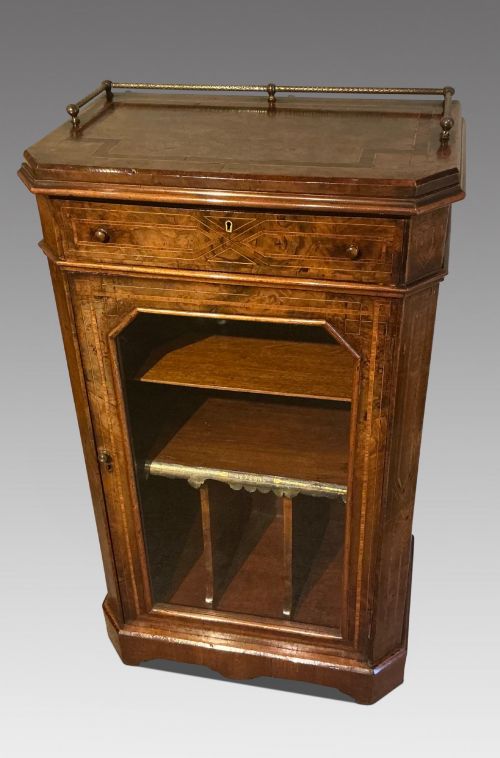
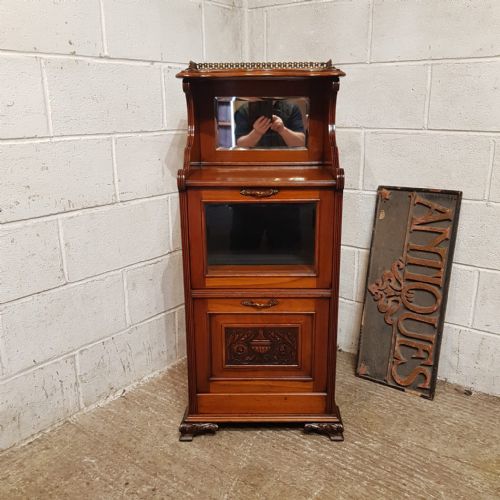
A brass gallery music cabinet brings together period timber and pierced metalwork to hold sheet music or display curiosities.
Brass Gallery Music Cabinet
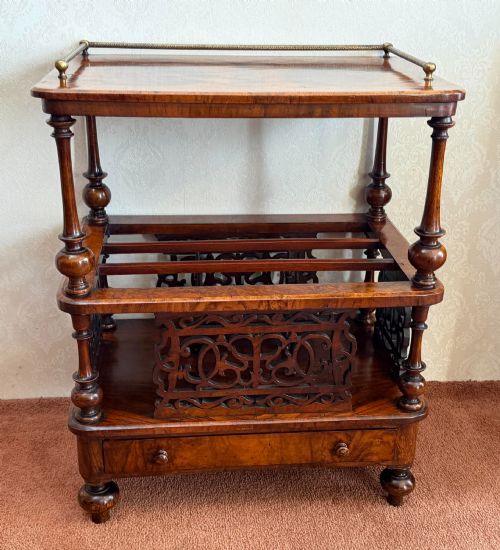
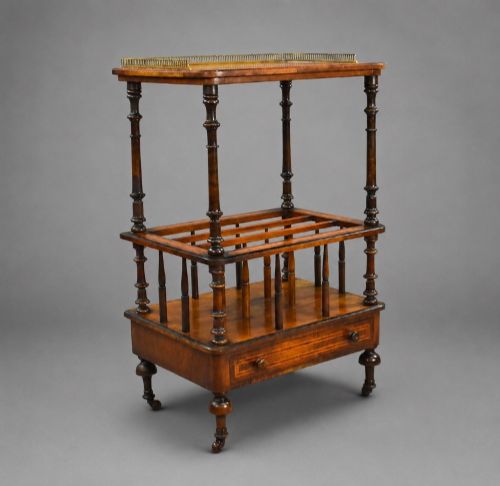
When you search for a brass gallery music cabinet, you find upright storage furniture designed for sheet music, alongside related forms such as canterburys, side cabinets, and whatnots. These pieces emerge from the Victorian, Edwardian, and Regency periods, spanning dates like 1870, 1880, 1890, and their broader respective eras.
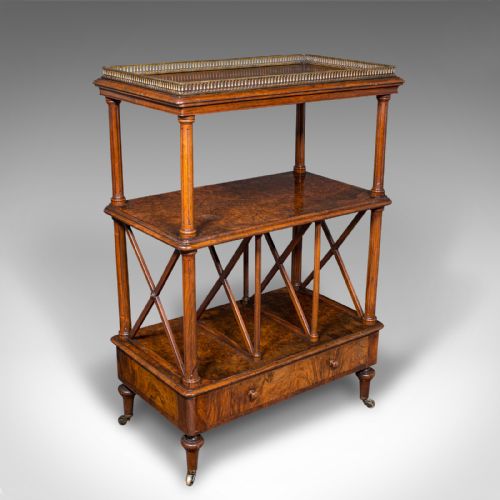
The most common iterations on this page are constructed from walnut, burr walnut, and mahogany, frequently enhanced by glass doors, fabric elements, and marquetry inlay. Alongside dedicated music cabinets, you encounter display stands, étagères, and lamp tables sharing the characteristic brass gallery rail along the top.
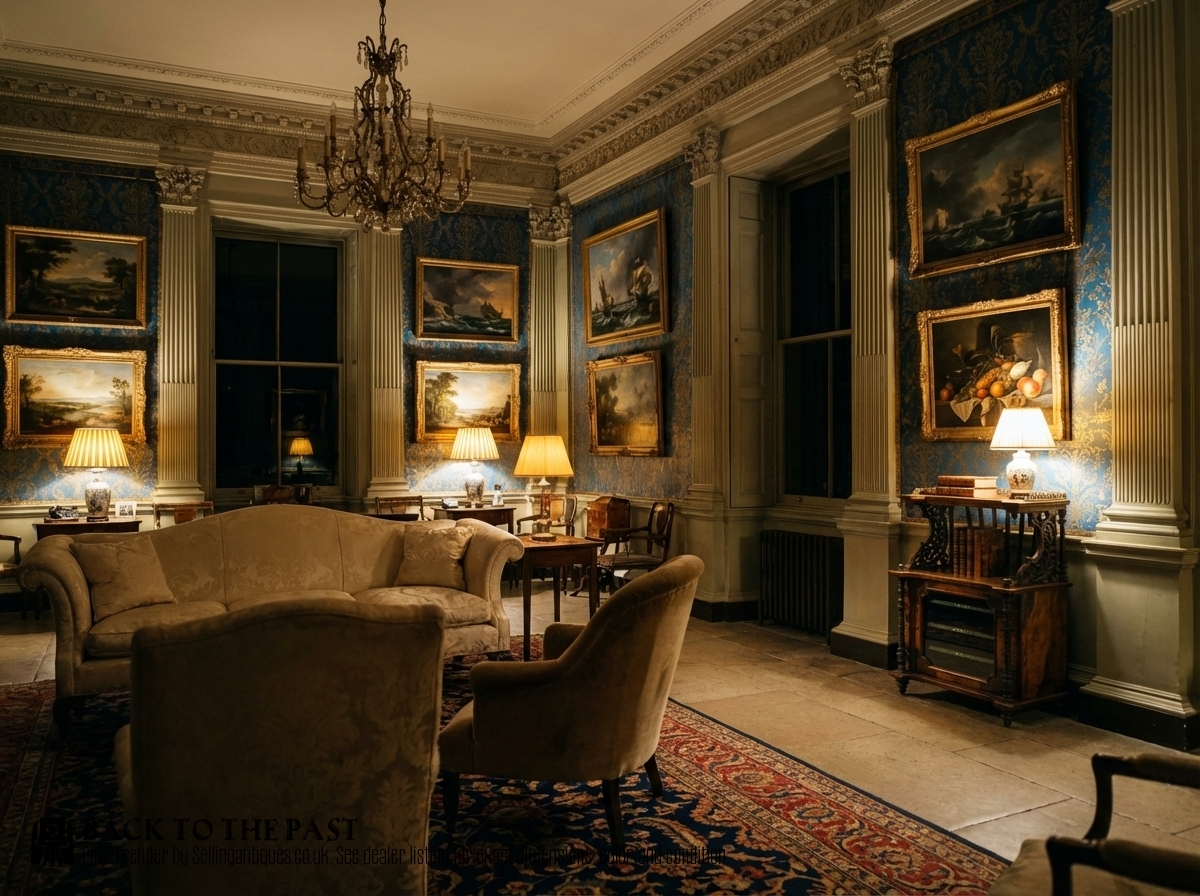
The physical form serves domestic utility, originally housing scores near a piano or parlour instrument while providing a flat upper surface bounded by metalwork. These items function equally today as side cabinets or bookcases in period interiors.
Construction and materials
Cabinet makers utilised dense hardwoods including mahogany and walnut, often selecting highly figured burr walnut veneers for the primary surfaces. Marquetry inlay added ornamental detail to the timber panels, creating floral or geometric motifs.
The defining feature, the brass gallery, consists of slender metal spindles and rails fixed to the upper perimeter of the cabinet to secure items placed on top. Glazed doors incorporate glass panels for display purposes, while internal shelving organises the storage space.
Brass Gallery Music Cabinet Retail Price Guide 2026
Typical asking prices for brass gallery music cabinet among the pieces listed under this phrase on Sellingantiques today, from the lower quarter to the upper quarter. They describe what is for sale here now, not the wider market.
Materials recorded across the inventory include walnut, burr walnut, mahogany, ebonised wood, glass, and fabric.
Judgements of quality
Quality rests in the selection of timber veneers and the precision of the marquetry inlay across the cabinet doors and top surfaces. Burr walnut with rich figuring indicates a more ambitious piece than plain timber variants.
The execution of the brass gallery itself differentiates examples, where solid cast or turned metalwork secured firmly to the wood displays greater care than lighter, stamped substitutes. Finer hardware and balanced proportions separate standard production from superior cabinet work.
The Brass Gallery Music Cabinet Glossary
- Brass gallery
- A low metal rail with spindles fitted to the top edge of a cabinet or table to prevent objects from sliding off. This feature defines the visual character of the upper surface.
- Canterbury
- A low stand or cabinet originally designed for holding sheet music, folios, or books. They often feature vertical partitions or dividers.
- Marquetry inlay
- Decorative patterns formed by fitting contrasting pieces of wood veneer into a prepared surface. It is commonly found on Victorian and Edwardian cabinet doors.
- Burr walnut
- Timber taken from a walnut tree growth that produces intricate, swirling grain patterns. Cabinet makers prized this wood for high-status ornamental furniture.
- Étagère
- A piece of furniture consisting of a set of open shelves for displaying small objects or ornaments. These frequently incorporate brass galleries on their tiers.
Brass Gallery Music Cabinet: Frequently Asked Questions
What is a brass gallery music cabinet used for?
These cabinets were originally manufactured to store sheet music and scores near a piano or in a Victorian parlour.
Today, they serve equally well as compact side cabinets, bookcases, or display stands in domestic rooms.
How do I date a music cabinet?
Dating relies on identifying the prevailing timber choices, inlay styles, and structural forms associated with periods like the Victorian and Edwardian eras, or specific years such as 1870, 1880, and 1890.
Details like ebonised finishes, marquetry motifs, and brass gallery construction help place an item within its decade of manufacture.
How do I care for walnut and mahogany cabinets?
Keep wooden furniture away from direct heat sources and strong sunlight to prevent the timber and burr walnut veneers from drying or fading.
Dust regularly with a dry cloth and occasionally apply appropriate furniture wax to nourish the polished surface.