


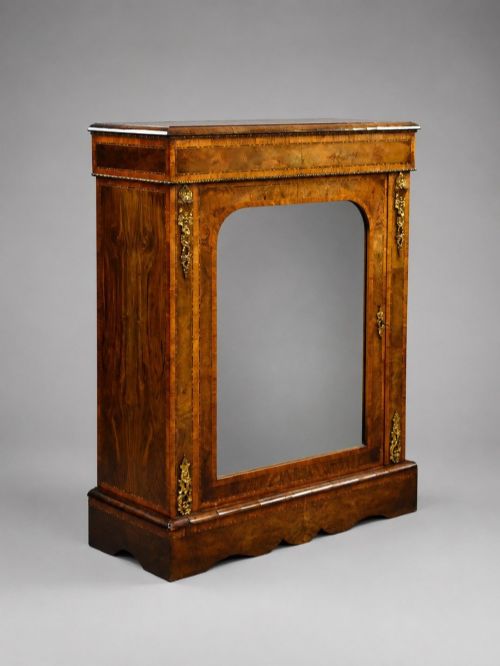


Burr Walnut Music Cabinet
A burr walnut music cabinet brings figured timber and internal storage for folios or sheets into a period parlour or drawing room.
Burr Walnut Music Cabinet
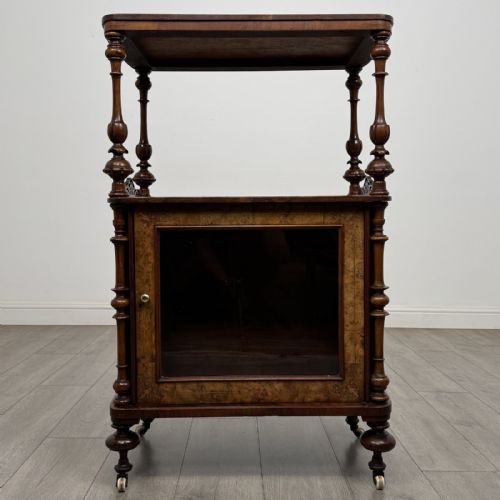
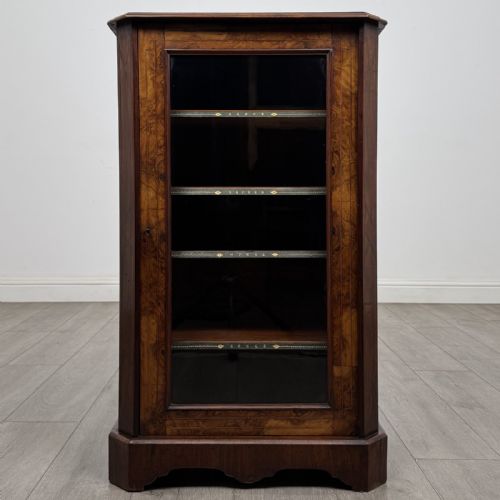
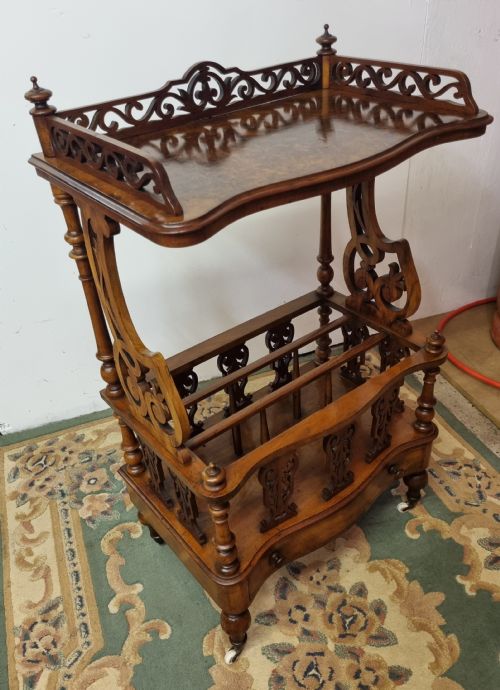
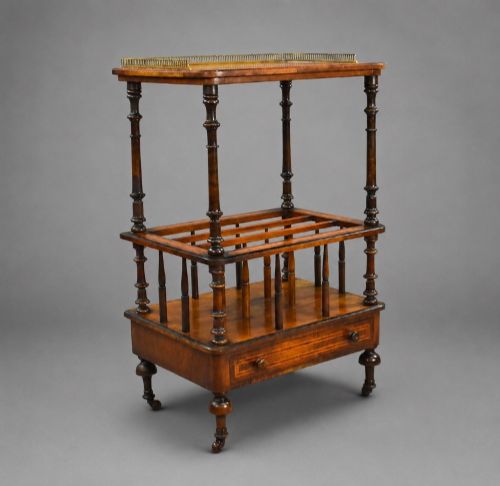
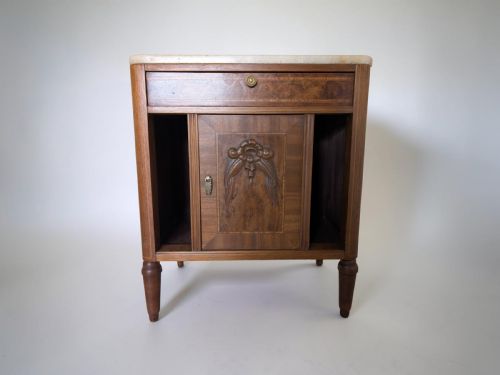
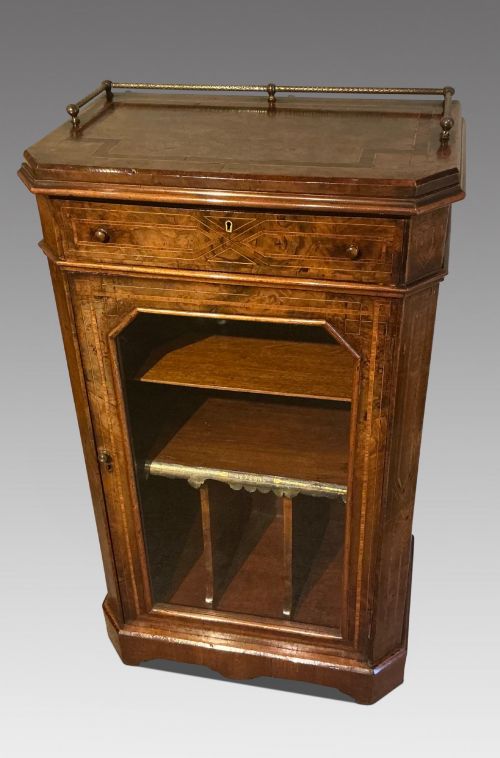
A burr walnut music cabinet is a specialised Victorian or Edwardian storage piece designed to keep sheet music, folios or smaller instruments organised. The majority of pieces seen belong to the Victorian period, alongside examples dated around eighteen-sixty, eighteen-seventy, eighteen-eighty, and the Edwardian era.
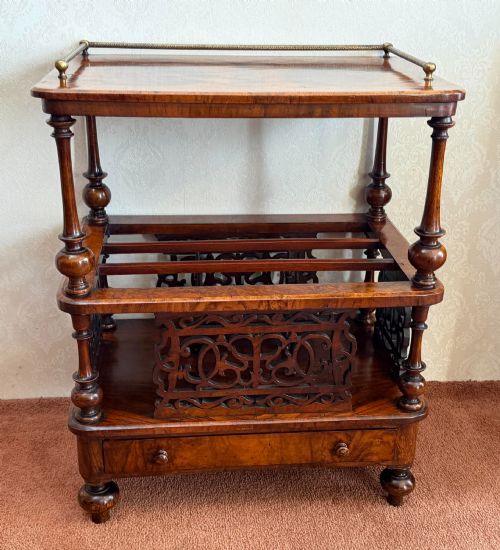
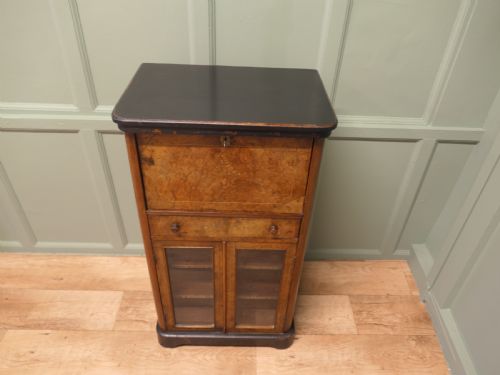
Most examples function as upright music cabinets, music filing cabinets, or Canterbury combinations. Variations include glazed display cabinets, open wot-nots, mirror-backed pier cabinets, bookcase hybrids, and specialist piano-top cylinder writing desks with integrated music storage.
These items originate primarily from nineteenth-century English workshops. They serve as both practical storage and decorative furniture, utilising figured timbers to command attention in a domestic interior.
What varies in quality
Quality separates ordinary storage from superior examples through the selection and bookmatching of the burr walnut veneer. Finer pieces display symmetrical, highly active grain patterns across every surface rather than plain or fragmented timber selections.
The sophistication of the internal fittings and exterior ornamentation dictates the grade of the piece. Superior examples integrate complex wood inlay, marquetry, glazed display sections, or mirrored backs, whereas simpler versions rely solely on figured timber surfaces without auxiliary decoration.
Burr Walnut Music Cabinet Retail Price Guide 2026
Typical asking prices for burr walnut music cabinet among the pieces listed under this phrase on Sellingantiques today, from the lower quarter to the upper quarter. They describe what is for sale here now, not the wider market.
Recorded listings show materials spanning burr walnut, walnut, burr yew, glass, brass, and wood inlay across Victorian and Edwardian periods.
The Burr Walnut Music Cabinet Glossary
- Burr walnut
- A figured veneer sliced from the knotty growths of walnut trees, prized for its swirling grain and complex patterns. It forms the primary decorative skin on high-status nineteenth-century cabinets.
- Canterbury
- A low, partitioned stand originally designed to hold sheet music or folios, often incorporated into the base or design of music cabinets. It allows upright separation of paper sheets.
- Marquetry
- The art of creating decorative pictures or patterns by fitting together small pieces of different coloured woods and veneers. This technique adorns the doors and panels of finer cabinets.
- Pier cabinet
- A tall, narrow cabinet designed to fit against the wall space between windows, sometimes featuring glass doors or mirror backs. They maximise display area in smaller Victorian drawing rooms.
- Folio
- A large-format book or collection of unbound sheets used for storing music scores. Music cabinets provide internal shelving specifically proportioned to hold these items flat or upright.
Burr Walnut Music Cabinet: Frequently Asked Questions
What is a burr walnut music cabinet used for?
These cabinets were built to organise sheet music, folios, and small musical accessories in nineteenth-century homes. The internal shelves and compartments kept paper scores flat and protected from dust.
Today, they serve equally well as decorative storage for papers, letters, or modern collections in a living space.
How do I date a Victorian music cabinet?
Dating relies on stylistic details, timber choices, and construction methods recorded across the Victorian and Edwardian eras. Pieces from around eighteen-sixty to eighteen-eighty often feature rich marquetry inlay and glazed doors.
Later Edwardian versions tend to exhibit lighter timber tones and simpler surface ornamentation compared to their mid-nineteenth-century predecessors.
Are music cabinets only for holding music?
While originally commissioned by pianists and parlour musicians for scores, their internal dimensions suit various flat items. Collectors frequently utilise the shelves for stationery, documents, or small display objects.
The partitioned interiors and filing spaces adapt easily to modern organisational needs without altering the historical structure.
What is the difference between a pier cabinet and a music cabinet?
A pier cabinet is generally designed to stand against narrow wall sections between windows, often incorporating glass display panels or mirror backs. Music cabinets focus specifically on internal storage divisions tailored for sheet music and folios.
Some hybrid designs combine both functions by adding glazed display doors to a dedicated music storage carcass.