

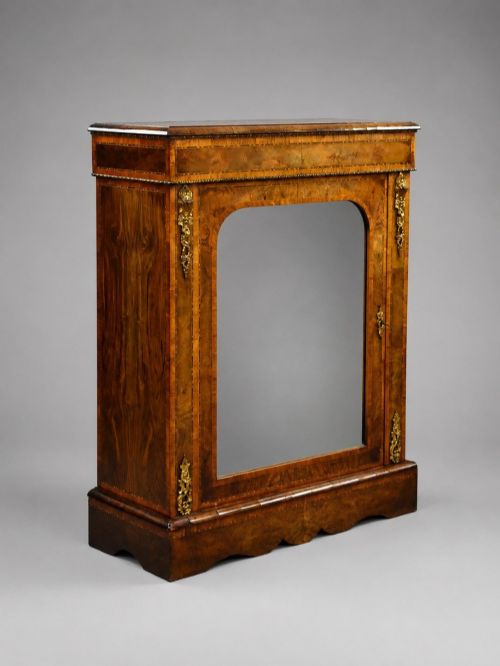


19th Century Music Cabinet
A 19th century music cabinet brings refined order to sheet music and folios, combining timber, marquetry and brass into a purposeful parlour piece.

Identifying a 19th century music cabinet
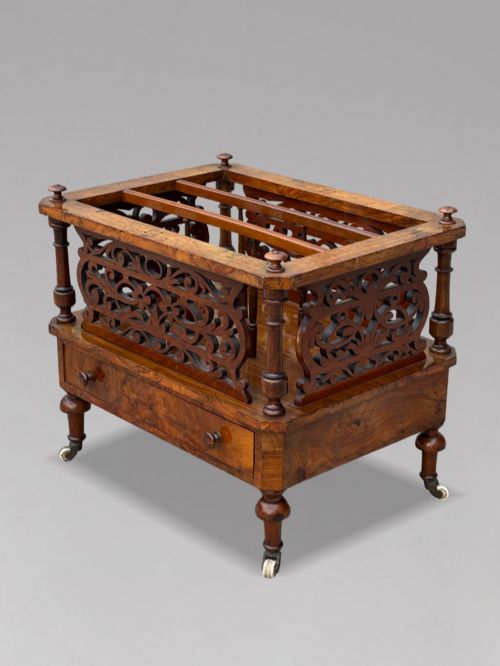
When you search for a 19th century music cabinet, you encounter dedicated storage designed to house the sheet music and folios of Victorian parlours. These items frequently appear in burr walnut, mahogany, rosewood and satinwood, spanning styles from straightforward Victorian forms to Louis XV Revival and Chippendale influences.
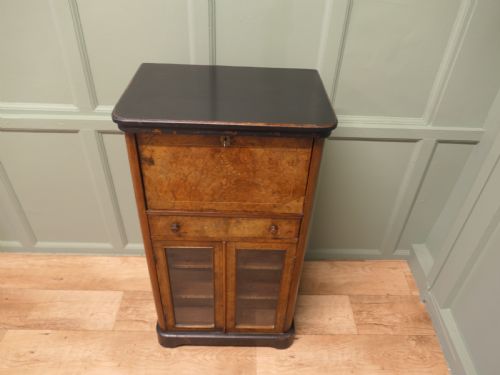
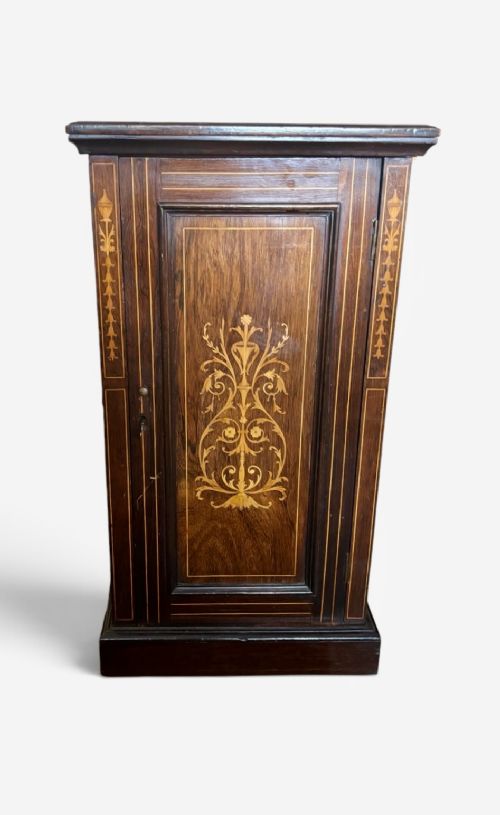
The most common examples on this page are Victorian burr walnut cabinets, often featuring glazed doors, marquetry inlay, and internal shelving or filing compartments. Alternative configurations include whatnots, side cabinets, display pieces and secretaire variants with specialised lifting lids or writing surfaces.
Origins stretch across British, French and American workshops of the period, reflecting diverse regional tastes in domestic music organisation. Whether rendered in figured walnut or ebonised wood, each piece offers compact vertical storage tailored to the era's social habits.
Materials and construction
Cabinet makers relied heavily on rich timbers such as walnut, burr walnut, mahogany, satinwood and rosewood, frequently enhanced by decorative veneers and intricate marquetry inlay. Structural elements often integrated brass hardware, ormolu mounts, and glazed door panels to display contents.
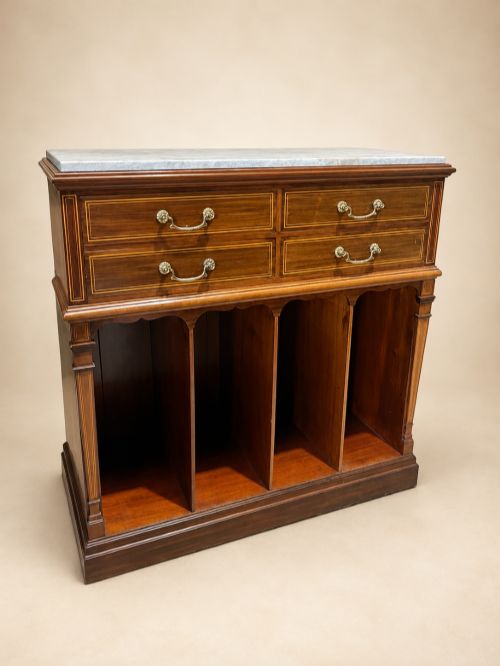
French pieces utilised specialised surface treatments, including Vernis Martin paintwork and marble tops, paired with fine hardwood carcases. British and American examples prioritized figured grain patterns, turning and inlay to achieve visual depth without excessive bulk.
Retail Price Guide 2026
Typical UK retail prices for 19th century music cabinet, calculated from the Sellingantiques database of over a million retail prices indexed since 2003. This retail price guide relies exclusively on Sellingantiques data; no external sources or auction records are used, so the figures do not describe the wider market.
Some cabinets hid piano-top cylinders and writing desks inside, proving Victorians loved secret compartments for their sheet music.
Assessing quality and craftsmanship
Quality rests in the selection of timber veneers and the crispness of marquetry inlay, where superior cabinets display carefully matched burr walnut figures across every surface. The integration of bronze ormulu mounts, brass fittings, and bevelled glass further elevates a piece from standard domestic utility to high Victorian craftsmanship.
The 19th Century Music Cabinet Glossary
- Burr walnut
- A highly figured timber harvested from the wart-like growths on walnut trees, prized for its swirling grain patterns. It was extensively used by Victorian cabinet makers for decorative veneering.
- Marquetry
- The art of applying small pieces of veneer to a structure to form decorative patterns or pictures. Craftsmen used various contrasting woods to create floral or geometric motifs.
- Whatnot
- A piece of open shelving designed for displaying ornaments or holding books and music sheets. These multi-tiered units often incorporated cabinet storage in their lower sections.
- Ormolu
- Gilded bronze mounts and decorative details applied to furniture, particularly popular in French-influenced pieces. It provides metallic contrast against dark hardwoods.
- Vernis Martin
- A simulated Japanese lacquer technique developed in France, utilising translucent varnishes over painted designs. It appears on select continental music cabinets.
Frequently Asked Questions
What is a 19th century music cabinet?
A specialised piece of Victorian furniture built to store sheet music, folios, and musical accessories in the home. They typically feature internal shelves, vertical partitions, or dedicated filing sections behind a door.
Designs range from simple walnut cupboards to elaborate glazed or marquetry-inlaid display units suited for a formal parlour.
How were music cabinets used?
They kept unbound sheet music neat, flat, and protected from dust and light in households where playing the piano was a daily pastime. Families stored their collection of songs and instrumental pieces alphabetically or by genre inside.
The top surface often served as a stand for small ornaments, a lamp, or additional musical scores currently in rotation.
How do I spot a French music cabinet?
French models from the period often incorporate distinct decorative flourishes like marble tops, ormolu mounts, or painted Vernis Martin panels. Their timber choices and silhouettes lean towards Louis XV Revival tastes.
They frequently employ exotic woods and intricate marquetry that differ slightly from standard British Victorian production.
What is a music cabinet whatnot?
It is a hybrid furniture form combining open display shelves above with an enclosed music cupboard below. This allowed owners to exhibit decorative items while keeping their active sheet music collection concealed.
These pieces offer versatile proportions suited for smaller reception rooms.