



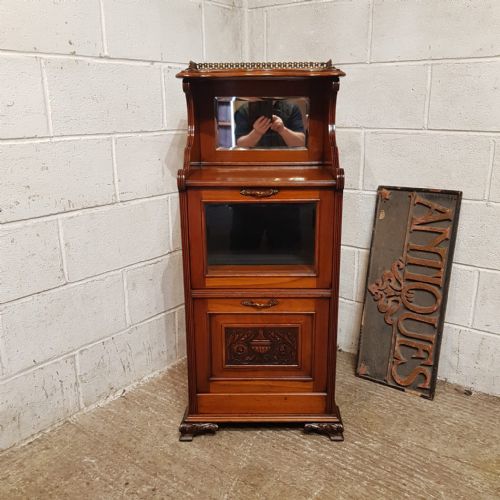

Victorian Sheet Music Cabinet
A victorian sheet music cabinet is a dedicated piece of parlour furniture designed to keep scores flat and tidy.
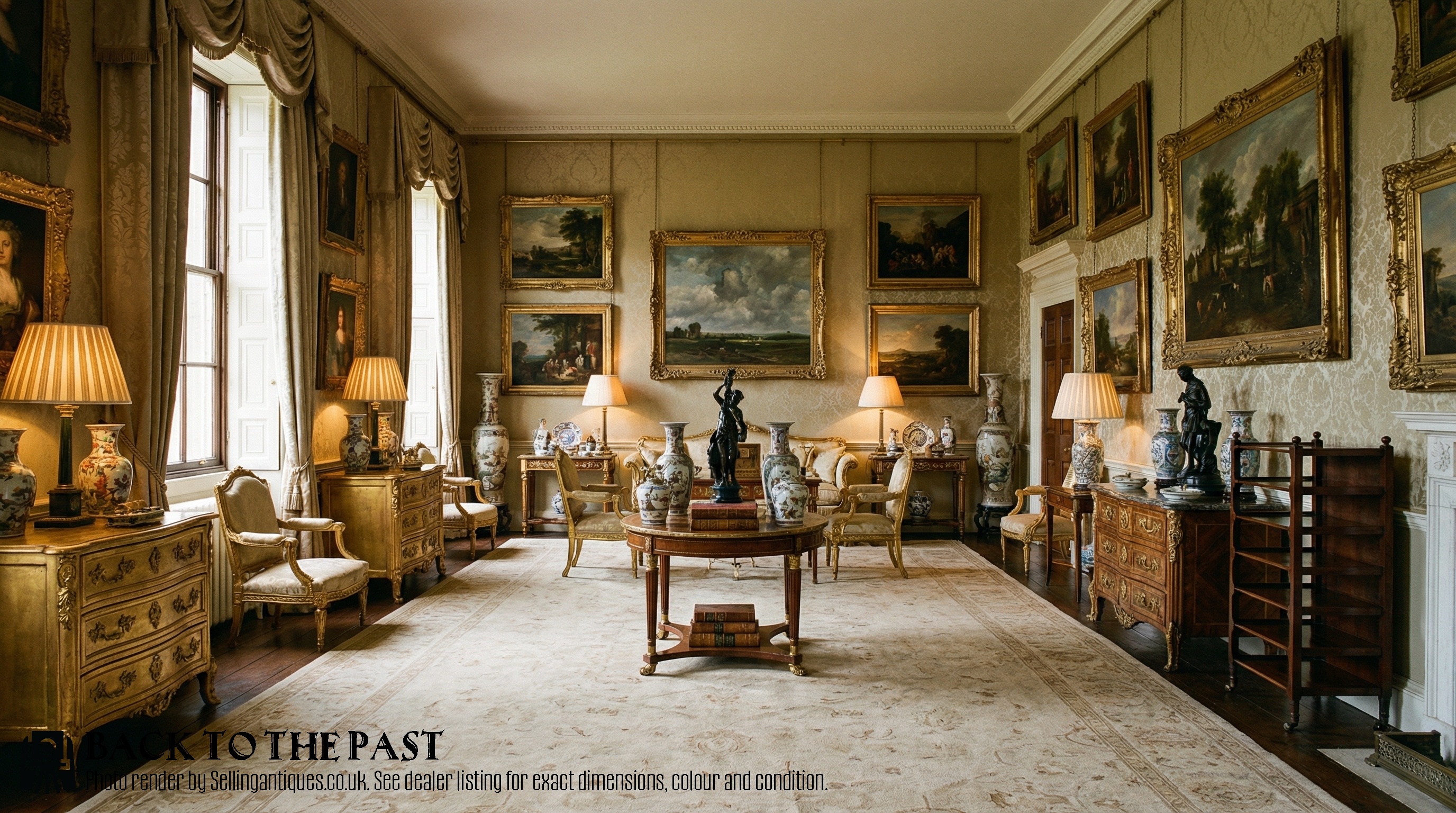
Victorian Sheet Music Cabinet
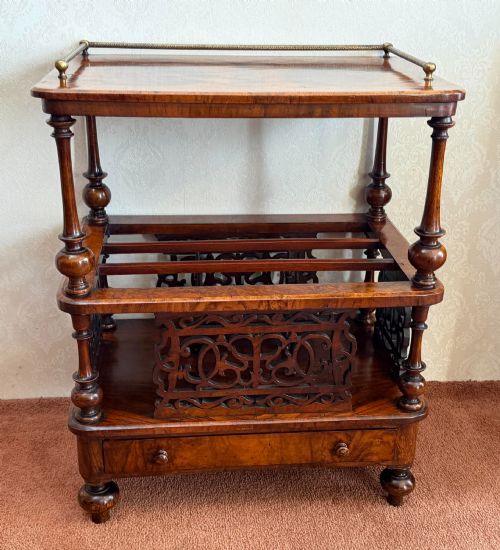
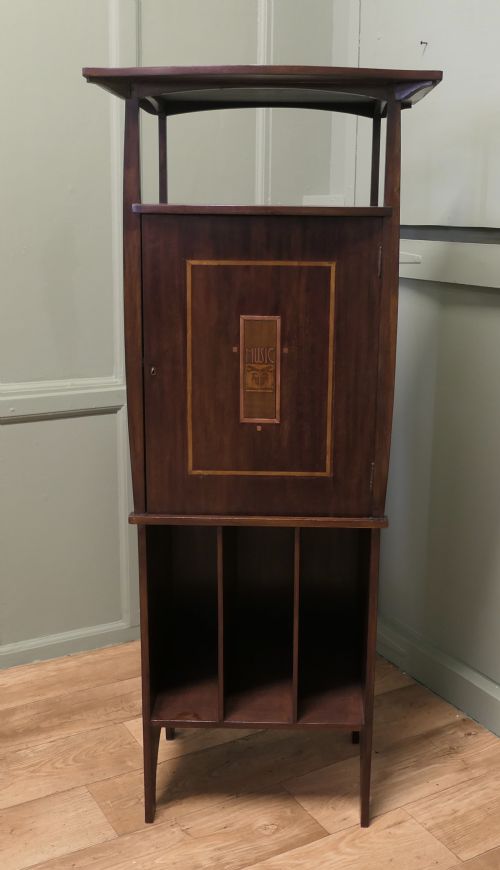
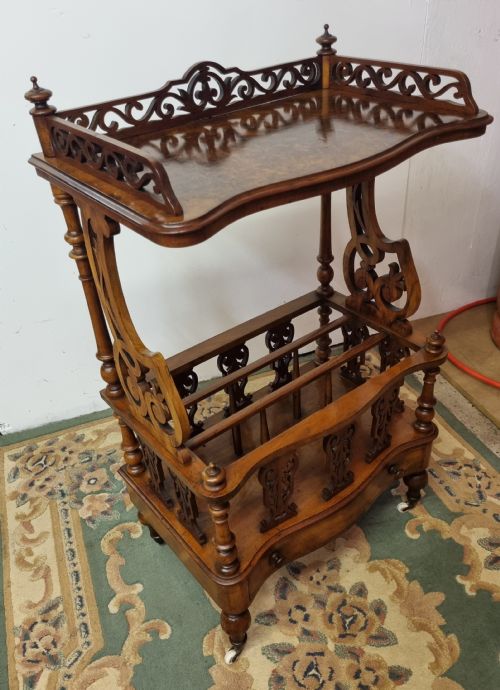
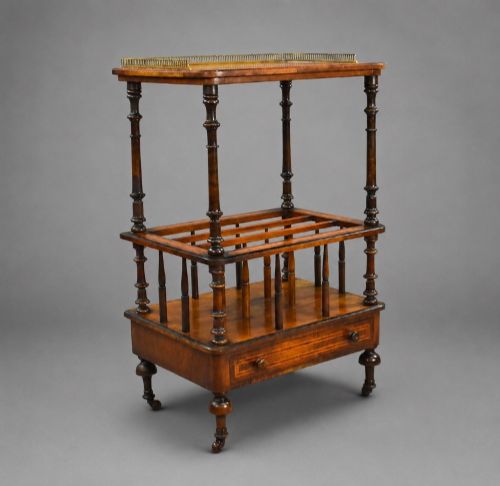
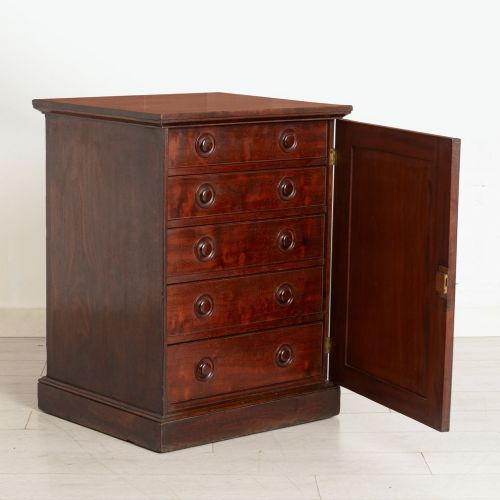
A victorian sheet music cabinet is a specialised domestic storage piece built to hold paper scores and folios safely in the drawing room. These items appear in various forms throughout the nineteenth century, including upright cupboards, open-slat canterburys, and multi-functional side cabinets.
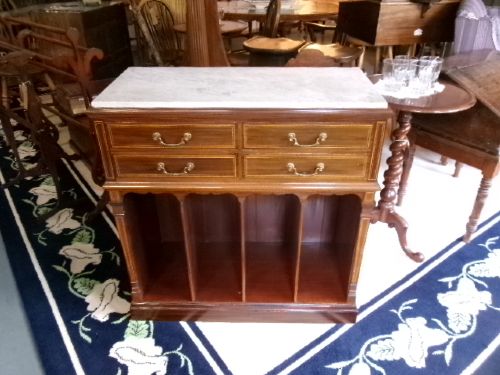
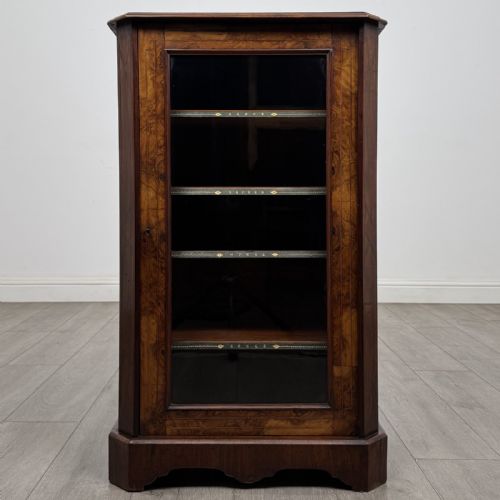
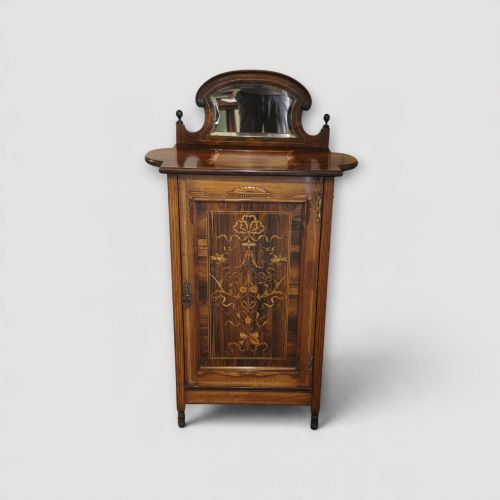
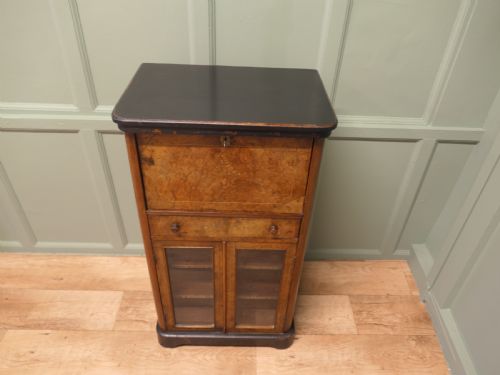
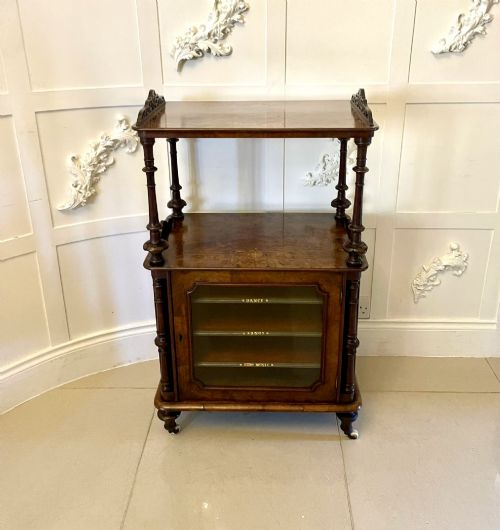
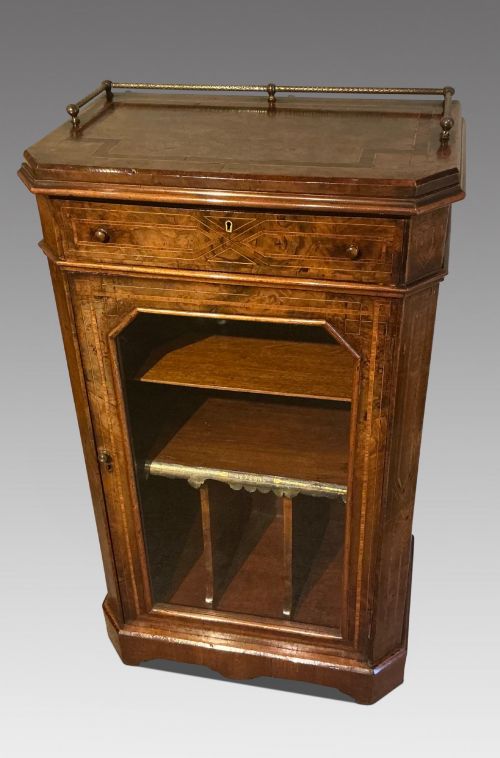
The version most commonly met on this page is the walnut or mahogany cabinet featuring internal vertical partitions, drop fronts, or glazed doors. Makers often incorporated brass handles, marquetry inlay, and mirror glass into the designs to suit the formal reception rooms of the period.
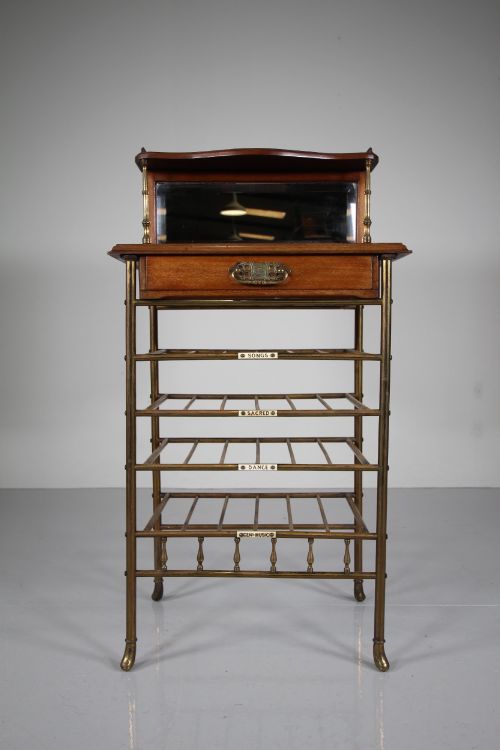
Beyond the standard upright cupboard, the selection includes related forms such as music stands, etageres, and duet stools with integrated storage. These variations reflect the changing demands of domestic music-making across the Victorian era and into the Edwardian years.

How they were made
Cabinet makers relied primarily on timbers such as walnut, burr walnut, mahogany, and rosewood for the main carcase construction, frequently applying intricate marquetry and satinwood inlay to the exterior surfaces. Hardwood framing supports internal shelving and sliding partitions designed to hold fragile paper sheets without bending.
Metalwork played a functional and decorative role, utilising brass for hinges, castors, handles, and occasional gallery rails. Glass panels appeared on glazed doors to display contents, while ceramic components sometimes featured in the fittings of related seating and stands.
Victorian Sheet Music Cabinet Retail Price Guide 2026
Typical asking prices for victorian sheet music cabinet among the pieces listed under this phrase on Sellingantiques today, from the lower quarter to the upper quarter. They describe what is for sale here now, not the wider market.
Some cabinets hid secret compartments behind their sheet music slots for stashing private violin rosin.
What varies in quality
The standard of a victorian sheet music cabinet depends heavily on the selection of timber veneers, such as richly figured burr walnut or dense rosewood, and the precision of the marquetry inlay. Superior examples display seamless grain matching across doors and drawer fronts, alongside neatly dovetailed internal construction.
Hardware and secondary details also distinguish finer pieces, with heavy cast brass handles, well-fitted locks, and robust internal divisions setting them apart from utilitarian storage. The integration of specialised forms like serpentine shapes, applied mouldings, or maker-signed plaques elevates the standing of individual pieces.
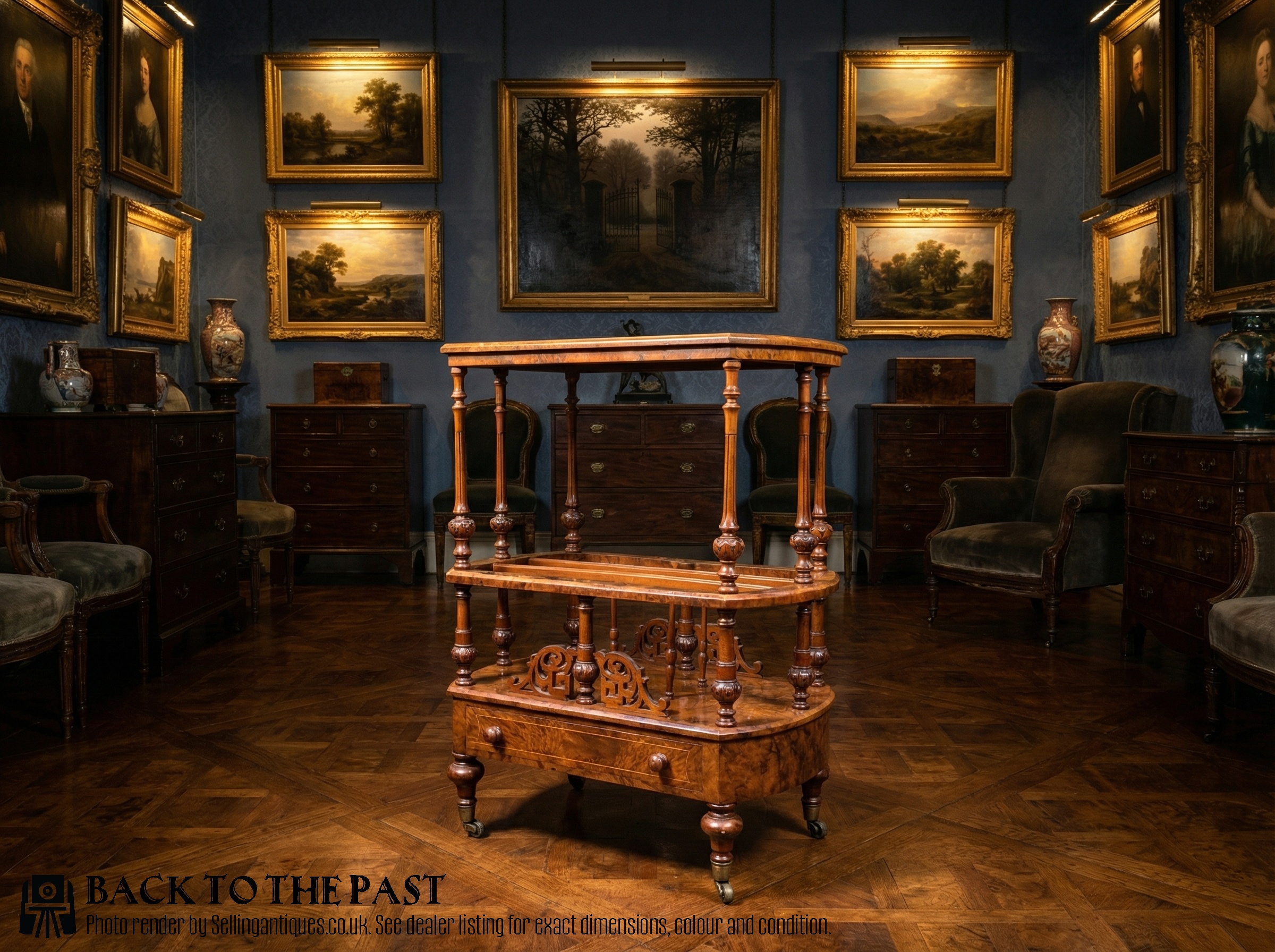
GM Elwood for JS Henry·Gabriel Viardot·Henry Ogden and Son·Keeble London
The Victorian Sheet Music Cabinet Glossary
- Canterbury
- A low stand featuring vertical partitions or open slats, originally designed to hold loose sheets of music or folios beneath a small tabletop. This form frequently includes a single lower drawer and low castor feet.
- Marquetry
- The decorative craft of applying small pieces of wood veneer to a structure to form intricate pictorial or geometric patterns. Cabinet makers utilised contrasting timbers to achieve shaded floral or classical motifs.
- Serpentine
- A furniture shape characterised by a undulating front edge that curves outward centrally and inward at the sides. This contour requires skilled carpentry to shape solid timber or apply veneer accurately.
- Etagere
- A set of open shelves supported by slender pillars, used for displaying small decorative objects or holding accessible reading material. These often sit atop enclosed lower cabinet sections.
- Fall Front
- A hinged panel that opens downward to serve as a writing or sorting surface while providing access to internal compartments. This mechanism protects stored music sheets behind a flush exterior door.
Victorian Sheet Music Cabinet: Frequently Asked Questions
What is a victorian sheet music cabinet?
A victorian sheet music cabinet is a specialised piece of furniture built during the nineteenth century to store unbound musical scores, folios, and instruments. They typically feature internal vertical divisions or drop-down drawers designed to keep fragile paper flat and organised.
These pieces were kept in the drawing room or music room for easy access during domestic piano recitals and evening gatherings. Their designs ranged from compact floor-standing cupboards to ornate glazed display units.
Where were these cabinets placed?
These cabinets stood in the principal reception rooms of nineteenth-century homes, usually positioned near the piano or music stand. Their compact footprints allowed them to fit against parlour walls or in corners without obstructing household traffic.
Because they were meant for formal entertaining, makers decorated them with figured veneers, brass mounts, and marquetry to match other high-status drawing room furniture.
Can these cabinets hold modern music books?
Most victorian sheet music cabinet interiors are sized for nineteenth-century paper formats, which often differ slightly from modern bound music books. However, many pieces feature adjustable shelving or wide compartments that comfortably accommodate contemporary folios and sheet music.
Buyers should check internal partition dimensions if they intend to store oversized modern scores rather than historical ephemera.