


Brown Mahogany Canterbury
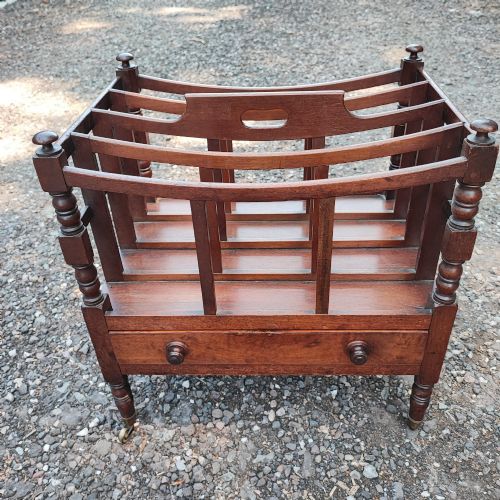
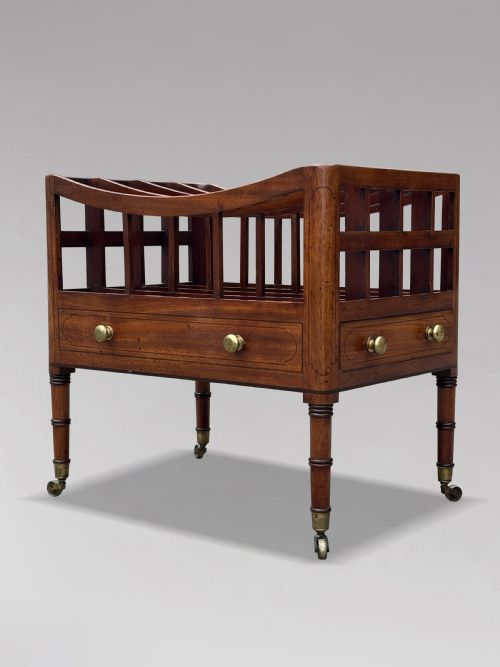
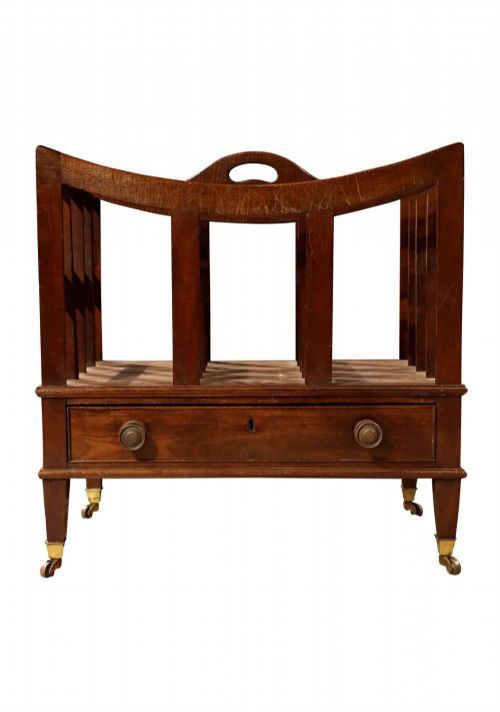
Brown mahogany canterbury stands bring refined timber utility to any room, offering compartmented storage designed originally for sheets of music and folios.
Brown Mahogany Canterbury
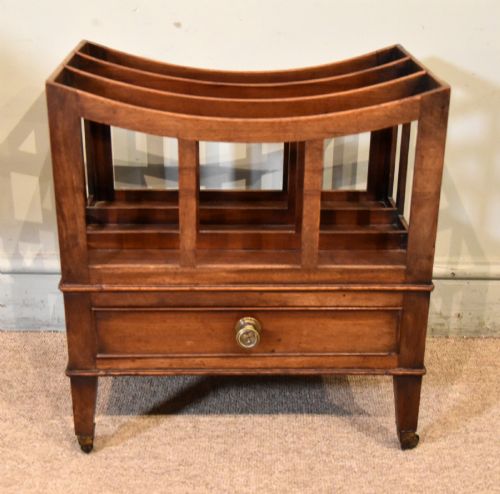
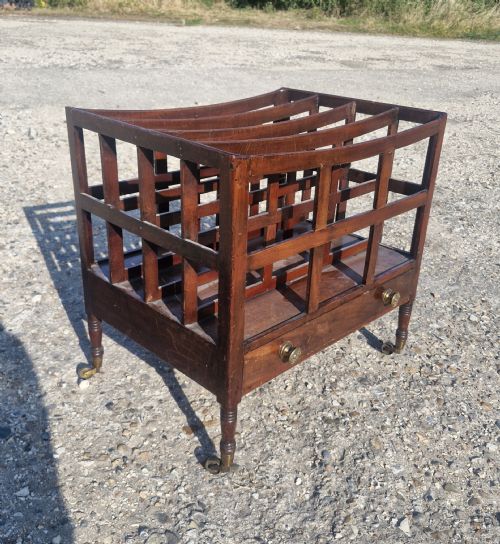
A brown mahogany canterbury is a low, compartmentalised stand built to hold folios, newspapers, and sheet music near a piano or seating area. These pieces emerge across the Georgian, Regency, William IV, and Victorian periods, often sitting on low castors for mobility.
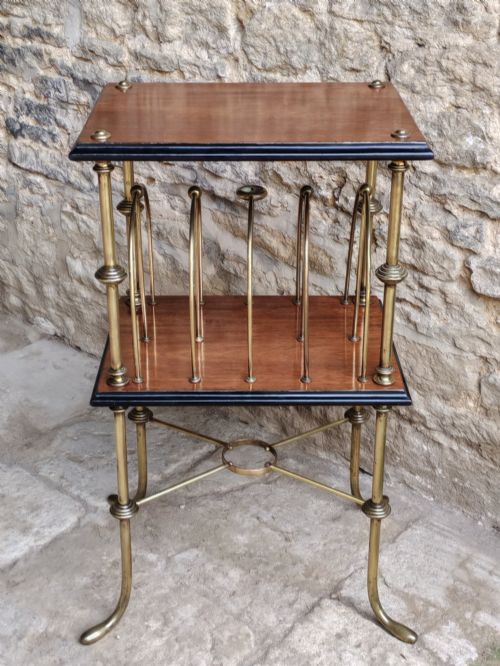
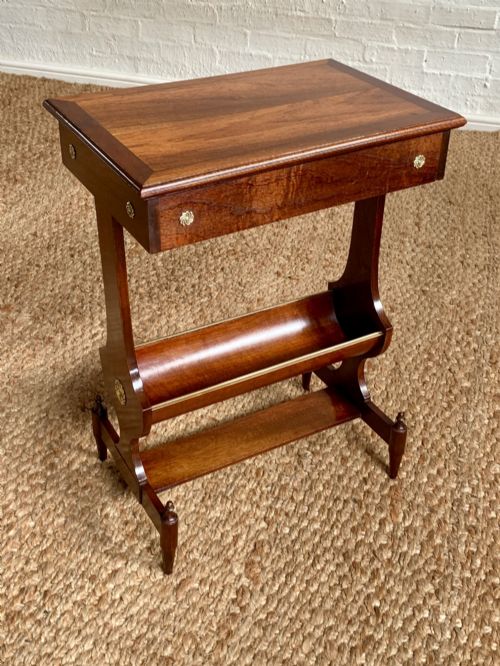
Buyers searching for a brown mahogany canterbury encounter forms featuring slatted divisions, single or double lower drawers, and occasionally turned legs or boat-shaped bodies. The selection spans straightforward country house utility to grand scaled designs with precise joinery.
The dominant variants include open slatted rack sections combined with a base drawer for small accessories, alongside occasional variants incorporating music stands or book shelves. Most examples rely on the deep grain and warm tone of polished mahogany to create visual weight.
Assessing Quality and Execution
Quality rests in the selection of the timber grain, particularly where figured flame mahogany veneer is matched across the drawer fronts and structural panels. Superior pieces demonstrate crispness in the inlaid banding, neatly fitted drawer linings, and robust turned supports that bear weight without wobble.
Proportion and restraint separate standard utility items from finer workshop output, such as those with integrated brass handles or finely carved wreath motifs. The integration of functional elements, like smooth-running drawers and original brass castors, marks the distinction between everyday items and superior examples.
Invented according to legend by the Bishop of Canterbury to hold his sheet music off the floor.
Gillow’s·Howard and Sons·J.C. Loudon
The Brown Mahogany Canterbury Glossary
- Canterbury
- A low stand with upright partitions designed for holding sheet music, folios, or newspapers. The form originated in the late eighteenth century and persisted through the Victorian era.
- Flame mahogany veneer
- A thin slice of timber cut from the fork of a mahogany tree where the branch meets the trunk, producing a rippled, flame-like grain pattern. Cabinet makers applied this to prominent surfaces for visual depth.
- Inlay
- A technique where contrasting woods such as boxwood, satinwood, or ebony are fitted into recesses carved into the primary timber surface. This creates geometric or linear decorative borders.
- Folio stand
- A larger variant designed for holding large bound prints, maps, or unbound sheets of paper. These pieces frequently feature adjustable supports and robust proportions.
Brown Mahogany Canterbury: Frequently Asked Questions
What was a brown mahogany canterbury originally used for?
These stands served as dedicated storage for sheet music, books, and unbound folios near a piano or reading desk.
The lower drawer provided a convenient space for small musical accessories, tuning keys, or writing materials.
How do I date a brown mahogany canterbury?
Dating relies on observing structural proportions, timber choice, and decorative details like inlay or turning style.
Georgian and Regency examples tend to feature cleaner architectural lines, while Victorian versions often incorporate heavier turned pillars and broader carving.
Where should I place a canterbury in a modern room?
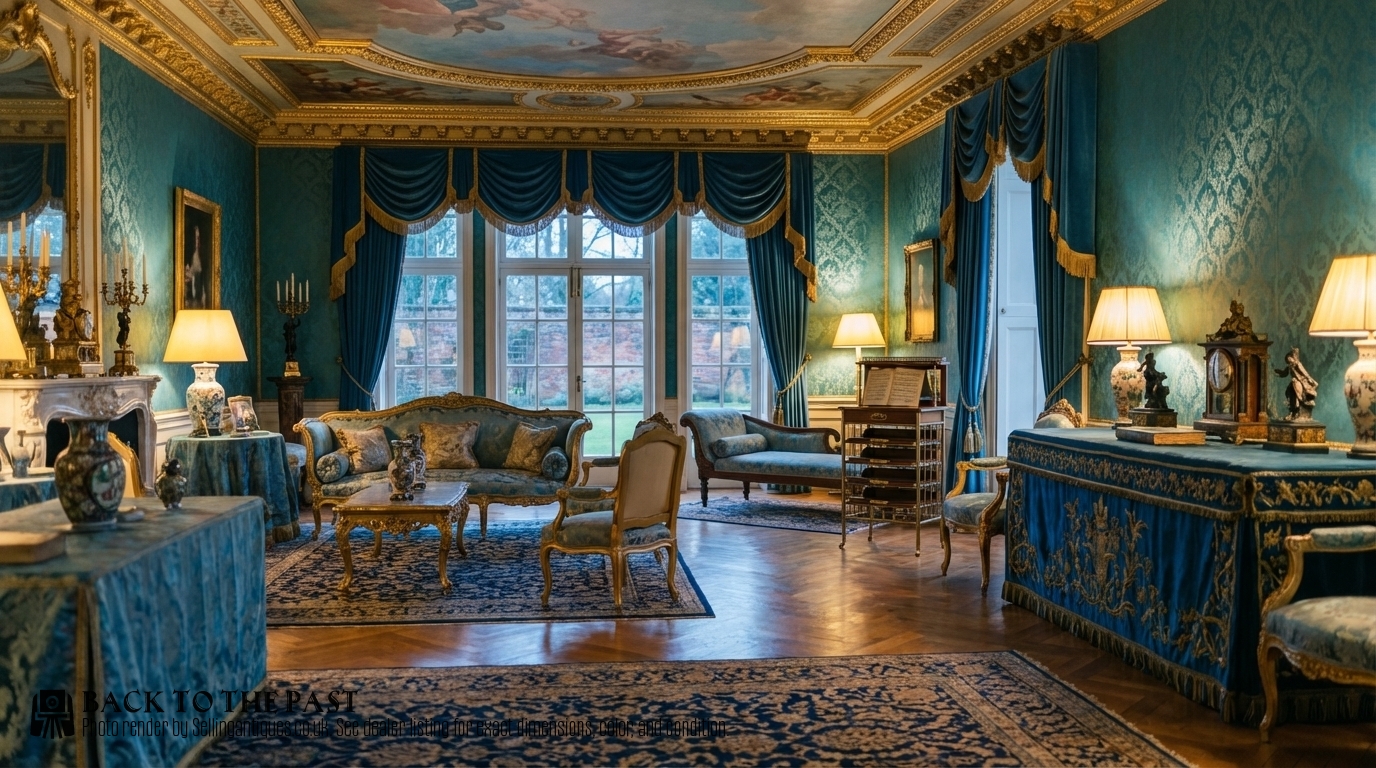
A canterbury fits well beside a sofa, armchair, or desk where its vertical dividers can hold magazines, notebooks, or records.
Its low profile allows it to sit neatly beneath window sills or alongside larger wooden case pieces without crowding the floor space.