
Antique Music Canterbury Stand
An antique music canterbury stand holds scores and periodicals with compartmented grace.
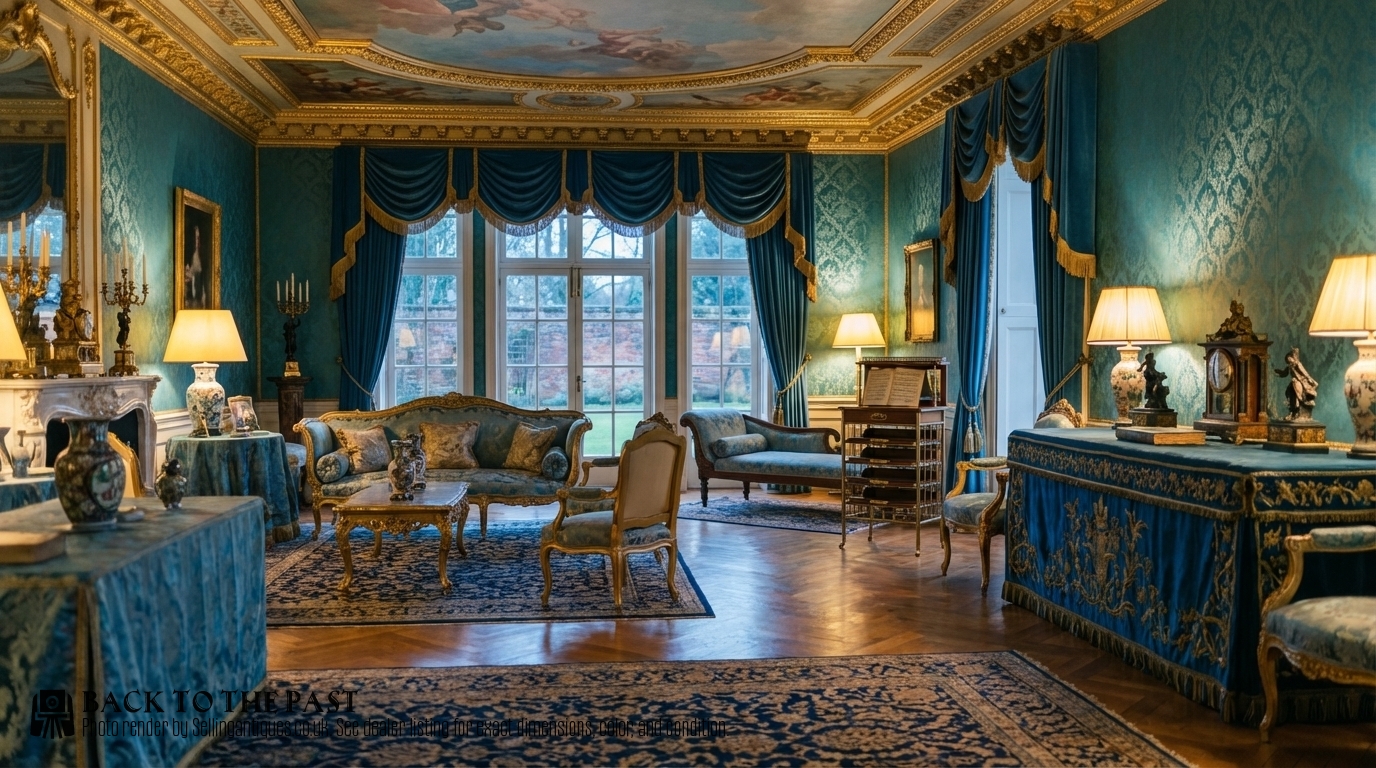
Antique Music Canterbury Stand
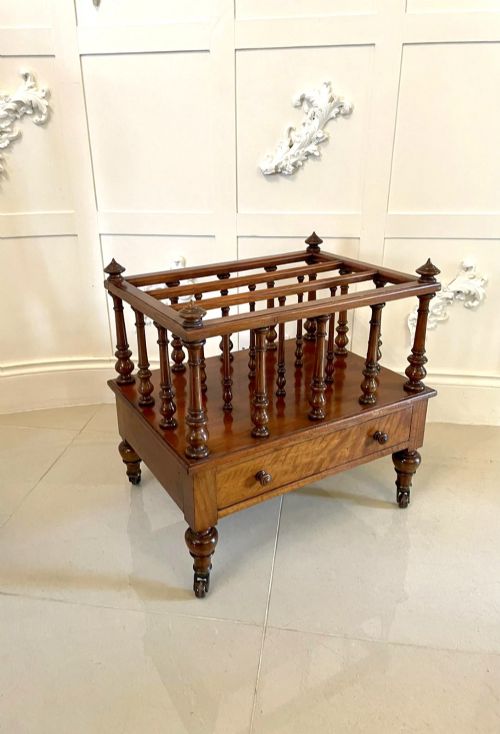
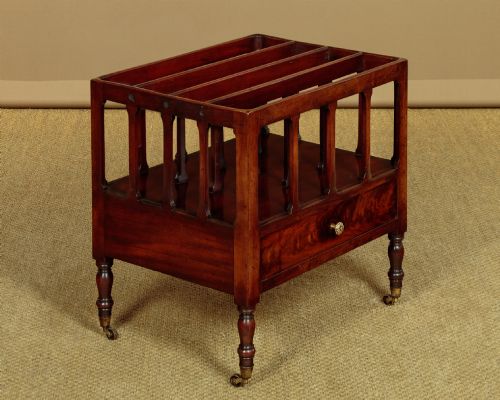
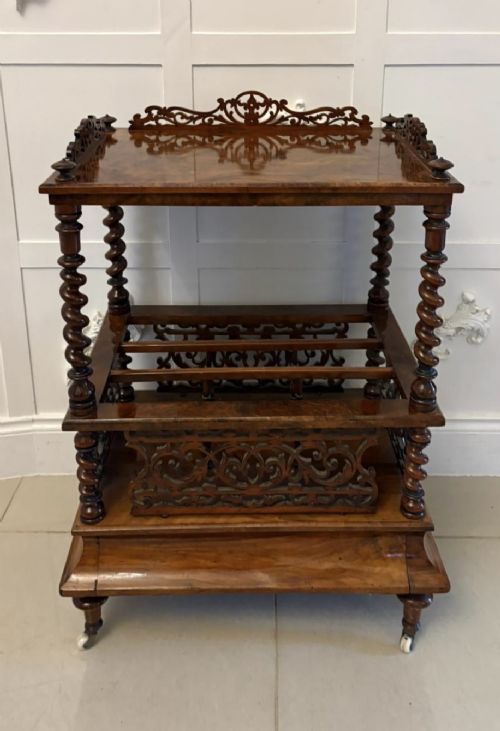
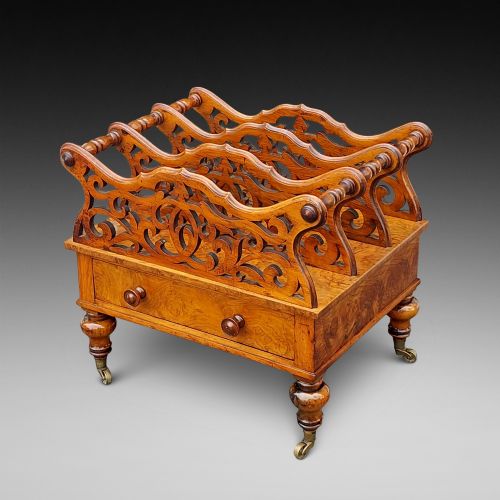
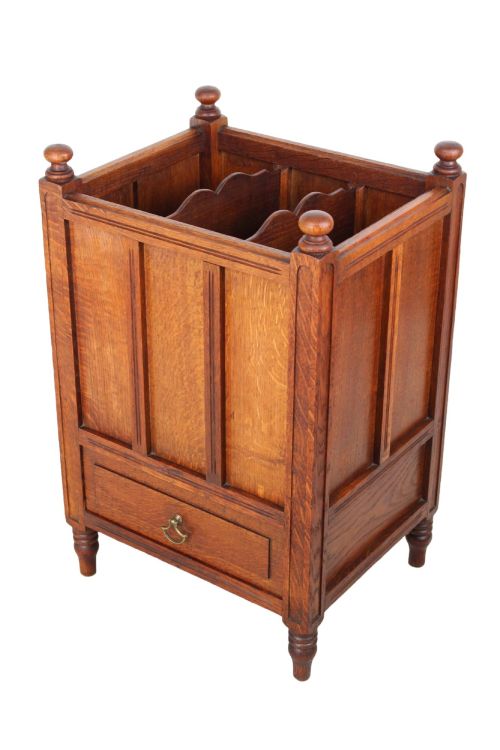
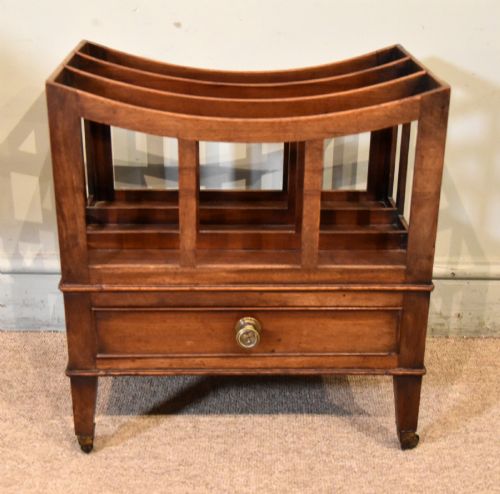
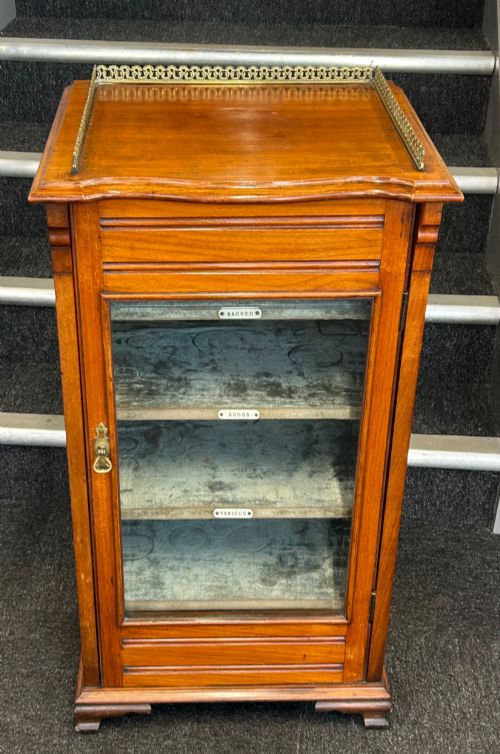
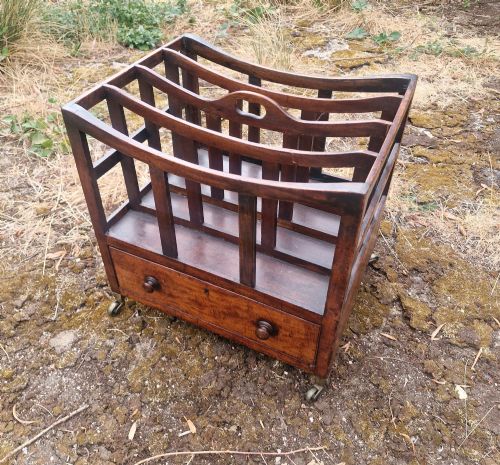
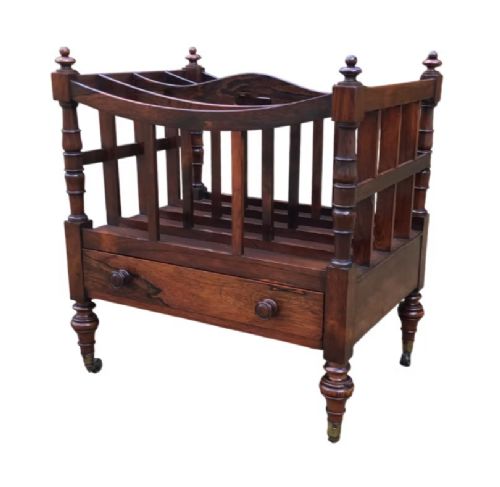
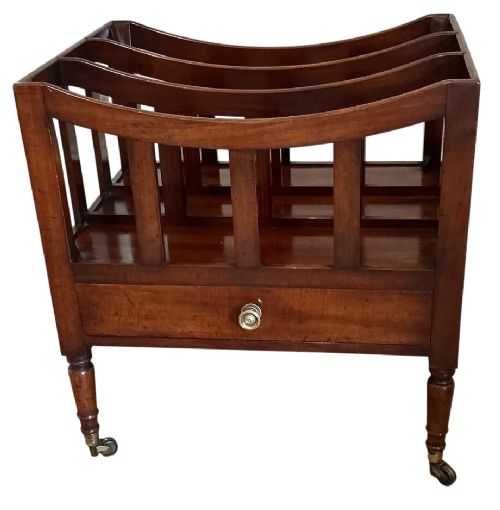
An antique music canterbury stand is a dedicated piece of furniture designed to store sheet music, folios, newspapers, and magazines near a piano or seating area. These items typically combine partitioned divisions for vertical storage with one or more lower drawers and sometimes shelves, functioning equally well as a music stand or a magazine rack. The pieces you will encounter most frequently on this page date from the nineteenth century, spanning Georgian, Regency, William IV, and Victorian eras, alongside later Edwardian examples.
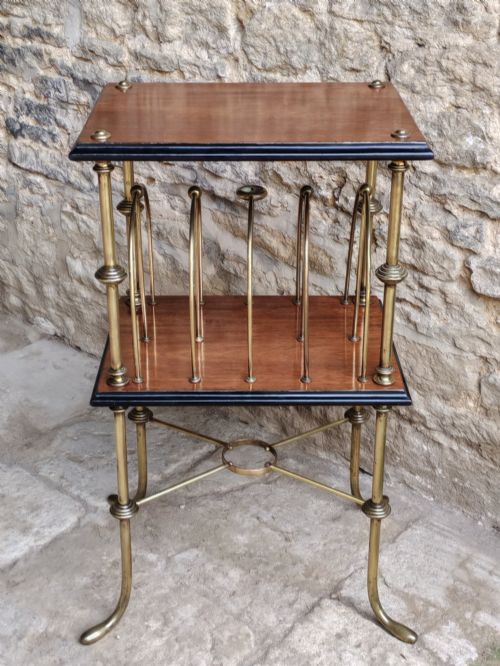
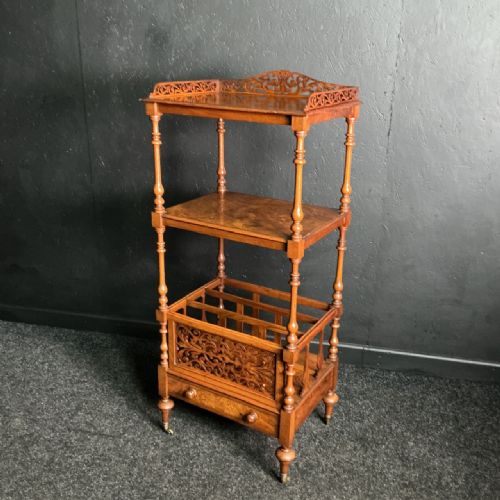
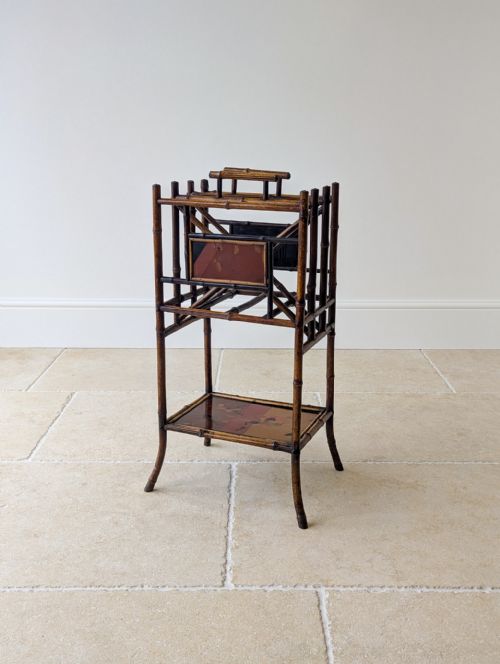
Makers and cabinetmakers produced these stands in various distinctive forms, including boat-shaped designs, tiered whatnots, and multi-functional side cabinets. Woods such as mahogany, walnut, burr walnut, and rosewood dominate the selection, while later pieces adopt exotic materials like bamboo during the Aesthetic Movement. Whether configured as a simple magazine tidy or an elaborate freestanding cabinet with a work top, each item reflects the domestic musical and reading habits of its period.
What Varies In Quality
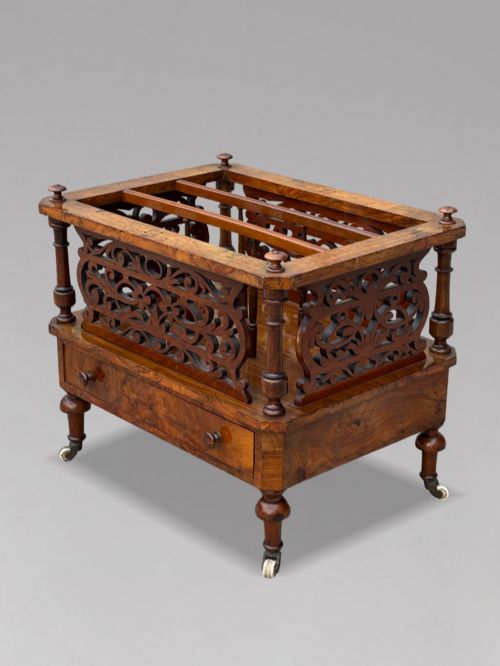
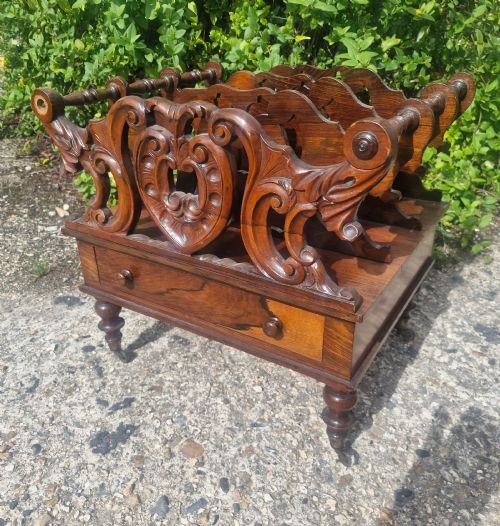
Quality rests primarily in the selection of timber and the ambition of the joinery. Stands featuring highly figured burr walnut veneers or dense, rich rosewood sit at the upper end of the range, showing careful grain matching across lids and drawer fronts. Simpler Edwardian oak or plain mahogany models offer domestic utility with less decorative flourish.
The sophistication of the construction distinguishes finer workshops from standard production. Integrated drawer linings, finely turned spindles, delicate fretwork divisions, and original brass fittings elevate an item, whereas heavier, unadorned frames represent more utilitarian domestic production.
Bamboo and oriental styles appear alongside heavy walnut, proving Victorian musicians enjoyed a brief tropical phase.
Edwards and Roberts·Henry Ogden and Son
The Antique Music Canterbury Stand Glossary
- Canterbury
- A low, open-partitioned stand used for holding sheet music, folios, or periodicals. The name originated in the eighteenth century when the Archbishop of Canterbury commissioned a similar piece.
- Whatnot
- A multi-tiered piece of freestanding shelving used for displaying ornaments or holding books and papers. They often incorporate a canterbury base at the lowest level.
- Burr walnut
- Timber taken from the gnarled growths of a walnut tree, yielding highly decorative swirling grain patterns. Cabinetmakers sliced this wood into thin veneers for high-status surfaces.
- Aesthetic Movement
- A late nineteenth-century design style that rejected heavy Victorian ornamentation in favour of simplicity, asymmetry, and inspiration from Japanese art.
- Boat-shaped
- A distinct nineteenth-century silhouette where the curved ends of the upper rack sweep upward and outward like the hull of a vessel.
Antique Music Canterbury Stand: Frequently Asked Questions
What is an antique music canterbury stand?
An antique music canterbury stand is a specialised nineteenth-century or Edwardian piece of furniture created to hold sheet music, folios, and periodicals upright. These stands typically feature open partitions, lower drawers, and occasionally upper shelving or reading surfaces.
They were placed beside pianos, writing desks, or in drawing rooms to keep reading material organised and accessible. Over time, their utility expanded to include magazines and newspapers, leading to various hybrid forms.
How were music canterbury stands used originally?
In nineteenth-century parlours, these stands kept musical scores tidy and within arm's reach of the piano or music stool. Musicians and guests could easily browse through unbound scores stored in the vertical compartments.
Later Victorian and Edwardian iterations often included drawers for smaller accessories like tuning keys, reeds, and manuscript paper. Some examples combined the rack with a small writing surface or a display whatnot tier.
How do I tell Regency stands from Victorian ones?
Regency stands generally date from the early nineteenth century and favour straight lines, sabre legs, brass inlays, and rich mahogany or rosewood. They often feature boat-shaped frames with minimal surface carving.
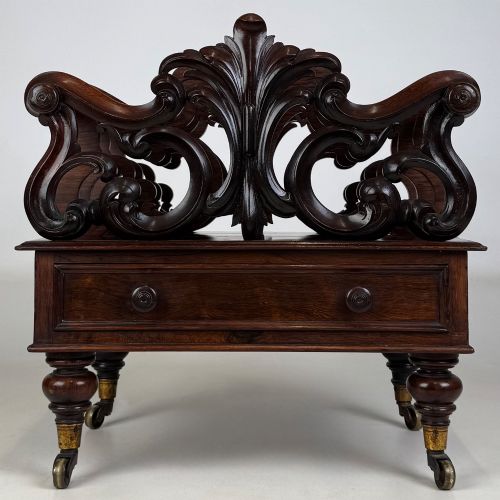
Victorian stands tend to be heavier, utilising burr walnut veneers, serpentine shapes, turned spiral columns, and elaborate fretwork. The introduction of ceramic or brass castors is common across both eras.
How do I care for a wood canterbury?
Keep the wood conditioned by avoiding direct sunlight and maintaining stable room humidity to prevent veneer lifting. Regular dusting with a dry, soft cloth preserves the original polish.
Avoid placing damp items or wet periodicals directly onto the wood surfaces, using coasters or protective linings inside compartments if necessary.