


Brass and Mahogany Canterbury
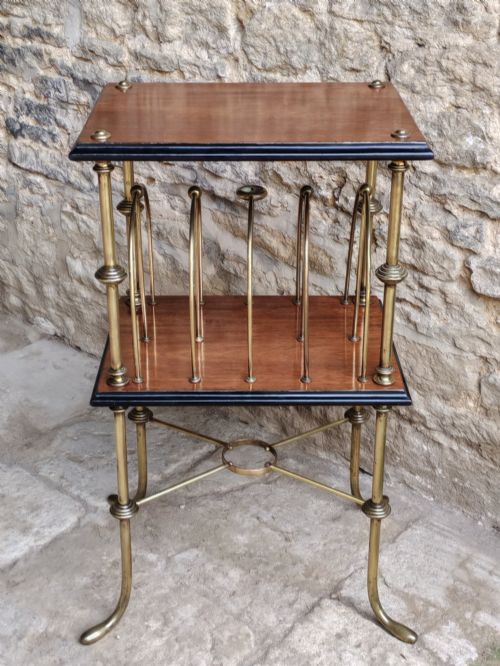
A brass and mahogany canterbury brings orderly charm to a room, holding papers and folios with upright grace.
Brass and Mahogany Canterbury
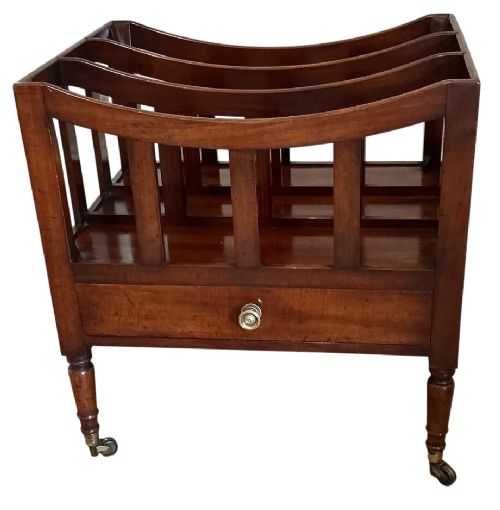
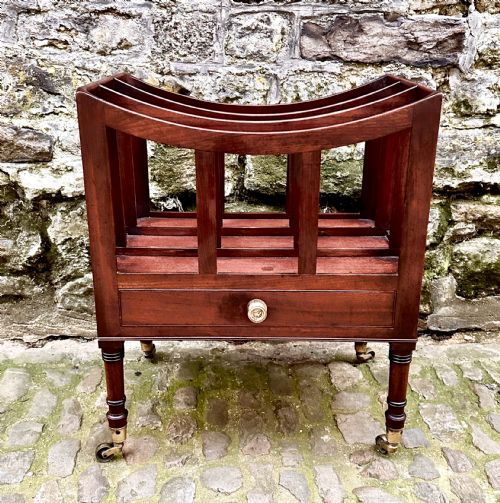
A brass and mahogany canterbury is a piece of furniture designed for holding sheets of music, newspapers, and periodicals, appearing in forms such as magazine racks, music cabinets, and revolving stands. The pieces seen here span from the Georgian and Regency periods through the Victorian and Edwardian eras, with many originating from the nineteenth century.
Buyers are most likely to encounter traditional four-division canterburys alongside boat-shaped designs and revolving stands. The combination of timber and metal fittings defines their appearance, often featuring slender brass spindles or castors.
Origins range across English workshops of the early nineteenth century and later revival periods, connecting domestic utility with formal reception rooms.
What Varies in Quality
The distinction between standard domestic items and finer examples rests on the crispness of the turning on the brass spindles and the depth of the mahogany grain. Superior pieces display thoughtful proportions and careful integration of metalwork into the wooden frame.
Construction methods also reveal differences, where dovetailed drawer joints and solid timber divisions elevate a piece above simpler variants. The presence of original castors and untampered brass components marks the better end of the range.
Forms on this site range from standard four-division magazine racks to revolving bookcases and lamp standards.
Gillows of Lancaster·J.C. Loudon
The Brass and Mahogany Canterbury Glossary
- Canterbury
- A low stand with partitions for holding sheet music or newspapers, typically fitted with legs and castors. Originating in the eighteenth century, it became a staple of nineteenth-century sitting rooms.
- Division
- One of the vertical partitions that separates the interior space of a rack into sections for holding papers. These are frequently formed from turned brass rods or wooden slats.
- Boat-shaped
- A curved hull-like profile seen on the sides of certain Regency pieces. This silhouette gives a lighter appearance to the receptacle portion of the furniture.
- Revolving
- Describing a stand or bookcase mounted on a central pivot that allows the top tier to turn freely. This mechanism is commonly found on later nineteenth and early twentieth-century examples.
- Ebonised
- Timber treated with a dark finish to imitate ebony. This technique creates a stark contrast against bright brass mounts.
Brass and Mahogany Canterbury: Frequently Asked Questions
What is a canterbury used for?
Originally designed to hold folios of sheet music near a piano, these stands served musicians in formal parlours.
Over time, households adopted them for newspapers, magazines, and general reading material kept close to seating areas.
How do I date a canterbury?
Dating relies on observing the leg style, timber characteristics, and the shape of the partitions. Regency examples often feature swept boat-shaped frames and delicate brass uprights.
Later Victorian and Edwardian pieces tend to introduce heavier mouldings, ebonised surfaces, or revolving mechanisms.
Are brass and mahogany canterburys sturdy?
Most pieces are built to withstand the weight of books and papers through robust timber frames and secure metal fixings. The slender brass rods are strong enough for daily retrieval of periodicals.
Care should be taken when moving them by their handles, as leverage can strain older joints.
Where should I place a canterbury?
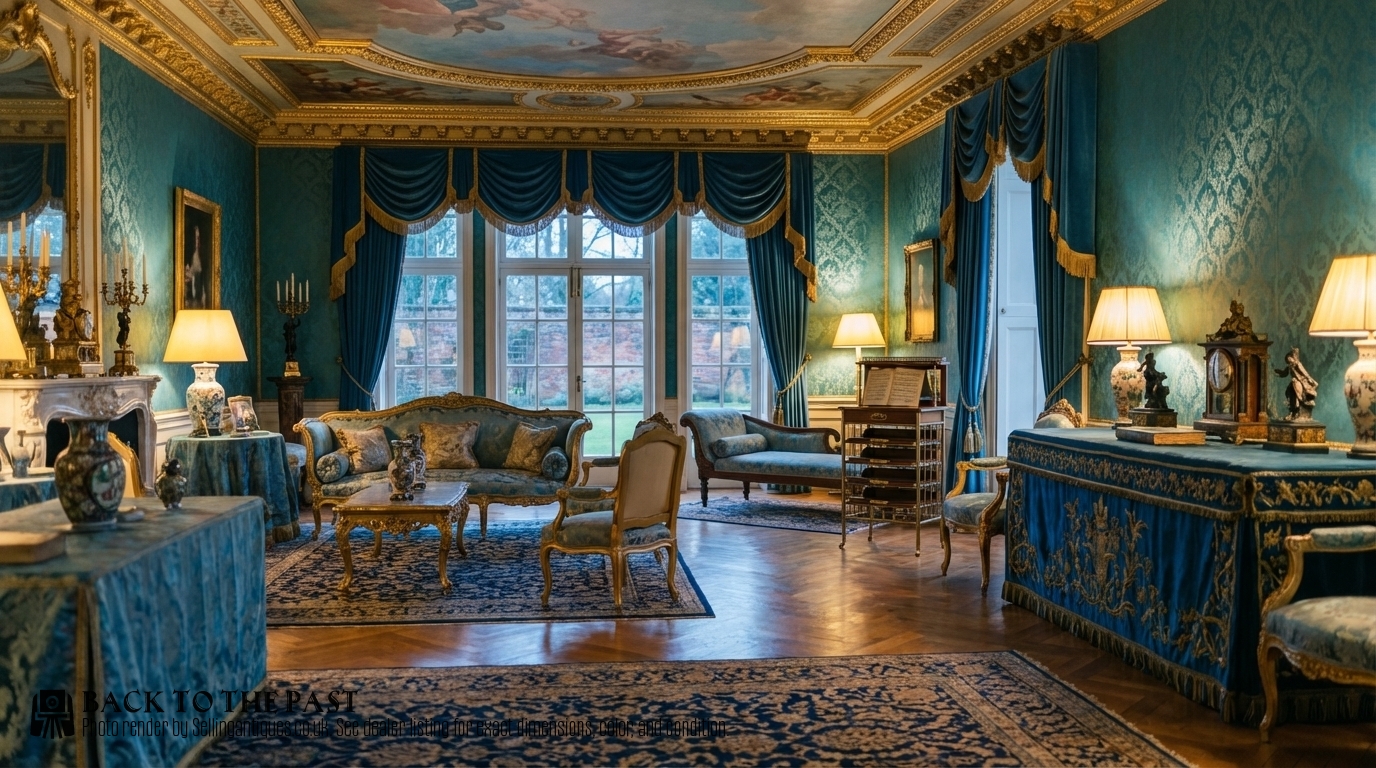
They suit sitting rooms, studies, and libraries where reading materials accumulate near armchairs or sofas. Their finished backs and compact footprints allow them to stand freestanding or beside larger furniture.
Revolving versions work well beside desks or between seating groups.