

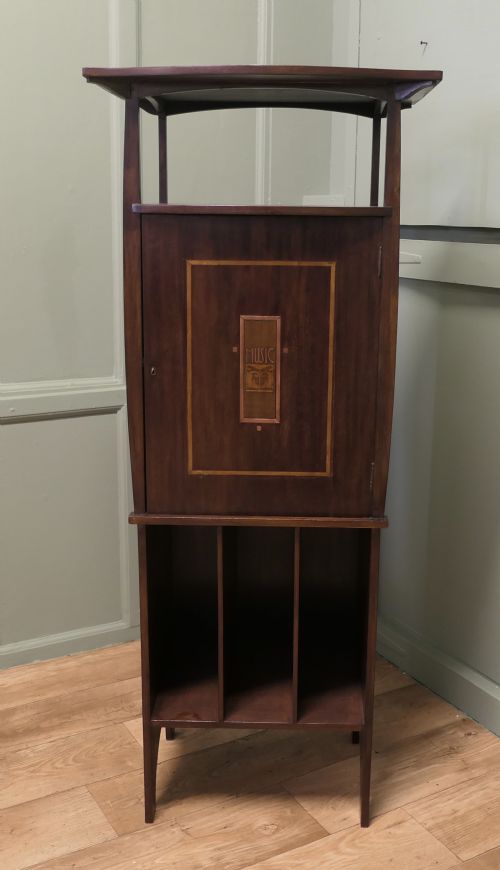
Antique Cabinet for Sheet Music
An antique cabinet for sheet music keeps scores tidy in drop-front drawers or upright compartments, offering refined storage for a piano room.
Antique Cabinet for Sheet Music
An antique cabinet for sheet music provides dedicated storage designed specifically for the organisation of musical scores and folios in the home. These pieces emerge chiefly across Victorian and Edwardian periods, running through the late nineteenth century and into the early twentieth century.
The most common forms on this page include upright music cabinets featuring stacks of drop-front drawers, alongside canterburys and narrow side cabinets. Makers constructed these items in mahogany, walnut, burr walnut, and rosewood, often applying satinwood inlay or brass hardware.
Object variations range from simple oak music filing cabinets to decorative pieces with glazed doors, mirrored tops, or raised galleries. Styles span from Late Victorian and Edwardian to Arts and Crafts, Art Nouveau, and Aesthetic Movement designs.
How they were made
Cabinet makers relied primarily on solid timbers and fine veneers, selecting mahogany, walnut, burr walnut, and rosewood for their rich grains and durability. Surfaces frequently incorporated delicate satinwood inlay work to create geometric or floral patterns.
Construction techniques focused on internal organisation, such as shallow drop-front drawers that prevented large scores from curling or folding. Glazed panels, mirrored sections, and brass fittings added functional and decorative detail to the timber framework.
Antique Cabinet for Sheet Music Retail Price Guide 2026
Typical asking prices for cabinet for sheet music among the pieces listed under this phrase on Sellingantiques today, from the lower quarter to the upper quarter. They describe what is for sale here now, not the wider market.
Materials across the selection include solid mahogany, walnut, rosewood, and brass, complemented by satinwood inlay and glass panels.
What varies in quality
Quality rests upon the selection of timber veneers, where highly figured burr walnut or rich mahogany elevates a piece above standard utility furniture. The crispness of satinwood inlay and the integration of brass mounts distinguish superior workshop production from simpler output.
Structural refinement in the drawer mechanisms, particularly the smooth operation of drop-front music trays, defines the level of craftsmanship. The presence of distinct stylistic elements, such as carved details or specific design movements like Arts and Crafts, marks out exceptional examples.
GM Elwood for JS Henry·Gabriel Viardot·Henry Ogden and Son
The Antique Cabinet for Sheet Music Glossary
- Drop-front drawer
- A drawer with a hinged front that lowers when opened to allow easy access to stacked paper sheets. This feature prevents delicate paper edges from tearing.
- Canterbury
- A low stand fitted with upright partitions for holding sheet music, magazines, or folios, often featuring a small lower drawer. These pieces sit on castors for mobility.
- Burr walnut
- Timber taken from the gnarled growth of a walnut tree, yielding a swirling, highly decorative grain pattern. Cabinet makers used veneers of this wood on prominent surfaces.
- Satinwood inlay
- Contrasting blonde wood inserted into recesses in a darker timber base to form decorative motifs. This technique brightened dark Edwardian and Victorian furniture.
- Raised gallery
- A low decorative railing positioned around the top edge of a cabinet. It stopped small decorative items or papers from sliding off the surface.
Antique Cabinet for Sheet Music: Frequently Asked Questions
What is an antique cabinet for sheet music?
An antique cabinet for sheet music is a specialised piece of furniture designed to store unbound musical scores and folios safely. They appear mainly in Victorian and Edwardian homes beside pianos.
These cabinets use shallow drawers with drop fronts or vertical slots to keep paper flat and organised.
How do I use one today?
These cabinets serve well in modern living rooms or studies as narrow storage units for papers, art supplies, or stationery. The flat surfaces suit lamps or small ornaments.
Drop-front drawers accommodate laptops or tablets just as easily as they once held nineteenth-century waltzes.
How do I tell Victorian from Edwardian cabinets?
Victorian models often feature dark burr walnut, rich rosewood, and heavier, ornate carved detailing. They lean towards formal, dense timber finishes.
Edwardian pieces tend to use lighter mahogany with delicate satinwood inlay and airier proportions, reflecting changing interior tastes around nineteen hundred.
What is a music canterbury?
A music canterbury is an open rack with vertical dividers designed for holding sheet music upright. Many examples include a small drawer underneath for smaller accessories.
Originating in the late eighteenth century, these compact stands remained popular through the Victorian and Edwardian eras.